Promoting science and technology education through spaceflight and weather balloons.

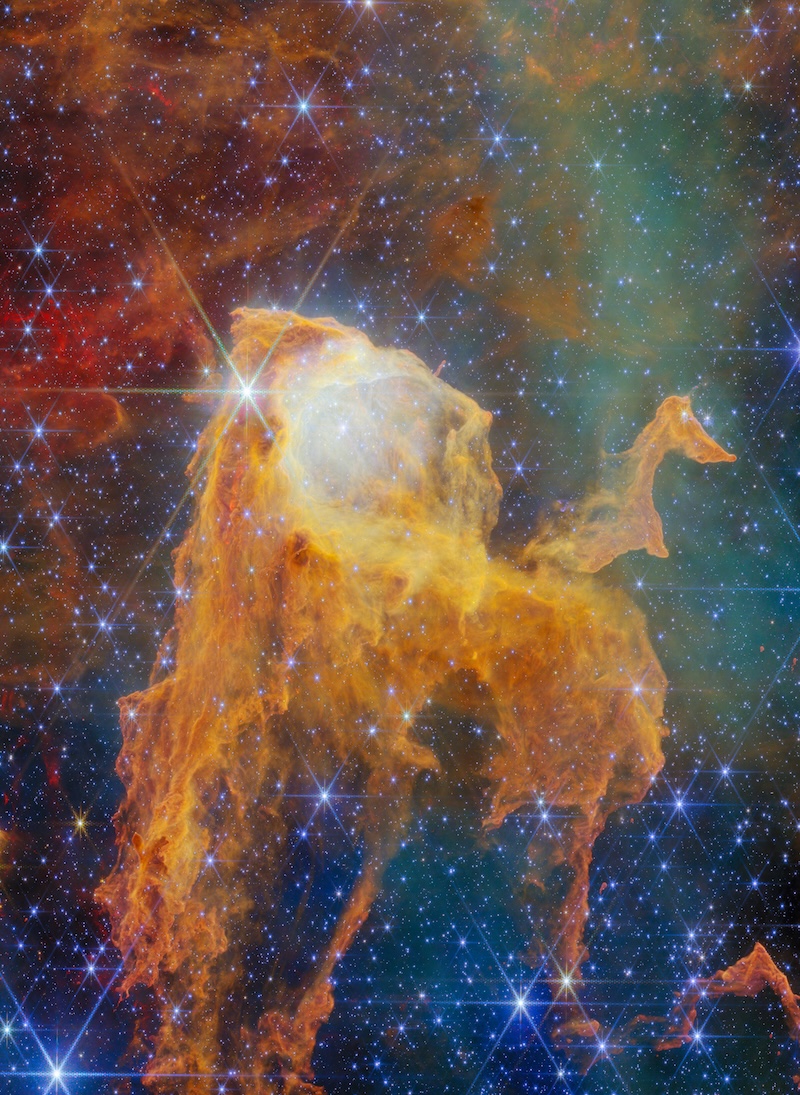
Mystic Mountain Monster being Destroyed

By |2026-04-26T16:44:28-04:00April 26th, 2026|Categories: NASA News, Uncategorized|Tags: , , , , , |

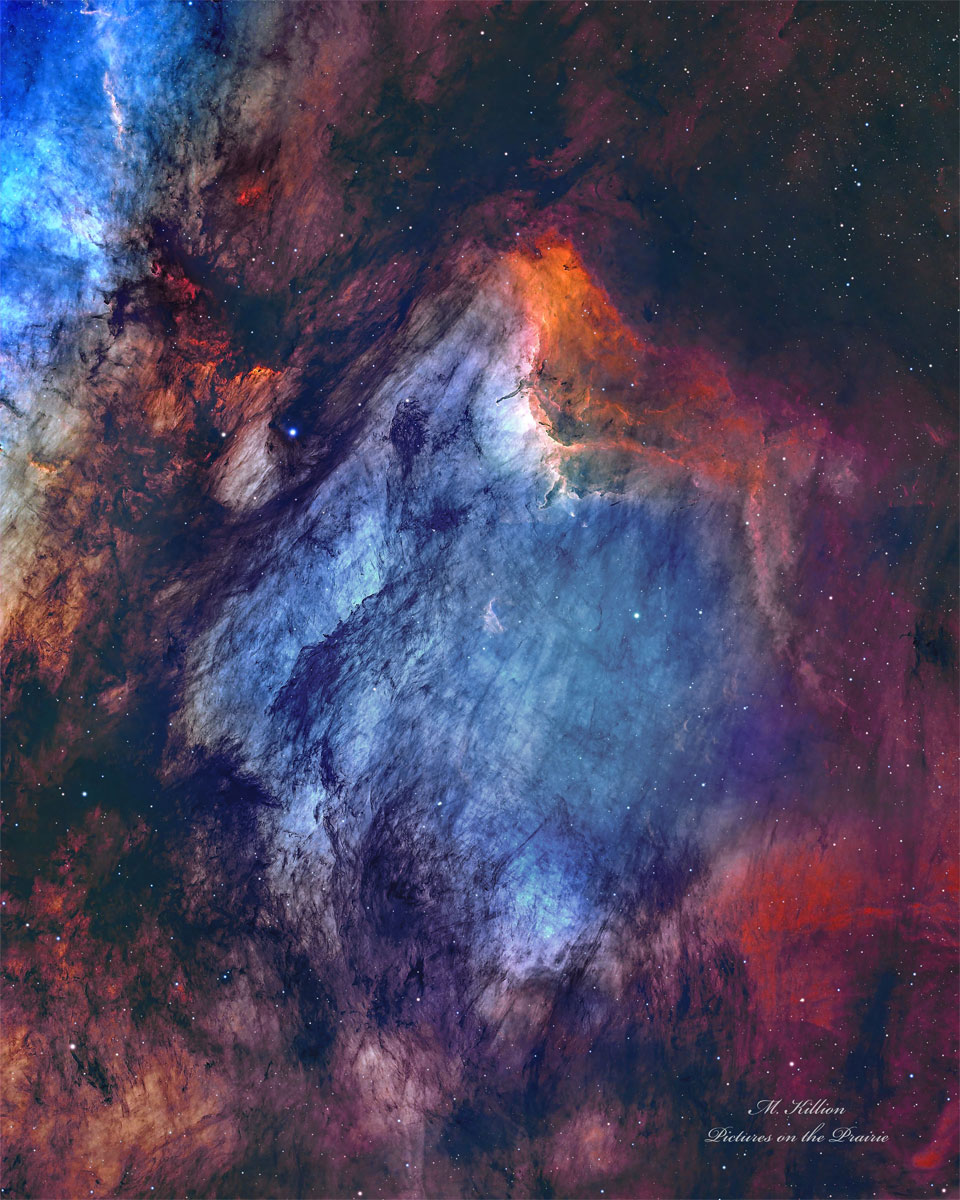
Photo of the Day Inside the head of this interstellar monster is a star that is slowly destroying it. The huge monster, actually an inanimate series of pillars of gas and dust, measures light years in length. The in-head star is not itself visible through the opaque interstellar dust but is bursting out partly [...]

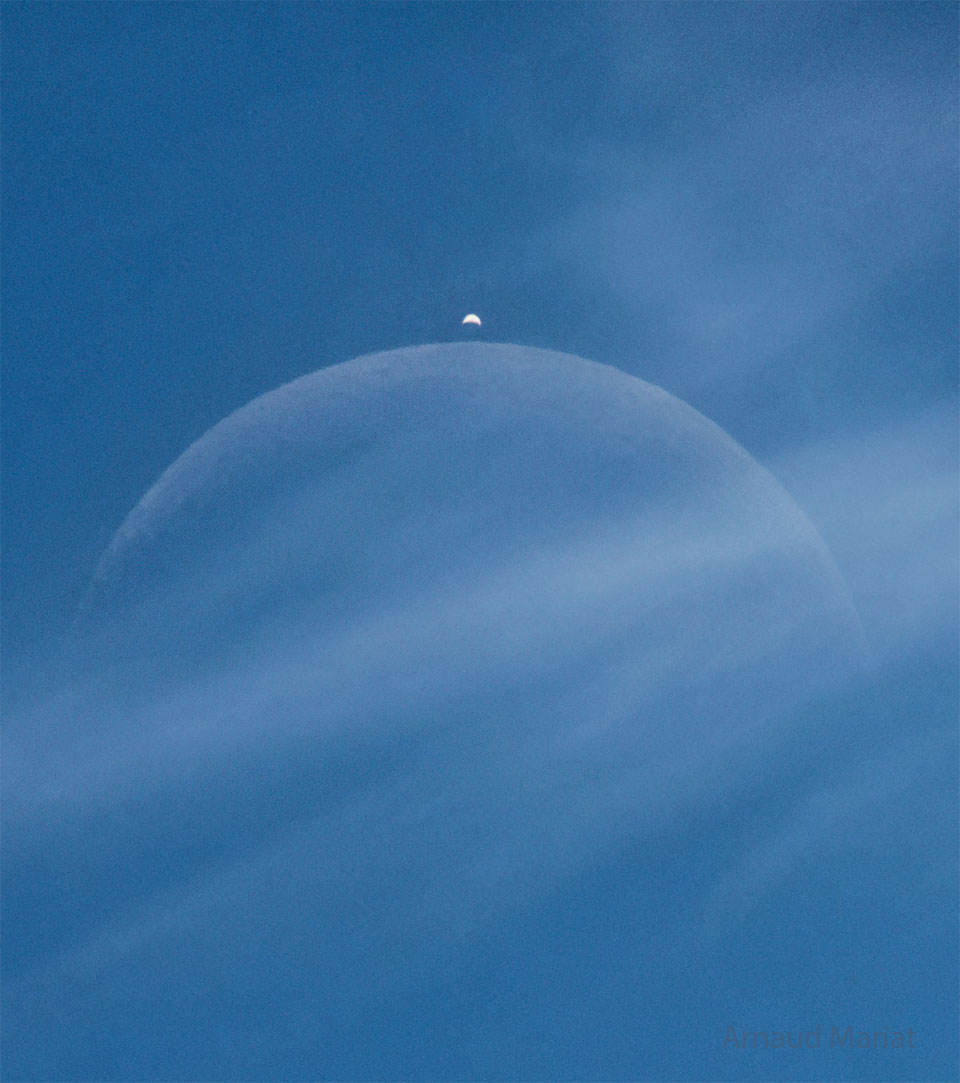
Young Moon and Sister Stars

By |2026-04-24T16:44:26-04:00April 24th, 2026|Categories: NASA News, Uncategorized|Tags: , , , , , |

Photo of the Day Sunlit arms of a crescent moon seem to embrace the faint lunar night side in this dramatic celestial view from planet Earth. The single telephoto exposure tracking the sky was captured on the night of April 19, when a two day old Moon was near perigee in its elliptical orbit. [...]

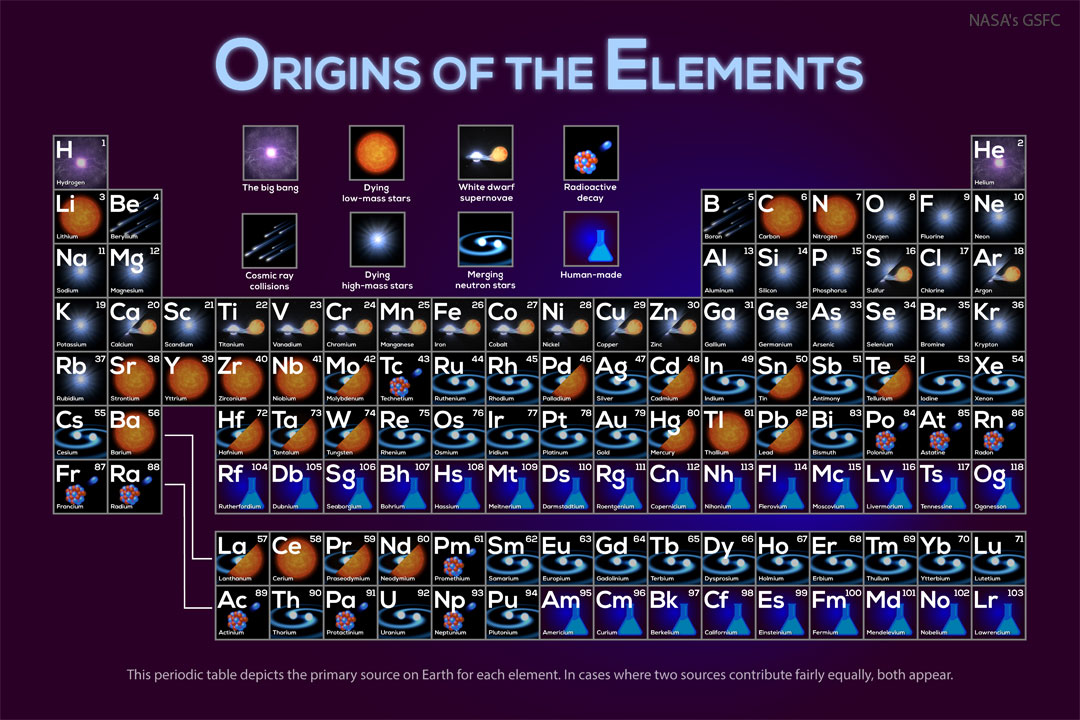
Large Scale Structure of the Universe

By |2026-04-23T16:44:23-04:00April 23rd, 2026|Categories: NASA News, Uncategorized|Tags: , , , , , |

Photo of the Day This is a map of the universe. The Dark Energy Spectroscopic Instrument (DESI) at Kitt Peak National Observatory, Arizona, has finished its five-year survey. It observed more than 47 million galaxies and quasars and created a 3D map centered on the Earth. Today's featured image shows a thin slice of [...]

Three Sky Arches over Snowy Alps

By |2026-04-21T16:44:37-04:00April 21st, 2026|Categories: NASA News, Uncategorized|Tags: , , , , , |

Photo of the Day Why are there three arches across the sky instead of two? Last month, after being dropped off by a helicopter at a high mountain peak in the Alps near the Swiss Italian border, an adventurous astrophotographer expected two arches of our Milky Way galaxy to be visible during the night. [...]

Comet R3 PanSTARRS over a Himalayan Valley

By |2026-04-20T16:44:26-04:00April 20th, 2026|Categories: NASA News, Uncategorized|Tags: , , , , , |

Photo of the Day The best way to see comet R3 PanSTARRS’s long tail is with a camera. This week, the recently brightened comet appears in northern skies to the east just before dawn, but is only barely visible to the unaided eye. The many-degree ion tail captured on long duration camera exposures is [...]

M82: Starburst Galaxy with a Superwind

By |2026-04-17T16:44:35-04:00April 17th, 2026|Categories: NASA News, Uncategorized|Tags: , , , , , |

Photo of the Day Messier 82 is a starburst galaxy with a superwind. In fact, through supernova explosions and powerful winds from massive stars, the burst of star formation in M82 is driving a prodigious outflow. Evidence for the superwind from the galaxy's central regions is clear in the sharp telescopic portrait. The composite [...]

The Long Wispy Tail of Comet R3 (PanSTARRS)

By |2026-04-14T16:44:29-04:00April 14th, 2026|Categories: NASA News, Uncategorized|Tags: , , , , , |

Photo of the Day Why does Comet R3 (PanSTARRS) have a wispy tail? The newest bright member of the inner Solar System, Comet C/2025 R3 (PanSTARRS) is already extending an impressive stream of glowing gas. This tail starts from an unseen central nucleus of dirty ice that is likely a few kilometers across. The [...]

IC 4592: The Blue Horsehead Reflection Nebula

By |2026-04-07T16:44:29-04:00April 7th, 2026|Categories: NASA News, Uncategorized|Tags: , , , , , |

Photo of the Day Do you see the horse's head? What you are seeing is not the famous Horsehead nebula toward Orion, but rather a fainter nebula that only takes on a familiar form with deeper imaging. The main part of the here-imaged molecular cloud complex is reflection nebula IC 4592. Reflection nebulas are [...]

NGC 3310: A Starburst Spiral Galaxy

By |2026-04-05T16:44:59-04:00April 5th, 2026|Categories: NASA News, Uncategorized|Tags: , , , , , |

Photo of the Day The party is still going on in spiral galaxy NGC 3310. Roughly 100 million years ago, NGC 3310 likely collided with a smaller galaxy causing the large spiral galaxy to light up with a tremendous burst of star formation. The changing gravity during the collision created density waves that compressed [...]

Caught in the Web: Visualization of a Black Hole Merger in the Tarantula Nebula

By |2026-04-03T16:44:24-04:00April 3rd, 2026|Categories: NASA News, Uncategorized|Tags: , , , , , |

Photo of the Day How can we see what is invisible? Black holes are not easy to see in the dark cosmic night, but astronomers can find them by analyzing their gravitational effects on matter, light and spacetime. The featured image shows an illustration that combines a simulation of a black hole binary system [...]

Go to Top