Explore This Section Perseverance Home Mission Overview Rover Components Mars Rock Samples Where is Perseverance? Ingenuity Mars Helicopter Mission Updates Science Overview Objectives Instruments Highlights Exploration Goals News and Features Multimedia Perseverance Raw Images Images Videos Audio More Resources Mars Missions Mars Sample Return Mars Perseverance Rover Mars Curiosity Rover MAVEN Mars Reconnaissance Orbiter Mars Odyssey More Mars Missions Mars Home 3 min read
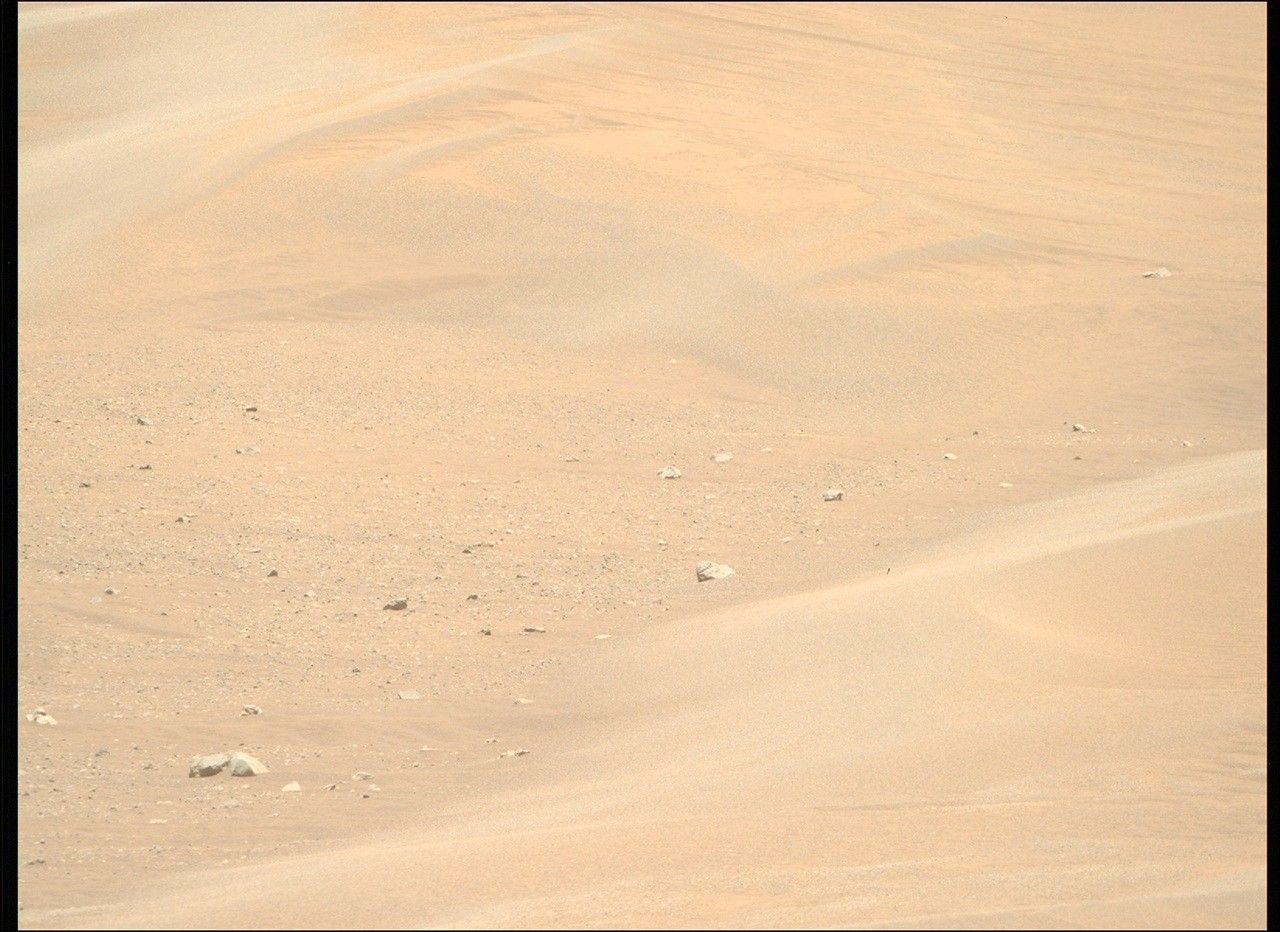
To See the World in a Grain of Sand: Investigating Megaripples at ‘Kerrlaguna’  NASA’s Mars Perseverance rover acquired this image of inactive megaripples at “Kerrlaguna,” Perseverance’s latest target of exploration, on Aug. 13, 2025. The rover acquired the image using its Right Mastcam-Z camera, one of a pair of cameras located high on the rover’s mast, on Sol 1593 — or, Martian day 1,593 of the Mars 2020 mission — at the local mean solar time of 12:05:13. NASA/JPL-Caltech/ASU Written by Athanasios Klidaras, Ph.D. candidate at Purdue University
On Mars, the past is written in stone — but the present is written in sand. Last week, Perseverance explored inactive megaripples to learn more about the wind-driven processes that are reshaping the Martian landscape every day.
After wrapping up its investigation at the contact between clay and olivine-bearing rocks at “Westport,” Perseverance is journeying south once more. Previously, attempts were made to drive uphill to visit a new rock exposure called “Midtoya.” However, a combination of the steep slope and rubbly, rock-strewn soil made drive progress difficult, and after several attempts, the decision was made to return to smoother terrain. Thankfully, the effort wasn’t fruitless, as the rover was able to gather data on new spherule-rich rocks thought to have rolled downhill from “Midtoya,” including the witch hat or helmet-shaped rock “Horneflya,” which has attracted much online interest.
More recently, Perseverance explored a site called “Kerrlaguna” where the steep slopes give way to a field of megaripples: large windblown sand formations up to 1 meter (about 3 feet) tall. The science team chose to perform a mini-campaign to make a detailed study of these features. Why such interest? While often the rover’s attention is focused on studying processes in Mars’ distant past that are recorded in ancient rocks, we still have much to learn about the modern Martian environment.
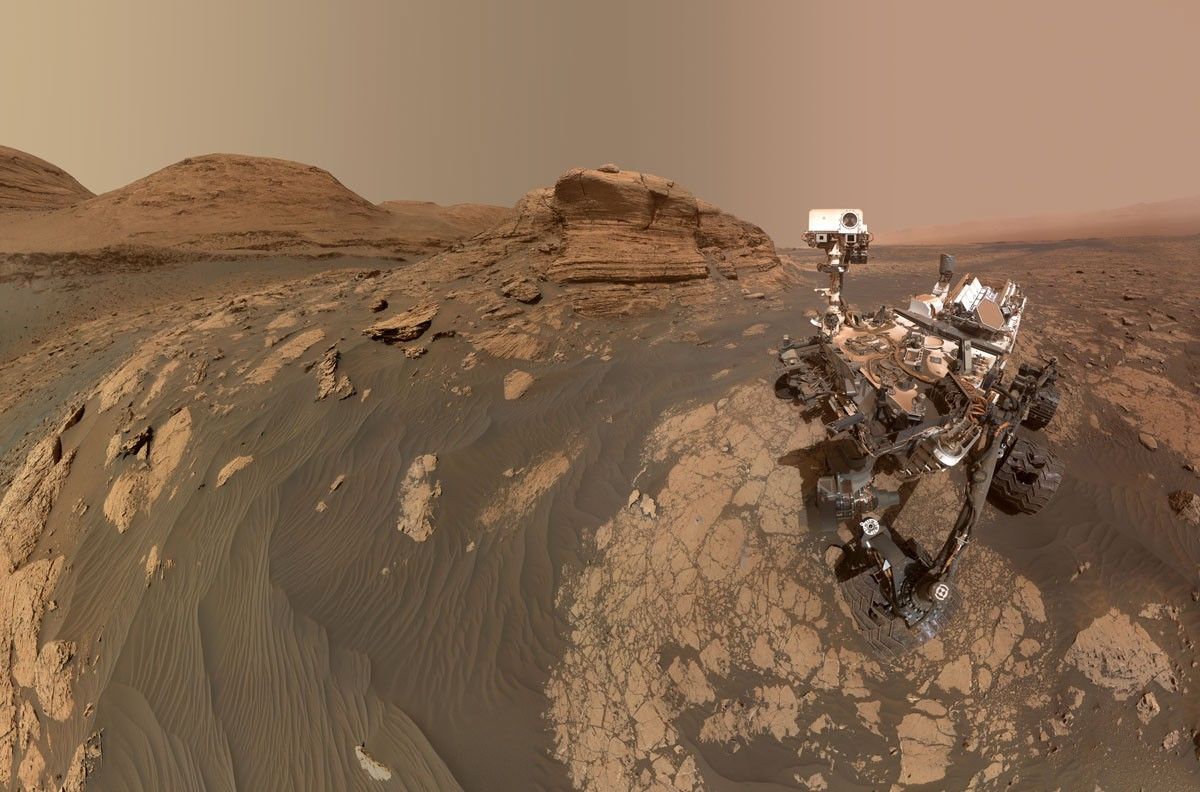
Almost a decade ago, Perseverance’s forerunner Curiosity studied an active sand dune at “Namib Dune” on the floor of Gale crater, where it took a memorable selfie. However the smaller megaripples — and especially dusty, apparently no longer active ones like at “Kerrlaguna” — are also common across the surface of Mars. These older immobile features could teach us new insights about the role that wind and water play on the modern Martian surface.
After arriving near several of these inactive megaripples, Perseverance performed a series of measurements using its SuperCam, Mastcam-Z, and MEDA science instruments in order to characterize the surrounding environment, the size and chemistry of the sand grains, and any salty crusts that may have developed over time.
Besides furthering our understanding of the Martian environment, documenting these potential resources could help us prepare for the day when astronauts explore the Red Planet and need resources held within Martian soils to help them survive. It is hoped that this investigation at “Kerrlaguna” can provide a practice run for a more comprehensive campaign located at a more extensive field of larger bedforms at “Lac de Charmes,” further along the rover traverse.
Want to read more posts from the Perseverance team?
Visit Mission Updates
Want to learn more about Perseverance’s science instruments?
Visit the Science Instruments page

Details Last Updated Aug 21, 2025 Related Terms Blogs
 2 min read Curiosity Blog, Sols 4636-4637: Up Against a Wall
Article
19 hours ago
 3 min read Curiosity Blog, Sols 4634-4635: A Waiting Game
Article
2 days ago
 2 min read Curiosity Blog, Sols 4631-4633: Radiant Ridge Revolution
Article
2 days ago
Keep Exploring Discover More Topics From NASA Mars
Mars is the fourth planet from the Sun, and the seventh largest. It’s the only planet we know of inhabited…
Explore this collection of Mars images, videos, resources, PDFs, and toolkits. Discover valuable content designed to inform, educate, and inspire,…
Each robotic explorer sent to the Red Planet has its own unique capabilities driven by science. Many attributes of a…
Mars Exploration: Science Goals
The key to understanding the past, present or future potential for life on Mars can be found in NASA’s four…