After 25 years of continuous human presence in space, the International Space Station remains a training and proving ground for deep space missions, enabling NASA to focus on Artemis missions to the Moon and Mars. The orbiting laboratory is also a living archive of human experience, culture, and connection.
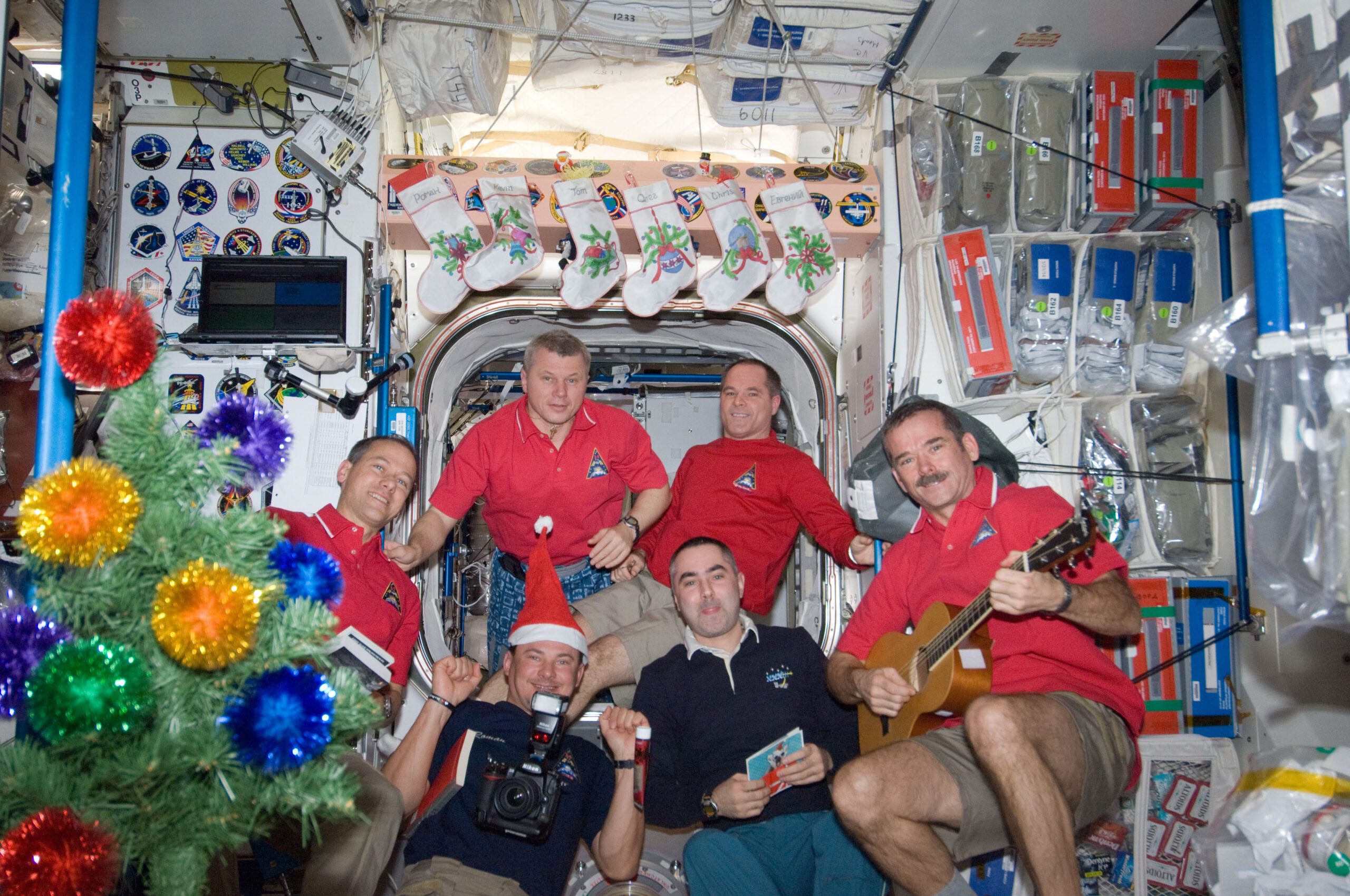
Creating community  Expedition 34 crew members pictured in the Unity node of the International Space Station in December 2012. NASA With 290 visitors from 26 countries and five international partners, the space station has celebrated many different cultures during its 25 years of continuous human presence. Crew members share their holiday traditions, cuisine, music, and games with each other – creating their own community, similar to the ones they have back home, while maintaining a connection to Earth.
Crews living and working aboard the space station during the holiday season have found creative ways to mark the occasions from low Earth orbit. Festive socks, Halloween costumes, mini artificial Christmas trees, champagne, and candle-less menorahs are just a few of the items space station visitors have brought with them to spread holiday cheer.
Mealtimes are also the perfect opportunity to share a taste of home. The space station’s standard menu is inclusive of varied cuisines, but crew members also contribute their own special food items. French astronaut Thomas G. Pesquet once brought macarons to help celebrate his birthday, and several JAXA (Japan Aerospace Exploration Agency) astronauts have hosted sushi parties.
Sharing a piece of themselves and their cultures not only fosters crew camaraderie but also supports the international collaboration necessary to sustain the space station’s success.
Taking music to new heights  Expedition 55 crew members aboard the space station (from left) are NASA astronaut Drew Feustel, Roscosmos cosmonaut Oleg Artemyev, and NASA astronauts Ricky Arnold and Scott Tingle. JAXA (Japan Aerospace Exploration Agency)/Norishige Kanai The first musical instrument, an acoustic guitar, arrived at the orbiting laboratory in August 2001. Since then, playing music aboard the orbiting laboratory has supported astronaut well-being, fostered relationships among international crew members, and helped them connect with home.
The space station’s instrument collection started with an acoustic guitar and an electric keyboard, and also includes an alto saxophone. Some NASA astronauts bring their own instruments to suit their playing habits – bagpipes for Kjell Lindgren, flutes for Catherine Coleman, a piccolo for Jessica Meir. International partners have, too. In April 2010, JAXA astronauts Soichi Noguchi and Naoko Yamazaki performed a duet using a bamboo flute and a miniature version of a traditional Japanese stringed instrument.
Several crew members have played in concerts on Earth while still orbiting the planet. Coleman played a duet with the frontman of Jethro Tull, for example, and ESA (European Space Agency) Luca Parmitano used the station’s electric keyboard to participate in a concert at Moscow’s Luzhniki Stadium. He later became the first person to perform a DJ set from space.
The space station has even hosted at least one epic jam session, featuring the crew members of Expedition 55 on guitar, flutes, and a drum made from a repurposed waste container.
Read more musical memories here.
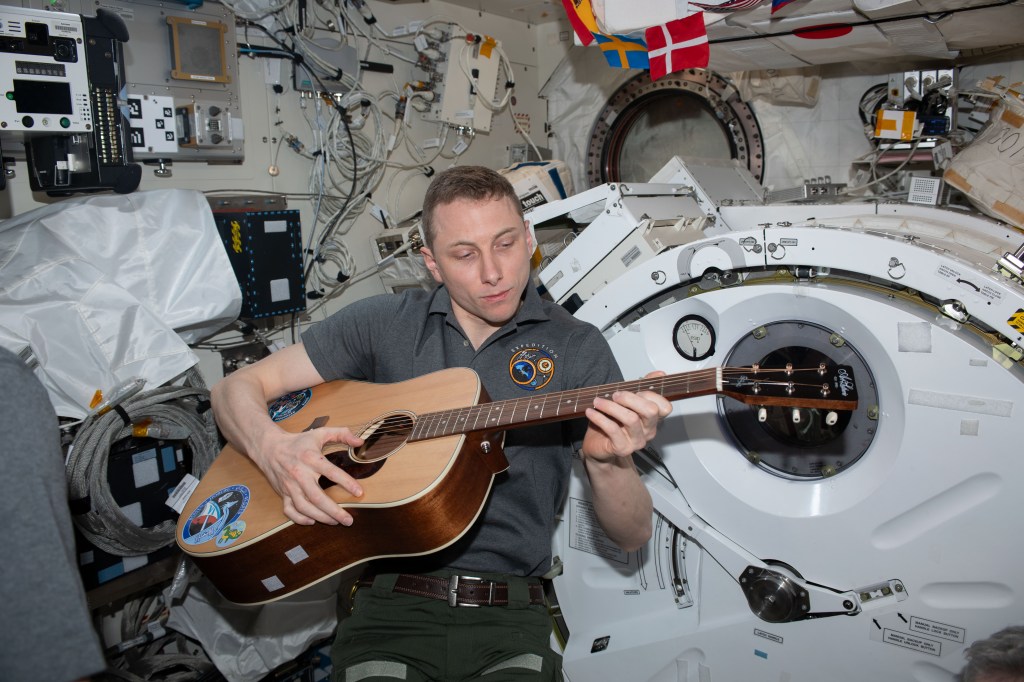 NASA astronaut and Expedition 69 Flight Engineer Woody Hoburg plays guitar inside the space station’s Kibo laboratory module.
  NASA astronaut Jessica Meir plays a saxophone in front of the station’s Cupola windows.
 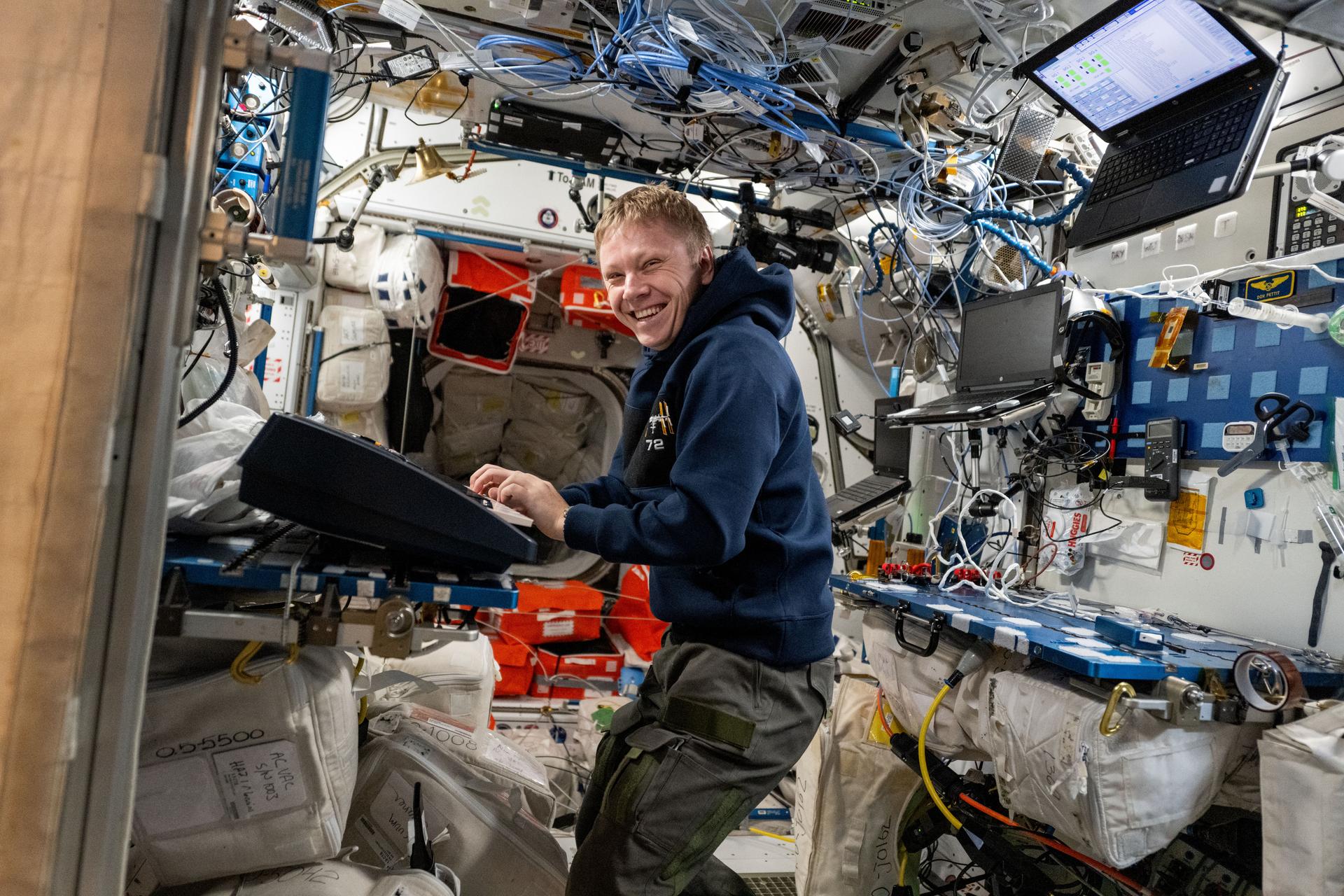 Roscosmos cosmonaut Aleksandr Gorbunov plays an electronic keyboard aboard the space station’s Harmony module.
  NASA astronaut Cady Coleman plays a flute in the JAXA (Japan Aerospace Exploration Agency) Kibo laboratory aboard the space station.
  Former NASA astronaut Dan Burbank plays a guitar while Russian cosmonaut Anton Shkaplerov plays a musical keyboard in the station’s Unity node. An astronaut’s perspective
 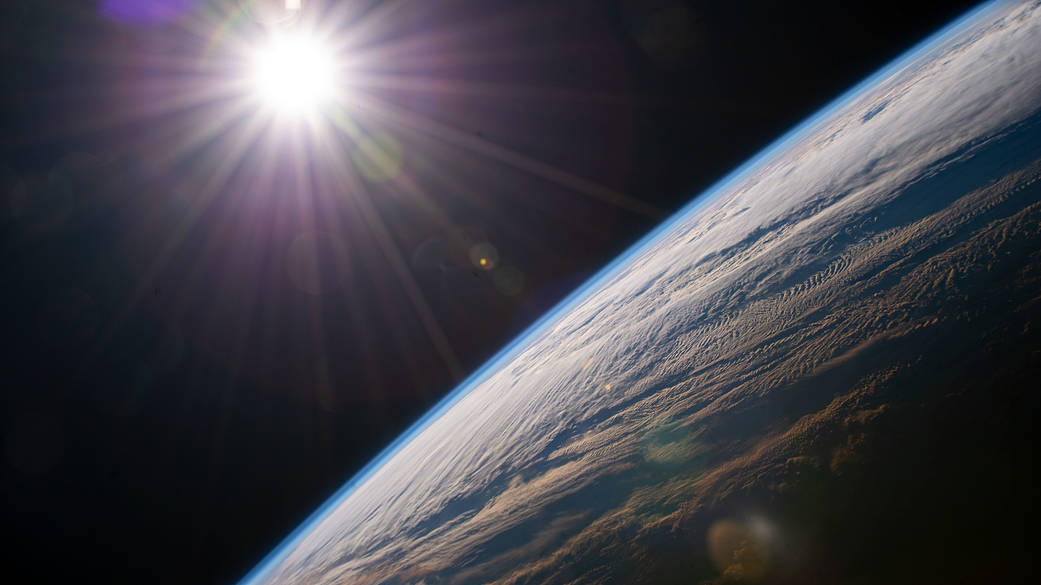 The sun shines above Earth’s horizon as the space station orbited 264 miles above the Canadian province of Quebec.NASA Across the decades and missions of U.S. human spaceflight, NASA astronauts have shared a unique and transcendent experience: looking down at Earth from the space station’s cupola windows. That experience has had a profound impact on many, creating a powerful shift in the way astronauts think about life and our home planet – a phenomenon known as the overview effect.
Crew members aboard the orbital outpost describe the beauty of our planet and how it stands in stark contrast to the darkness of space from the cupola module. Many comment on Earth’s fragility and the need to protect it after observing how thin the planet’s atmosphere appears to be from orbit. Others note the lack of borders or lines we see on a map, emphasizing that all of humanity is connected.
Regardless of how long they stay in orbit, astronauts return with a different worldview they are eager to share with others.
Read more about astronaut perspectives on the overview effect or watch “Down to Earth” on NASA+.
Capturing the beauty and science in orbit The space station provides a vantage point like no other. The cupola observation module, with its seven windows, offers unparalleled panoramic views of Earth and space which are crucial for monitoring mission activities, conducting scientific observations, and supporting crew morale and habitability. Astronauts aboard the orbiting laboratory have captured millions of photographs of Earth, creating a visual archive that spans 25 years of continuous human presence in orbit.
These images serve as scientific data used to track hurricanes, monitor wildfires, measure glacial retreat, and study urban growth through NASA’s Crew Earth Observations. Astronaut photography also supports NASA Disaster Response, a program that works with various NASA centers to collect data before, during, and following a disaster to aid recovery efforts.
The cupola has become a favorite spot for astronauts to work and reflect. Their photos help connect people worldwide to the orbital outpost, reinforcing the importance of protecting our planet.
Earth views 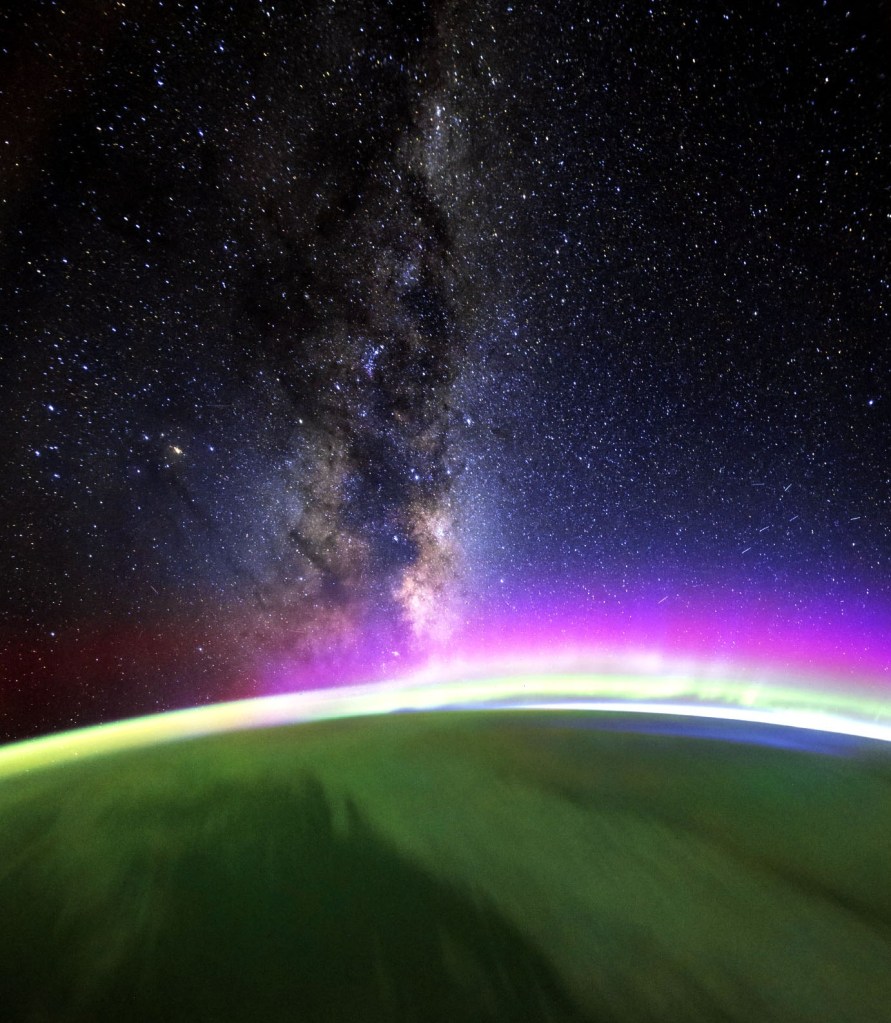 NASA astronaut Don Pettit photographs “cosmic colors at sunrise.” From 250 miles above, the space station’s orbital path covers most of Earth’s population, offering valuable data and a great opportunity for shooting photography.
  The Full Moon is pictured setting below Earth’s horizon from the space station.
  Earth observation taken by the Expedition 40 crew aboard the orbital outpost.
  The southern coast of Africa is pictured from the space station’s “window to the world,” or cupola, as it soared 265 miles above.
  Earth observation taken during a day pass by an Expedition 36 crew member aboard the space station.
 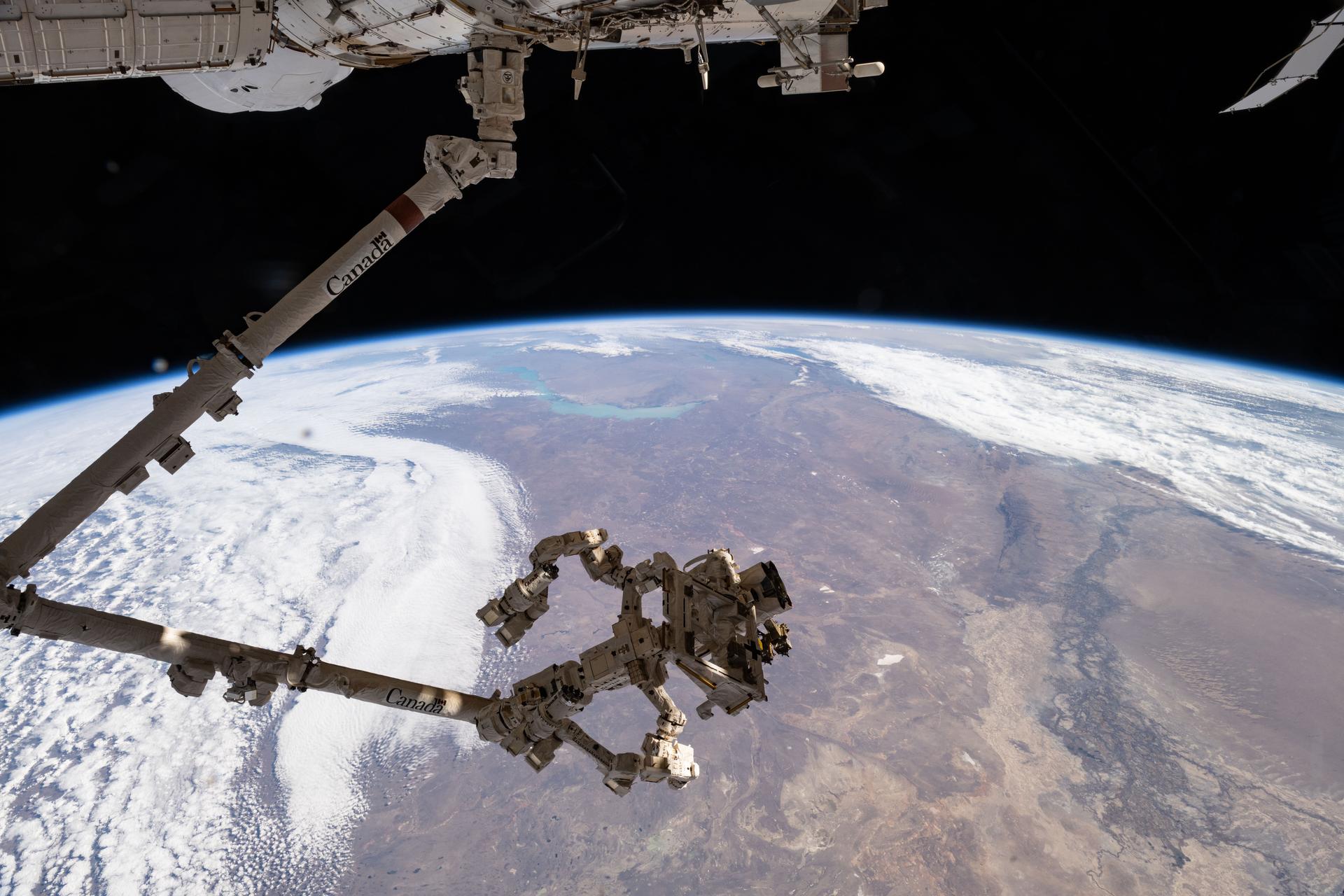 The Canadarm2 robotic arm, with Dextre—its fine-tuned robotic hand—attached, extends from the space station’s Harmony module as the orbital outpost soars 263 miles above Kazakhstan.
 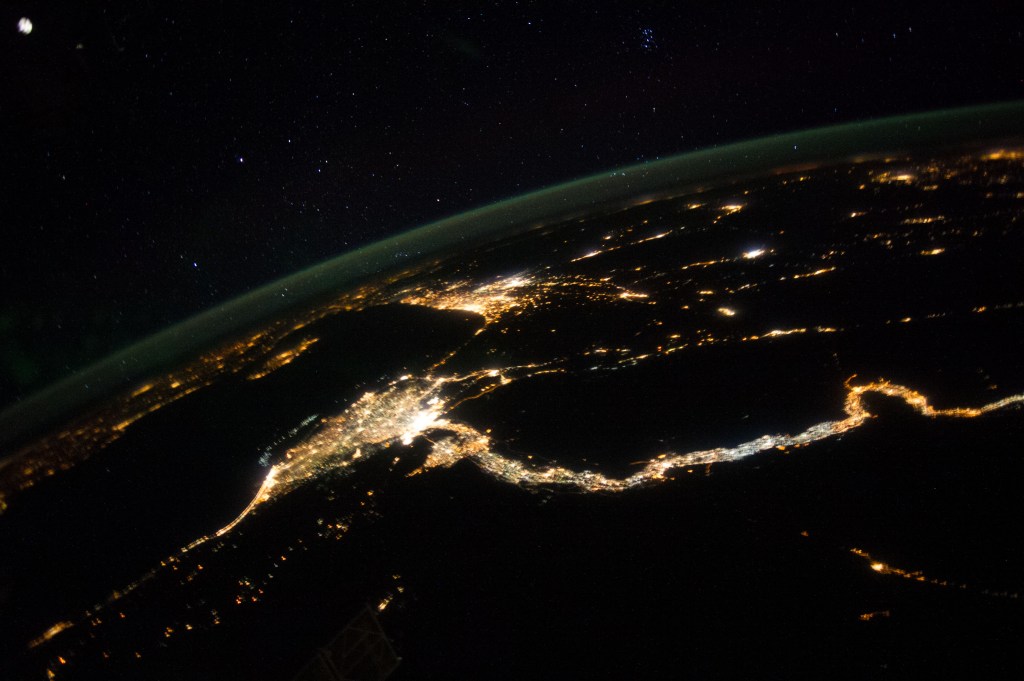 Earth observation taken during a night pass by the Expedition 40 crew aboard the orbiting laboratory.
 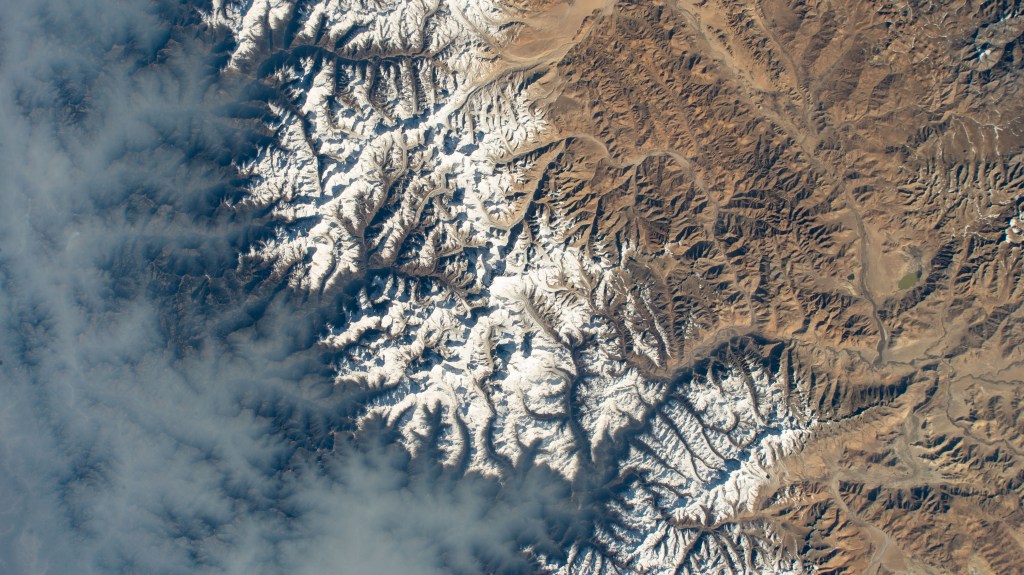 Clouds gather on Nepal’s sub-tropical side of the Himalayas with Mount Everest at the center of this photograph taken by an external high definition camera on the space station as it orbited 263 miles above the Indian subcontinent.
 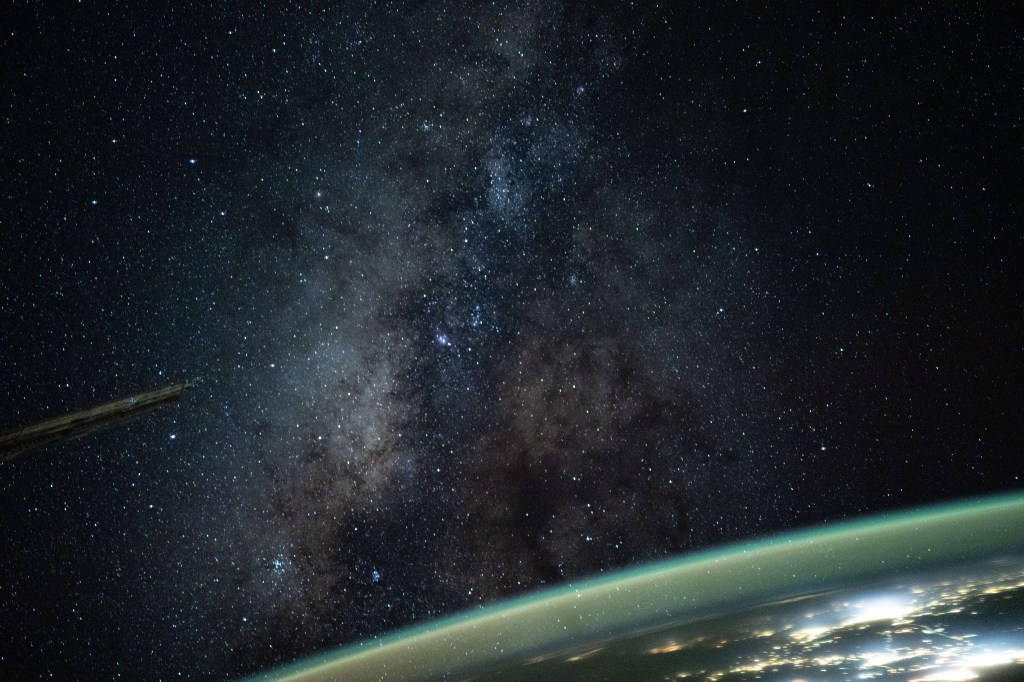 The Milky Way appears above Earth’s bright atmospheric glow from the orbital outpost as it soared 261 miles above southern Iran.
 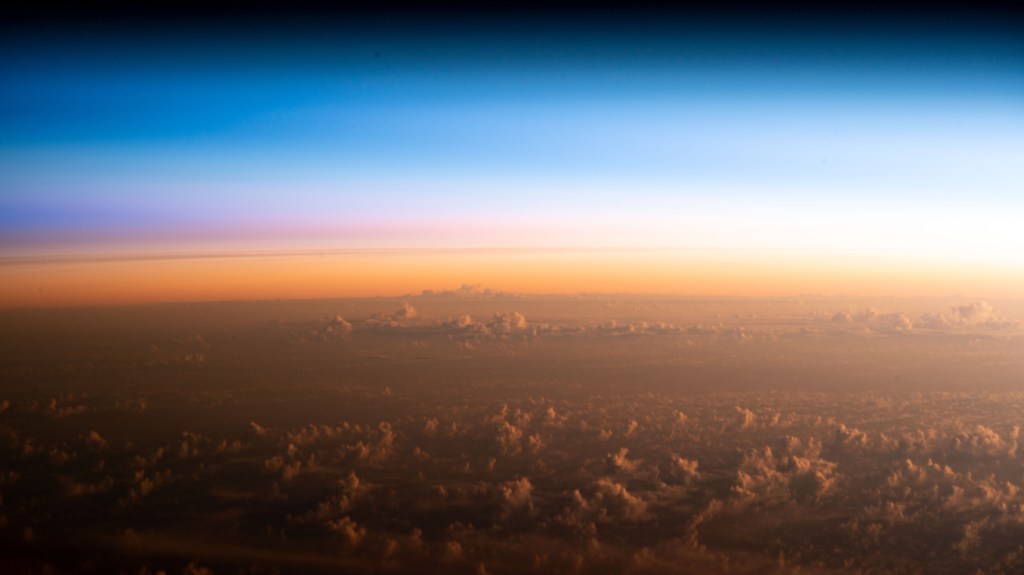 The soft hues of an orbital sunrise reveals the cloud tops above the Pacific Ocean northeast of New Zealand as the space station orbited 260 miles above.
  NASA astronaut Don Pettit captures a photo of a fire in La Porte, Texas in 2024.
  NASA astronaut John Phillips photographs a wildfire raging through northeast Phoenix in 2005.
 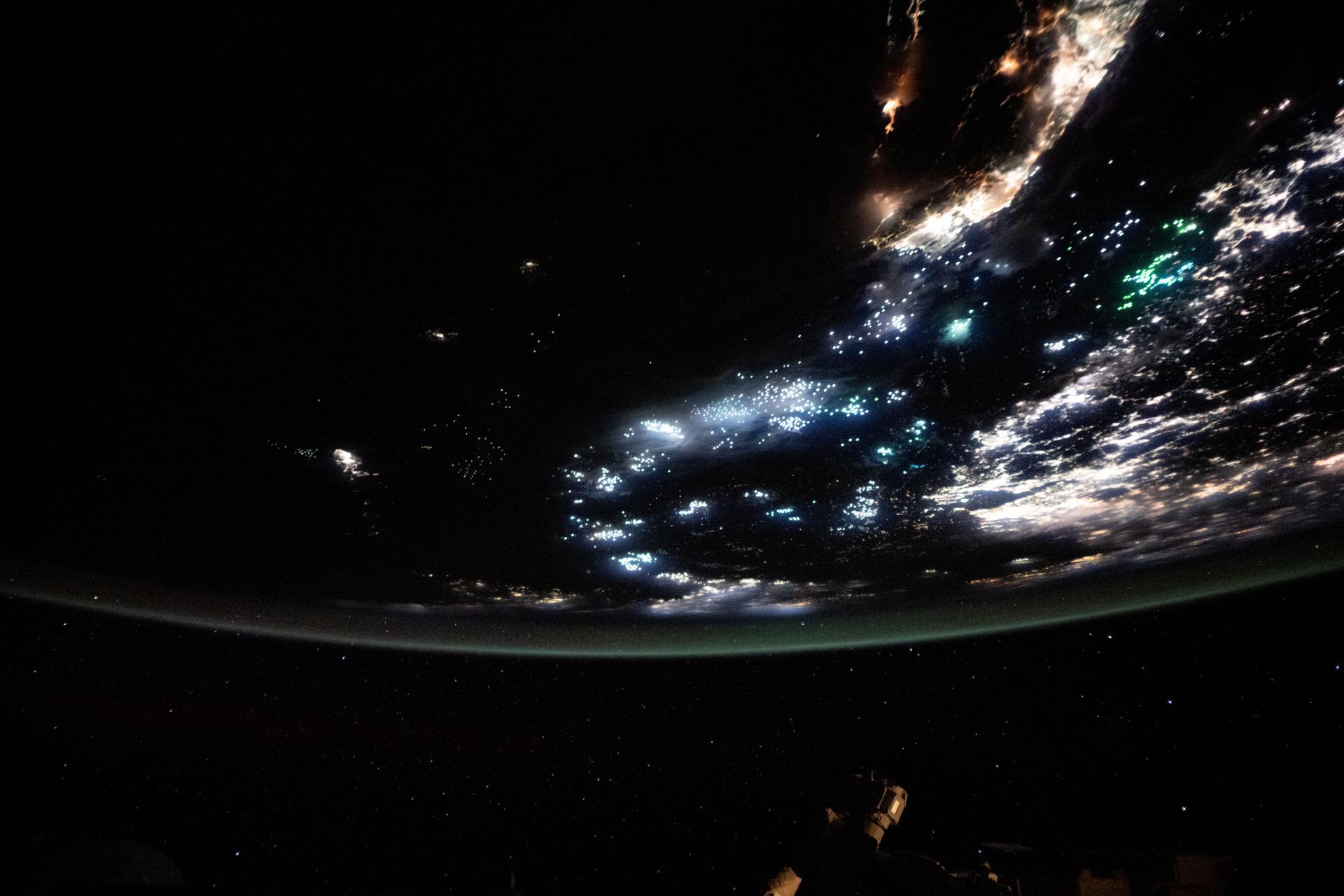 The blue-green lights of fishing boats, designed to lure squid, sardines, or mackerel, dot the East China Sea and the Taiwan Strait contrasting with the coastal city lights of Taiwan and China. The space station was orbiting 259 miles above the South China Sea just south of Taiwan.
 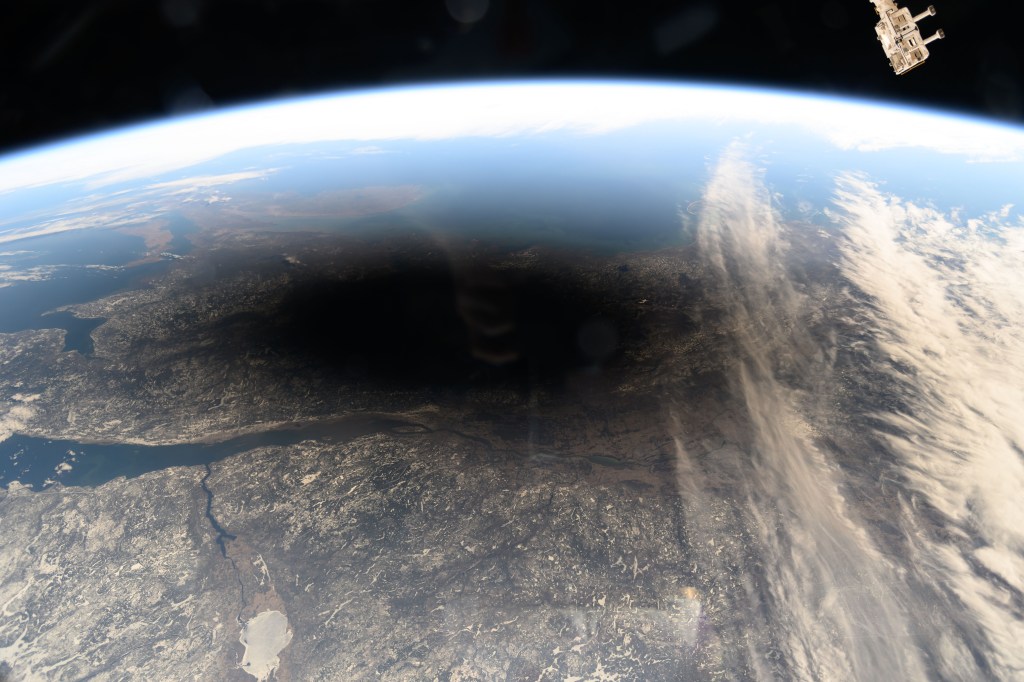 The Moon’s shadow, or umbra, is pictured covering portions of the Canadian provinces of Quebec and New Brunswick and the American state of Maine.
 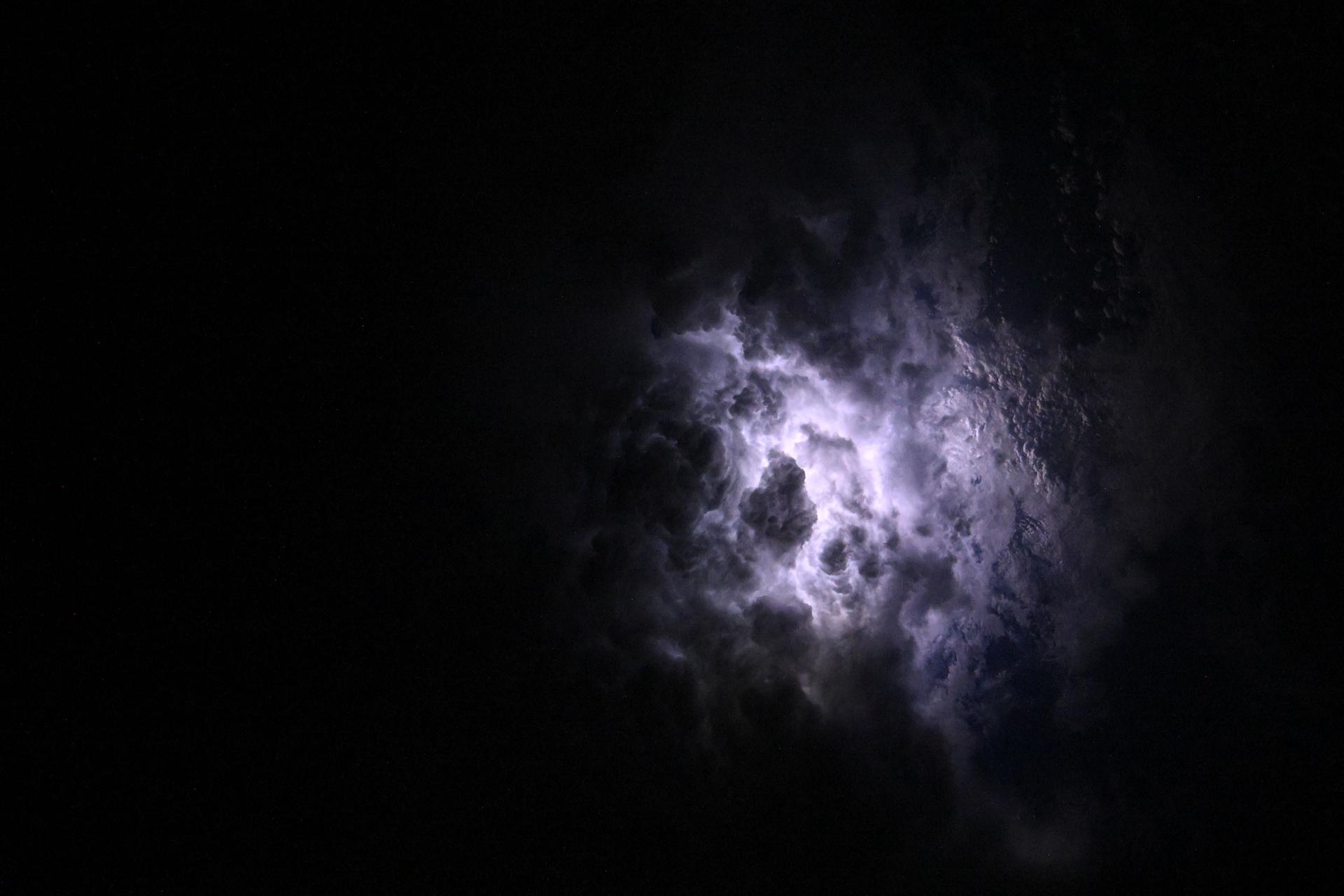 Lightning illuminates the cloud tops of Category 1 Hurricane Erick as it stormed across the Pacific Ocean south of the Mexican state of Chiapas.
 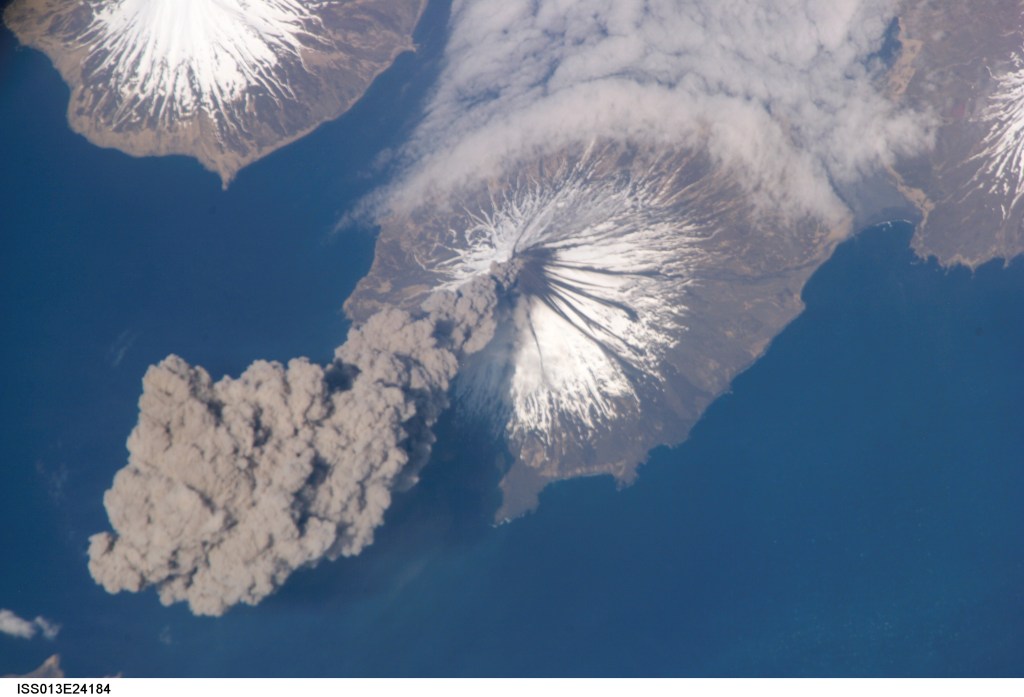 Eruption of Cleveland Volcano, Aleutian Islands, Alaska in 2006.
 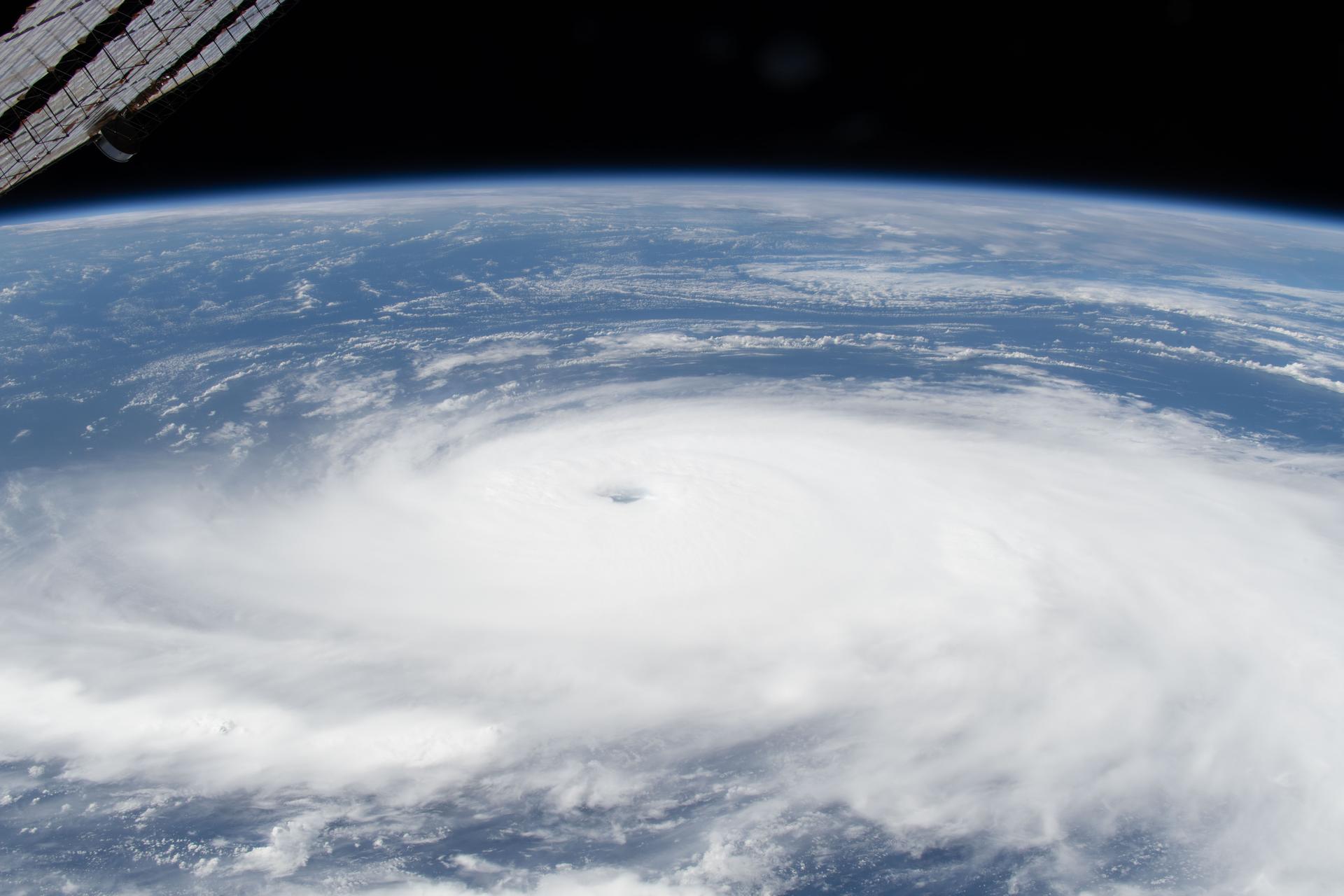 Hurricane Gabrielle is seen in the Atlantic Ocean as a Category 4 storm with sustained winds of 140 miles per hour.
 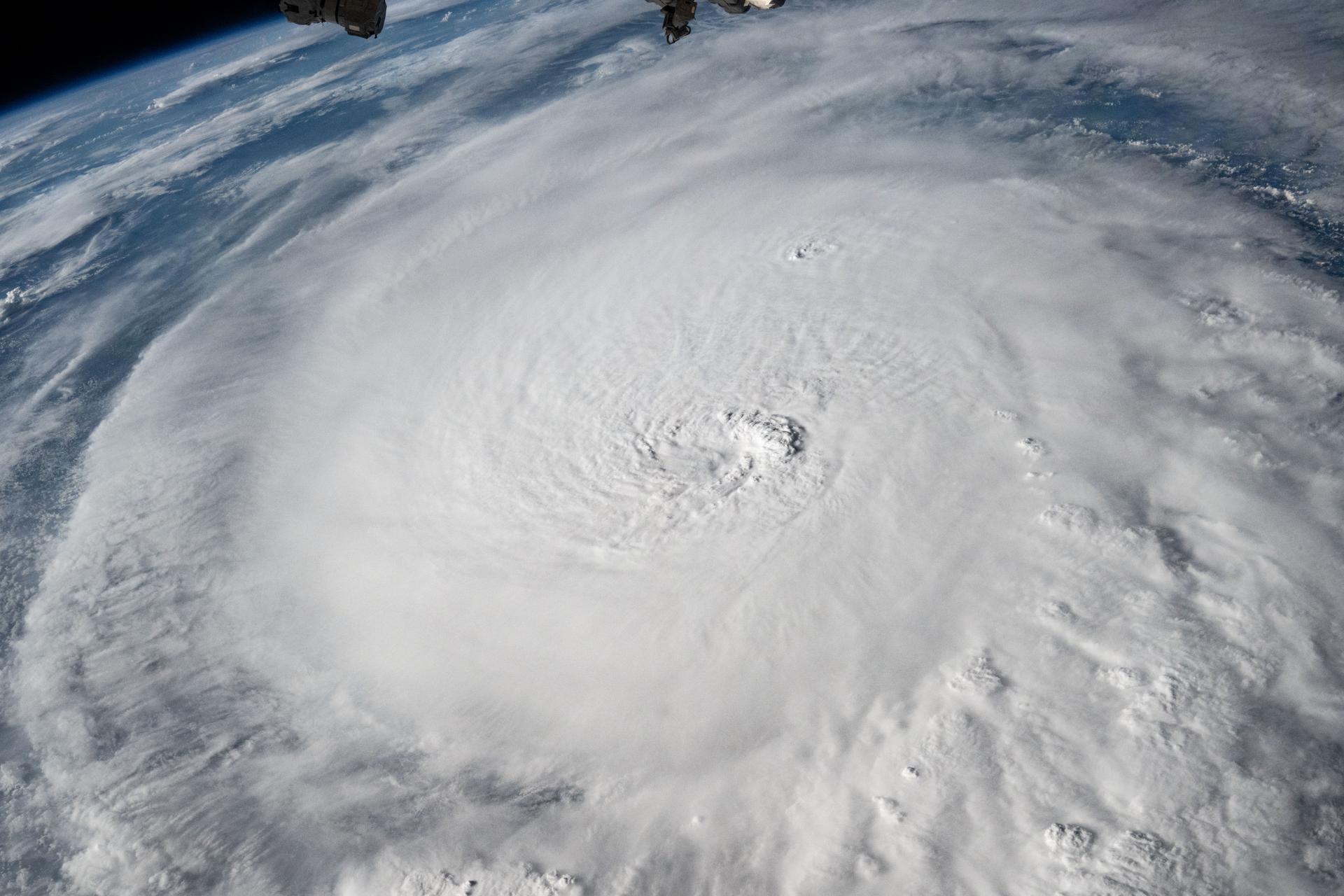 Hurricane Milton, a Category 5 storm at the time, in the Gulf of America off the coast of Yucatan Peninsula in 2024.
 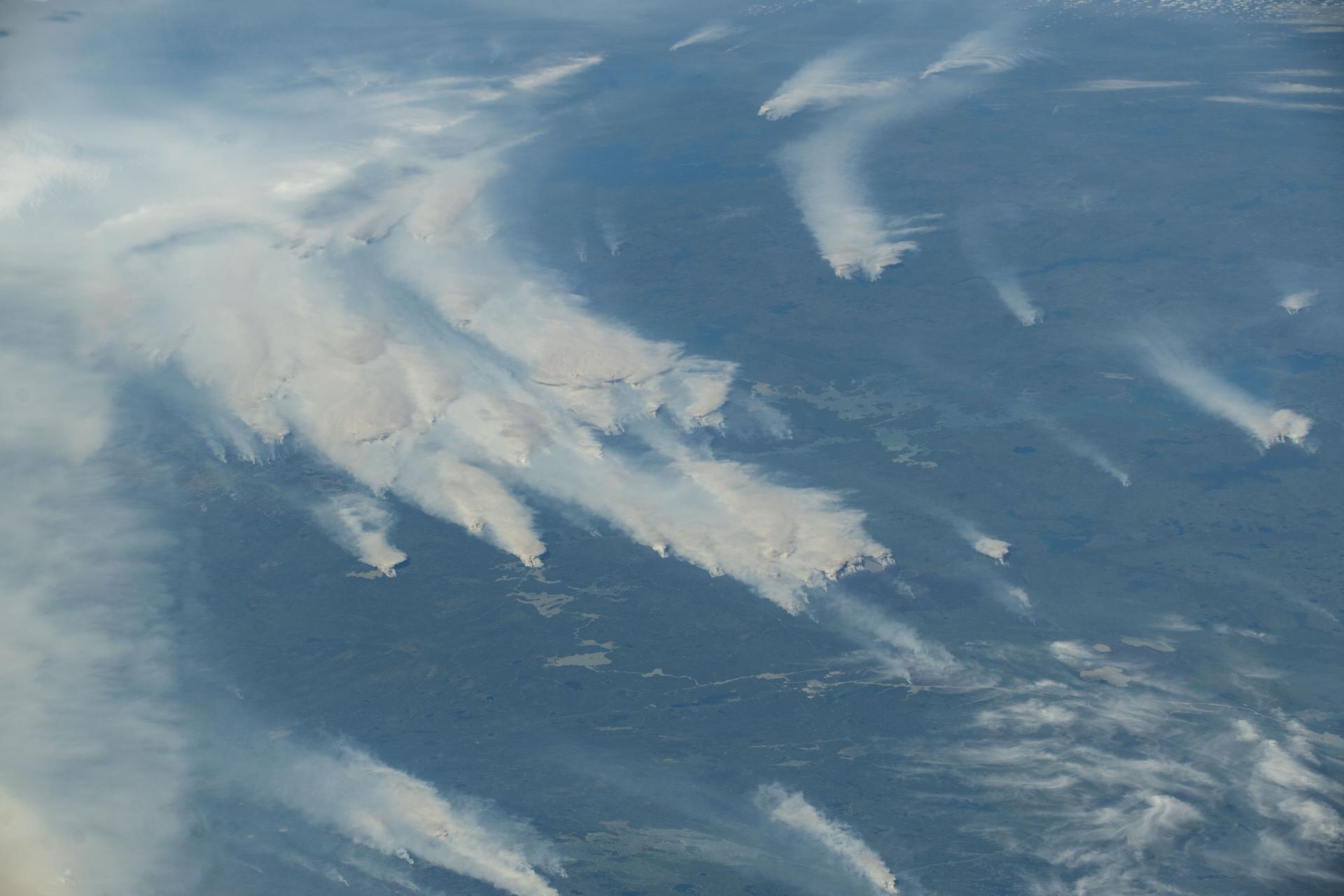 Wildfires burn throughout Canada’s central provinces sending smoke drifting into the United States’ Great Lakes and Northeast regions.
 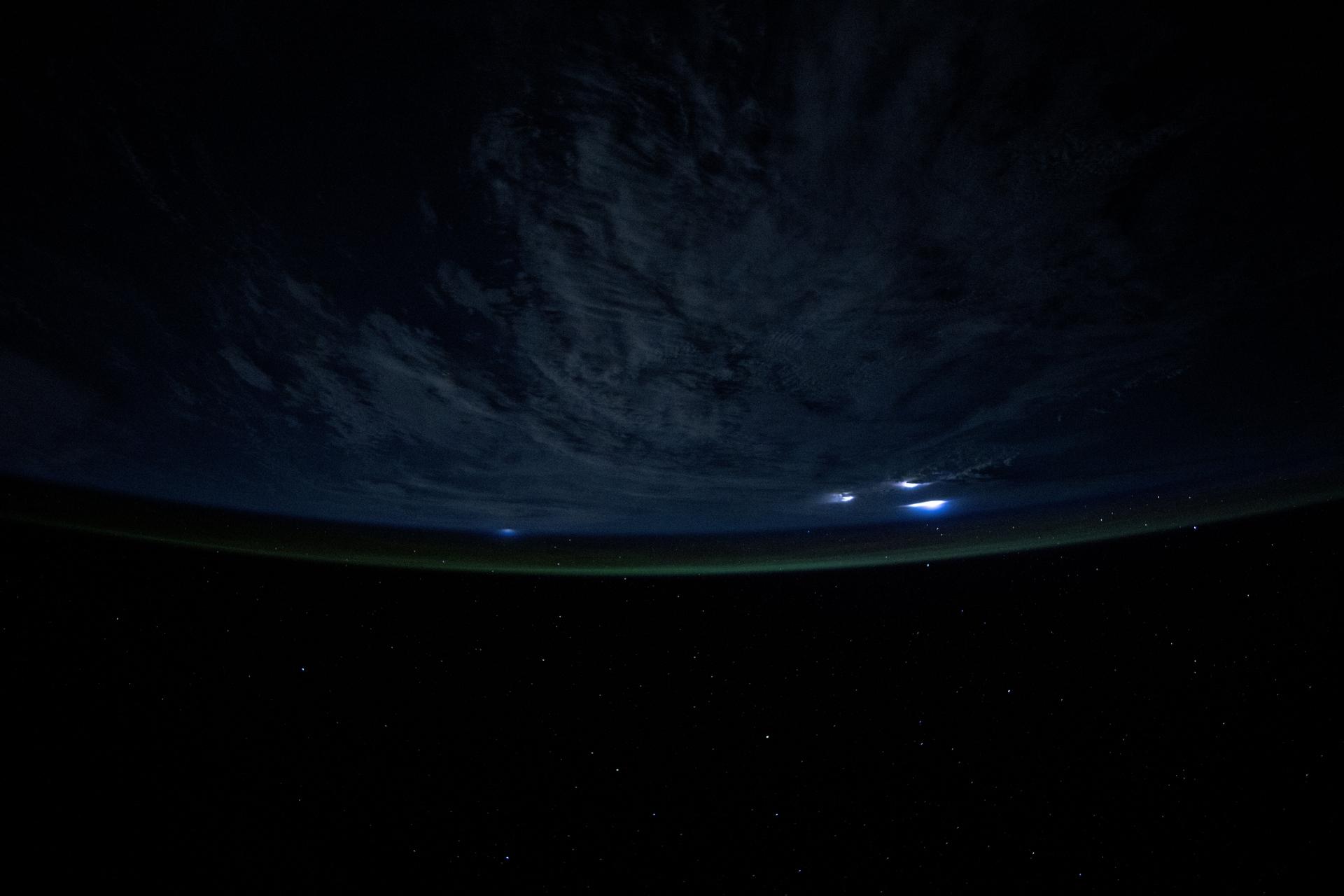 Lightning illuminates the cloud tops as the International Space Station orbits 259 miles above the Atlantic Ocean east of the Bahamas. Station memories from the ground
 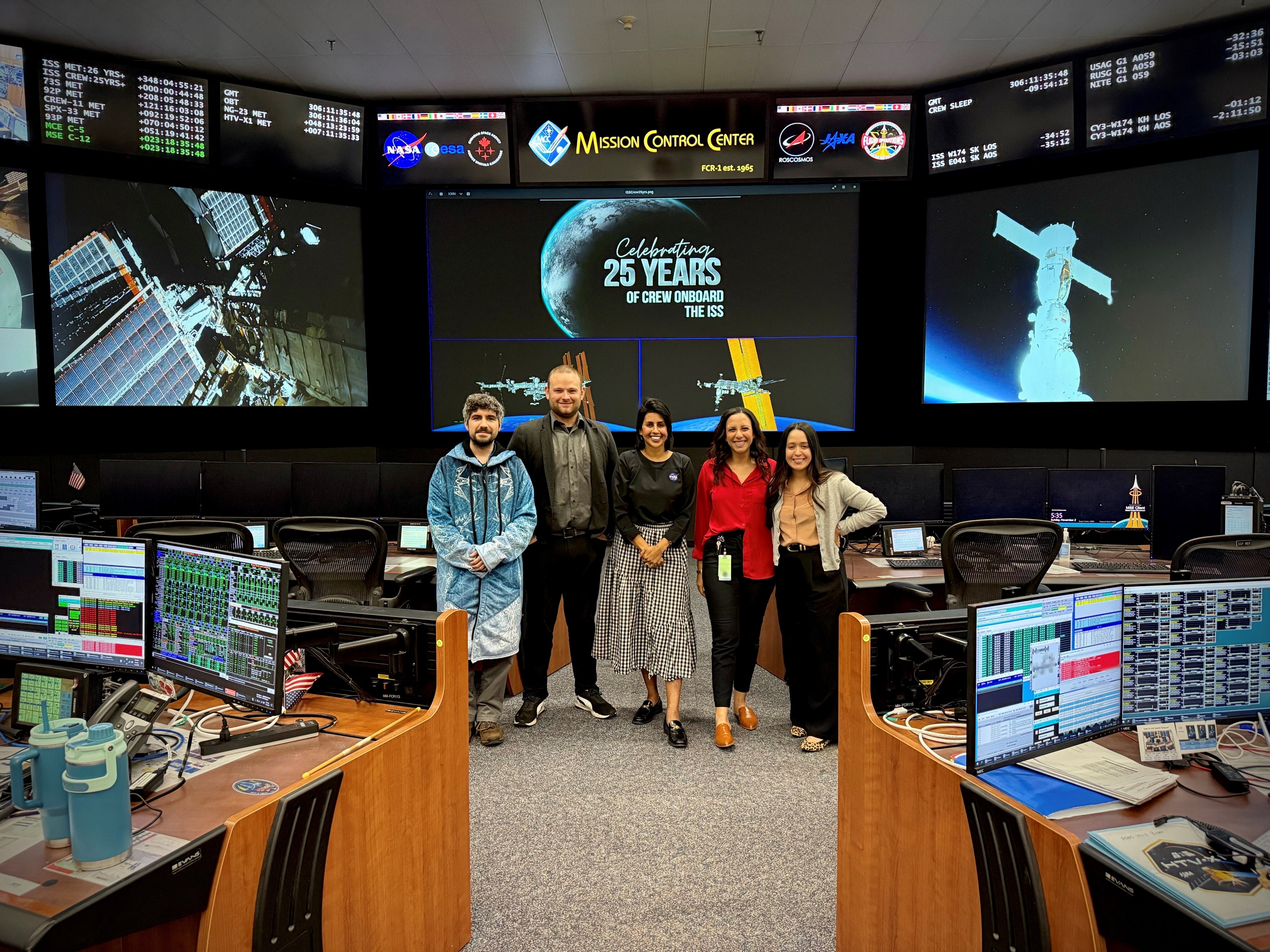 Flight controllers at NASA’s Mission Control Center in Houston marked 25 years of continuous human presence in space with the Expedition 73 crew aboard the orbital outpost on Nov. 2, 2025.NASA/Pooja J. Jesrani Behind every moment aboard the orbiting laboratory is a dedicated team on the ground – engineers, scientists, flight directors, and communicators – who work around the clock to keep crews safe and missions running smoothly.
They mark milestones together, from spacecraft dockings and crew returns to mission anniversaries and plaque-hanging ceremonies. Teams on console in the mission control have even organized chess matches with astronauts in orbit to foster connection between Earth and space.
The flight control team celebrated the 25th anniversary of continuous human habitation in space with the Expedition 73 crew aboard the station on Nov. 2, 2025. The team congratulated the crew to mark the incredible milestone. They emphasized that humanity has held a heartbeat in orbit for a quarter century, a testament to human curiosity, cooperation, and courage that keeps the light of exploration shining above Earth and represents the very best of what humankind can achieve together. Every orbit, every experiment, and every challenge has taught teams how to adapt, grow, and build the skills needed for the next great leaps to the Moon, Mars, and beyond.
Holidays are often spent in the control rooms, where teams decorate consoles, share potluck meals, and hold the occasional cookie-cutting contest. Engineers in the station’s Mission Evaluation Room (MER) host an annual “MERloween,” a tradition that began in 2006 to celebrate the year’s milestones and reflect on lessons learned.
These traditions highlight the spirit and teamwork that make every mission possible. The dedication honed through decades of mission support now guides the teamwork and expertise that will send Artemis astronauts to the Moon and beyond.
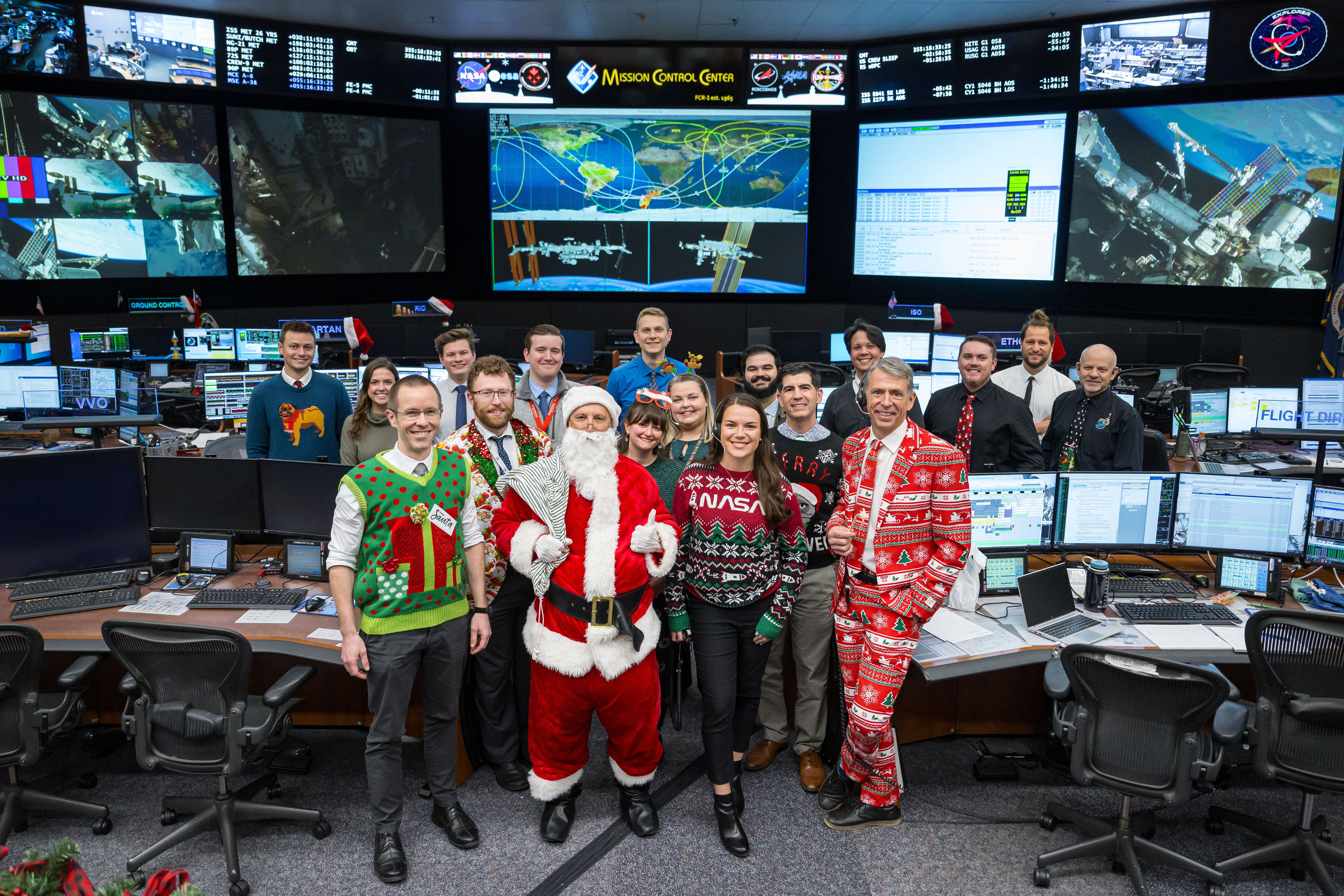 Flight controllers in mission control celebrate the holidays while supporting crews aboard the space station. NASA/Josh Valcarcel Painting hope beyond Earth
  NASA astronaut Nicole Stott, the first person to watercolor in space, paints aboard the space station. NASA Former NASA astronaut Nicole Stott became the first person to watercolor in space during her time aboard the orbiting laboratory. Inspired by the beauty of Earth from orbit, she used her art to connect the science of human spaceflight with the creativity that defines it.
After returning to Earth, Stott helped launch the Space for Art Foundation, which unites children around the world through the healing power of art and space. One of its most meaningful initiatives, the Spacesuit Art Project, invites young patients undergoing cancer treatment to create colorful artwork that is transformed into custom-made spacesuits. Each suit – Hope, Courage, Unity, Victory, Dreamer, Exploration, Beyond, and Infinity – celebrates the imagination and resilience of its creators.
Four of these suits have journeyed to and from the orbiting laboratory, where astronauts wore them during special downlinks to speak with the patients and raise awareness for childhood cancer research. The project shows that space exploration is not only about discovery, but about compassion, creativity, and the human spirit that connects us all.
 4 min read Unexpected Trajectory: Erin Sholl’s Path to Human Spaceflight Safety Article 1 day ago
  6 min read 25 Years of Space Station Technology Driving Exploration Article 6 days ago
  3 min read City Lights Glow Along Moonlit Waters An astronaut photographed moonglint shimmering across the sea surface and the bright clusters of Florida’s…
Article 7 days ago