
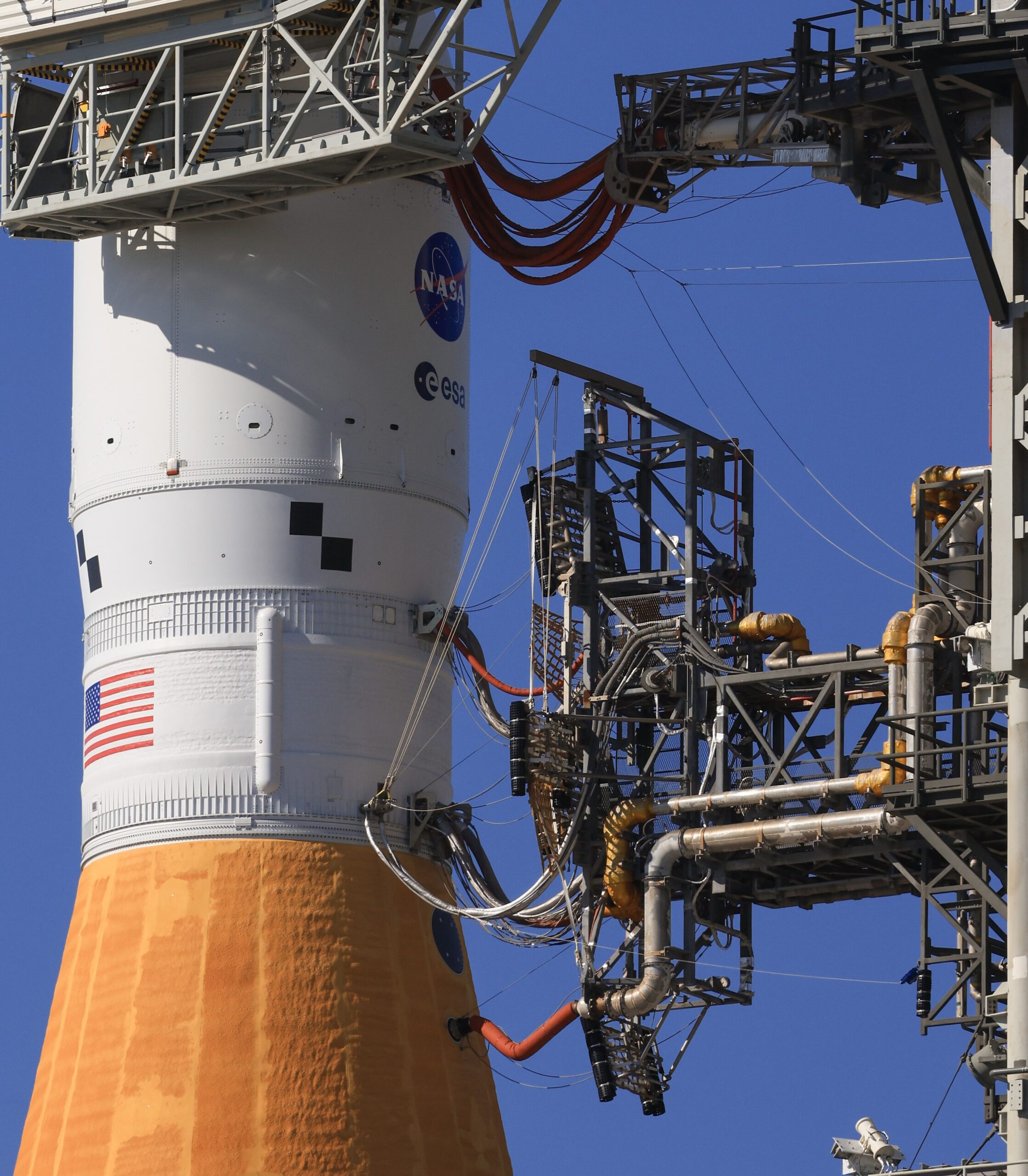
Once NASA’s Artemis II SLS (Space Launch System) rocket and Orion spacecraft arrived at the Vehicle Assembly Building (VAB) Feb. 25, technicians immediately began addressing why the flow of helium to the SLS upper stage was interrupted as engineers were reconfiguring the rocket following a successful wet dress rehearsal on Feb. 21.
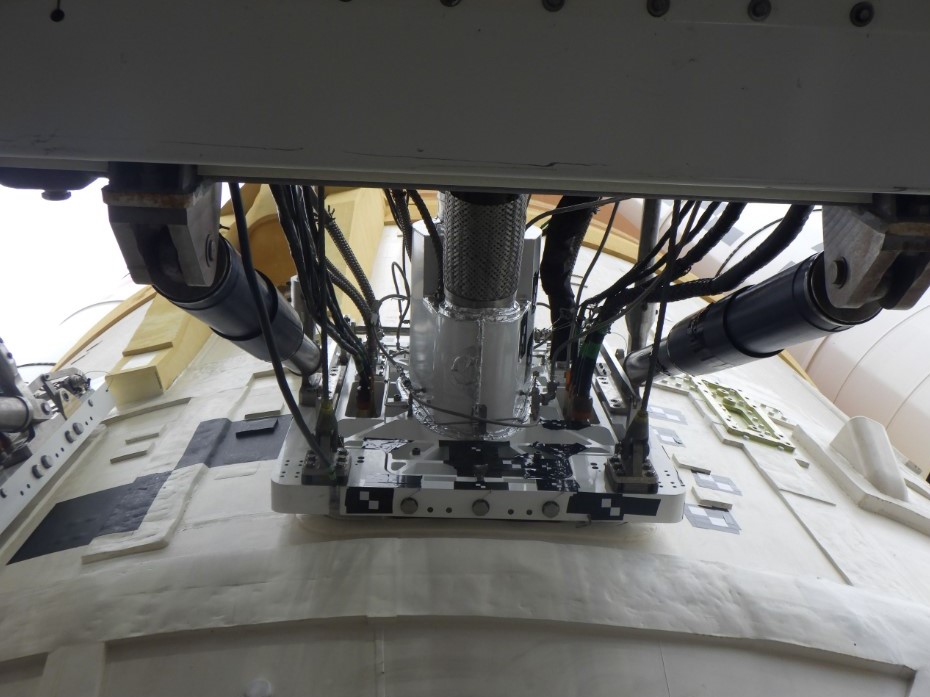
To make the repairs, teams are installing two sets of internal access platforms inside the launch vehicle stage adapter and must remove thermal blankets that cover the area they are interested in – a point on the rocket’s interim cryogenic propulsion system, or upper stage. The area provides connections for multiple umbilicals, including tubing used to fill the upper stage with helium. Helium is used to maintain proper environmental conditions, and to pressurize the stage for flight.

Engineers have narrowed the issue preventing the helium flow to two potential components: a seal on the tubing’s quick disconnect and a check valve on the other end of that tubing.
While the rocket and spacecraft are in the VAB, teams also will install new batteries for the SLS’s upper stage, core stage, and solid rocket boosters, as well as retest its flight termination system and avionics and control systems.
The Orion spacecraft’s launch abort system batteries will be recharged, and engineers may refresh some of the stowed items inside the crew module.
Engineers have optimized planned work in the VAB, and much of the work to come can be done in parallel. Pending the outcome of data reviews, repair efforts, and how the schedule comes to fruition in the coming days and weeks, the Artemis II Moon rocket will roll back to Launch Pad 39B in time for April launch opportunities.