3 min read
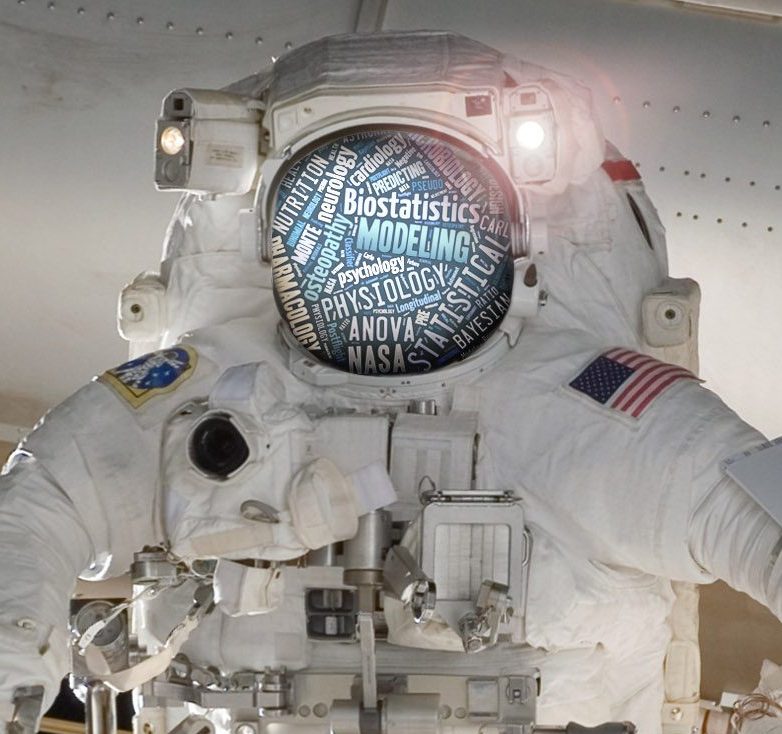
Preparations for Next Moonwalk Simulations Underway (and Underwater) 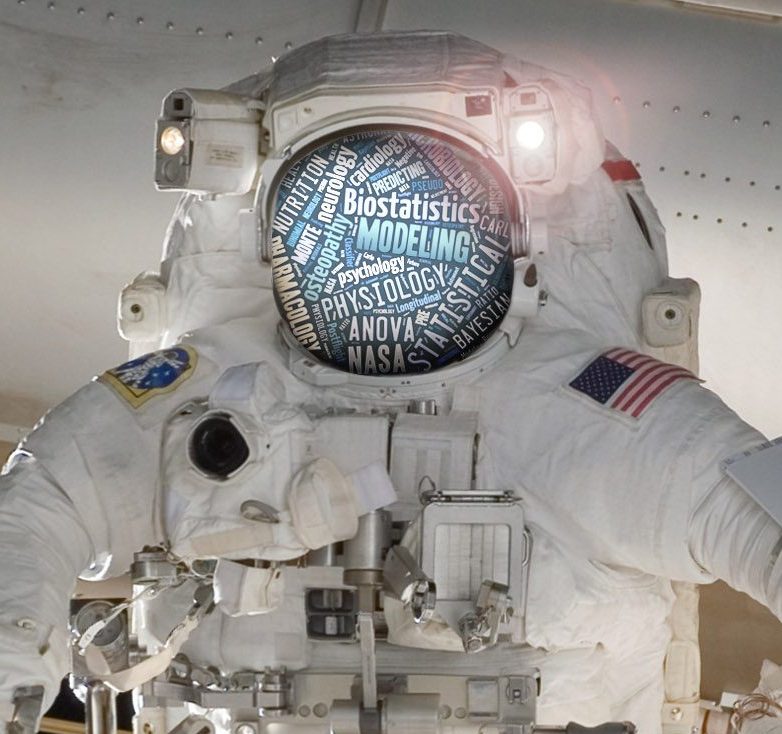 Biostatistics and Data Science Enabling Successful Research A major aim of biomedical research at NASA is to acquire data to evaluate, understand, and assess the biomedical hazards of spaceflight and to develop effective countermeasures. Data Science (S&DS) personnel provide statistical support to groups within the NASA JSC Human Health and Performance Directorate and other NASA communities. They have expertise in the development of complex study designs, the application of modern statistical methods, and the analysis of data collected under NASA operational constraints (small sample sizes, the limited population of astronauts).
Fun Fact: Did you know statistics is more than just means and standard deviations? Statistics is the science of collecting, analyzing, presenting and interpreting data. NASA depends on data to make decisions and statistics is crucial to making good decisions. Statistics and Data Science (S&DS) help transform data into evidence.  NASA
NASA
Data Science Support Beyond statistics, the group aids with data engineering and exploring data. Data engineering includes extracting and transforming data in preparation for analysis and visualization. Data can come in many different formats, the S&DS team helps researchers harmonize (bring data sets together) information across sources. Exploration includes initial analysis and building informative visualizations to deepen the understanding of the evidence. Analyzing and interpreting data to produce insights follow.
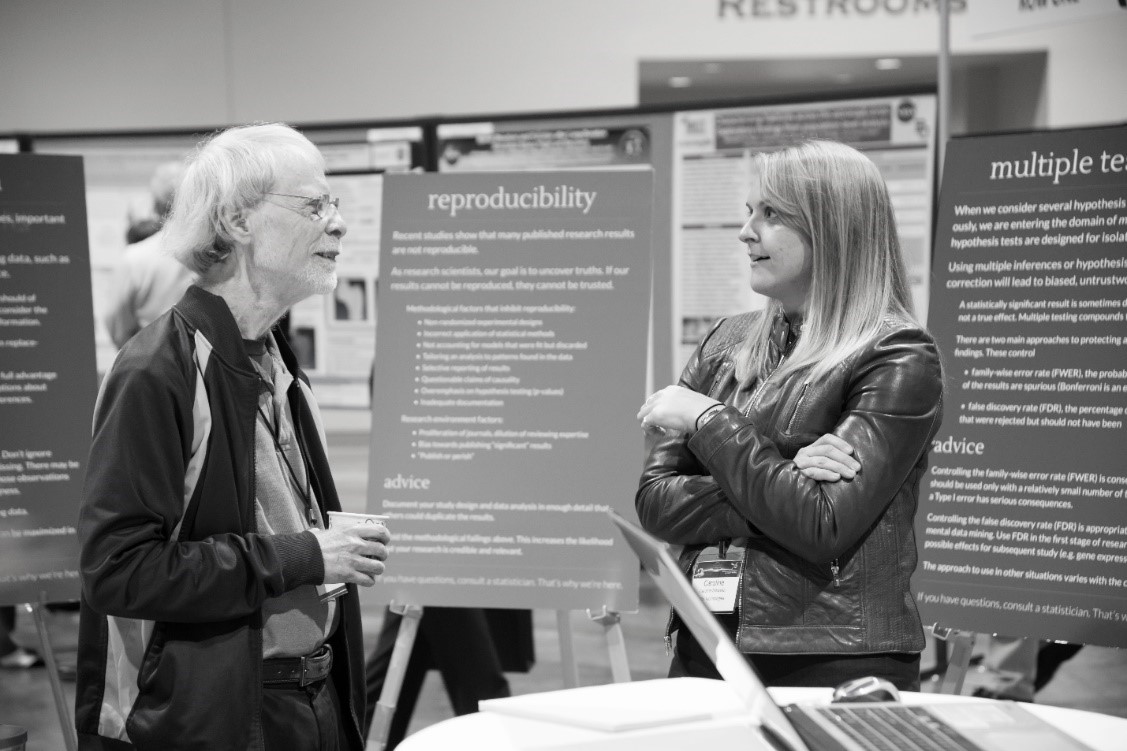 S&DS statistician Dr. Alan Feiveson consulting with Lifetime Surveillance of Astronaut Health’s Statistical Data Analyst Caroline Schaefer at a Statistics helpdesk during the Human Research Program’s Investigators’ Workshop in 2017.NASA Statistical Consulting Services The S&DS team provides collaboration and consulting expertise to the Directorate in the application of statistical theory and practice to ongoing biomedical research. Personnel aid in the preparation of sections of research proposals that deal with experiment design, statistical modeling, and subsequent analysis of anticipated research data. Once data are gathered, S&DS statisticians assist with analysis, visualization, and interpretation of results so that investigators can extract the most information while maintaining statistical integrity. A S&DS statistician may be a co-investigator on a project requiring sophisticated statistical modeling and/or analysis techniques. Through collaboration, members of the S&DS team expand their knowledge base in such diverse medical fields as environmental physiology, osteopathy, neurology, pharmacology, microbiology, cardiology, nutrition, and psychology. To meet the unique data collected by NASA, statisticians may develop new techniques to address challenges such as small sample sizes of ISS studies, missing data, operational constraints, and novel measures of outcome.
Outreach Collaborators with the S&DS team often reside within the Directorate, but statistics and data science support is extended to other organizations within the Johnson Space Center, including the Engineering Directorate, Human Resources, and the Education Office. The S&DS team also provides a venue wherein high school, undergraduate, and graduate interns can participate in the analysis and interpretation of NASA biomedical data. Students assigned to the S&DS team have a rare opportunity to gain real-world experience with research in a variety of biomedical fields.
Point of Contact Millennia Young, PhD
Human Health and Performance Capabilities
 3 min read Bone and Mineral Evaluation and Analysis Article 3 years ago
  3 min read Exercise Physiology and Countermeasures Article 3 years ago
  1 min read Core Laboratory Article 3 years ago
 Keep Exploring Discover More Topics From NASA Humans In Space