Explore Hubble Hubble Home Overview About Hubble The History of Hubble Hubble Timeline Why Have a Telescope in Space? Hubble by the Numbers At the Museum FAQs Impact & Benefits Hubble’s Impact & Benefits Science Impacts Cultural Impact Technology Benefits Impact on Human Spaceflight Astro Community Impacts Science Hubble Science Science Themes Science Highlights Science Behind Discoveries Universe Uncovered Hubble’s Partners in Science Hubble & Citizen Science AI & Hubble Science Explore the Night Sky Observatory Hubble Observatory Hubble Design Mission Operations Science Operations Astronaut Missions to Hubble Hubble vs Webb Team Hubble Team Career Aspirations Hubble Astronauts Multimedia Images Videos Online Activities e-Books Sonifications Podcasts 3D Hubble Models Lithographs Fact Sheets Posters Hubble on the NASA App Glossary News Hubble News Social Media Media Resources 35th Anniversary More Online Activities 3 min read
NASA’s Hubble Spots Star-Spangled Cosmic Scene 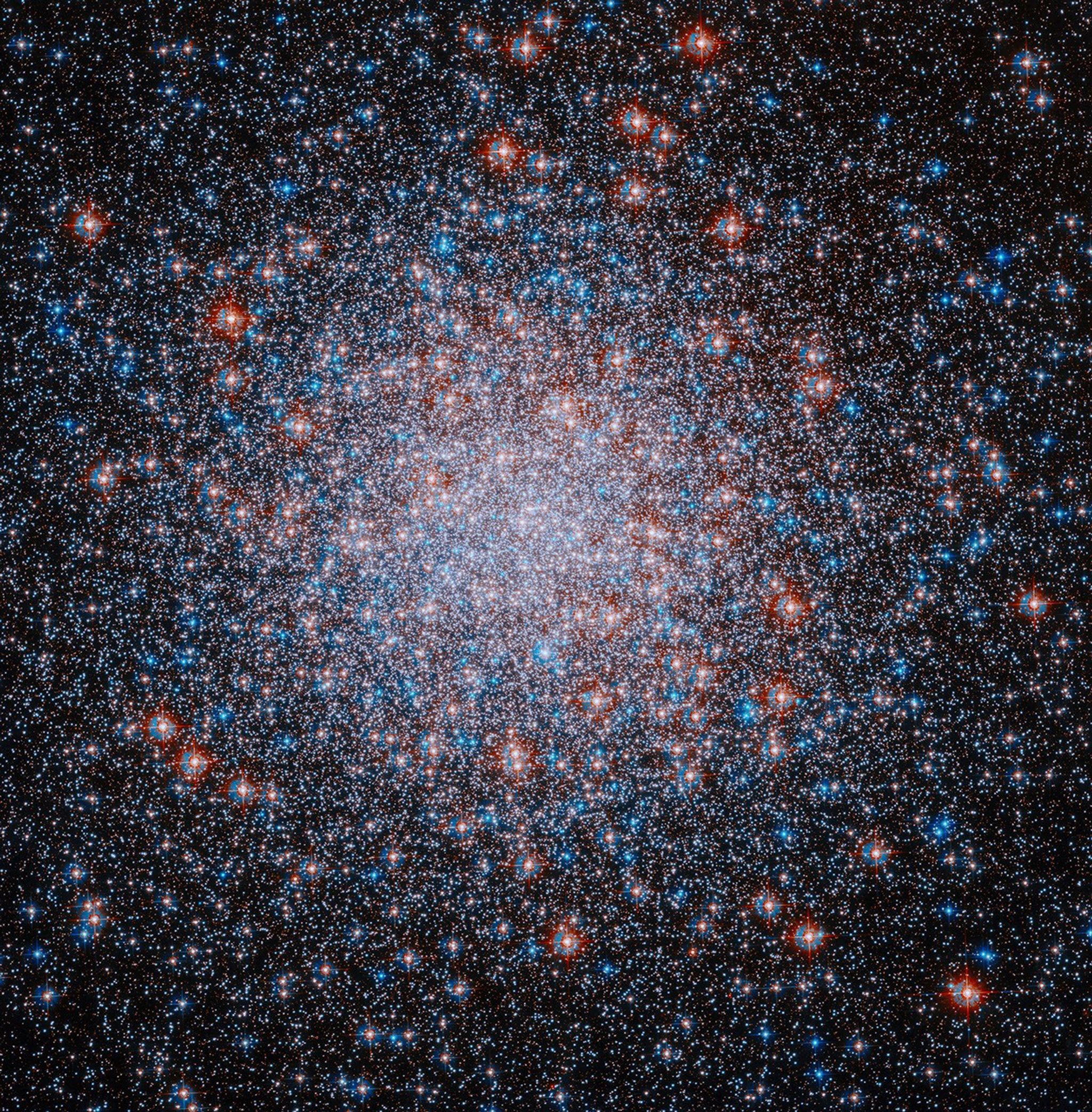
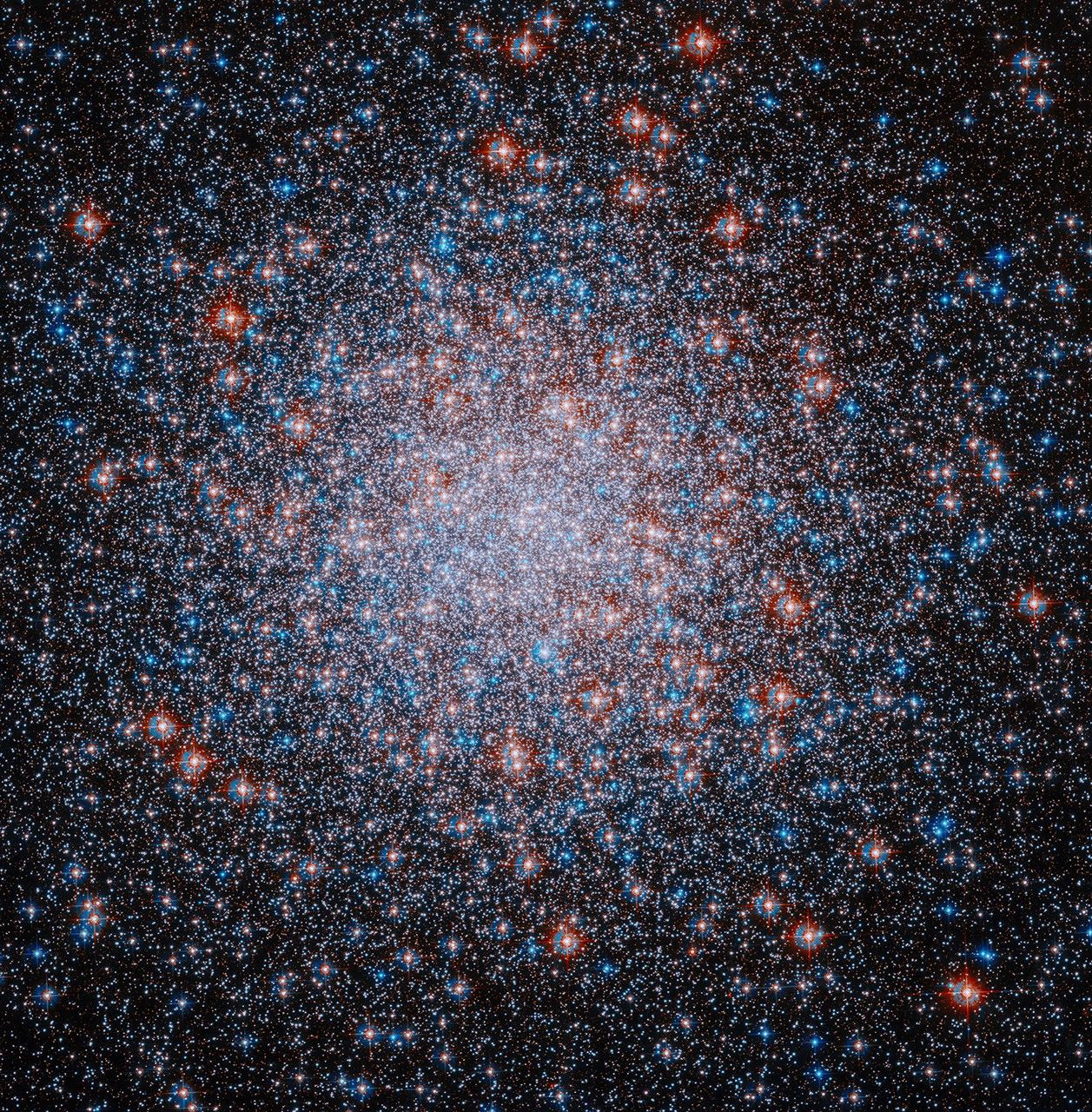
In addition to its significant mass, M3 is unusual because it lies relatively far from the galactic center and has more than 240 RR Lyrae variable stars, the most of any globular cluster in our galaxy. RR Lyrae variables are some of the galaxy’s oldest stars and are of special interest to astronomers, due to their age and because their light fluctuates over time in a way that tells us their intrinsic brightness. This true brightness can be used to measure distances in the cosmos, just as knowing the brightness of car headlights on a dark road can help estimate the distance to an oncoming vehicle.
The M3 globular cluster also contains around 70 identified “blue straggler” candidates, which are stars that shine with a bright, blue light that makes them look like younger stars than the typical, redder residents of globular clusters. This was the first cluster in which these oddball stars were located. These stars are thought to have gravitationally pulled mass from companion stars, rejuvenating them and making them appear bluer and younger despite their true age.
The unusual characteristics of M3 may arise from its origins. The globular cluster, which contains two distinct populations of stars, may be the result of a merger of two globular clusters. These two clusters were members of the same dwarf galaxy, which was later swallowed up by the Milky Way.
Hubble has taken several images of M3, also known as NGC 5272, documenting its complicated and intriguing characteristics. In this image, blue indicates the shorter wavelengths that are visible light, while red depicts the longer wavelengths of visible light, as well as some near-infrared light. Colors in Hubble images are chosen based on standard image processing techniques to best represent the wavelengths of light that pass through the filters used in the observation. Because the color and temperature of stars are directly related, we know that the blue stars in this image are hotter and the red stars are cooler.
This image is part of a Hubble Treasury program survey designed to observe approximately half of the Milky Way’s globular clusters to construct a detailed chronology of how the Milky Way galaxy formed. With over 30 years of observations, Hubble is one of NASA’s flagship observatories and works in complement with its sibling space missions, including the infrared-detecting Webb Space Telescope and the upcoming Nancy Grace Roman Space Telescope, to weave together a comprehensive picture of our vast universe.
Facebook logo @NASAHubble @NASAHubble Instagram logo @NASAHubble Explore More
Exploring the Birth of Stars
Media Contact:
Claire Andreoli
NASA’s Goddard Space Flight Center, Greenbelt, MD
claire.andreoli@nasa.gov
Details Last Updated Jul 03, 2026 Editor Andrea Gianopoulos Location NASA Goddard Space Flight Center Related Terms Hubble Space Telescope Astrophysics Astrophysics Division Globular Clusters Goddard Space Flight Center Star Clusters Stars
Keep Exploring Discover More Topics From Hubble Hubble Space Telescope
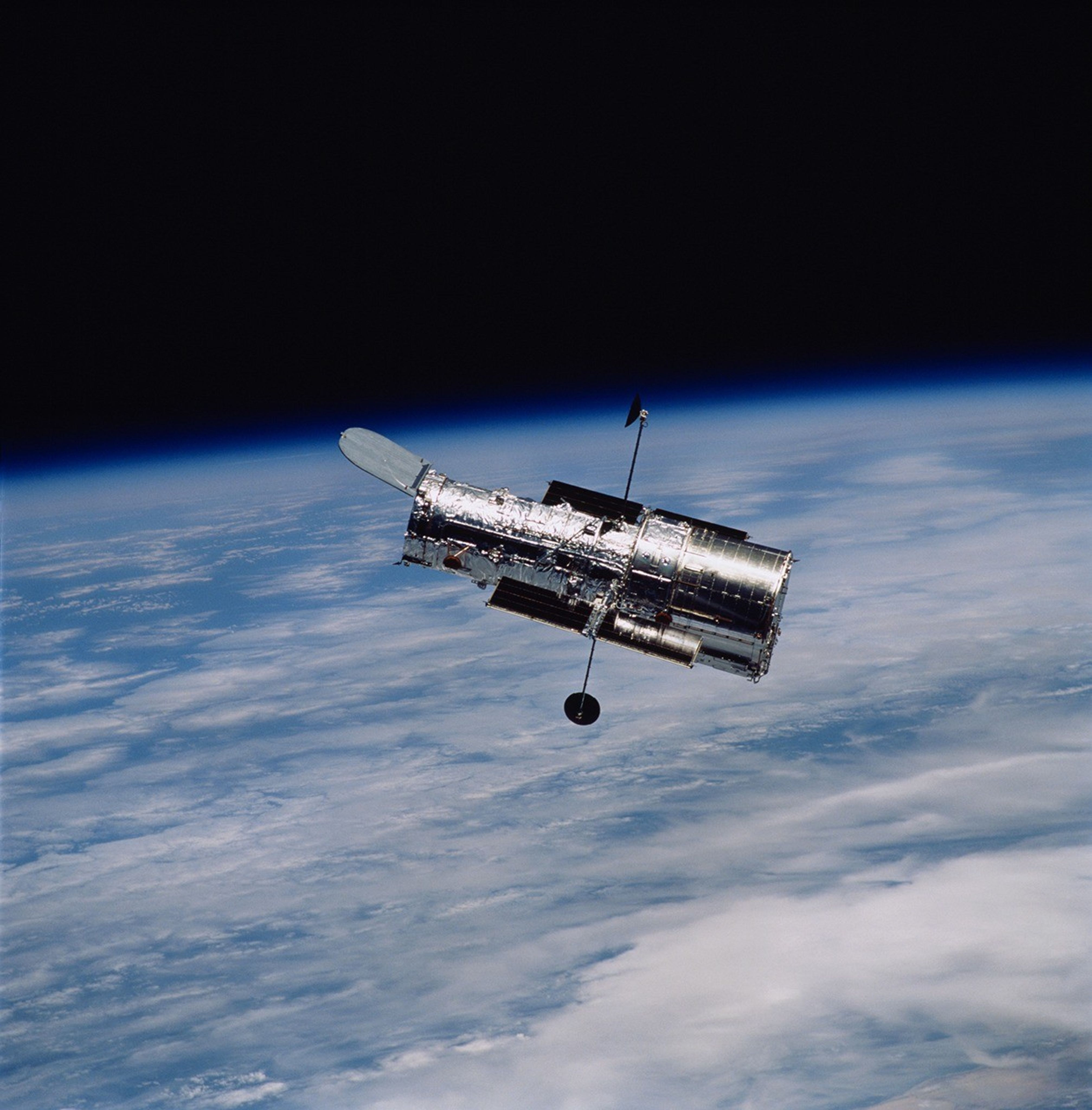
Since its 1990 launch, the Hubble Space Telescope has changed our fundamental understanding of the universe.
Break out your telescope or binoculars and compare your view with Hubble’s observations.

What Did Hubble See on Your Birthday?
Take a look at what cosmic wonders Hubble observed on your special day!
Fourth of July Through Hubble’s Eyes
To commemorate the nation’s 250th birthday, Hubble shares 13 images for the nation’s 13 original colonies.