Explore Hubble Hubble Home Overview About Hubble The History of Hubble Hubble Timeline Why Have a Telescope in Space? Hubble by the Numbers At the Museum FAQs Impact & Benefits Hubble’s Impact & Benefits Science Impacts Cultural Impact Technology Benefits Impact on Human Spaceflight Astro Community Impacts Science Hubble Science Science Themes Science Highlights Science Behind Discoveries Universe Uncovered Hubble’s Partners in Science Hubble & Citizen Science AI & Hubble Science Explore the Night Sky Observatory Hubble Observatory Hubble Design Mission Operations Science Operations Astronaut Missions to Hubble Hubble vs Webb Team Hubble Team Career Aspirations Hubble Astronauts Multimedia Images Videos Online Activities e-Books Sonifications Podcasts 3D Hubble Models Lithographs Fact Sheets Posters Hubble on the NASA App Glossary News Hubble News Social Media Media Resources 35th Anniversary More Online Activities 3 min read
NASA’s Hubble Spies Stellar Sparkler for July 4th 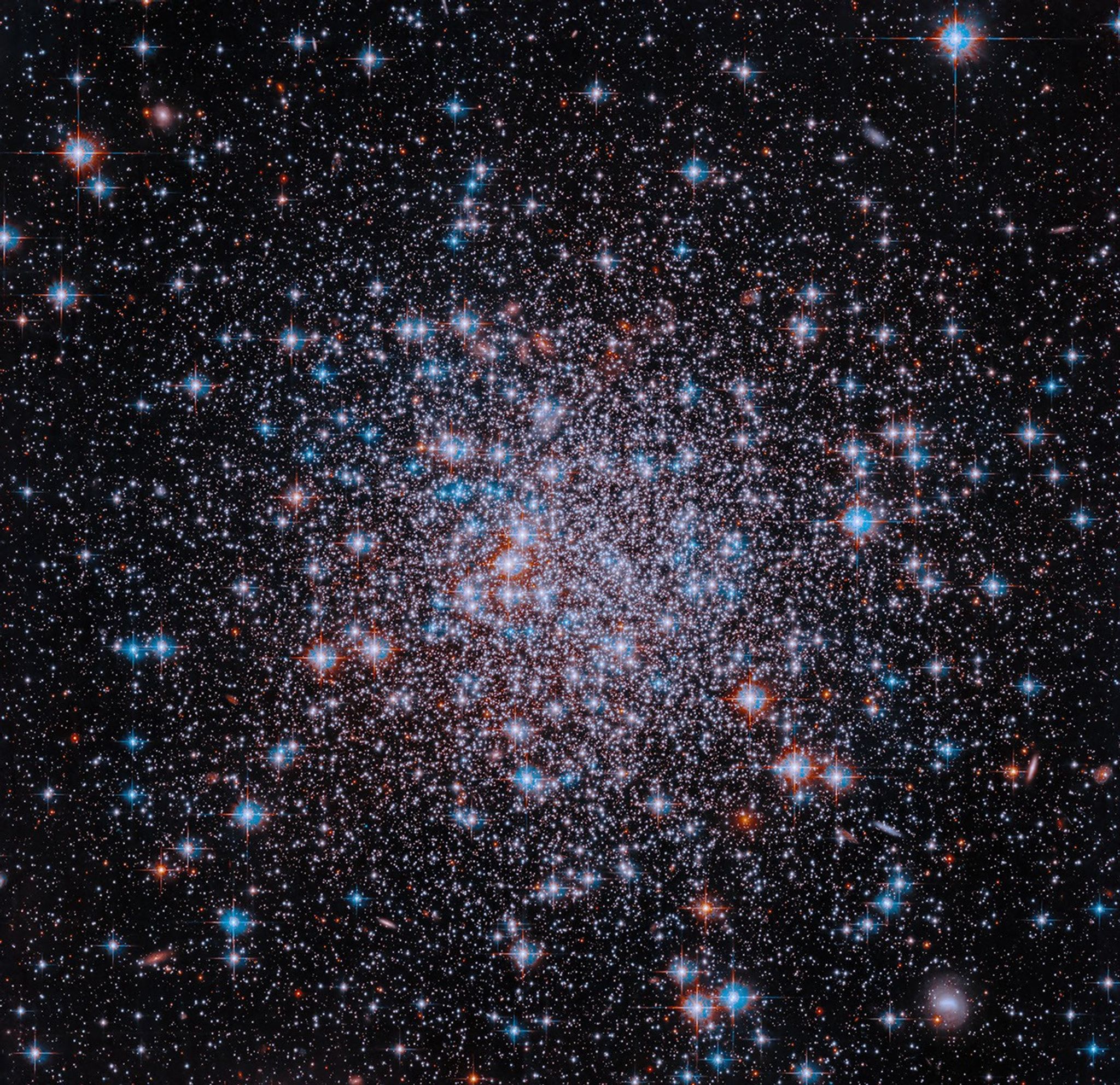
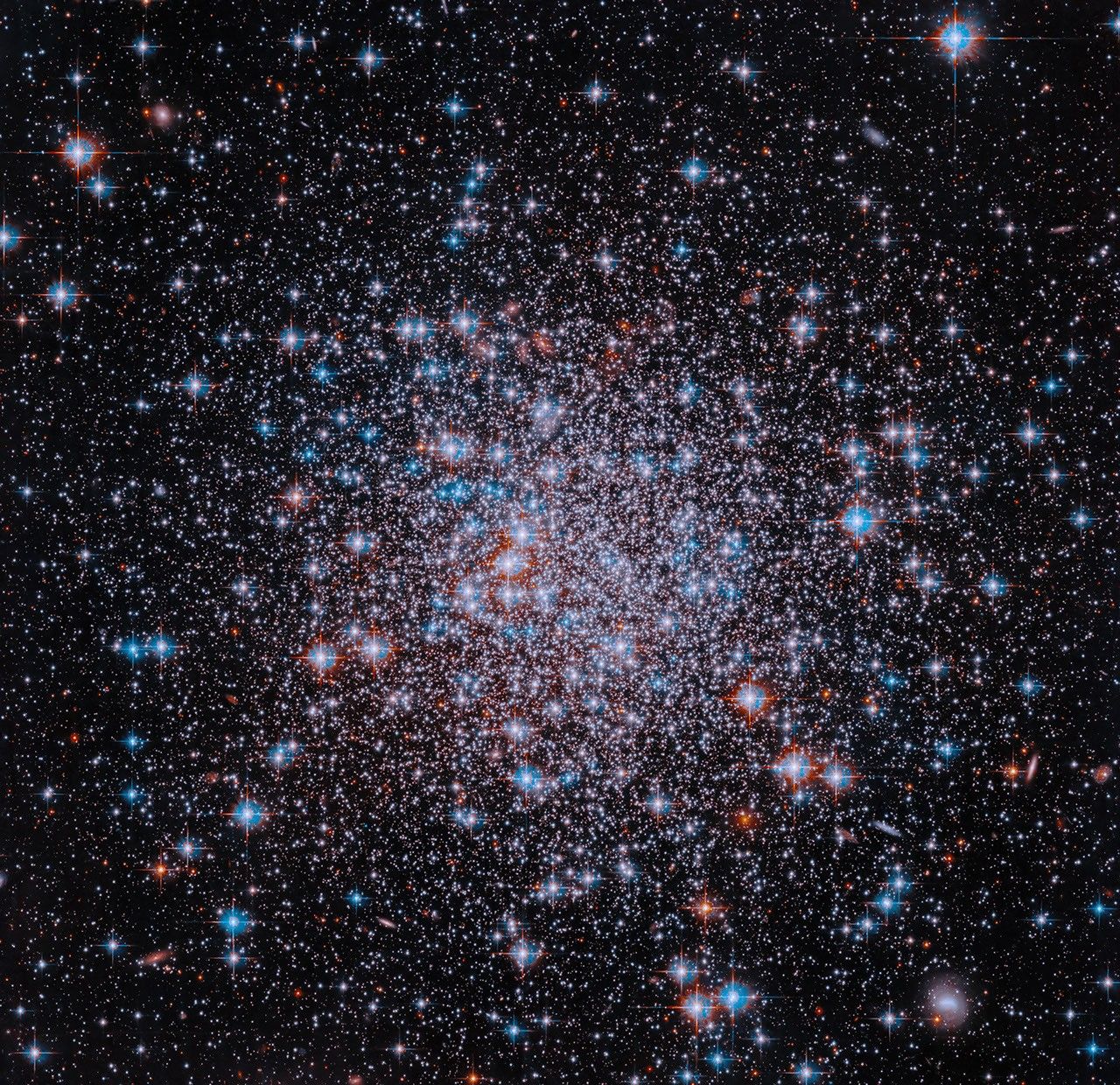
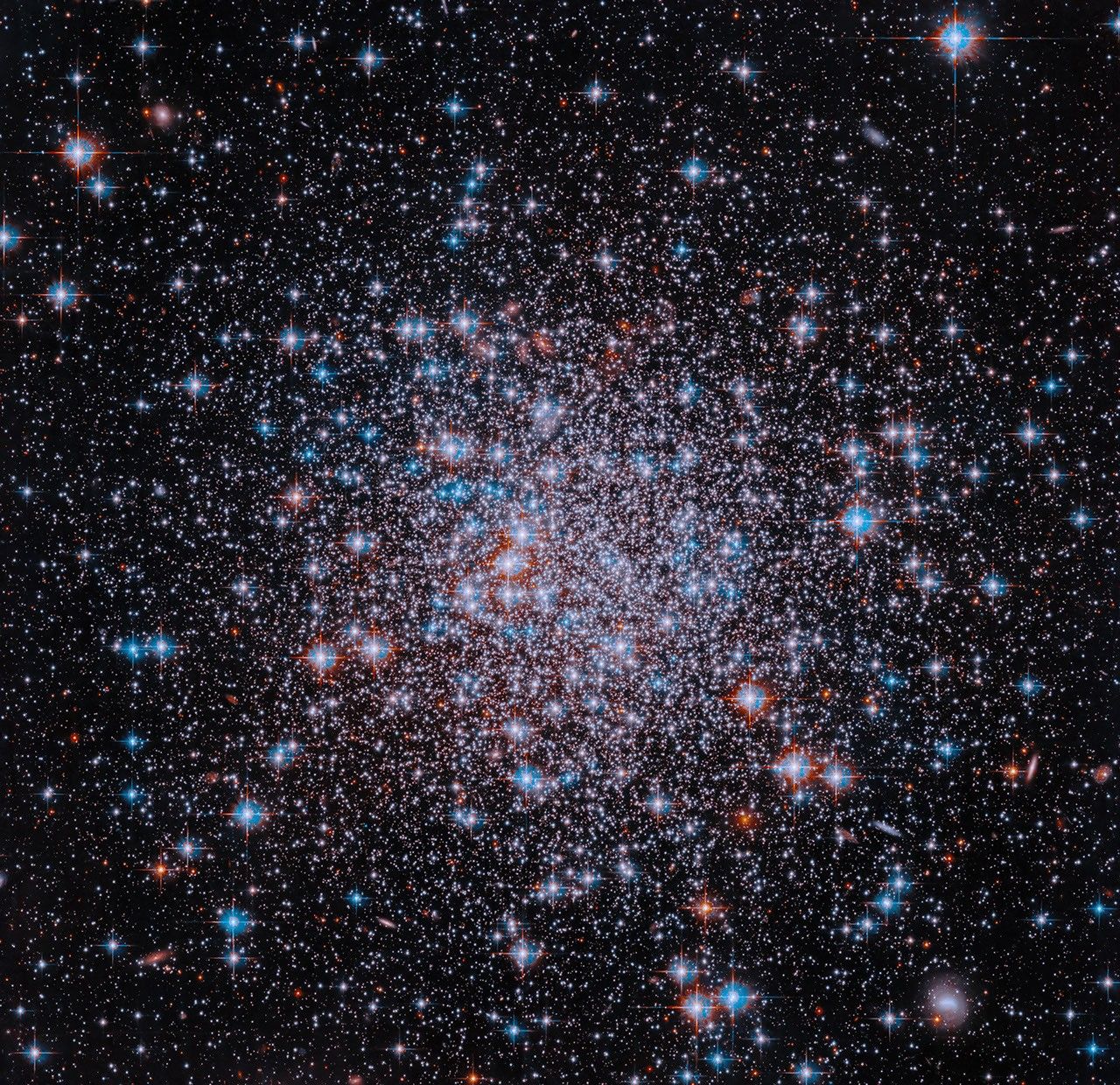
Located in the outer halo of our Milky Way galaxy, globular cluster NGC 6426 is a spherical collection of stars bound together by their mutual gravity, one of 150 known globular clusters in our galaxy. These groups of stars are thought to form as a unit from the same collapsing cloud of gas, and thus the stars in them typically have similar ages. The stars in globular clusters tend to be ancient. At approximately 13 billion years old, NGC 6426 is one of the Milky Way’s oldest globular clusters and almost as old as the universe itself (13.7 billion years).
In this image, blue indicates the shorter wavelengths that are visible light, while red depicts the longer wavelengths of visible light, as well as some near-infrared light. Colors in Hubble images are chosen based on standard image processing techniques to best represent the wavelengths of light that pass through the filters used in the observation. Because the color and temperature of stars are directly related, we know that the blue stars in this image are hotter and the red stars are cooler.
The stars of NGC 6426 have low metallicity, which means they have fewer elements that are heavier than hydrogen and helium. These conditions resemble those of the early universe, when matter was mostly helium and hydrogen and heavier elements were just beginning to form via nuclear fusion within massive stars.
Researchers have found evidence for two chemically distinct populations of stars in NGC 6426, indicating that the slightly younger and more metallic stars were enriched with material from the explosive deaths of the cluster’s earlier stars. Massive stars that explode as supernovae fling elements heavier than hydrogen and helium into the universe, seeding it with materials to build new stars and planets.
Hubble took this image as part of a study of globular clusters in the Milky Way’s halo intended to determine their ages and shed light on the formation and evolution of the galaxy. Over the past three decades in orbit, Hubble has fundamentally changed our understanding of the universe. Its discoveries are expanded upon and complemented by observations from other NASA missions like the infrared-detecting James Webb Space Telescope and the Nancy Grace Roman Space Telescope, scheduled to launch in late summer.
Facebook logo @NASAHubble @NASAHubble Instagram logo @NASAHubble Explore More
Hubble’s Star Clusters
Media Contact:
Claire Andreoli
NASA’s Goddard Space Flight Center, Greenbelt, MD
claire.andreoli@nasa.gov
Details Last Updated Jul 04, 2026 Editor Andrea Gianopoulos Location NASA Goddard Space Flight Center Related Terms Hubble Space Telescope Astrophysics Astrophysics Division Globular Clusters Goddard Space Flight Center Star Clusters Stars The Universe
Keep Exploring Discover More Topics From Hubble Hubble Space Telescope
Since its 1990 launch, the Hubble Space Telescope has changed our fundamental understanding of the universe.
Hubble Celebrates Nation’s 250th Birthday
Commemorating the United States’ 250th anniversary with new images and more!
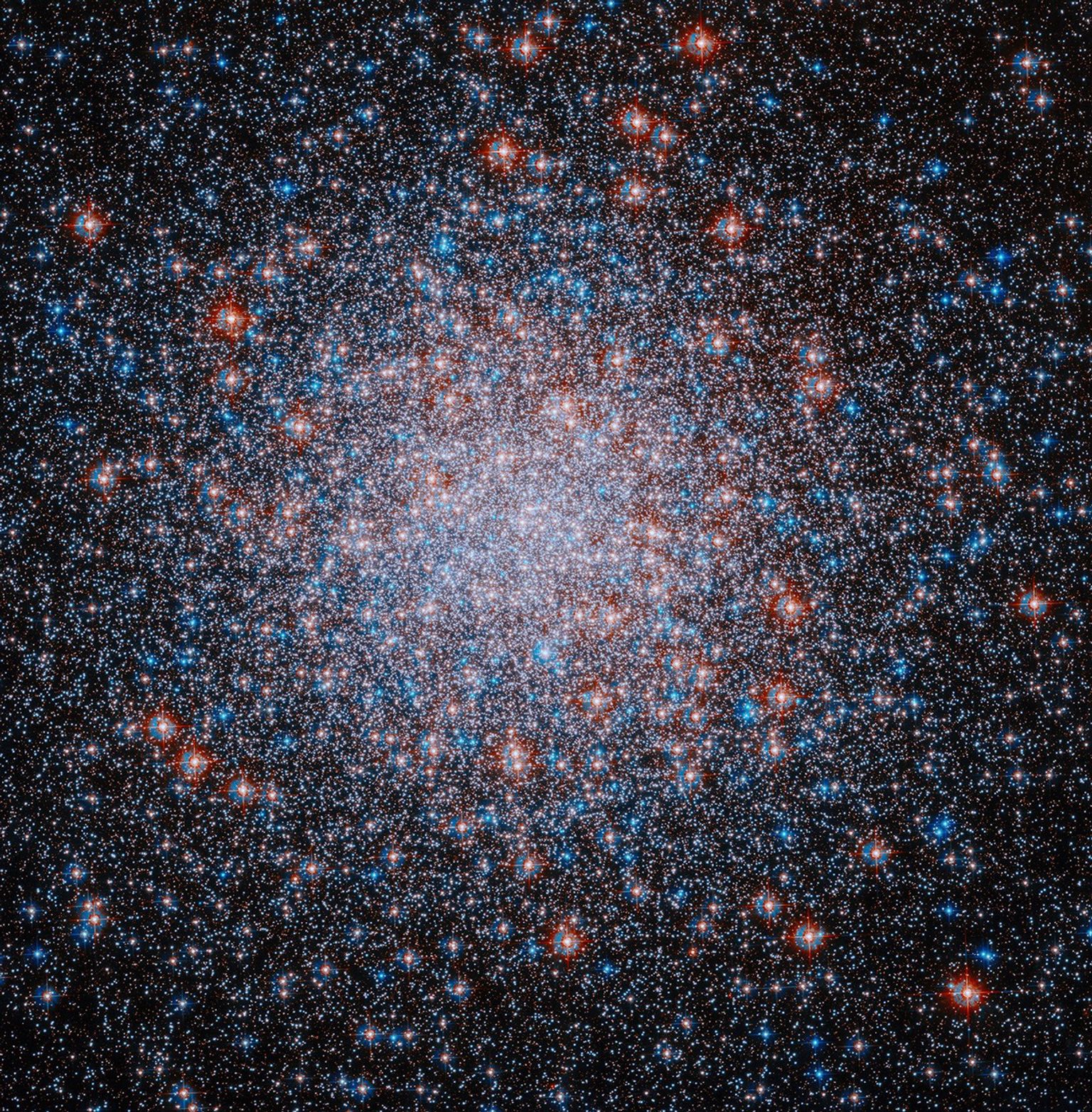
What Did Hubble See on Your Birthday?
Take a look at what cosmic wonders Hubble observed on your special day!
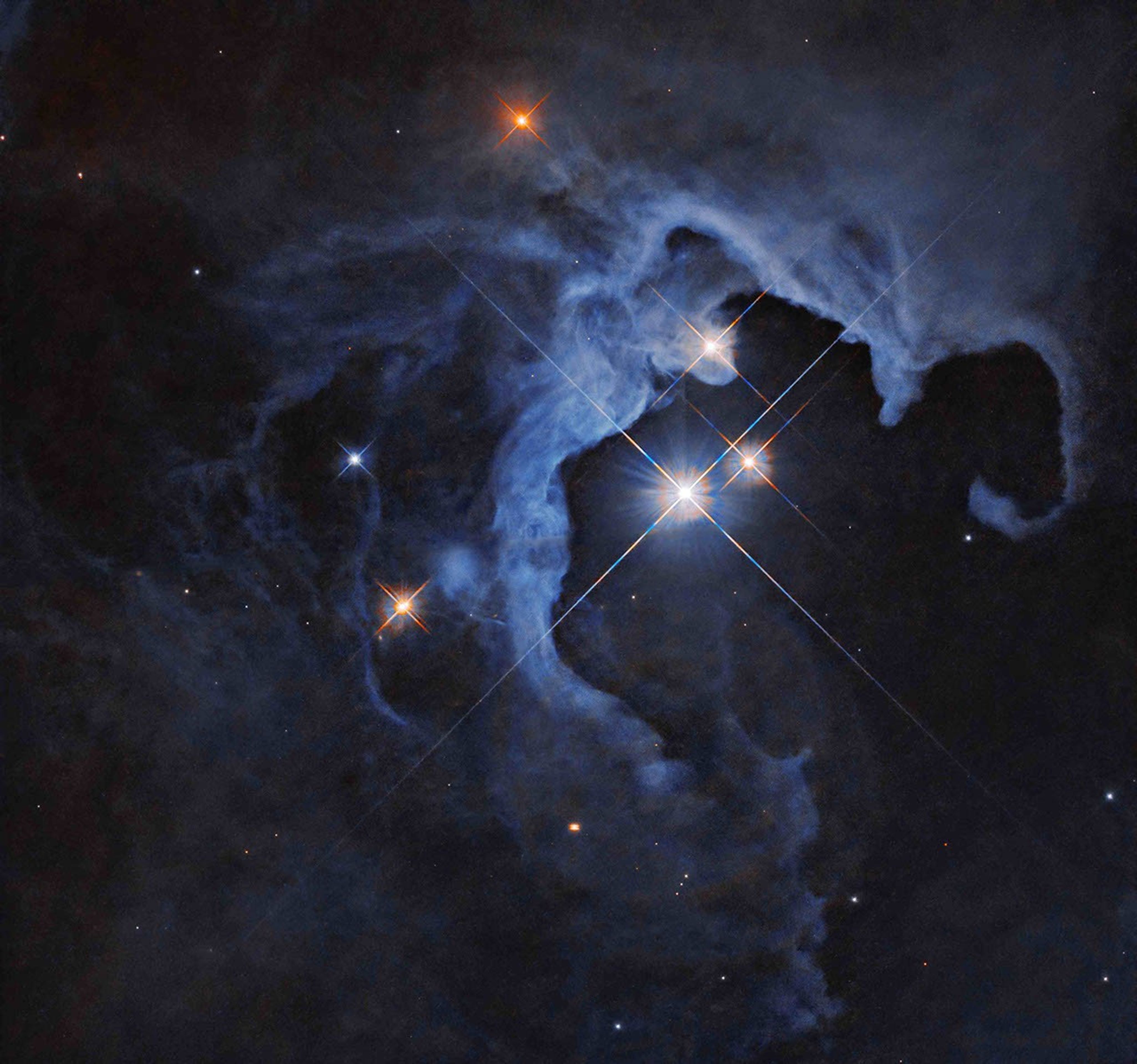
These jewels of the night sky offer us a glimpse at the lifecycle of stars.