Explore Hubble Science Hubble Space Telescope NASA’s Hubble Dazzles With… Hubble Home Overview About Hubble The History of Hubble Hubble Timeline Why Have a Telescope in Space? Hubble by the Numbers At the Museum FAQs Impact & Benefits Hubble’s Impact & Benefits Science Impacts Cultural Impact Technology Benefits Impact on Human Spaceflight Astro Community Impacts Science Hubble Science Science Themes Science Highlights Science Behind Discoveries Universe Uncovered Hubble’s Partners in Science Hubble & Citizen Science AI & Hubble Science Explore the Night Sky Observatory Hubble Observatory Hubble Design Mission Operations Science Operations Astronaut Missions to Hubble Hubble vs Webb Team Hubble Team Career Aspirations Hubble Astronauts Multimedia Images Videos Online Activities e-Books Sonifications Podcasts 3D Hubble Models Lithographs Fact Sheets Posters Hubble on the NASA App Glossary News Hubble News Social Media Media Resources 35th Anniversary More Online Activities 6 Min Read NASA’s Hubble Dazzles With Young Stars in Trifid Nebula  NASA celebrates Hubble’s 36th anniversary with a new image of the Trifid Nebula, a star-forming region it first captured in 1997. The telescope leveraged almost its full operational lifetime to show us changes in the nebula on human time scales with an improved camera. Credits:
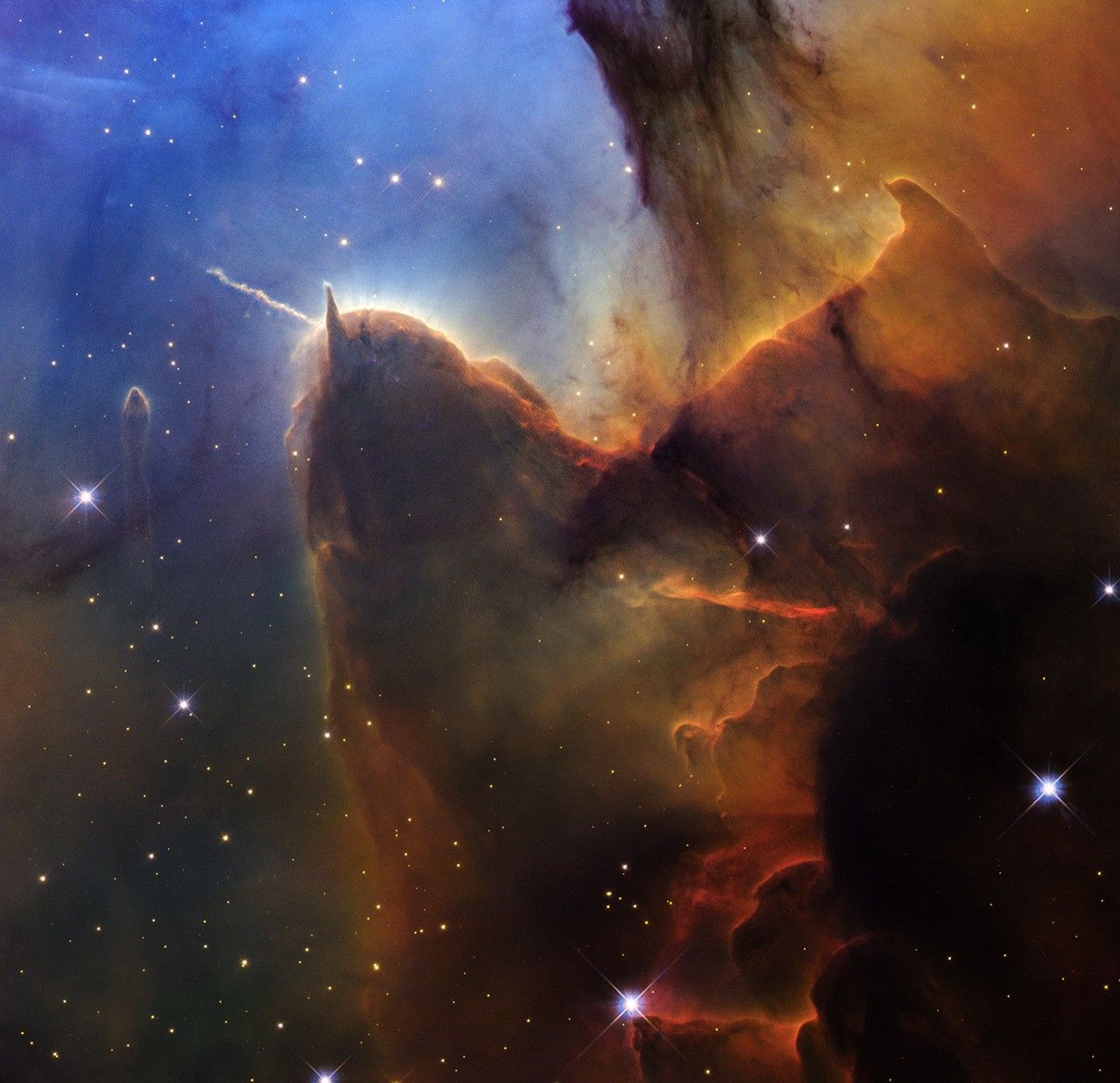
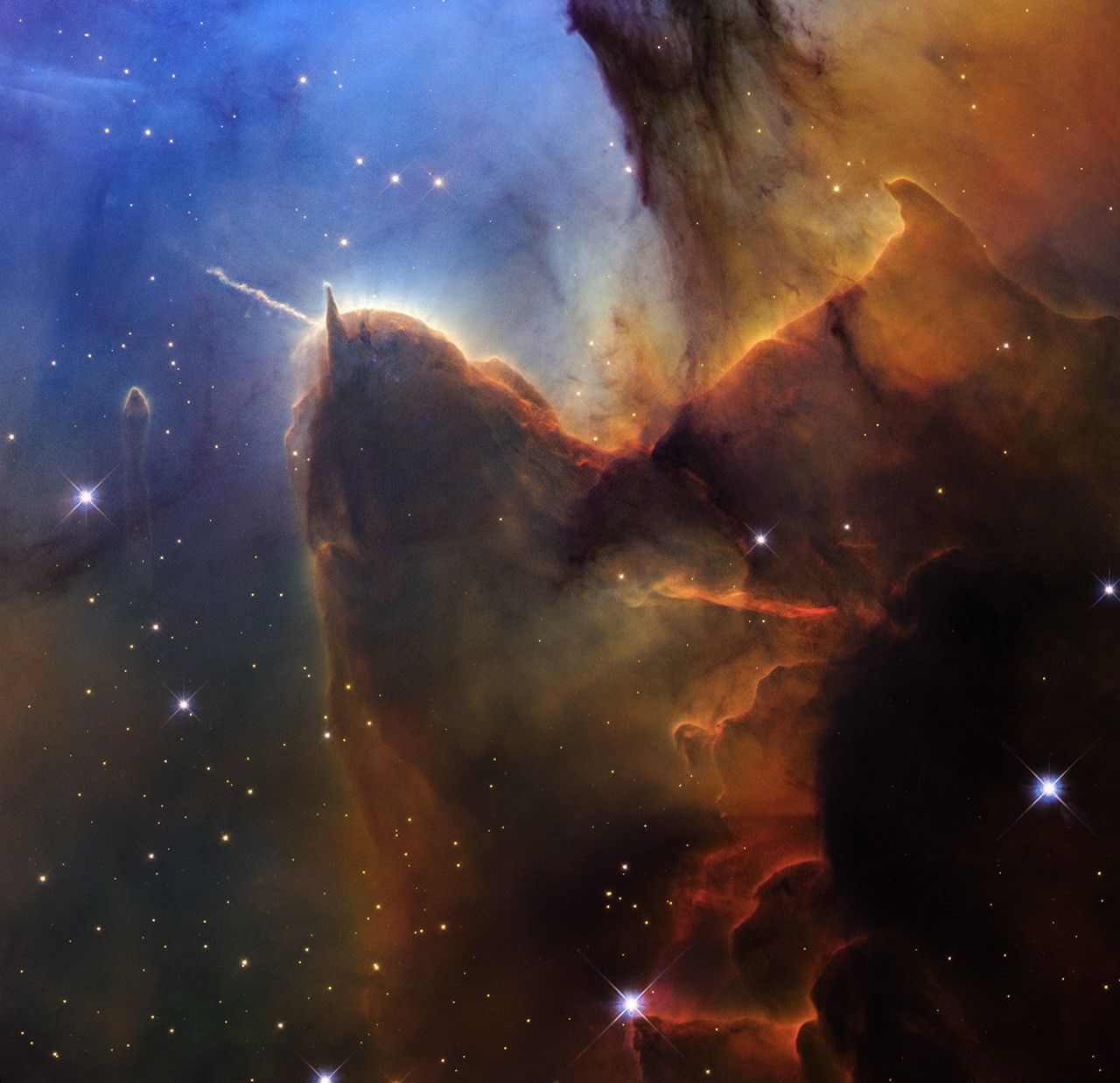
NASA, ESA, STScI; Image Processing: Joseph DePasquale (STScI) This shimmering region of star-formation, a close-up of the Trifid Nebula about 5,000 light-years from Earth, was captured in intricate detail by NASA’s Hubble Space Telescope. The colors in Hubble’s visible light image, which marks the 36th anniversary of the mission’s launch on April 24, are reminiscent of an underwater scene filled with fine-grained sediments fluttering through the ocean’s depths.
Several massive stars, which are outside this field of view, have shaped this region for at least 300,000 years. (See them in a wider view.) Their powerful winds continue to blow an enormous bubble, a small portion of which is shown here, that pushes and compresses the cloud’s gas and dust, triggering new waves of star formation.
NASA celebrates Hubble’s 36th anniversary with a new image of the Trifid Nebula, a star-forming region it first captured in 1997. The telescope leveraged almost its full operational lifetime to show us changes in the nebula on human time scales with an improved camera. NASA, ESA, STScI; Image Processing: Joseph DePasquale (STScI) This isn’t the first time Hubble has gazed at this scene. The telescope observed the Trifid in 1997 and now, 29 years later, it has leveraged almost its full operational lifetime to show us changes in the nebula on human time scales. Why look at the same location again? In addition to seeing changes over time, Hubble is also equipped with an improved camera with a wider field of view and greater sensitivity that was installed during Servicing Mission 4.
Star formation in ‘Cosmic Sea Lemon’ Hubble’s view of the Trifid Nebula (also known as Messier 20 or M20) focuses on a “head” and undulating “body” of a rusty-colored cloud of gas and dust that resembles a marine sea lemon, or sea slug, that appears as if it is gliding through the cosmos.
The Cosmic Sea Lemon’s left “horn” is part of Herbig-Haro 399, a jet of plasma periodically ejected over centuries by a young protostar embedded in the head of the sea lemon. Changes, as seen in the video below, allow researchers to measure the speeds of the outflows and determine how much energy the protostar is injecting into these regions. These measurements will provide insights into how newly formed stars interact with their surroundings.
To view this video please enable JavaScript, and consider upgrading to a web browser that
supports HTML5 video
Compare Hubble’s two observations of a portion of the Trifid Nebula, one taken in 2026 with the telescope’s current Wide Field Camera 3 and the other in 1997 with an earlier instrument (the Wide Field and Planetary Camera 2). Video: NASA, ESA, STScI, Joseph DePasquale (STScI) To the immediate lower right is evidence of the counter jet: jagged orange and red lines that ”run” down the back of the sea lemon’s neck, where a natural V appears in the brown dust.
The darker, more triangular “horn” on the right of the “head” hosts another young star at its tip. Zoom in to see a faint red dot with a tiny jet. The green arc above it may be evidence that a circumstellar disk is being eroded by the intense ultraviolet light from nearby massive stars. The clearer area around this protostar suggests it may almost be finished forming.
To the immediate left of the Cosmic Sea Lemon is a small, faint pillar that resembles a water bear. Much of this pillar’s gas and dust has been blown away, but the densest material at the top persists.
Streaks and sharp lines offer more clues about other young stars’ activities. Spy an example by looking near the center for a rippling angled line that begins in a bright orange and ends in a blazing red. In the image comparison, it appears to move, which means it may be a jet shot out by another actively forming star buried deeply in dust.
NASA is celebrating the 36th anniversary of the Hubble Space Telescope with a stunning new look at the Trifid Nebula, a star-forming region about 5,000 light-years away. Powerful ultraviolet light from massive stars carved out this glowing bubble, triggering new waves of star birth. Sit back and relax as Hubble Senior Project Scientist, Dr. Jennifer Wiseman takes us on a tour of this beautiful image. Credit: NASA; Lead Producer: Paul Morris Prismatic ‘sea’ of color In Hubble’s visible light observations, the clearest view is toward the top left, where it’s bluer. Strong ultraviolet light from massive stars, not in the field of view, stripped electrons from nearby gas, creating a glow, with winds sculpting a bubble by clearing out surrounding dust.
At the top of the Cosmic Sea Lemon’s head, bright yellow gas streams upward. This is an example of ultraviolet light plowing into the dark brown dust, stripping and dismantling the gas and dust.
Many ridges and slopes of dark brown material will remain for a few million years, as the stars’ ultraviolet light slowly eats away at the gas. The densest areas are home to protostars, which are obscured in visible light.
The far-right corner is nearly pitch black. This is where the dust is the densest. The stars that appear here may not be part of this star-forming region — they might be closer to us, in the foreground.
Now, scan the scene for bright orange orbs. These stars have fully formed, clearing the space around them. Over millions of years, the nebula’s gas and dust will disappear — only stars will remain.
Unprecedented longevity, nonstop discoveries Hubble’s varied instruments and the expansive range of light it collects — from ultraviolet through visible to near-infrared — have helped researchers make ground-breaking discoveries for decades and supply new data daily that will inevitably lead to more.
The telescope has taken over 1.7 million observations to date. Almost 29,000 astronomers have published peer-reviewed science papers using Hubble data collected over the telescope’s 36-year lifetime, resulting in more than 23,000 publications, with almost 1,100 in 2025 alone. Hubble’s observational data is publicly available in the Barbara A. Mikulski Archive for Space Telescopes at the Space Telescope Science Institute in Baltimore, while its mission descriptions, history, and gallery of popular images are found on NASA’s Hubble website.
Since 2022, researchers have regularly combined Hubble’s observations with those from NASA’s James Webb Space Telescope to push opportunities for discovery further. Very soon, astronomers will begin diving into huge near-infrared datasets from vast surveys from NASA’s new Nancy Grace Roman Space Telescope, and will seek to compare them to existing or new Hubble observations to clarify what is at work. For context, Roman’s camera can cover the entire Trifid Nebula, showing the full bubble, with a single pointing — and may turn up interesting objects for follow-up.
Another flagship to look forward to? The mission concept known as the Habitable Worlds Observatory, which would have a significantly larger mirror than Hubble — leading to higher resolution images — and, like Hubble, capture ultraviolet, visible, and infrared light. This next-generation space telescope would advance science across all of astrophysics, and would be the first specifically engineered telescope to identify habitable, Earth-like planets next to relatively bright stars like our Sun and examine them for evidence of life.
The Hubble Space Telescope has been operating for over three decades and continues to make ground-breaking discoveries that shape our fundamental understanding of the universe. Hubble is a project of international cooperation between NASA and ESA (European Space Agency). NASA’s Goddard Space Flight Center in Greenbelt, Maryland, manages the telescope and mission operations. Lockheed Martin Space, based in Denver, also supports mission operations at Goddard. The Space Telescope Science Institute in Baltimore, which is operated by the Association of Universities for Research in Astronomy, conducts Hubble science operations for NASA.
Facebook logo @NASAHubble @NASAHubble Instagram logo @NASAHubble Related Images, Videos, & Articles Image: Trifid Nebula (Wide Field Camera 3 Image) NASA celebrates Hubble’s 36th anniversary with a new image of the Trifid Nebula, a star-forming region it first captured in 1997. The telescope leveraged almost its full operational lifetime to show us changes in the nebula on human time scales with an improved camera.
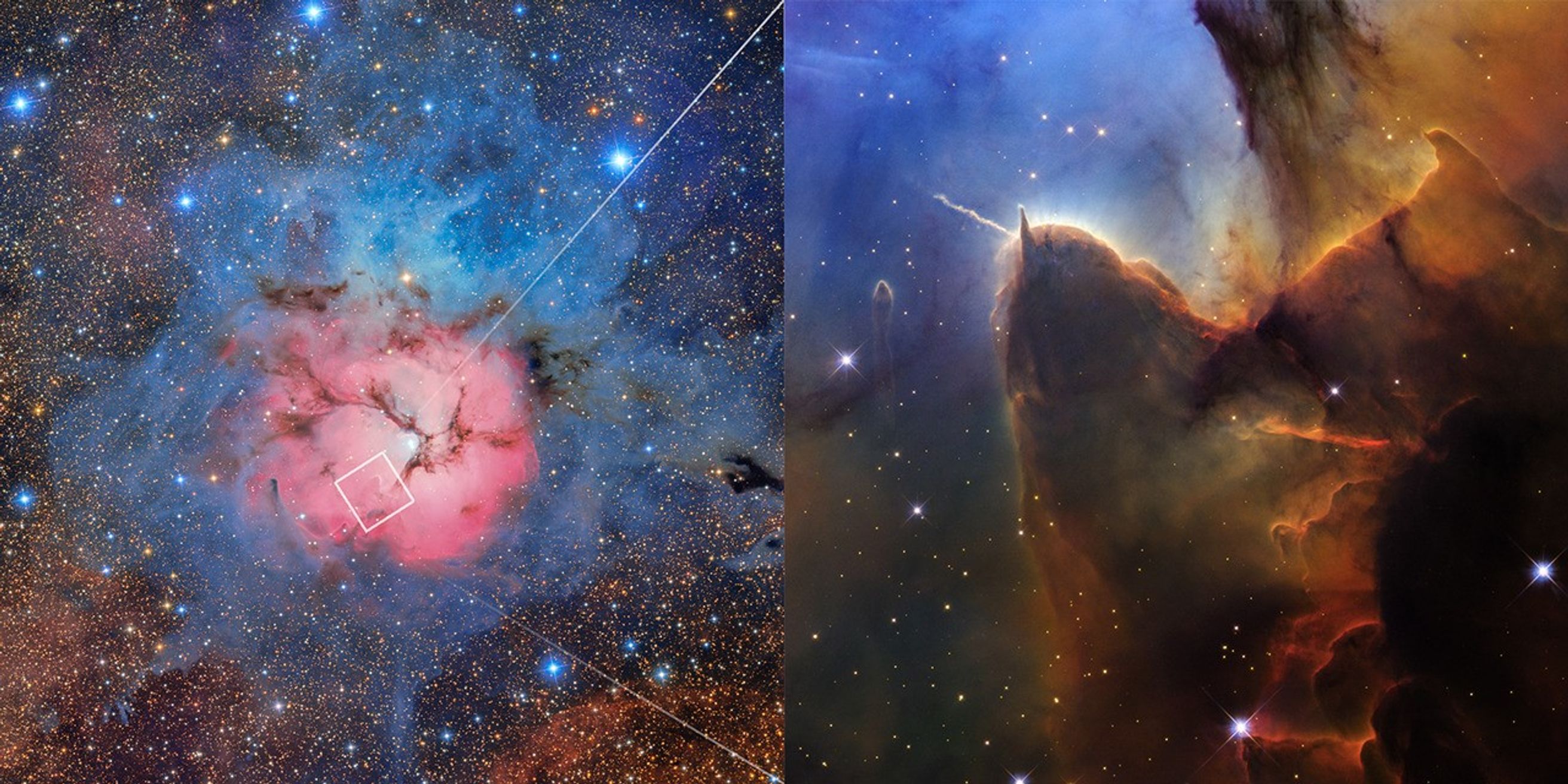 Image: Full Trifid Nebula (Rubin Image with Hubble Close-up) A pullout shows where the Hubble Space Telescope’s close-up image is located within the wider Trifid Nebula. The image at left was taken by the NSF-DOE Vera C. Rubin Observatory in Chile. The color assignments in the images vary based on the filters in the telescopes’ cameras.
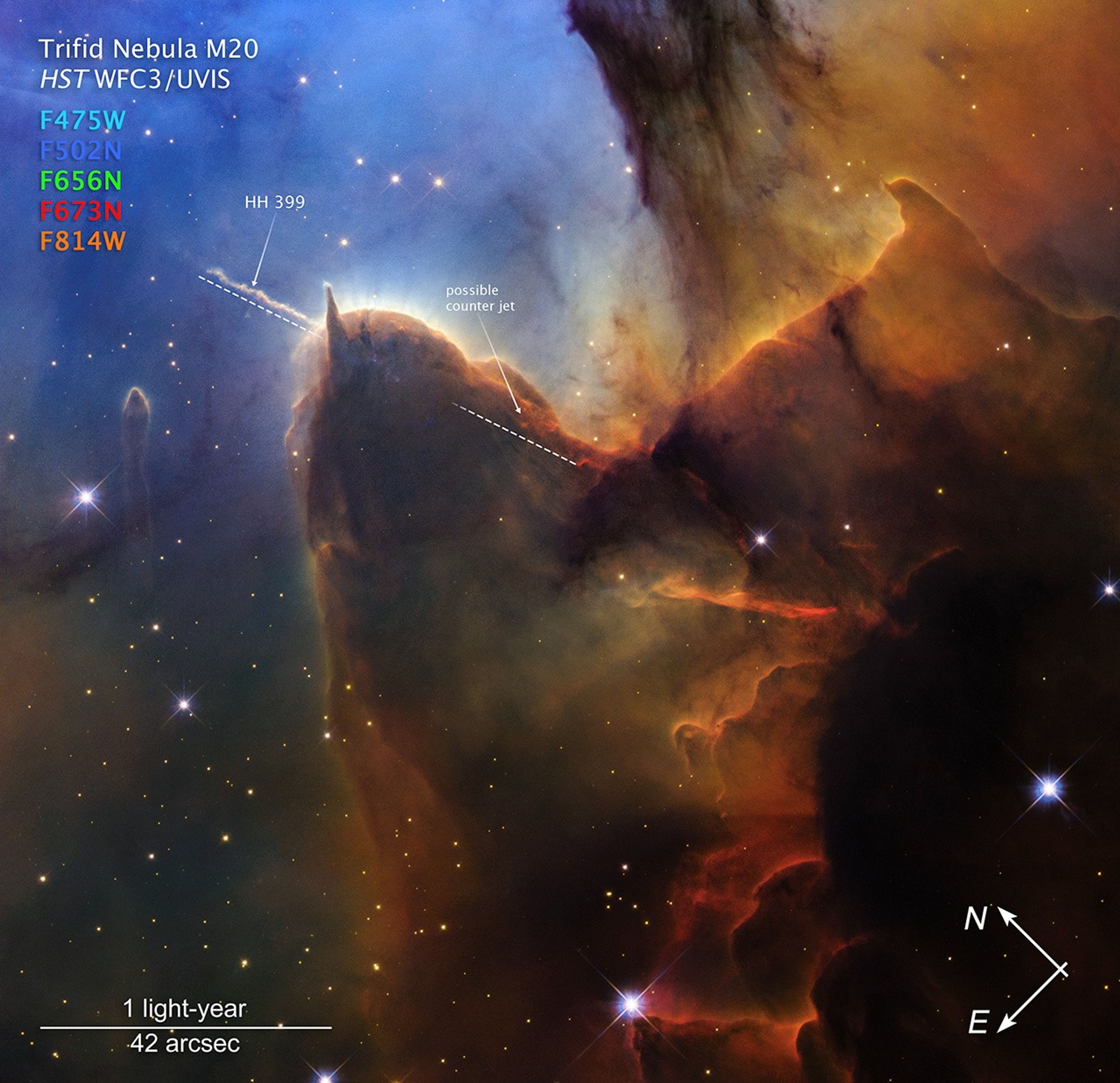 Image: Trifid Nebula (WFC3 Compass Image) This closeup image of the Trifid Nebula (Messier 20 or M20) captured by NASA’s Hubble Space Telescope’s Wide Field Camera 3 (WFC3) shows compass arrows, scale bar, and color key for reference.
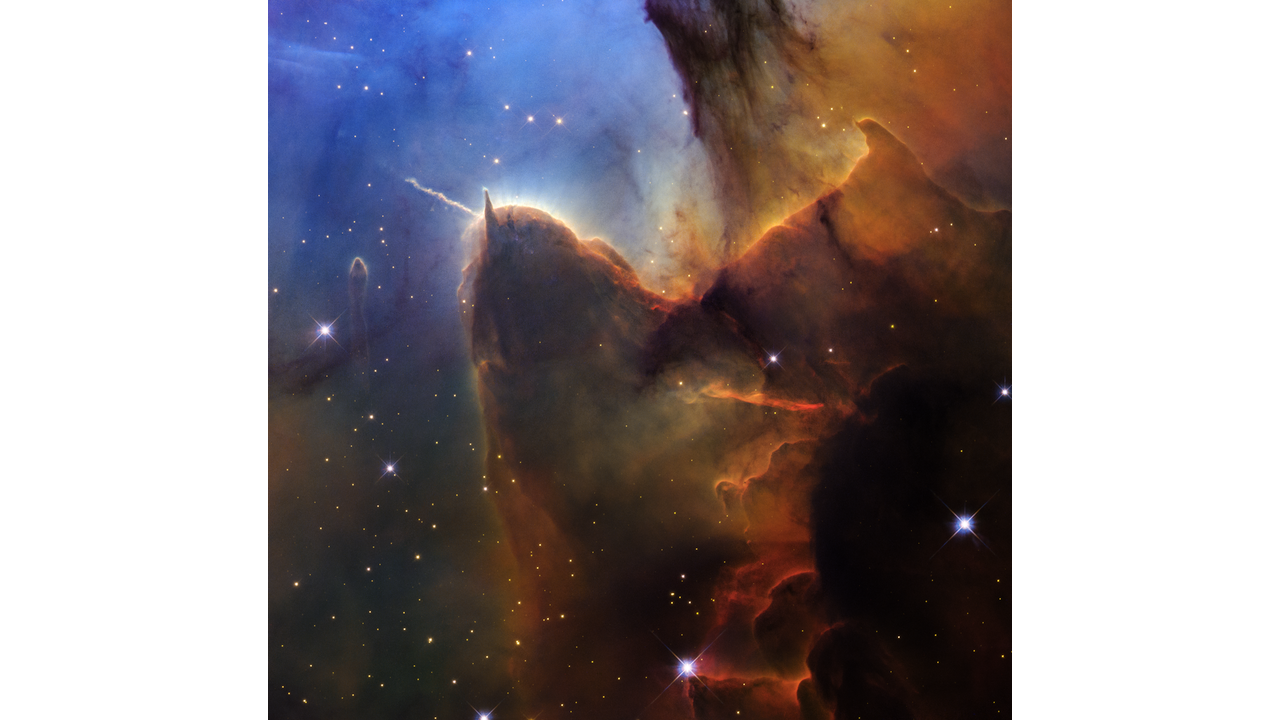 Video: Changes in the Trifid Nebula (1997 and 2026 Observations) Compare Hubble’s two observations of a portion of the Trifid Nebula, one taken in 2026 with the telescope’s current Wide Field Camera 3 and the other in 1997 with an earlier instrument (the Wide Field and Planetary Camera 2).
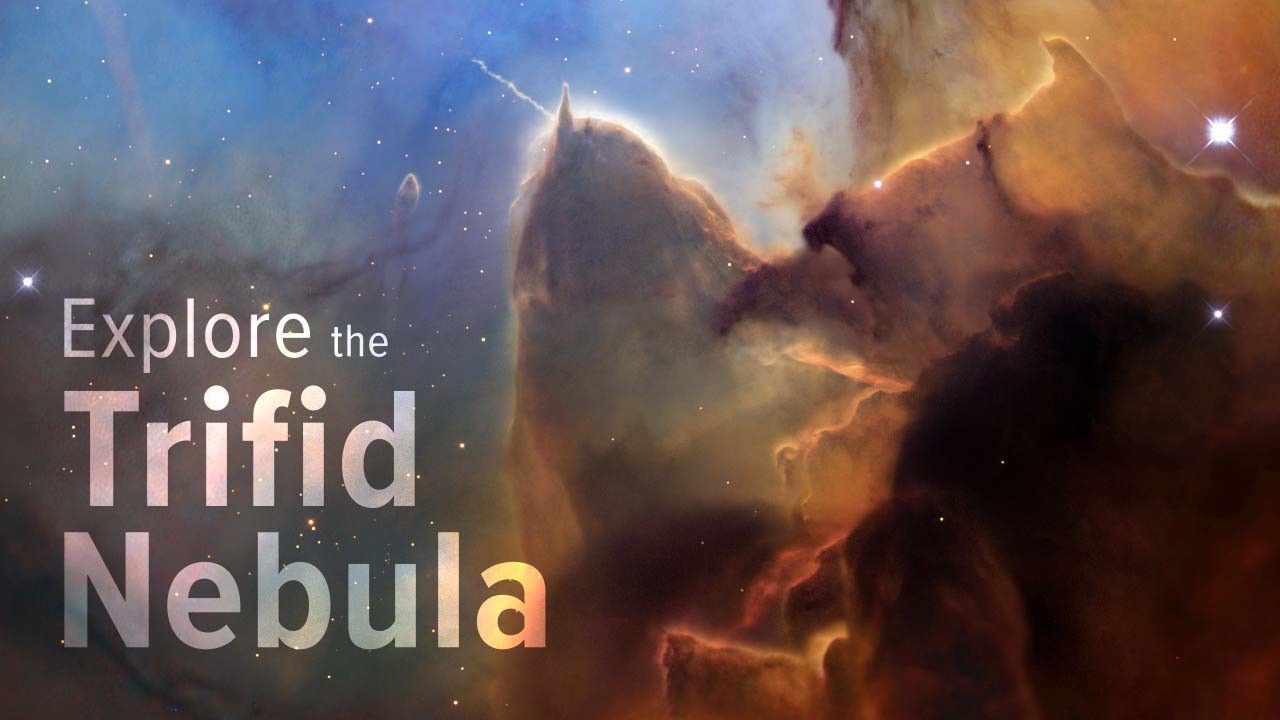 Video: Explore the Trifid Nebula “Fly” through the Hubble Space Telescope’s view of the Trifid Nebula. The video “floats” over the ridges of gas and dust and moves up toward Herbig-Haro 399, at the top of a brown cloud that resembles a head with horns.
Details Last Updated Apr 20, 2026 Editor Andrea Gianopoulos Location NASA Goddard Space Flight Center
Contact Media Claire Andreoli
NASA’s Goddard Space Flight Center
Greenbelt, Maryland
claire.andreoli@nasa.gov
Claire Blome, Christine Pulliam
Space Telescope Science Institute
Baltimore, Maryland
Related Terms Hubble Space Telescope Astrophysics Astrophysics Division Emission Nebulae Goddard Space Flight Center Nebulae Stars The Universe
Keep Exploring Discover More Topics From Hubble Hubble Space Telescope
Since its 1990 launch, the Hubble Space Telescope has changed our fundamental understanding of the universe.