NASA’s 777 Aircraft Returns Home with Science Flights on the Horizon
NASA/Ryan Hill
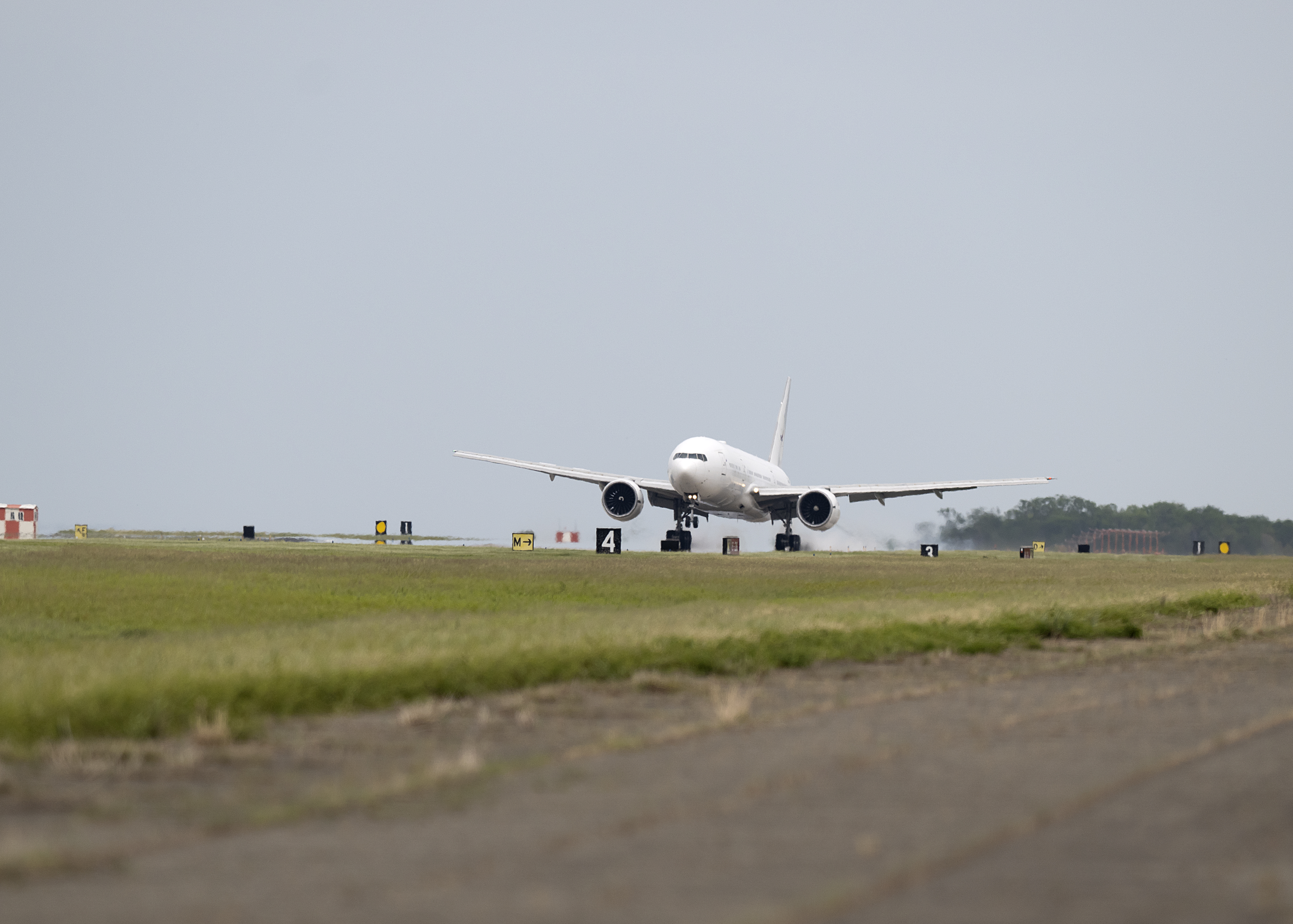
NASA’s Boeing 777 has returned to the agency’s fleet after undergoing heavy structural modifications as it transforms from a giant passenger plane into the agency’s next-generation airborne science laboratory. After a check flight and a three-hour transit from Waco, the aircraft returned to NASA’s Langley Research Center in Hampton, Virginia, on April 22.
Since January 2025, the aircraft has been in Texas receiving hardware and structural upgrades to prepare for science operations. The modifications include installing dedicated research stations and extensive wiring. This allows payload systems to communicate with sensors such as lidar and infrared imaging spectrometers during flights. Cabin windows were enlarged and open portals installed at the bottom of the fuselage to mount remote-sensing instruments.
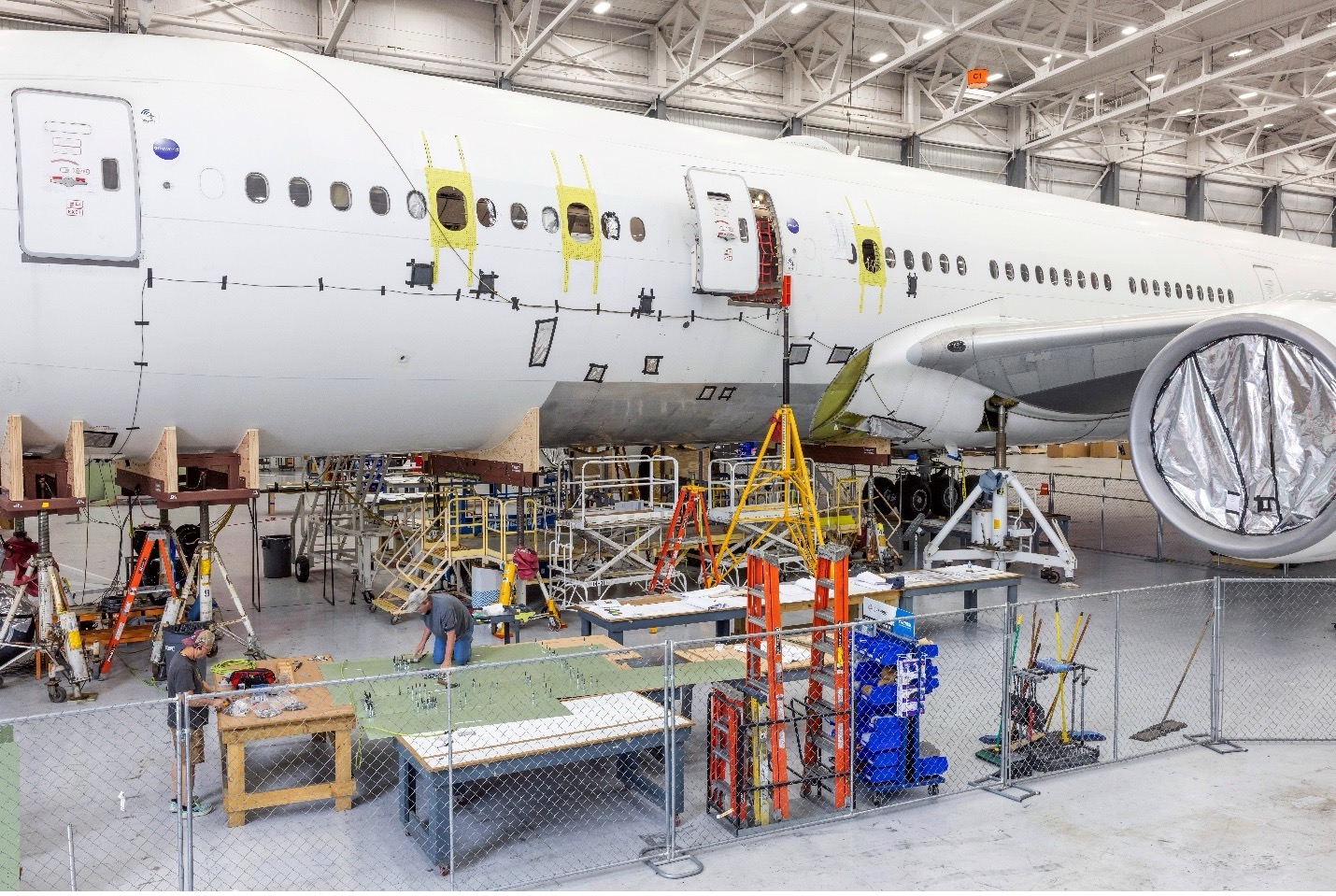
“Airborne missions at NASA use cutting-edge instruments to explore and understand our home planet,” said Derek Rutovic, program manager for the Airborne Science Program at NASA Headquarters in Washington. “The 777 will be the largest airborne research laboratory in our fleet, collecting data to improve life on our home planet and extend our knowledge of the Earth system as a whole.”
Acquired in 2022 to succeed NASA’s retired DC-8 aircraft, the 777 will expand the agency’s airborne research capacity. It can accommodate 50 to 100 operators and carry 75,000 pounds of equipment for flights lasting up to 18 hours.
“NASA’s DC-8 was an incredible workhorse for Earth science for nearly 40 years,” said Kirsten Boogaard, the NASA 777 program manager at NASA Langley and former deputy program manager of NASA’s DC-8. “Being part of that team, I got to see the impact up close. I’m excited for what the 777 will bring. It gives us the ability to bring together more partners, more educational opportunities, and more instruments. That will make a real difference in the data we collect moving forward.”
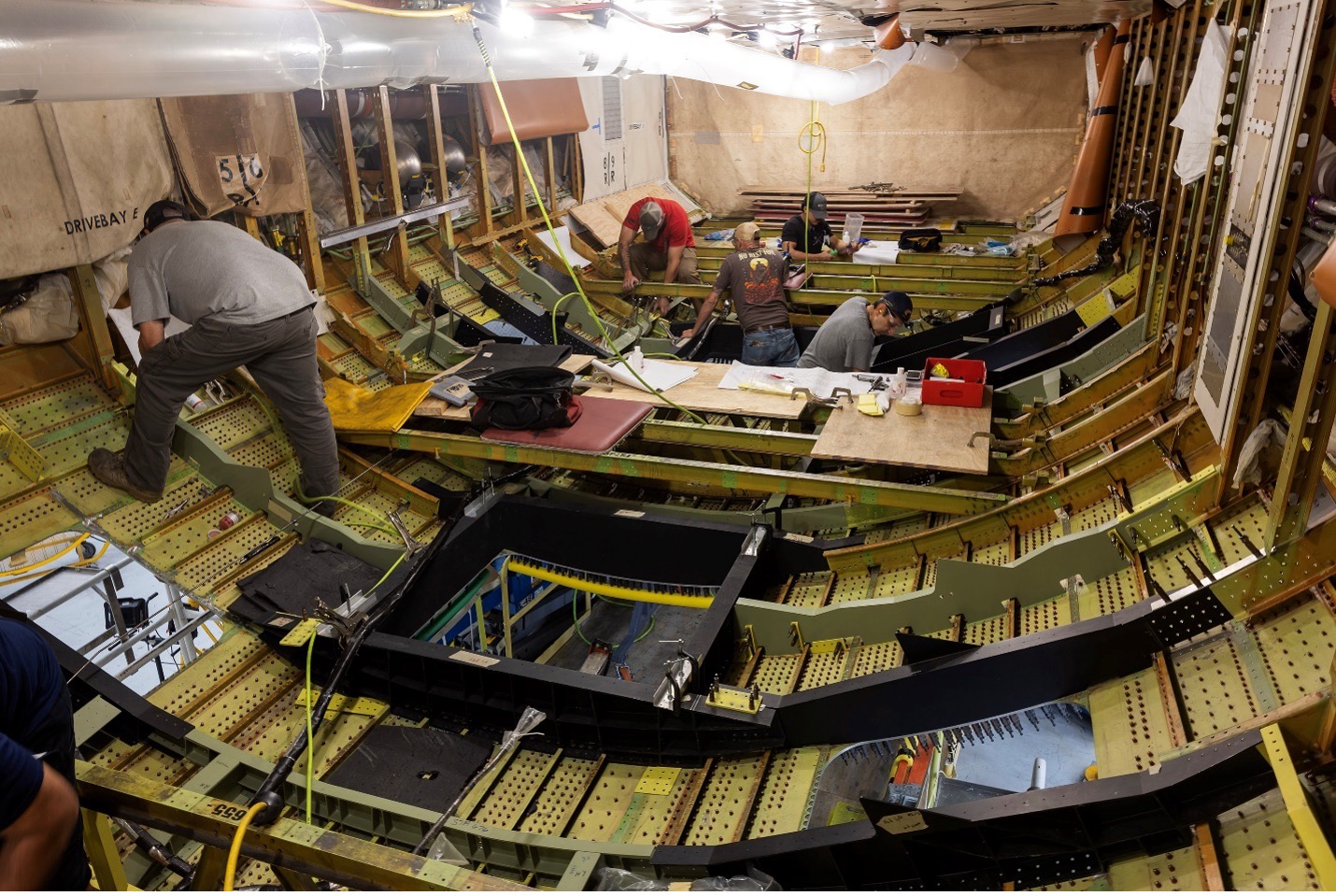
The aircraft’s inaugural science mission, slated to deploy in January 2027, will investigate high-impact winter weather events, such as severe cold air outbreaks, wind, snow and ice storms, and hazardous seas. Known as the North American Upstream Feature-Resolving and Tropopause Uncertainty Reconnaissance Experiment (NURTURE), the mission will collect detailed atmospheric observations across a vast region spanning North America, Europe, Greenland, and the Arctic and North Atlantic Oceans.
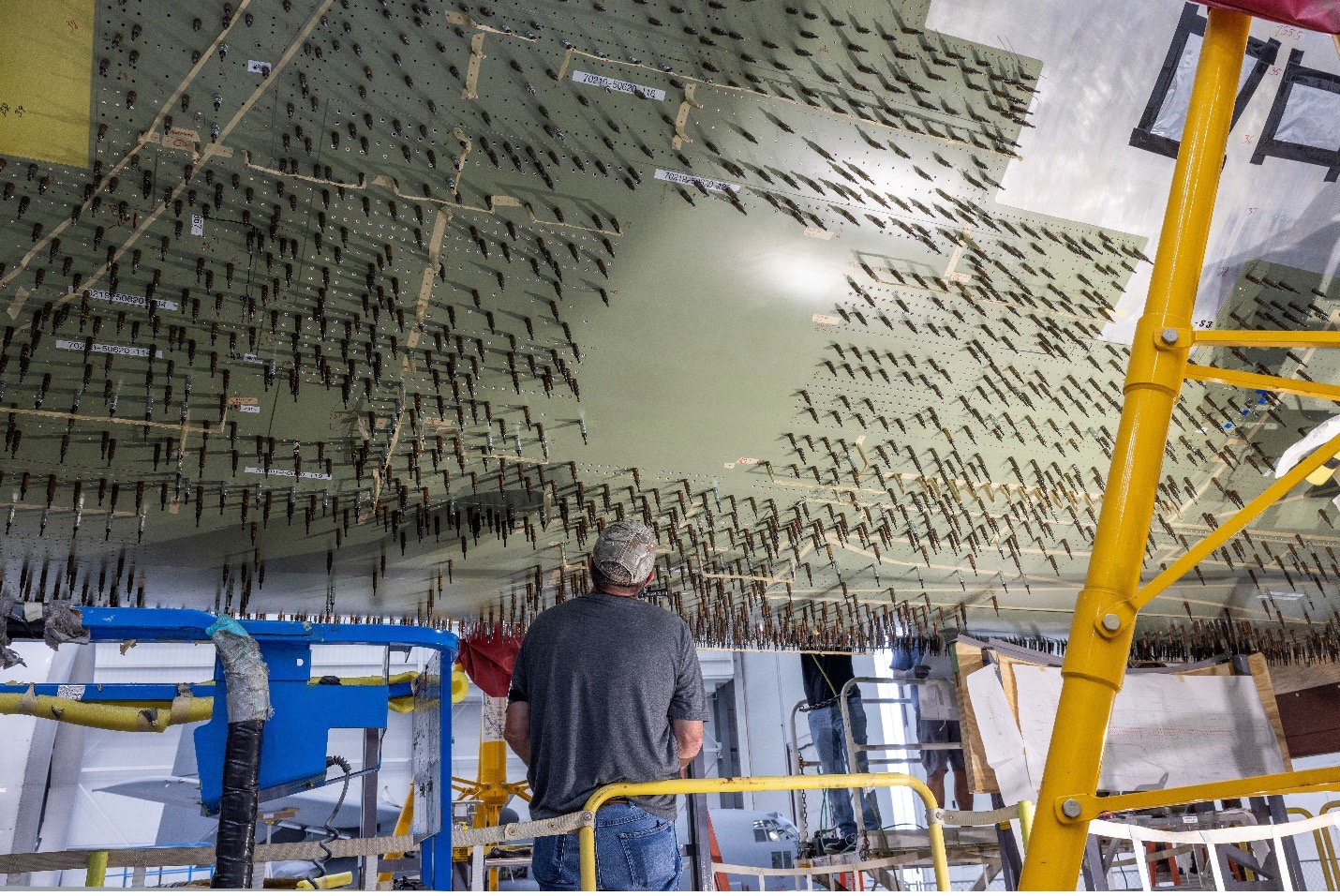
“We’ve been completing the engineering design and analysis to install the NURTURE payload into the aircraft in parallel with the portal modification,” Rutovic said. “We’re excited to get the airplane back home to NASA and on the road to its first mission.”
The NASA 777’s major structural modification was performed by L3Harris Technologies in partnership with Yulista Holding, LLC. Research station and wiring upgrades in the cabin are being performed by NASA and HII. NASA’s Airborne Science Program is responsible for providing aircraft systems that further science and advance the use of satellite data and is part of the Science Mission Directorate’s Earth Science Division.
To learn more about NASA’s airborne science missions, visit:
https://airbornescience.nasa.gov
Explore More