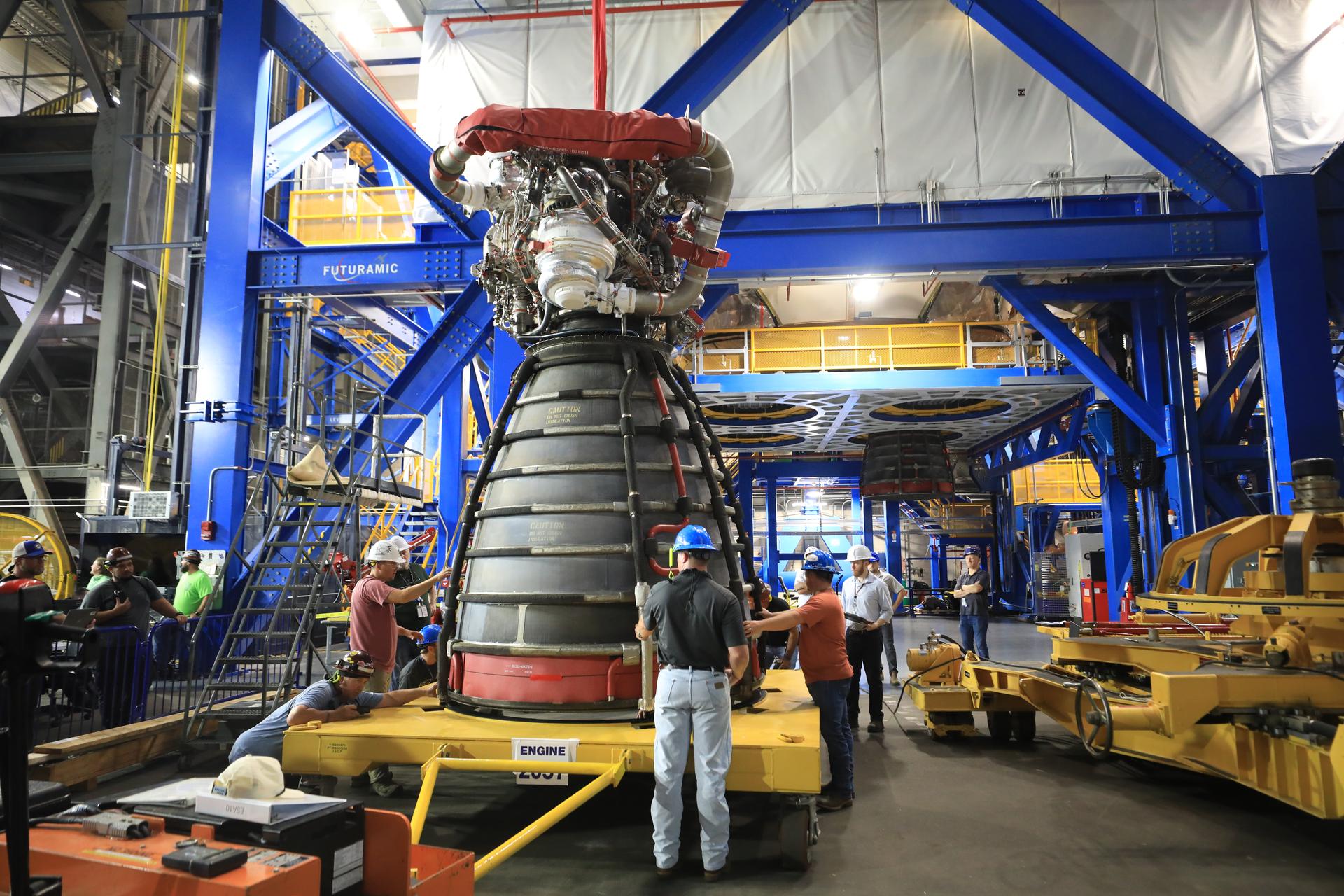
Technicians at NASA’s Kennedy Space Center in Florida began the installation of the four RS-25 engines in the core stage of the agency’s SLS (Space Launch System) rocket that will launch the Artemis III crew next year.
The milestone on Aug. 24 marks the next phase of core stage integration following the mating of the engine section to the top four-fifths of the stage earlier this summer. Inside High Bay 2 at the spaceport’s Vehicle Assembly Building (VAB), teams will continue installing the remaining engines, as well as the propulsion and electrical systems throughout the stage.
Weighing in at approximately 7,700 pounds, each engine produces nearly 500,000 pounds of thrust. All four engines are located at the base of the SLS and are integrated inside the engine section. Built to withstand the extreme conditions during launch, this section protects the engines from severe temperatures. During ascent, the engines fire continuously for more than eight minutes, consuming propellant from the core stage’s two massive propellant tanks at a rate of approximately 1,500 gallons per second.
Each RS-25 engine carries a unique serial number that traces its detailed flight history. The four engines assigned to Artemis III, including E2054, E2057, E2048, and E2052, previously powered multiple shuttle missions. Engine 2048 helped power NASA astronaut Randy Bresnik’s previous mission on space shuttle Atlantis during the STS-129 mission. The engine also powered Space Shuttle Discovery on STS-95 in 1998, which was the mission that returned 77-year-old space pioneer U.S. Sen. John Glenn to orbit, making him the oldest person to fly in space at the time.
Technicians also continue to integrate the twin solid rocket booster motor segments atop the mobile launcher inside the VAB. Teams began stacking the segments in early July and are now more than halfway complete after streamlining processes and procedures learned from previous Artemis launches.
Progress on the Orion spacecraft continues after the recent integration of the crew and service modules. Technicians recently installed the umbilical connector, which bridges the electrical, data, and fluid systems between the two modules, and installed its electrical connectors and fluid lines. Teams powered on the spacecraft for the first time since joining the two components to ensure electrical connectivity through the umbilical mechanism and that the communications of the subsystems between the crew and service module work as planned.
Crew training underway
After being assigned to the Artemis III mission on June 9, NASA astronauts Bresnik, Andre Douglas, Frank Rubio, and ESA (European Space Agency) astronaut Luca Parmitano began an intensive training flow that covers Orion systems and operations, science objectives, leadership and team‑building exercises, as well as joint training with commercial human landing system providers.
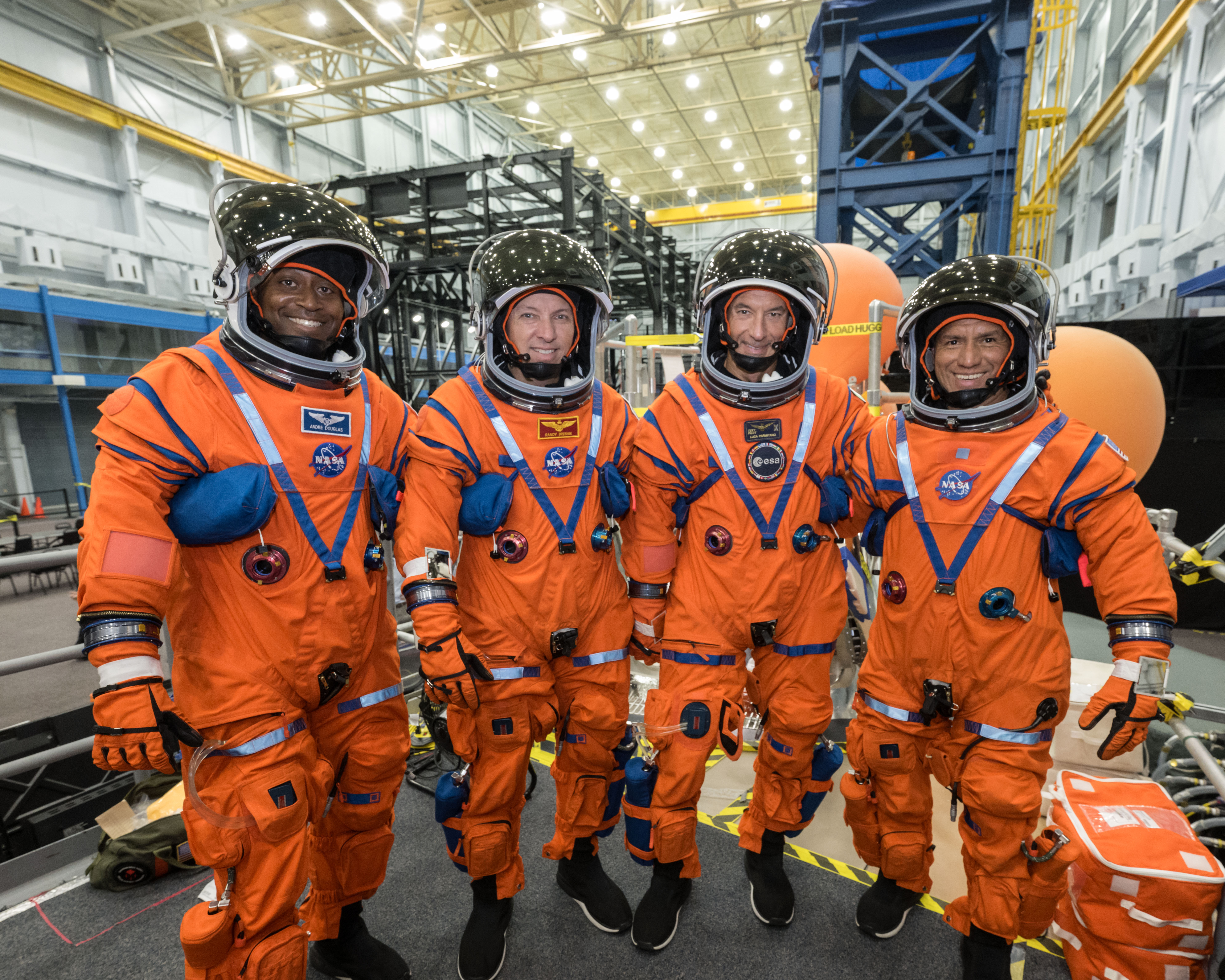
The crew’s training is organized around major phases of the mission, including ascent, orbit and rendezvous operations, entry, and both pre‑ and post‑landing readiness.
Crew members are working in the Orion mockup at NASA’s Johnson Space Center in Houston, practicing daily spacecraft operations, such as mealtime routines, using equipment like the food warmer and potable water dispenser. They also are refining their camera skills to capture and share imagery from their mission in low Earth orbit.
The crew recently completed an introductory water survival class focused on hardware used during off‑nominal landings, along with a post‑landing emergency exiting course that introduced splashdown procedures and initial post‑landing conditions.
This week in NASA’s Neutral Buoyancy Lab, they donned their spacesuits and practiced exiting Orion in an upright configuration. The practice allowed the crew to demonstrate the proper use of their Orion Crew Survival System suits, survival hardware, life raft, and more.
The Artemis III crew also began integrated simulations with the flight control team, including the first simulation with the four crew members together. In these sessions, crew members and controllers rehearse mission timelines and respond to a variety of situations they could face in space, strengthening coordination, decision‑making, and procedures.