2 min read
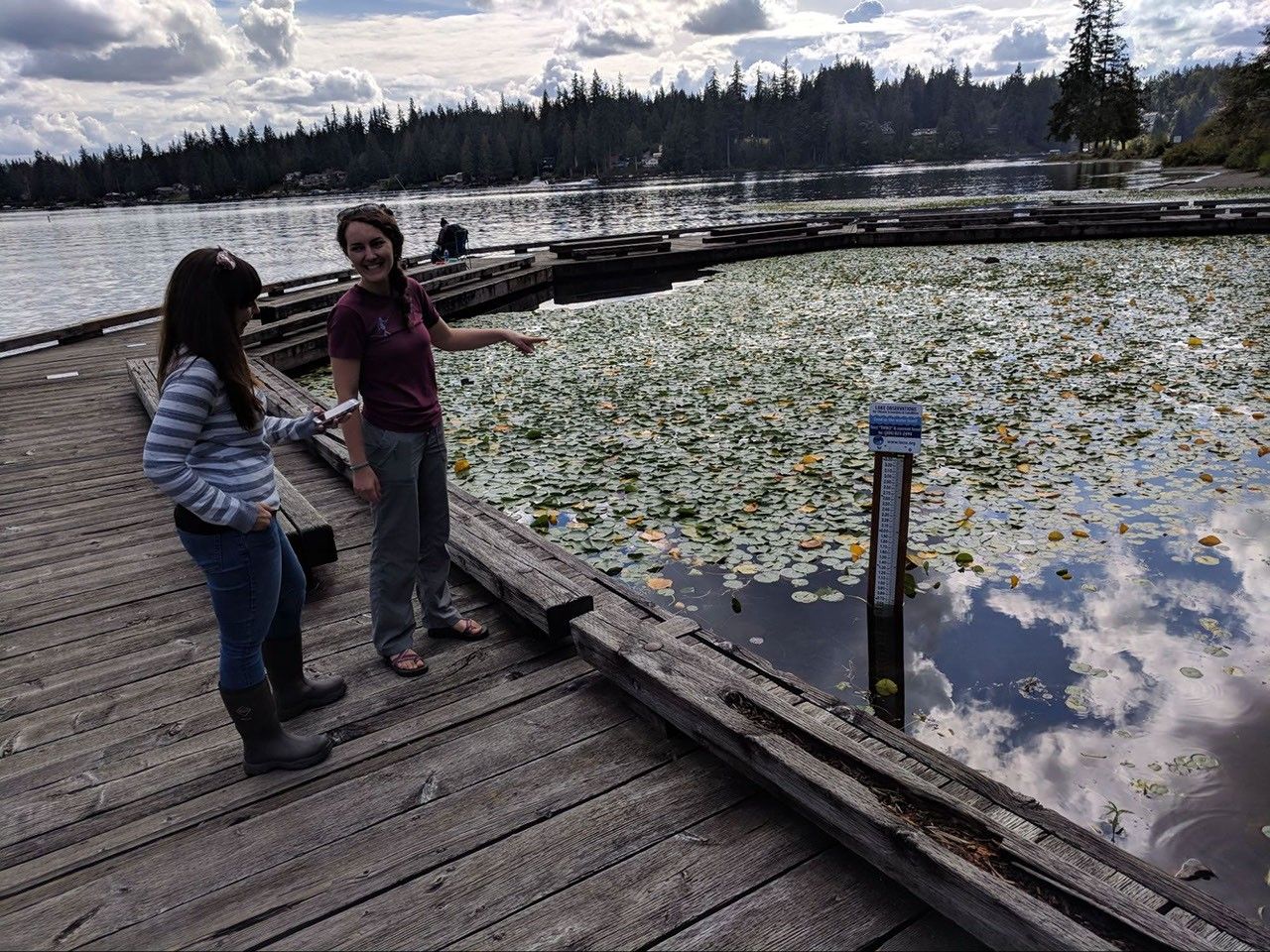
How Small Is Too Small? Volunteers Help NASA Test Lake Monitoring From Space 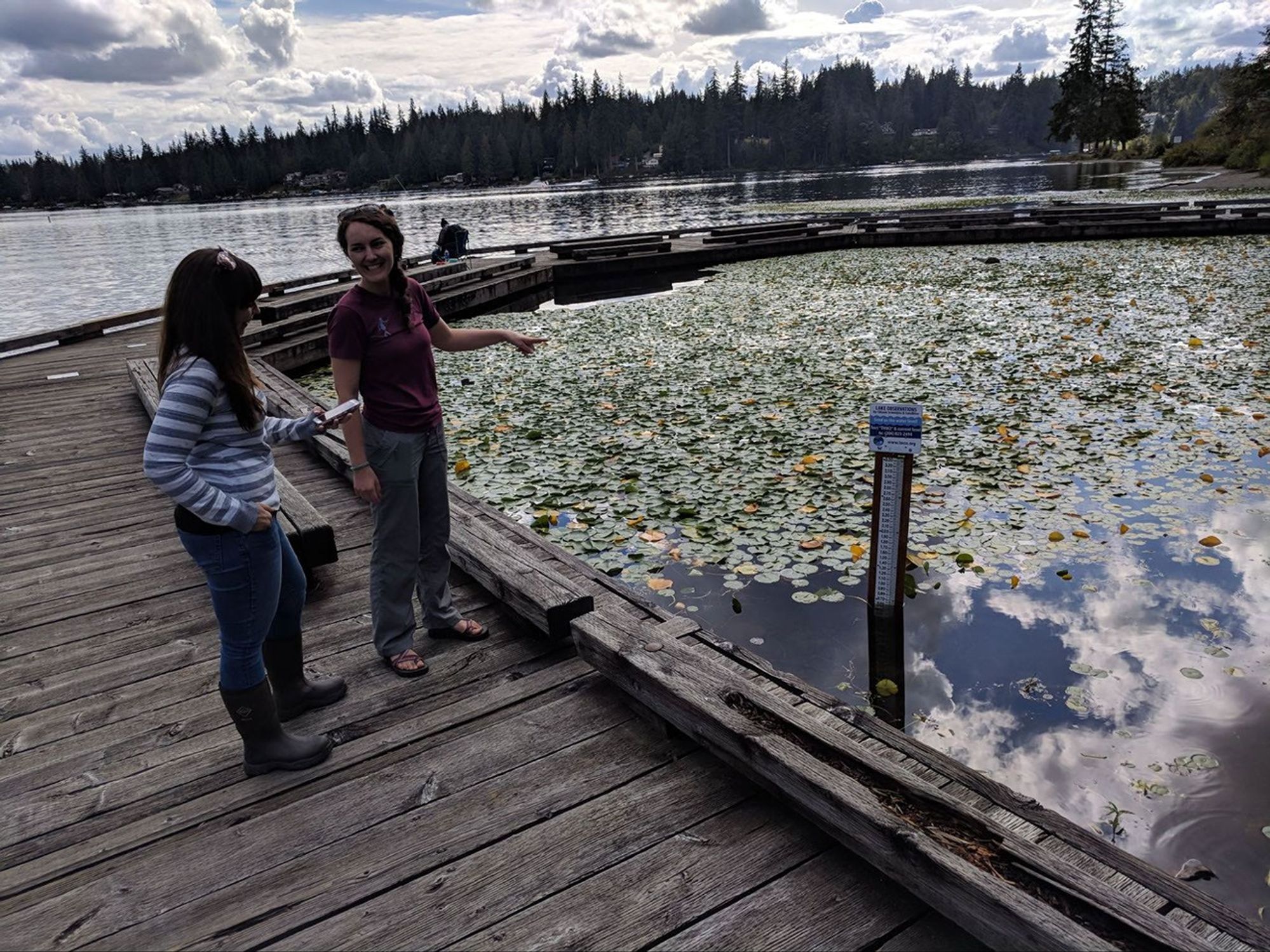 Jen Oden, Snohomish County Water Quality Specialist, and Megan Lane, LOCSS team member, report a lake height measurement at Flowing Lake, Snohomish County, Washington. Visit locss.org to contact the team or to get involved!Grant Parkins, 2018 Volunteers participating in the Lake Observations by Citizen Scientists and Satellites (LOCSS) project have been collecting water level data in lakes since 2017. Now, the LOCSS team has used these data to examine the accuracy of water level measurements made from space. The results, published in GIScience & Remote Sensing, showed that modern satellites with special instruments called nadir altimeters can capture water level variation with relatively high accuracy even for lakes smaller than one square kilometer. These measurements are crucial for scientific research and resource management.
“We can look at the wetland now with different eyes,” said Nelsi Durán, a volunteer from Ciénaga La Musanda, Colombia. (Translated from Spanish).
The work done by LOCSS volunteers also helped reveal where satellite-based lake water level measurements can go wrong. Water level variability turns out to be an important factor. Relatively small lakes with a high lake level variability can be measured from space, but lakes where the water level seldom changes yielded measurements with lower accuracy.
The LOCSS project has included 274 lakes in 10 countries (USA, Canada, Colombia, Chile, Kenya, Spain, France, India, Pakistan, and Bangladesh), so far. Since the project started, more than 10,000 citizen scientists have reported water level measurements to the project.
“We chose to work with the LOCSS team, because it is important for us to try to widen our understanding of how our environments change over time,” said Dan Grigas, an ecologist at Forest Preserve District, DuPage County, Illinois. “This includes how changes in climate patterns in both the near-term and long-term can affect freshwater ecology. This program also allows for and relies on citizen scientists to participate, which strengthens the relationships among government agencies, the people they serve, and the environments that we all treasure.”
Are you passionate about understanding our planet and its precious water resources? Visit locss.org and look for a participating lake near you!
Learn More and Get Involved  Lake Observations by Citizen Scientists and Satellites Take measurements of lake heights and surface areas to reveal how their water volumes are changing!
Facebook logo @nasascience_ @nasascience_ Instagram logo @nasascience_ Linkedin logo @nasascience_
 2 min read New Software from the Dynamic Eclipse Broadcast Initiative Eighty-two volunteer teams with the Dynamic Eclipse Broadcast (DEB) Initiative spent the day spread across…
Article 6 days ago
 3 min read Eclipse Soundscapes Volunteers Empower Others to Get Involved in Scientific Discovery, Post-Eclipse Article 2 weeks ago
  1 min read NASA is Grateful for Citizen Scientists This Thanksgiving, we’re grateful for you!
Article 3 weeks ago