5 min read
How Open NASA Data on Comet 3I/ATLAS Will Power Tomorrow’s Discoveries
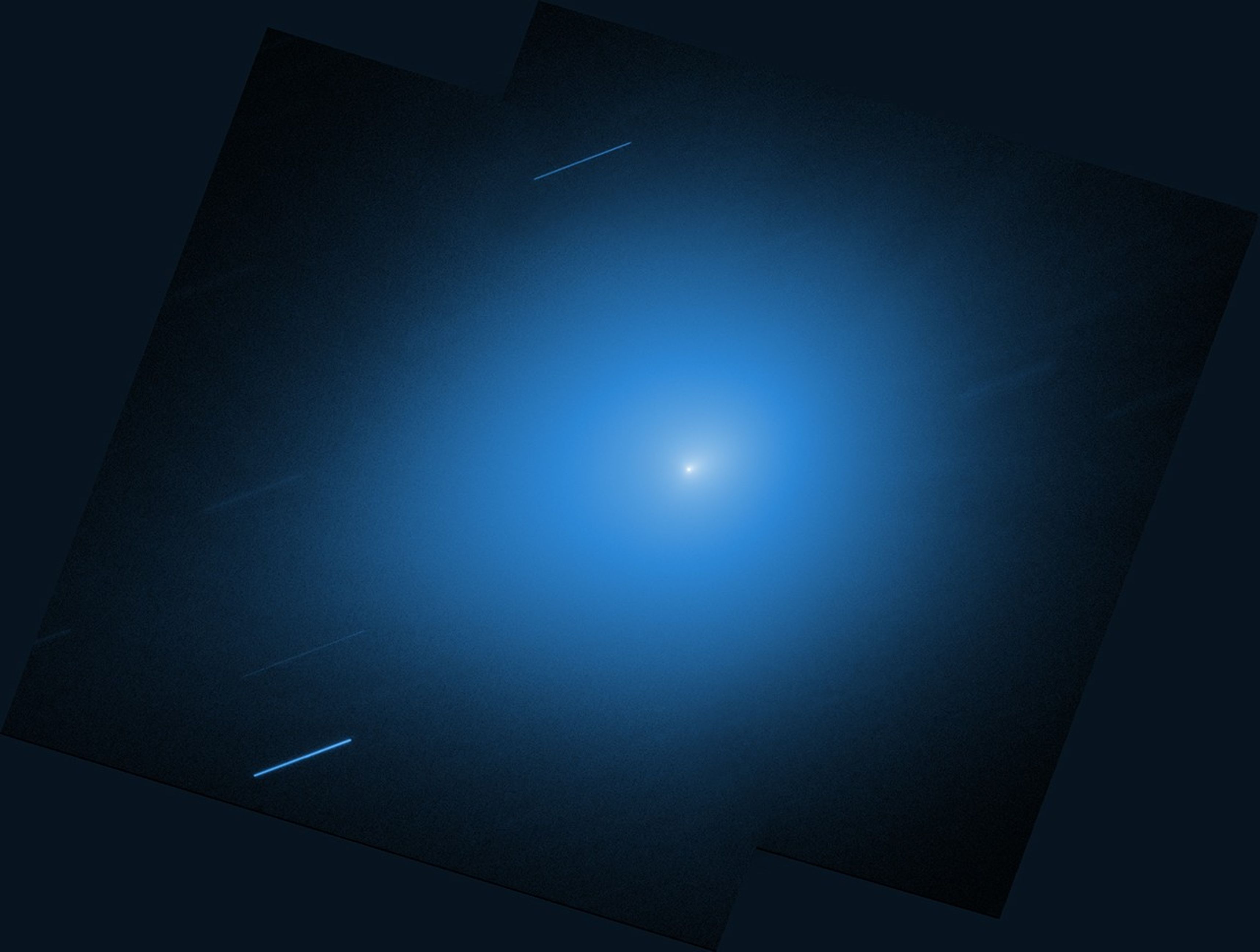
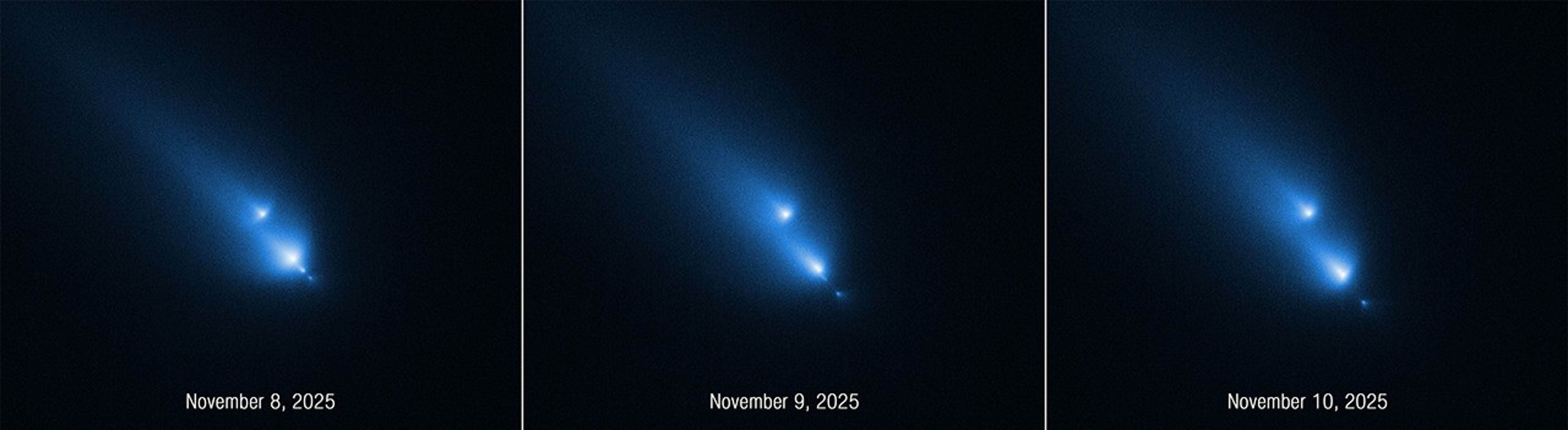
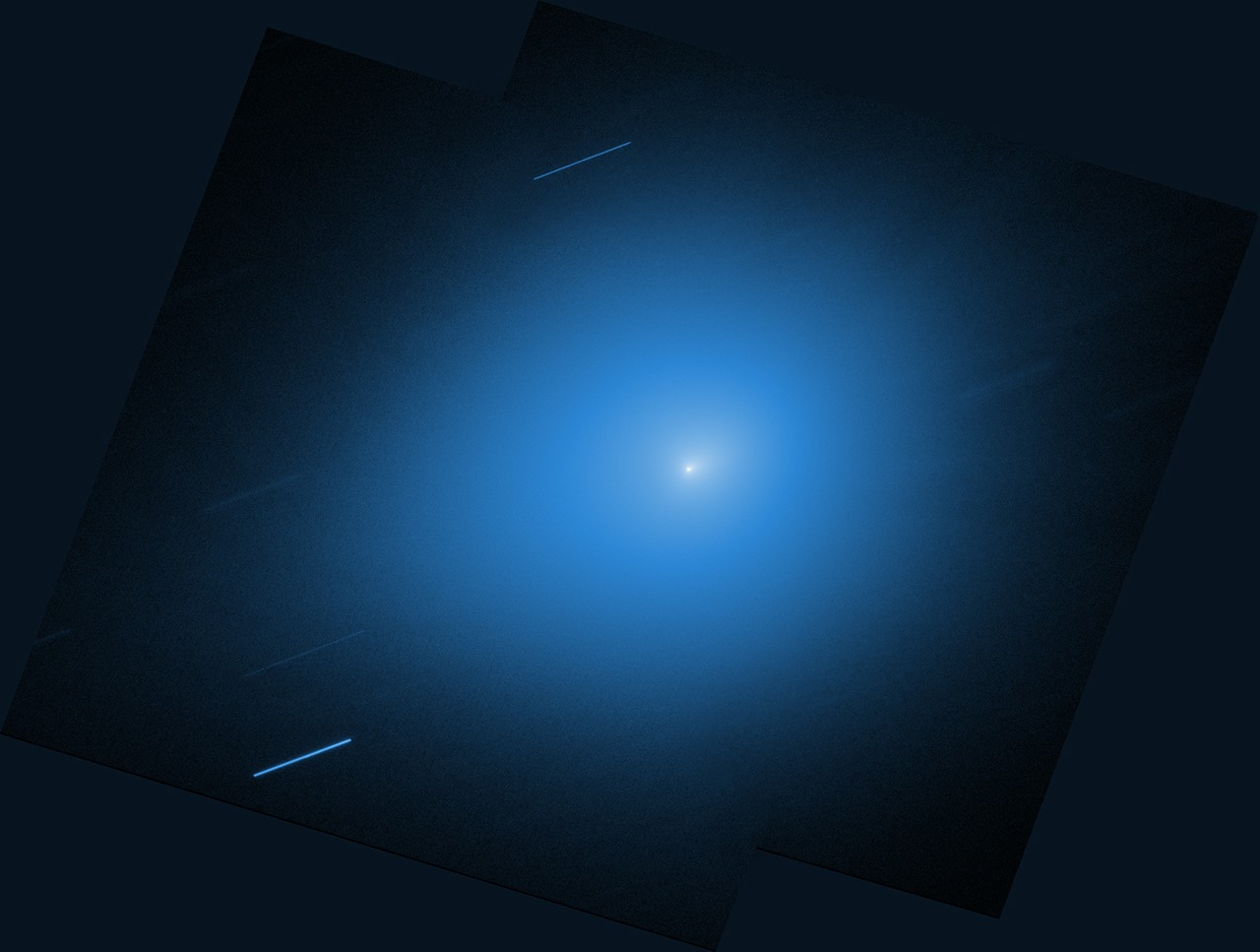
The interstellar comet 3I/ATLAS will soon leave our solar system, never to return, but the observations of the comet will live on in NASA’s public data archives. More than a dozen NASA science missions turned their instruments to observe the comet, which is only the third identified object to be visiting our solar system from interstellar space.
How open data first captured 3I/ATLAS
The NASA-funded ground-based ATLAS (Asteroid Terrestrial-impact Last Alert System) survey telescope in Rio Hurtado, Chile first discovered 3I/ATLAS July 1, 2025. However, queries to another NASA data archive revealed that the comet first appeared on camera long before its official identification in July.
NASA’s TESS (Transiting Exoplanet Survey Satellite), which scans the sky for planets outside our solar system, has a wide field of view that happened to capture 3I/ATLAS in May 2025. This allowed astronomers to better track the comet’s trajectory and understand more about its path through the solar system. TESS data is publicly available in the NASA-funded Barbara A. Mikulski Archive for Space Telescopes (MAST).
“NASA’s scientific data archives are a gold mine of discoveries waiting to be made,” said Kevin Murphy, chief science data officer at NASA Headquarters in Washington. “The early observations of 3I/ATLAS from the TESS mission represent just one example of the exciting insights our open data can reveal.”
Uncovering comet composition
Decades of observations have given scientists a good idea of the usual chemical makeup and structure for comets formed within our solar system, but because 3I/ATLAS formed elsewhere, scientists anticipated this comet would have different characteristics. To date, few, if any, comets have been observed by as many spacecraft as 3I/ATLAS, and combining data from these different missions can deliver powerful new insights.
For example, researchers discovered the relative water, carbon dioxide, and carbon monoxide production rates of 3I/ATLAS differed from typical comets. They found this result by combining spectral data from NASA’s MAVEN (Mars Atmosphere and Volatile EvolutioN) Mars orbiter with infrared observations from NASA’s James Webb Space Telescope and SPHEREx (Spectro-Photometer for the History of the Universe, Epoch of Reionization, and Ices Explorer) mission.

NASA’s commitment to open science makes it easier than ever to work with data from different sources. For example, the agency’s Planetary Data System sets standards that guide planetary science missions to store their data in the same format. It also develops tools that can work across data from several different missions.
“Open science, as a set of principles, has been pushing us as research communities and NASA to make data more accessible,” said Thomas Statler, lead scientist for Solar System Small Bodies at NASA Headquarters, who coordinated the agency’s observation campaign for 3I/ATLAS. “It’s worked into the way we structure and establish standards for our data archives. That’s what makes our data usable.”
Data from SPHEREx, including its observations of 3I/ATLAS, can be accessed through the NASA/IPAC Infrared Science Archive (IRSA). Data from MAVEN is available through the Planetary Data System. Webb’s observations can be found in the MAST archive.
Future research
In the short term, scientists and researchers will be able to use 3I/ATLAS data to learn even more about the comet’s structure and composition. However, the impact of NASA’s observations will have effects far beyond this one target.
Humans only recently developed technologies capable of spotting interstellar objects passing through our solar system. The first one ever detected, ‘Oumuamua, was discovered in 2017, but scientists estimate an interstellar object may pass through our solar system about once per year. With the advent of ever more powerful telescopes, these discoveries will become much more common.
As we become more aware of interstellar objects, scientists will increasingly be able to compare and contrast interstellar objects with each other and understand them as a group.
The amount of data collected about 3I/ATLAS means this comet could become an important part of the context for understanding interstellar comets for the rest of time. This makes it even more beneficial for that data to be available for everyone to access.
“Thirty-five years from now, when astronomers have seen another thirty-five years’ worth of data on interstellar comets, they’re going to be asking different questions,” Statler said. “The way we leave a legacy so scientists of the future can answer the questions of the future is by having these data here and preserved for them to use.”
NASA’s Office of the Chief Science Data Officer leads the open science efforts for the agency. Public sharing of scientific data, tools, research, and software maximizes the impact of NASA’s science missions. To get more stories about the impact of NASA’s science data delivered directly to your inbox, sign up for the NASA Open Science newsletter. To learn more about NASA’s commitment to transparency and reproducibility of scientific research, visit:
By Lauren Leese
Web Content Strategist for the Office of the Chief Science Data Officer
Share
Details
Related Terms
Explore More