
More biotechnology research was underway aboard the International Space Station on Wednesday taking advantage of the microgravity environment to boost knowledge about the properties of DNA and DNA-like nanomaterials. The Expedition 74 crew also completed the installation of an advanced exercise device and tested a set of new virtual reality goggles while continuing to unpack a U.S. cargo spacecraft.
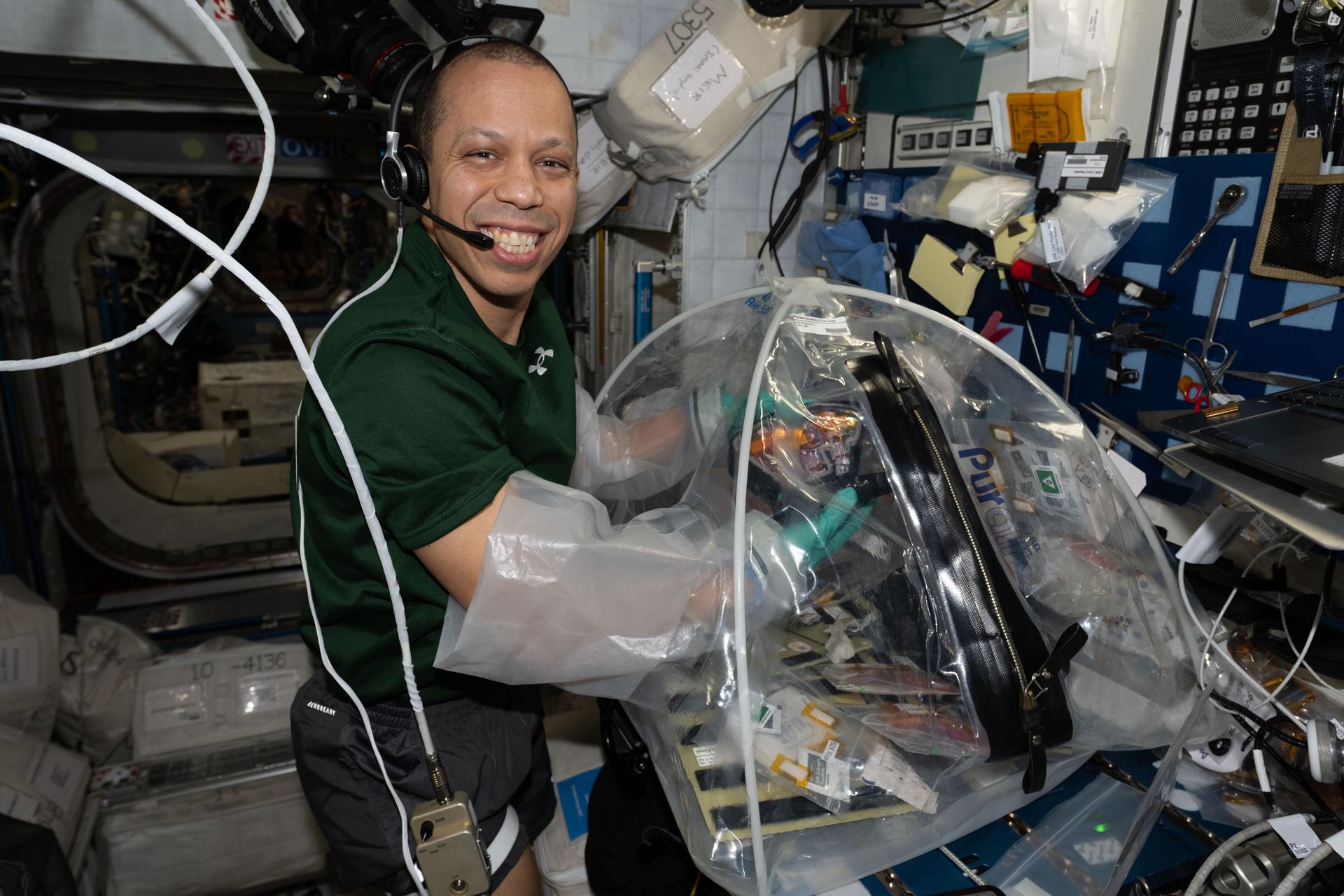
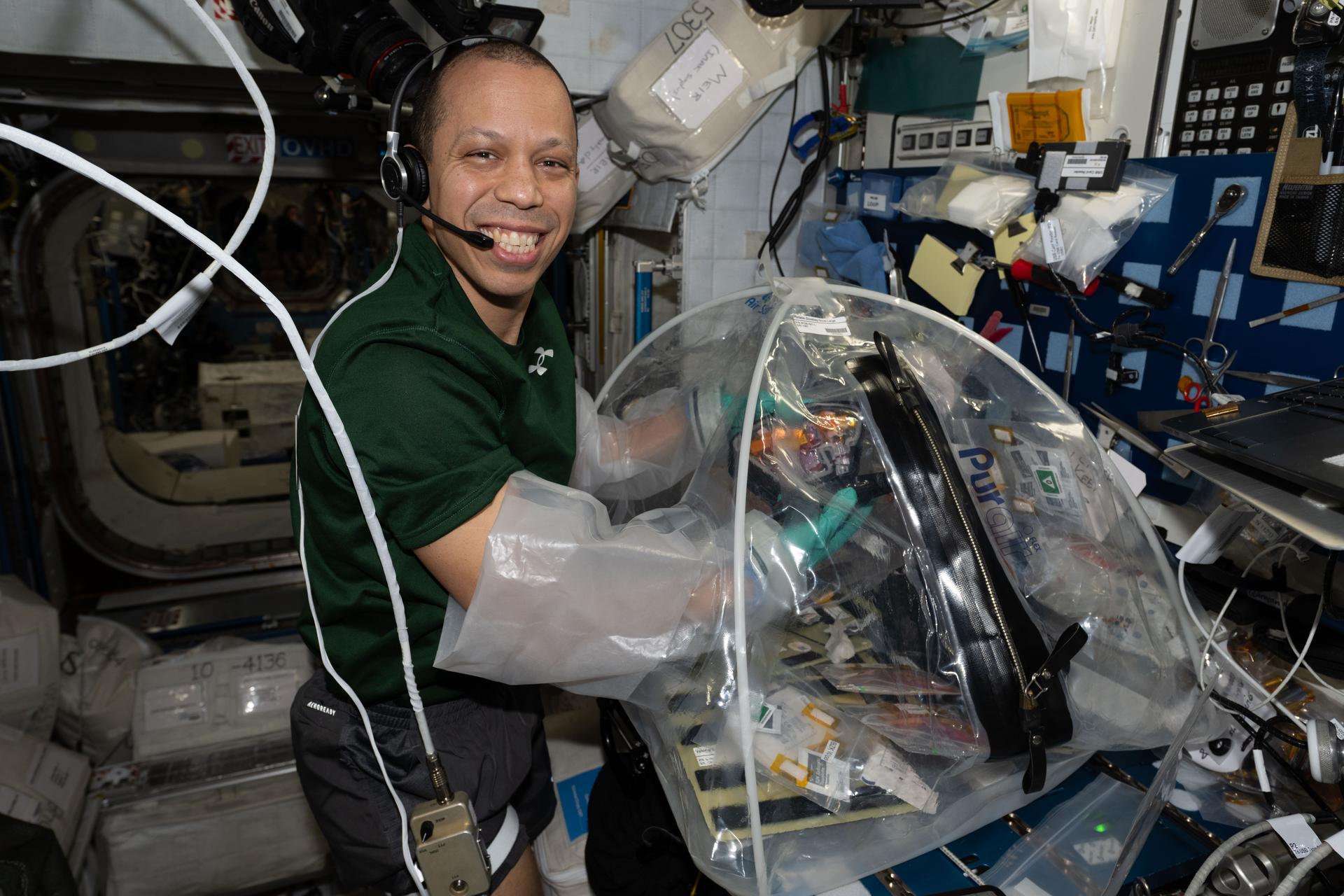
Flight engineers Chris Williams of NASA and Sophie Adenot of ESA (European Space Agency) joined each other in the Kibo laboratory module processing samples of genetic materials for the DNA Nano Therapeutics-3 experiment. The investigation is exploring DNA-inspired assembly techniques as a way to manufacture treatments, or nano-therapies such as chemotherapy and immunotherapy, to kill cancer cells and activate the immune system. The manufactured samples will be analyzed first on the orbital outpost with a spectrophotometer then returned to Earth for more analysis.
NASA flight engineer Jessica Meir began her shift swapping scientific hardware inside the Columbus laboratory module’s BioLab, an incubator supporting research into the effects of microgravity on small organisms. The science maintenance work is supporting the Lux in Space investigation that observes how DNA damaged by space radiation repairs itself. While still working inside Columbus, Meir checked and secured power connections for the new European Enhanced Exploration Exercise Device, or E4D. The E4D is being tested for its ability to support crew workouts on missions to the Moon, Mars, and beyond. Finally, Meir reviewed the Nevada Vision Screening System, a head-mounted virtual reality display that measures as astronaut’s visual function to protect eyesight in space.
NASA flight engineer Jack Hathaway worked throughout Wednesday supporting his crewmates with the scientific work then continued with cargo transfers and medical inventory management. He first activated Kibo’s Life Science Glovebox enabling Williams and Adenot to work on the DNA therapy study then photographed Meir as she swapped hardware on the BioLab. Next, Hathway unpacked more cargo from Northrop Grumman’s Cygnus XL resupply ship then refilled the Columbus lab’s Human Research Facility with medical gear including blood tube kits, needles, electrodes, and gloves.
Working together in the Roscosmos segment of the orbital outpost, flight engineers Sergei Mikaev and Andrey Fedyaev participated in a fitness evaluation. Mikaev pedaled on an exercise cycle while attached to sensors measuring his cardiac activity while Fedyaev assisted him. Next, Fedyaev tested the operation of the Zvezda service module’s treadmill then worked on the Nauka science module’s orbital plumbing system.
Later, Mikaev joined station commander Sergey Kud-Sverchkov and began configuring simulation hardware that will help the duo prepare for the automated rendezvous and docking of the Progress 95 cargo mission planned for 8 p.m. EDT on Monday, April 27. Kud-Sverchkov also worked inside the Zarya module replacing battery units inside its power supply system.
Learn more about station activities by following the space station blog, @space_station on X, as well as the ISS Facebook and ISS Instagram accounts.
Get the latest from NASA delivered every week. Subscribe here.