
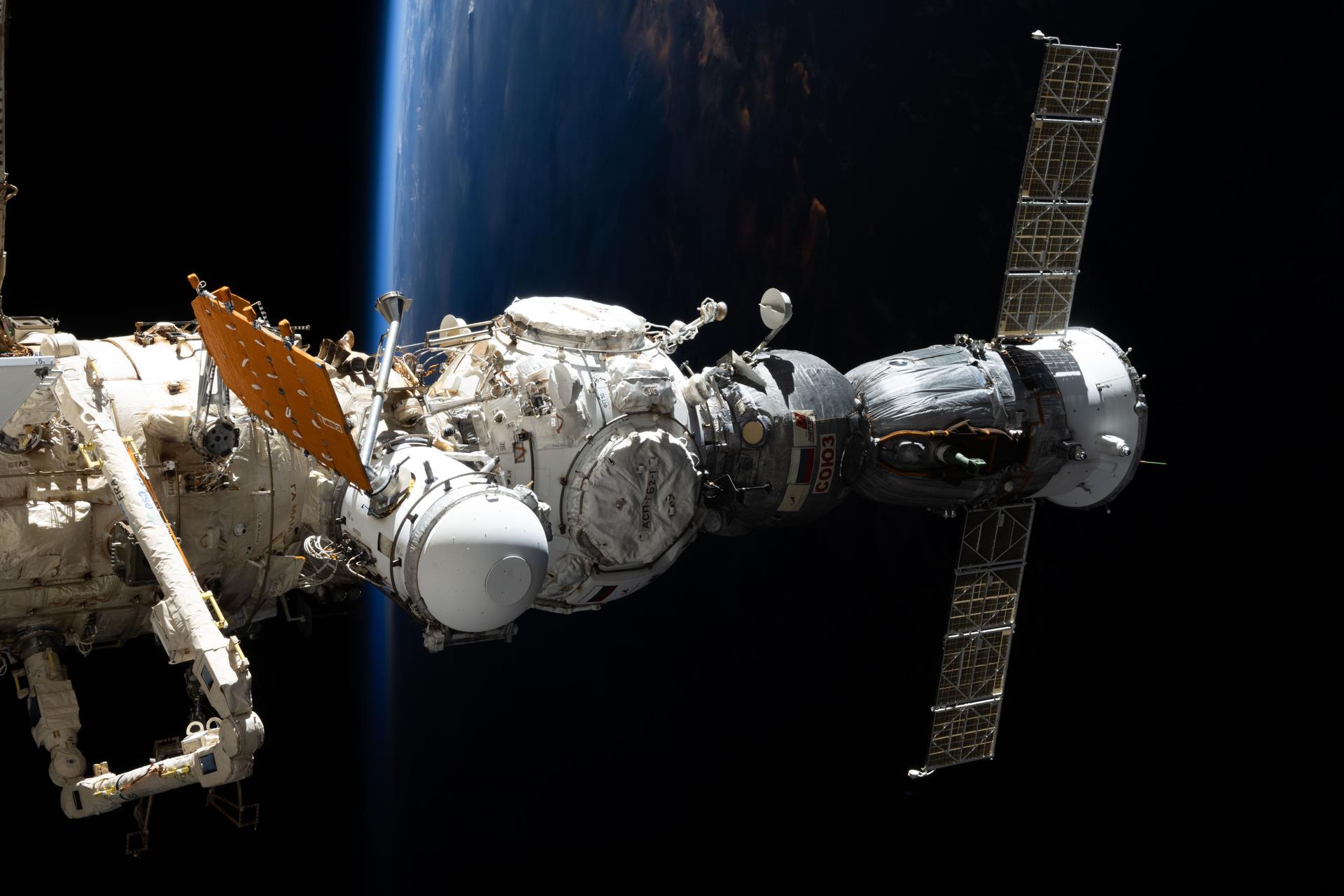
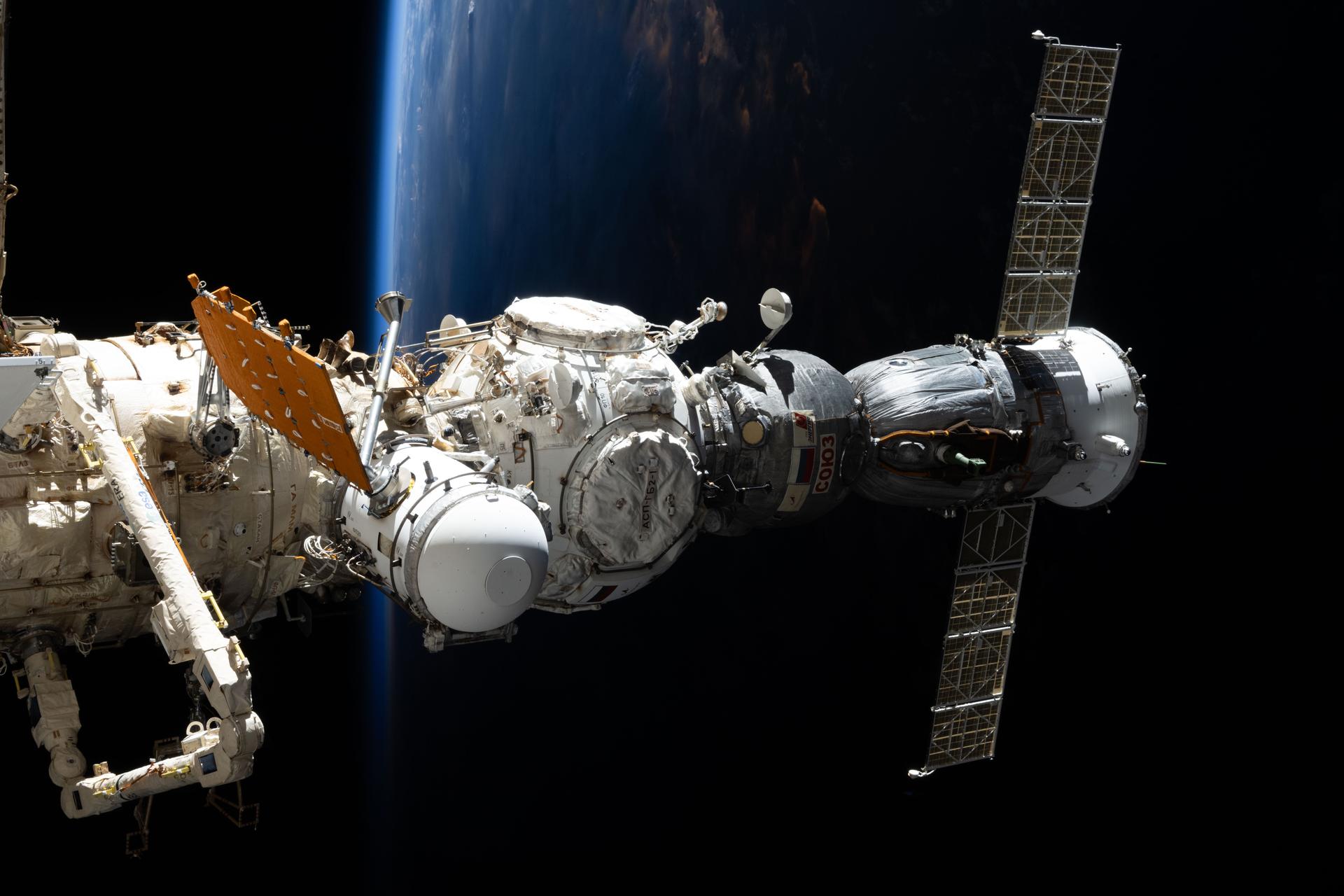
Expedition 73 will swap commanders this weekend before three crew members return to Earth on Monday. Expedition 74 officially begins once the home bound trio undocks from the Rassvet module inside the Soyuz MS-27 spacecraft the following day.
Veteran Roscosmos cosmonaut and station Commander Sergey Ryzhikov will hand over a symbolic key representing command of the orbital outpost to four-time space flyer NASA astronaut Mike Fincke at 10:30 a.m. EDT on Sunday, Dec. 7. Fincke will formally take responsibility of station operations and lead the new Expedition 74 crew at the moment Ryzhikov and Flight Engineers Alexey Zubritsky of Roscosmos and Jonny Kim of NASA back away from the orbital outpost inside their Soyuz at 8:41 p.m. on Monday. Ryzhikov and Zubritsky spent Friday packing cargo and personal items inside the Soyuz MS-27 and making final preparations for their Monday night departure with Kim.
The trio aboard the Soyuz descent module will parachute to landing in Kazakhstan less than three-and-a-half hours later at 12:04 a.m. on Tuesday completing an eight-month space research journey orbiting over 250 miles above Earth. NASA’s live coverage of the crew’s return will be broadcast on NASA+, Amazon Prime, and the agency’s YouTube channel beginning at 4:45 p.m. on Monday with farewell and hatch closure.
NASA Flight Engineer Chris Williams, who arrived at the station with Flight Engineers Sergey Kud-Sverchkov and Sergei Mikaev on Nov. 27, has stepped into his new role as a first-time station astronaut and assisted Kim inside the Quest airlock on Friday installing lights, cameras, and straps on a pair of spacesuit helmets. Williams then wore electrodes around his eyes as computerized medical gear operated by NASA Flight Engineer Zena Cardman sent light signals to test his retinal response in microgravity.
Kim also cleaned his crew quarters and took airflow measurements as he prepares to end his stay in space. Cardman later checked out wireless high-definition camera hardware to be used inside the station when photographing future spacewalks.
Flight Engineers Sergey Kud-Sverchkov and Sergei Mikaev took turns measuring their blood pressure then getting up to speed with life on orbit during the first half of Friday. Next, Kud-Sverchkov and Mikaev collected a variety of station microbial and personal biological samples for stowage and analysis as part of ongoing research to keep crews healthy in space.
Flight Engineer Kimiya Yui of JAXA (Japan Aerospace Exploration Agency uninstalled the NanoRacks CubeSat deployer after it deployed several tiny satellites into Earth orbit for government, educational, and commercial research. Fincke spent his shift replacing orbital plumbing components and inspecting fire extinguishers and breathing masks. Roscosmos Flight Engineer Oleg Platonov completed the end of the week transferring fluids into a Progress cargo craft then assisted Kud-Sverchkov processing microbe samples swabbed from surfaces in the station’s Roscosmos segment.
Learn more about station activities by following the space station blog, @space_station on X, as well as the ISS Facebook and ISS Instagram accounts.
Get the latest from NASA delivered every week. Subscribe here.