
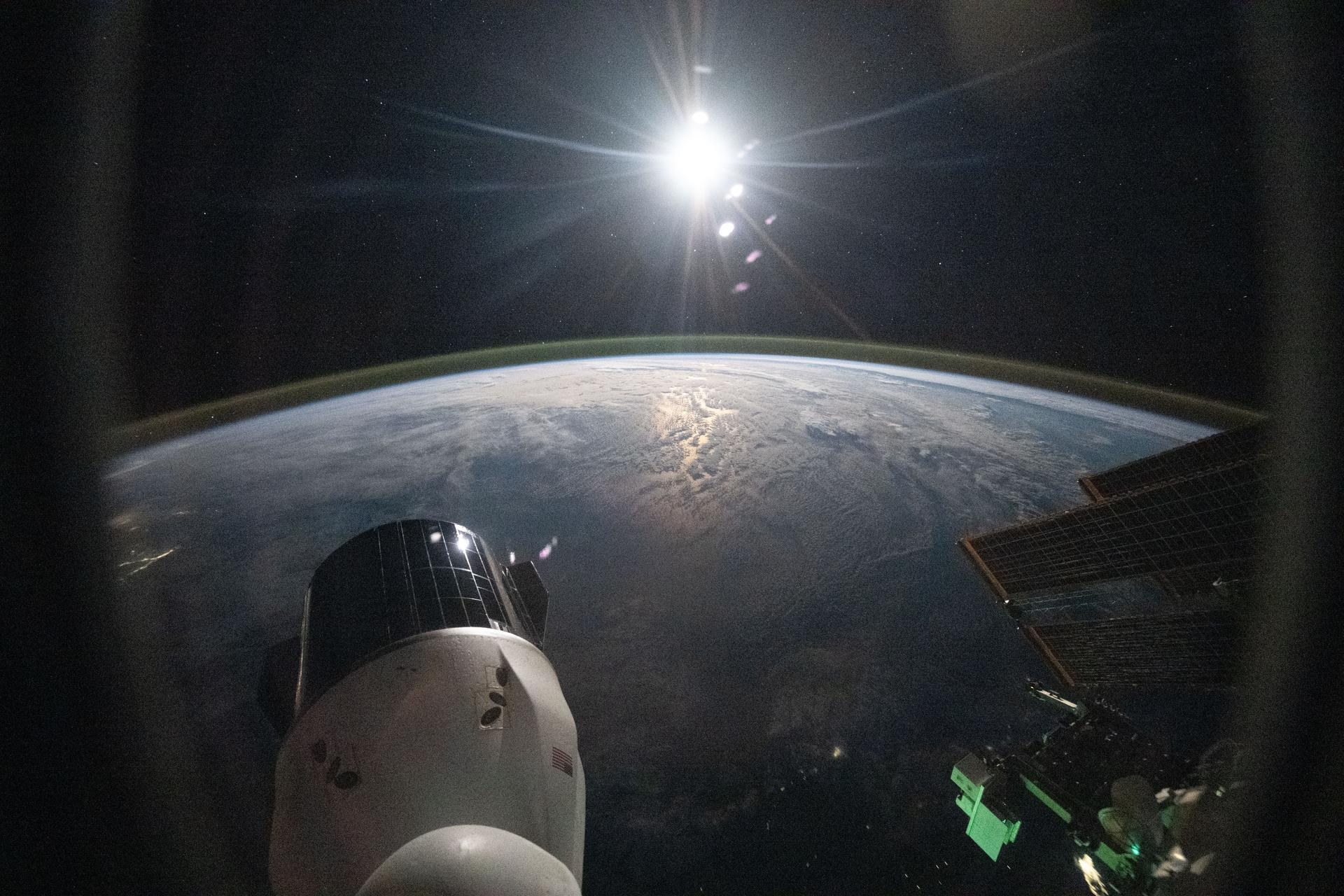
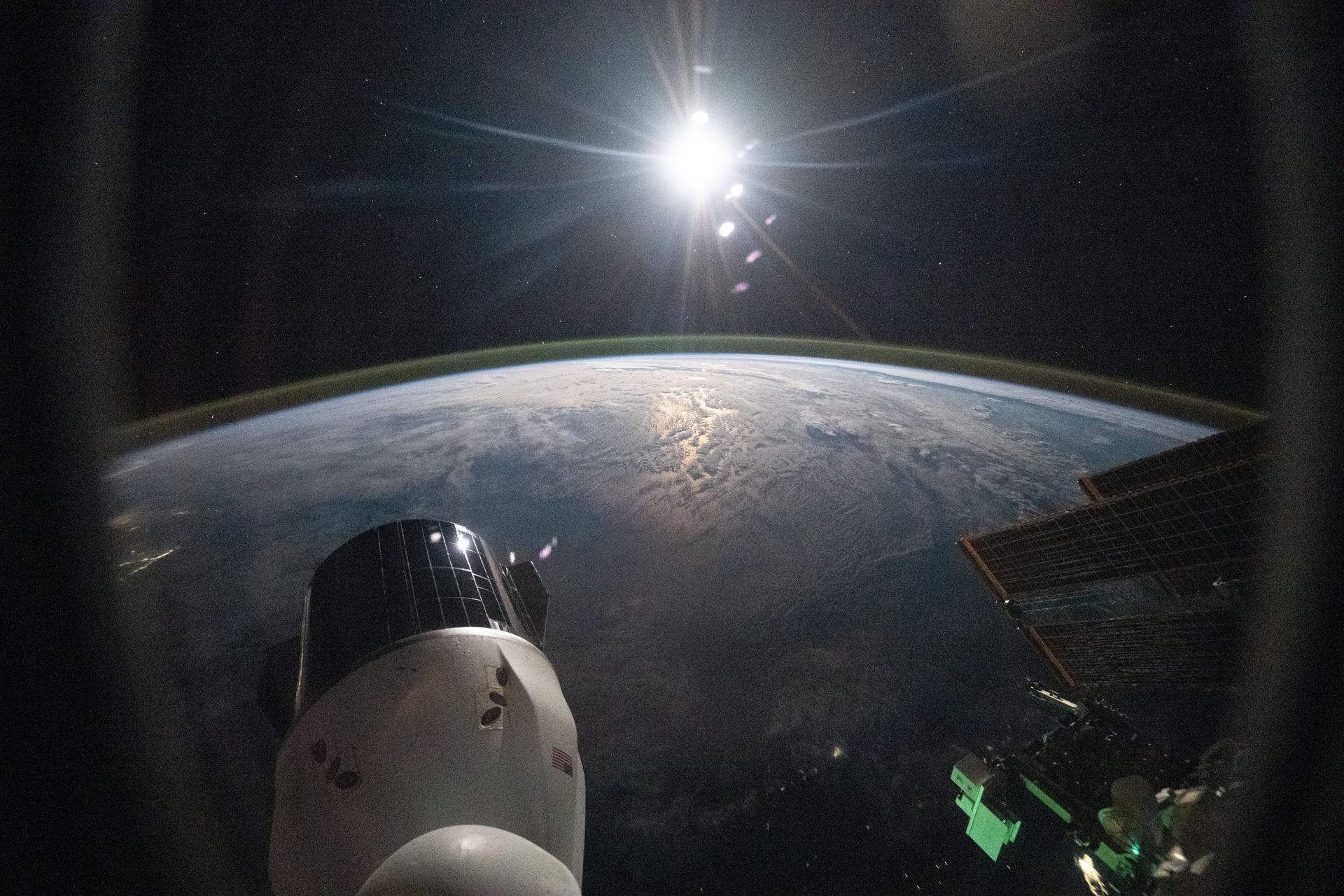
The Expedition 74 crew will finalize the packing of a SpaceX Dragon spacecraft as it nears its departure later this week. Science operations were still underway aboard the International Space Station on Tuesday as the orbital residents explored how living and working in weightlessness is affecting their bodies.
NASA and SpaceX have scheduled Dragon to undock from the Harmony module’s forward port at 12:05 p.m. EST on Thursday. Live streaming coverage begins at 11:45 a.m. on NASA+, Amazon Prime, and the agency’s YouTube channel. Learn how to watch NASA content on a variety of online platforms, including social media.
Dragon will be returning numerous science experiments completed aboard the orbital outpost for retrieval and analysis on Earth. Packed inside the spacecraft will be samples of materials exposed to the harsh environment of space, flat liquid crystal films, stem cells programmed to become cardiac and brain cells, and more. Results from the investigations may lead to advanced Earth and space technologies and improved human health. Dragon’s parachute-assisted splashdown off the coast of California a half-a-day later will not be broadcast.
NASA Flight Engineers Chris Williams and Jessica Meir transferred portable science freezers containing numerous research samples, including stem cells and microbes, into Dragon on Tuesday. The duo also partnered with Flight Engineer Sophie Adenot of ESA (European Space Agency) continuing to load and secure station hardware inside Dragon for the ride back to Earth. Adenot also collected her saliva samples for immunological analysis then continued familiarizing herself with living and working aboard the space station.
NASA Flight Engineer Jack Hathaway began his shift inside the Kibo laboratory module servicing the small satellite orbital deployer that is regularly placed outside the orbital outpost to eject CubeSats into Earth orbit for public, private, and educational research. Hathaway then joined Meir at the end of their shift and continued studying station systems and procedures such as using exercise gear, handling safety equipment, and performing medical procedures.
Station Commander Sergey Kud-Sverchkov and Flight Engineer Sergei Mikaev, both Roscosmos cosmonauts, worked together on a pair of human research experiments on Tuesday. Kud-Sverchkov and Sergei Mikaev took turns wearing chest electrodes and arm, wrist, and thumb cuffs measuring their cardiac activity and blood pressure. Doctors are assessing microgravity’s effect on blood flow regulation, clot prevention, and inflammation responses. The duo also wore virtual reality goggles and responded to visual and audio signals to test a crew member’s sense of balance and orientation in space.
Roscosmos Flight Engineer Andrey Fedyaev kicked off his shift wearing an acoustic sensor attached to his neck that recorded his rapid exhalation to understand how microgravity affects his breathing. Next, Fedyaev set up a space physics experiment and used molecular beams to explore semiconductor growth in microgravity. Results may lead to advanced electronics systems and scientific instruments for spacecraft and satellites. At the end of his shift, Fedyaev installed Earth observation gear for an automated overnight photography session to capture ground targets in a variety of wavelengths.
Learn more about station activities by following the space station blog, @space_station on X, as well as the ISS Facebook and ISS Instagram accounts.
Get the latest from NASA delivered every week. Subscribe here.