
Cartilage repair, cardiac research, and cargo operations wrapped up the week for the Expedition 74 crew before heading into a relaxing three-day weekend. The International Space Station is also orbiting higher following a reboost maneuver on Wednesday.
NASA flight engineer Jessica Meir opened up the Kibo laboratory module’s Life Science Glovebox on Thursday and continued studying how cartilage tissues grow in microgravity. She nourished the cartilage cell samples inside the glovebox then processed them for stowage inside a research incubator. Scientists are exploring engineering cartilage tissues in space possibly leading to self-repairing implants on Earth and advanced fitness techniques for space crews.
NASA flight engineer Chris Williams began his shift with Roscosmos flight engineer Sergei Mikaev in the Columbus laboratory module for neck, shoulder, and leg vein scans using the Ultrasound 3 device that was delivered aboard Northrop Grumman’s Cygnus XL resupply ship on April 14. Doctors will analyze the biomedical data from the Ultrasound 3 for insights into microgravity’s effect on the human circulatory system and learn how to protect crew members from space-caused blood clots. Next, Williams focused on cargo transfers inside Cygnus XL which is attached to the Unity module’s Earth-facing port. Meir, along with flight engineer Sophie Adenot of ESA (European Space Agency), assisted Williams with the cargo work. Cygnus XL is in the middle of a six-month stay at the orbital outpost.
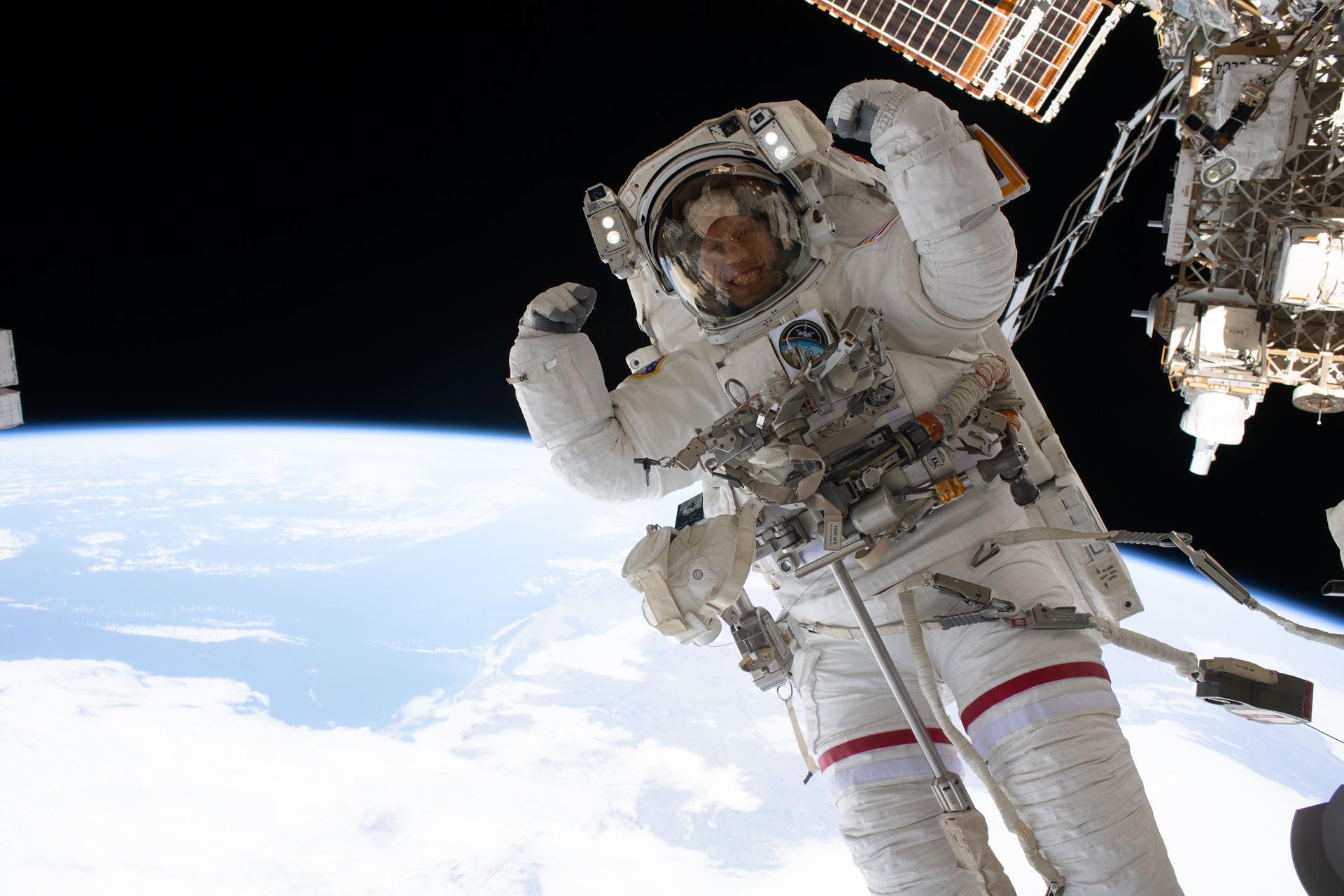
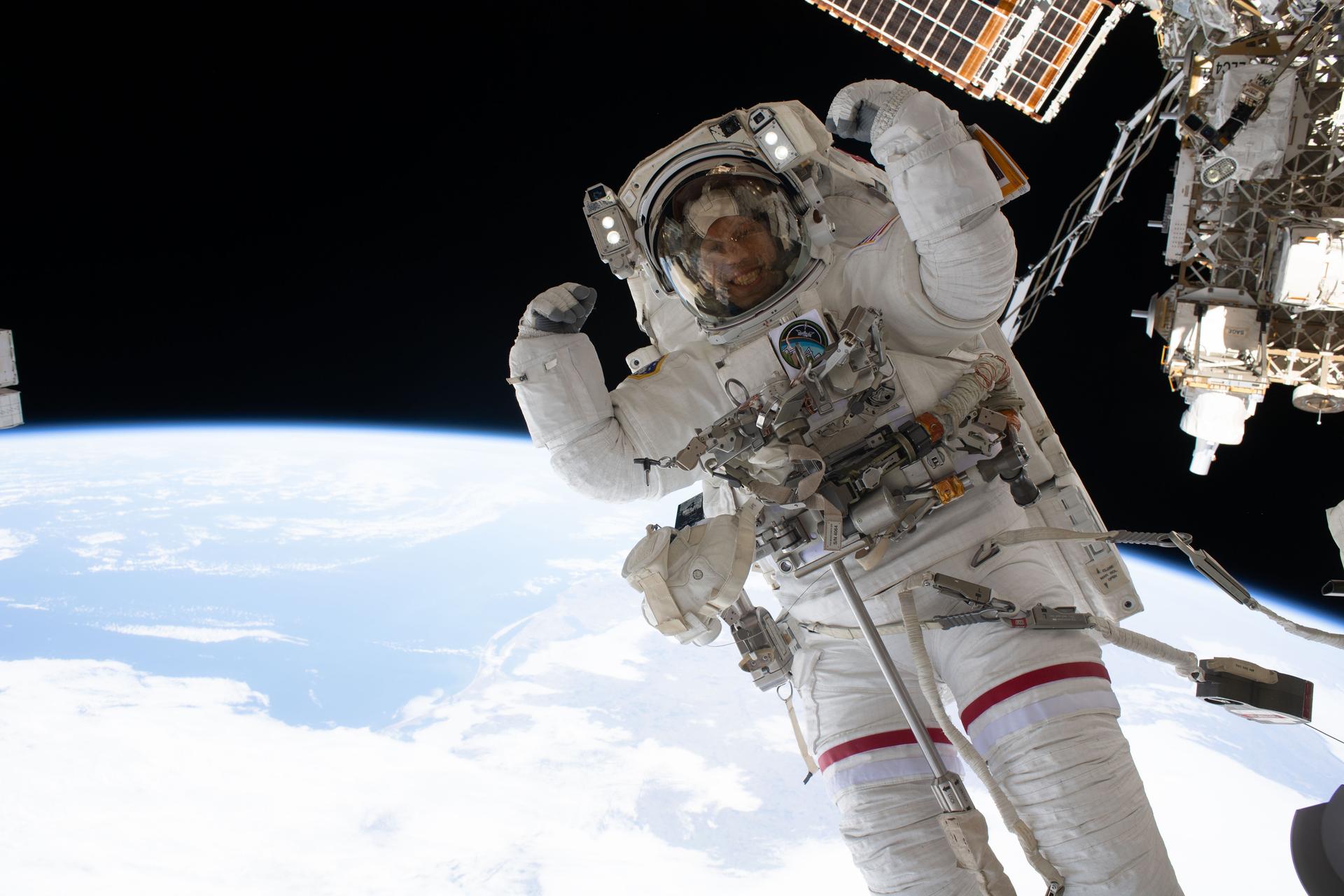
Adenot also partnered up with NASA flight engineer Jack Hathaway and configured an extra sleep station, also called a crew alternate sleep accommodation, in Columbus preparing it for an upcoming crew swap later this month. Earlier, Hathaway inspected hatch seals then stowed cameras used during Tuesday’s spacewalk. Adenot updated an exercise database that records a crew member’s physical condition after a workout session aboard the space station.
Mikaev continued his blood circulation research with station commander Sergey Kud-Sverchkov and studied how blood flows in tiny vessels, or the micro-circulatory system. The duo wore light-based sensors on their forehead, fingers, and toes and pointed a laser beam that interacted with the skin providing signals that characterize blood flow and distribution in weightlessness. Results may enable early detection of space-caused blood conditions and the development of advanced medical technology.
Flight engineer Andrey Fedyaev focused primarily on maintenance tasks throughout the orbital outpost’s Roscosmos segment. Fedyaev began his shift replacing orbital plumbing components then servicing an oxygen generator. After lunchtime, the two-time station resident tested computer operations in the Nauka science module then documented stowage space and the location of hardware in the Zarya module.
The International Space Station is orbiting slightly higher after a Progress 95 resupply ship docked to the Zvezda service module fired its engines for nine-and-a-half-minutes on Wednesday. The reboost places the orbital outpost at the correct altitude for the arrival of the Soyuz MS-29 spacecraft and its three crew members, Roscosmos cosmonauts Pyotr Dubrov and Anna Kikina and NASA astronaut Anil Menon, in mid-July. A few days after the new trio arrives, Kud-Sverchkov, Mikaev, and Williams will return to Earth aboard the Soyuz MS-28 spacecraft completing the Expedition 74 mission.
Learn more about station activities by following the space station blog, @space_stationon X, as well as the ISS Facebook and ISS Instagram accounts.
Get the latest from NASA delivered every week. Subscribe here.