
Biotechnology research was back on the schedule aboard the International Space Station on Thursday as the Expedition 74 crew conducted a pair of heart studies, explored cancer therapies, and demonstrated a self‑sustaining life‑support system.
NASA flight engineer Jessica Meir processed samples of heart stem cells and bacteria that cause pneumonia using a portable glovebag inside the Harmony module. Observations in microgravity may give doctors a clearer understanding of how cellular and molecular mechanisms of infectious diseases damage heart tissue. Insights could lead to advanced treatments for heart conditions on and off the Earth.
Roscosmos cosmonauts Sergey Kud-Sverchkov, Sergei Mikaev, and Andrey Fedyaev joined each other at the beginning of their shift and studied how a resting heart behaves in weightlessness. During the experiment operations a crew member assists another crew member wearing chest and limb sensors that measure cardiac bioelectric activity. Results will help inform doctors how a long-term spaceflight affects the human heart.
Afterward, Kud-Sverchkov and Sergei Mikaev trained for the upcoming arrival of the Progress 95 resupply ship due to launch at 6:21p.m. EDT on Saturday and dock to the Zvezda service module’s aft port at 8 p.m. on Monday. Fedyaev inventoried supplies stowed in medical kits then collected air samples throughout the orbital outpost’s Roscosmos segment for analysis.
Flight engineers Jack Hathaway of NASA and Sophie Adenot of ESA (European Space Agency) partnered together inside the Kibo laboratory module manufacturing DNA-inspired nanomaterials to treat cancer and other chronic diseases. The duo worked inside Kibo’s Life Science Glovebox taking advantage of the microgravity environment to improve the production of immunotherapies and chemotherapies benefitting human health.
Hathaway also took turns with NASA flight engineer Chris Williams treating samples of spirulina microalgae inside a temperature-controlled incubator located in Kibo’s Cell Biology Experiment Facility. Scientists are exploring ways to cultivate spirulina and design biological systems that can produce food and recycle air for future deep‑space missions.
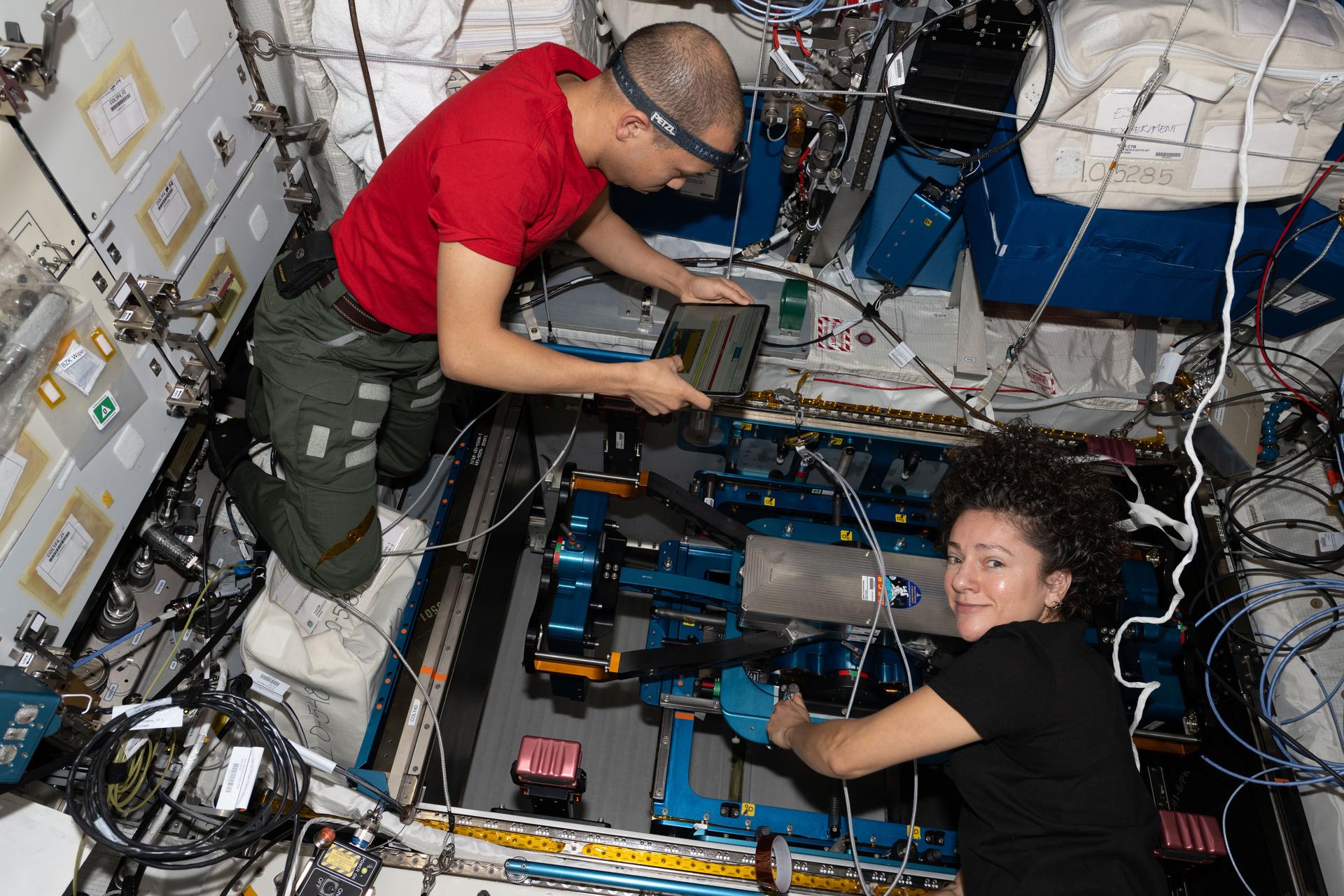
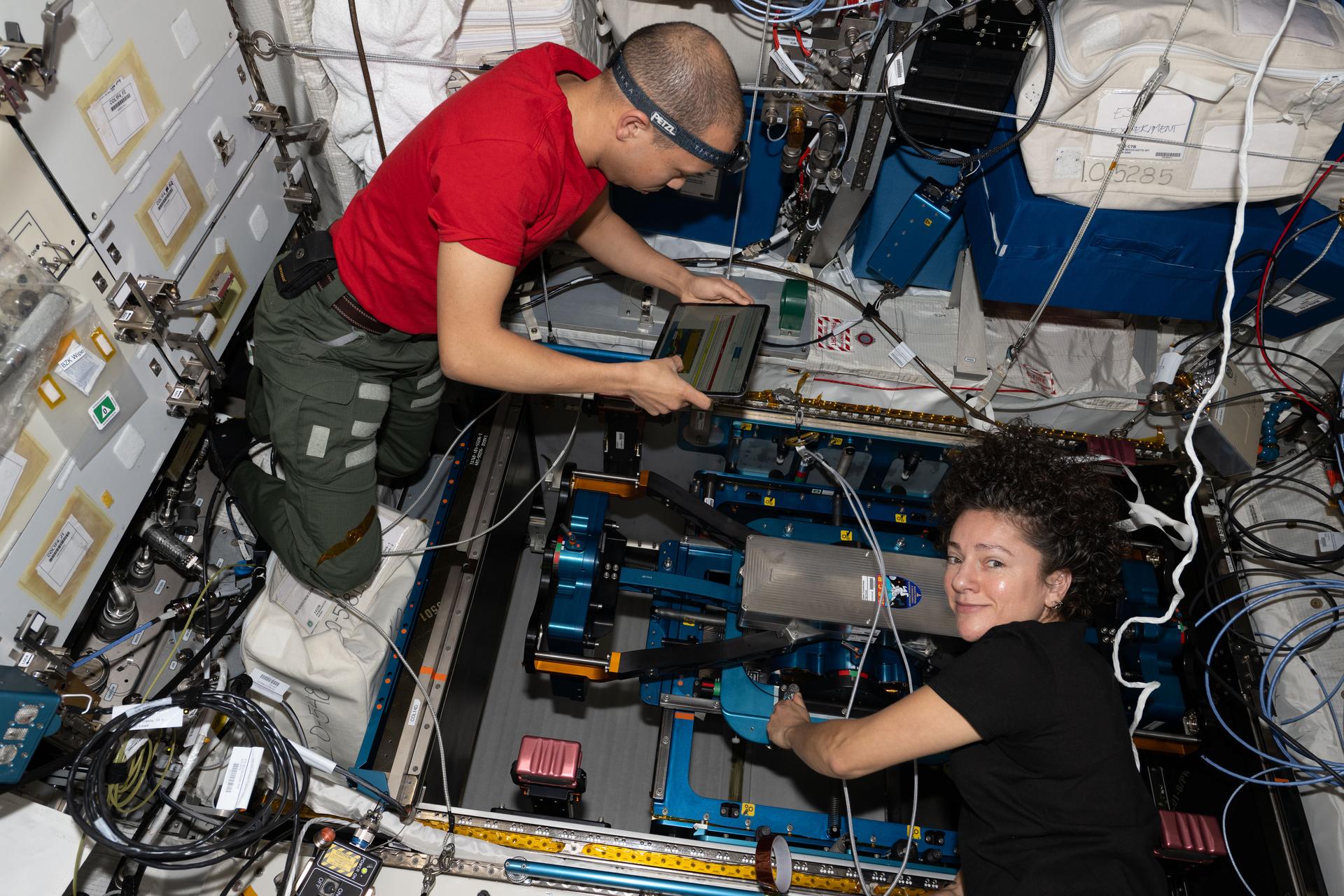
Williams earlier in his shift, joined Meir and helped her check and secure power connections on the new European Enhanced Exploration Exercise Device, or E4D. The E4D is being tested for its ability to support crew workouts on missions to the Moon, Mars, and beyond.
Learn more about station activities by following the space station blog, @space_station on X, as well as the ISS Facebook and ISS Instagram accounts.
Get the latest from NASA delivered every week. Subscribe here.