
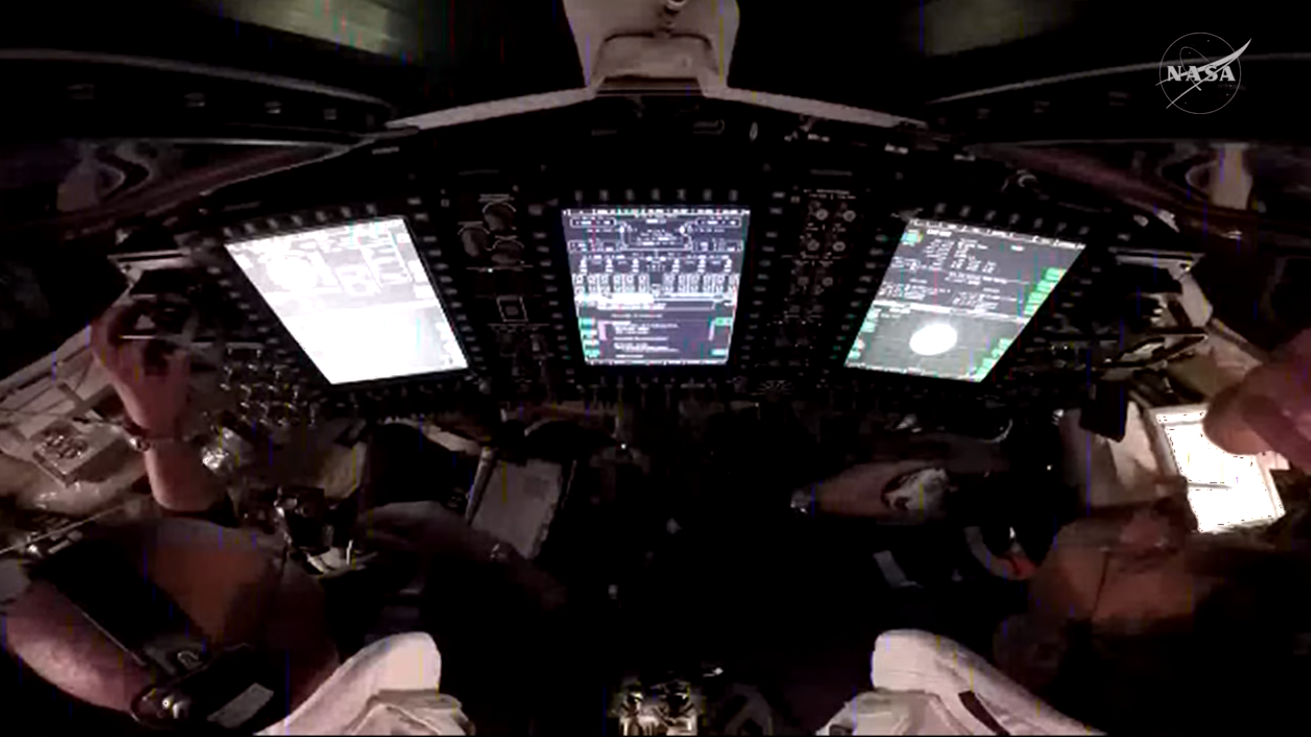
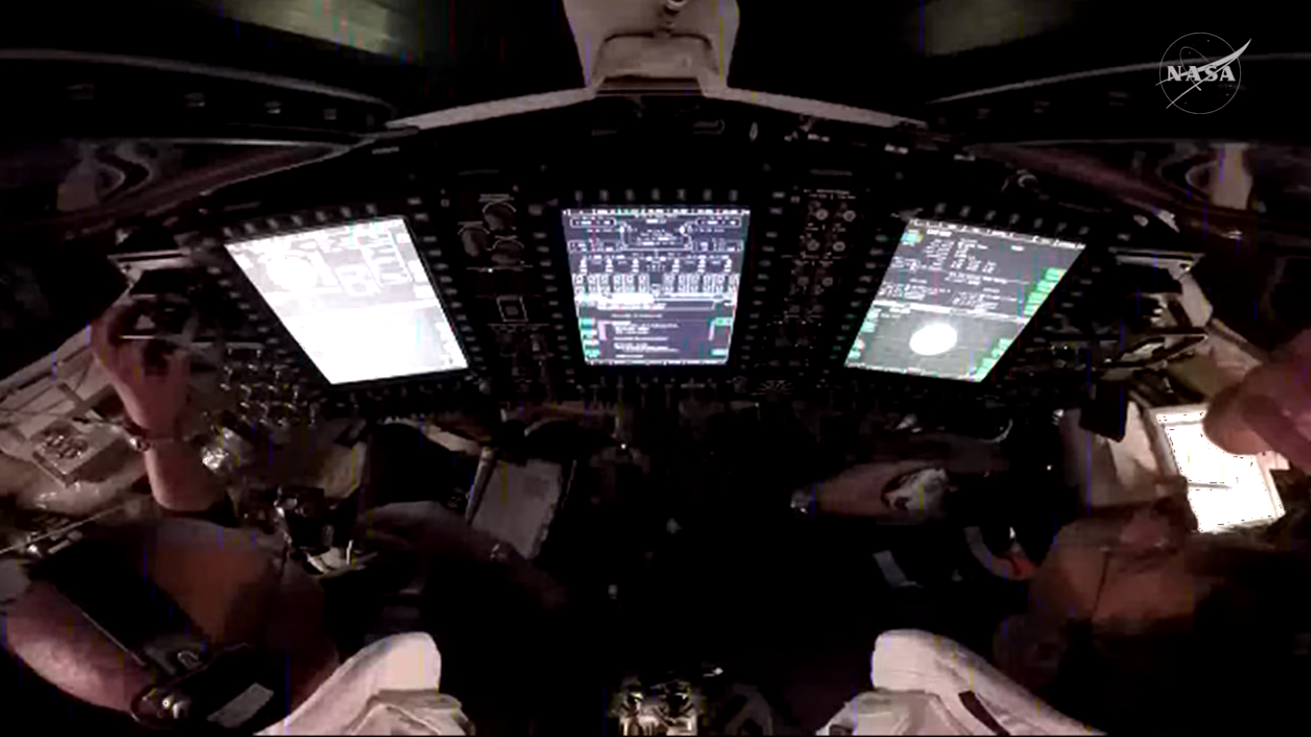
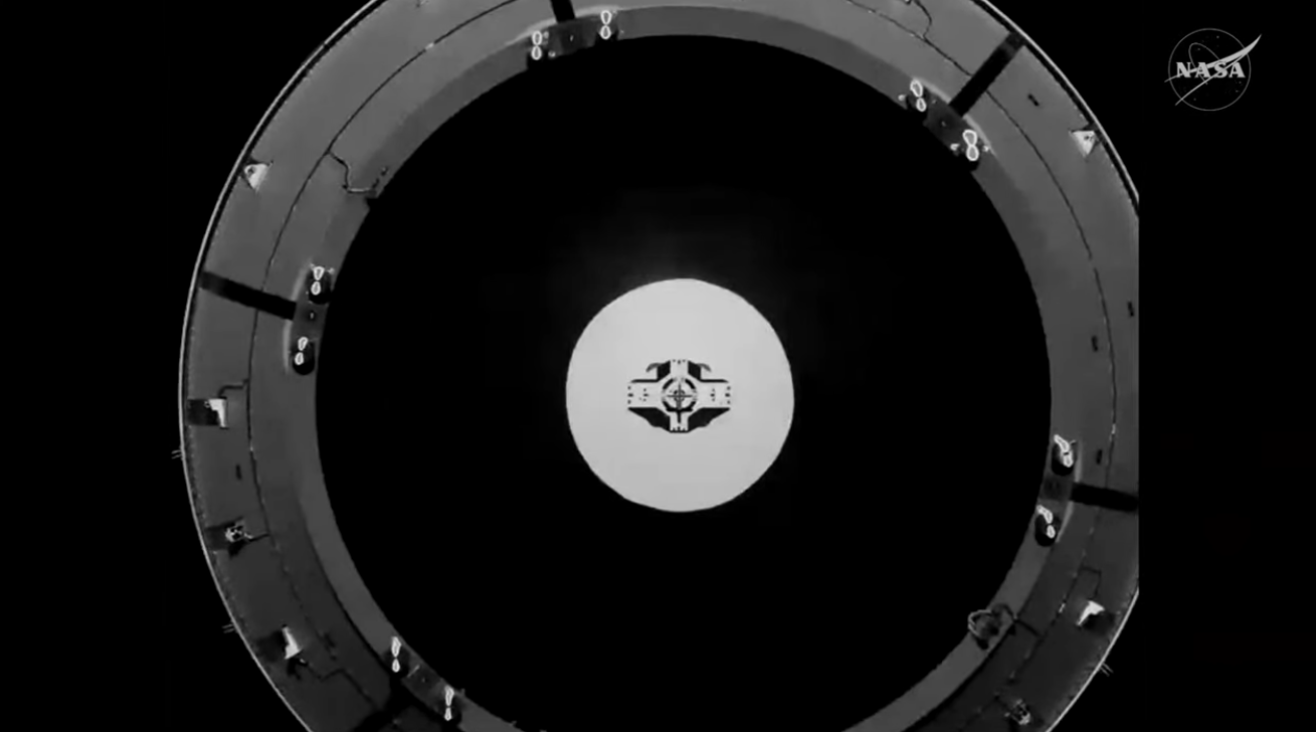
The Artemis II crew successfully completed the proximity operations demonstration, concluding one of the mission’s early objectives and providing valuable data on how the Orion spacecraft, named Integrity, performs during manual close‑range maneuvering around another spacecraft. Over the course of the approximately 70‑minute activity, the crew guided the spacecraft through a series of controlled approach and retreat maneuvers using the detached ICPS (interim cryogenic propulsion stage) as a reference target.
At the conclusion of the demonstration, Orion executed an automated departure burn to safely back away from the ICPS, after which the stage will perform its own disposal burn to re‑enter Earth’s atmosphere over a remote region of the Pacific Ocean.
CubeSats to Deploy as Secondary Payloads
Four small satellites, called CubeSats, also launched to high Earth orbit in the Orion stage adapter of the SLS (Space Launch System.) CubeSats are shoebox-sized payloads that have the potential to expand knowledge of the space environment. These experiments will be deployed after the adapter has separated from the spacecraft. The four CubeSats are:
- ATENEA, developed by the Argentina National Space Activities Commission, will investigate radiation shielding, orbital design optimization, and long-range communications.
- Space Weather CubeSat-1, developed by the Saudi Space Agency, will measure various aspects of space weather, such as radiation, solar X-rays, solar energy particles, and magnetic fields.
- TACHELES, developed by the German Aerospace Center, will demonstrate key in-space technologies, including electrical components for future lunar logistics vehicles and operations.
- K-Rad Cube, developed by KASA (Korea AeroSpace Administration) will measure space radiation and its biological effect across the Van Allen radiation belts.
Crew and Ground Teams Continue Toilet Troubleshooting
Ahead of the apogee raise burn earlier Wednesday, the Artemis II crew completed spacecraft configuration activities, including a checkout of the toilet system. During the procedure, the crew reported a blinking fault light and mission control teams are continuing to assess the data and are actively working with the crew to troubleshoot the issue.
After a four-hour nap, the Artemis II crew will be awakened at 7 a.m. EDT on Thursday, April 2, to prepare for the perigee raise burn. This burn will lift the lowest point of Orion’s orbit around Earth. Together with the apogee raise burn completed earlier, these burns shape the spacecraft’s initial orbit and prepare it for later translunar operations. The crew then will resume their sleep period around 9:40 a.m.