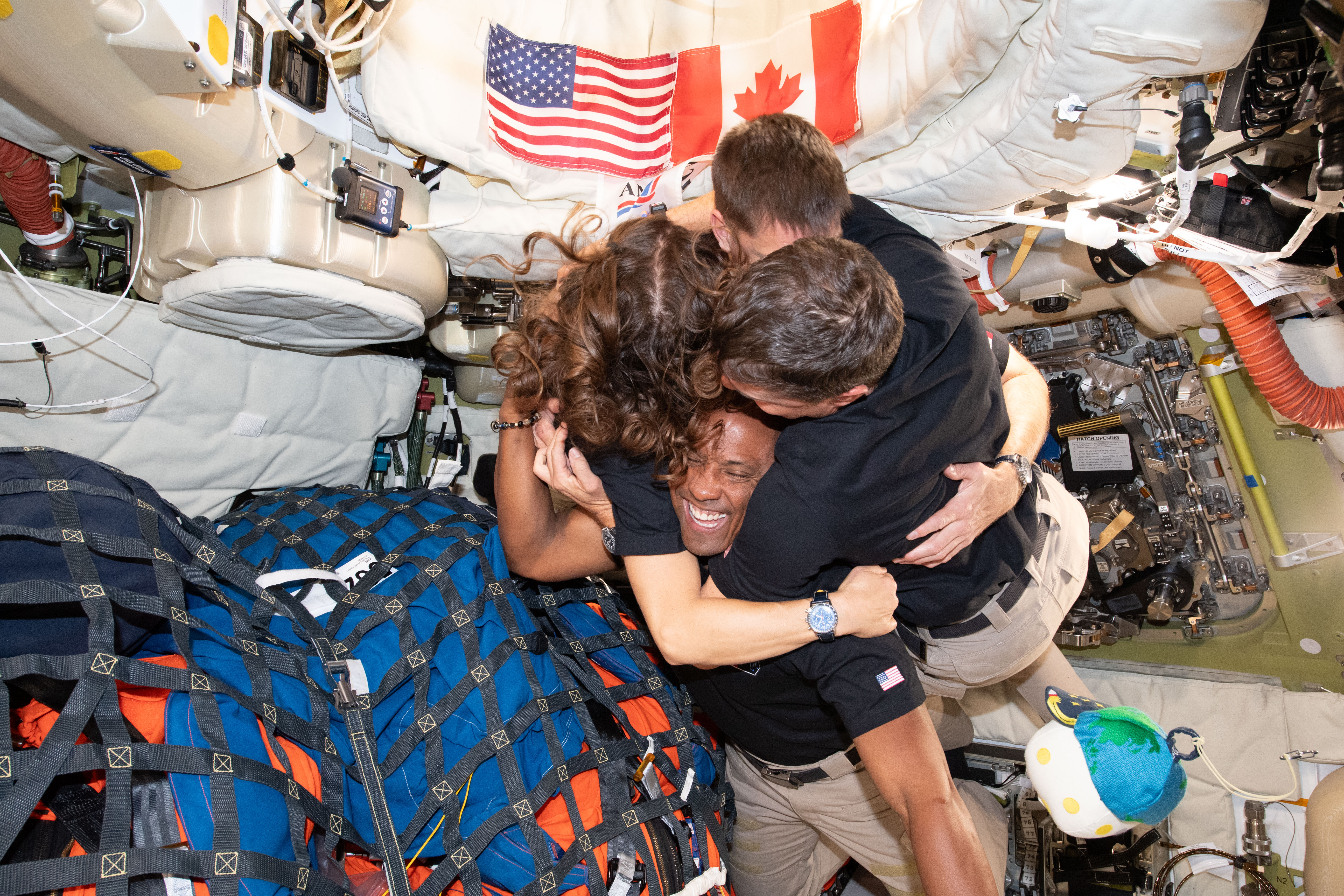
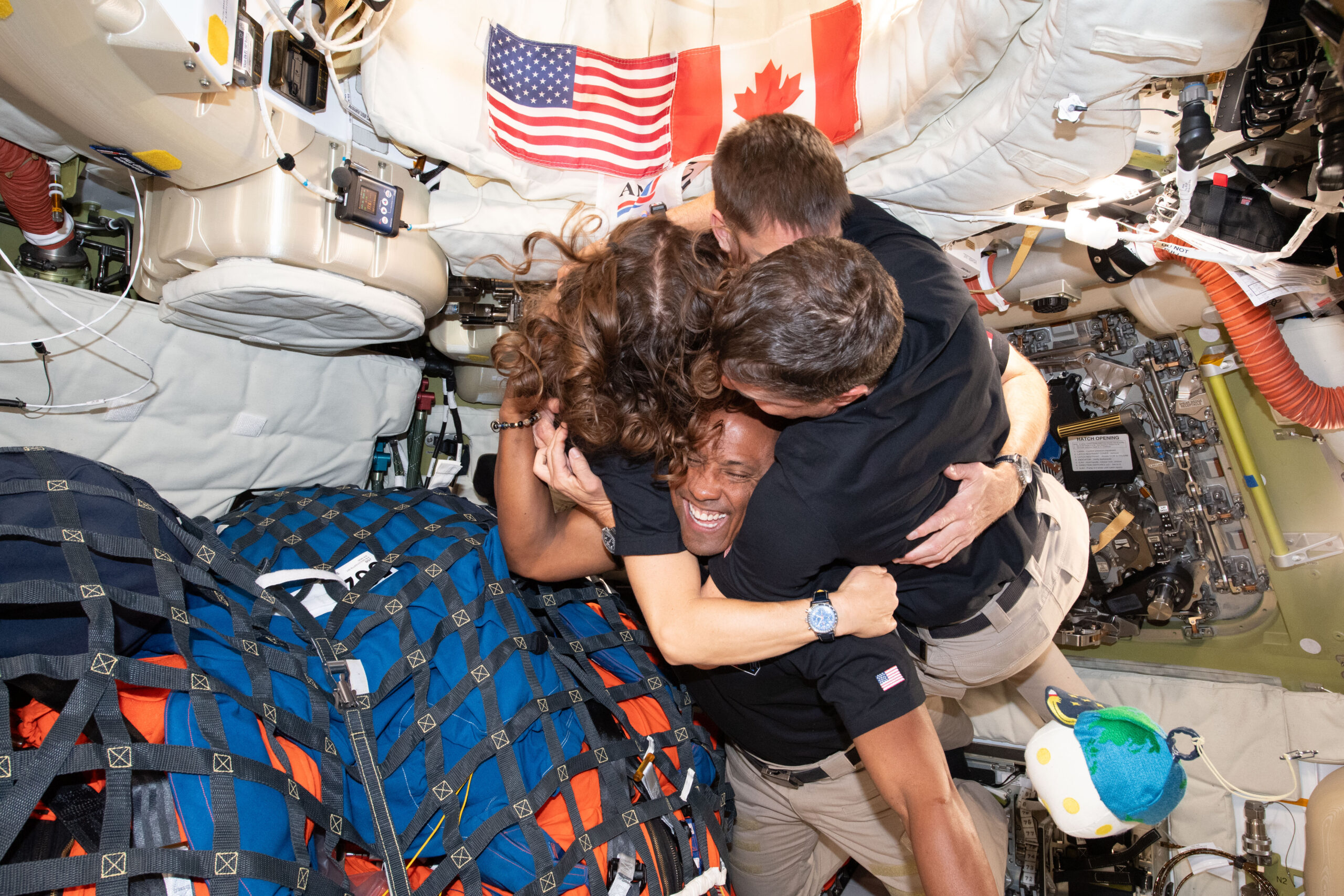
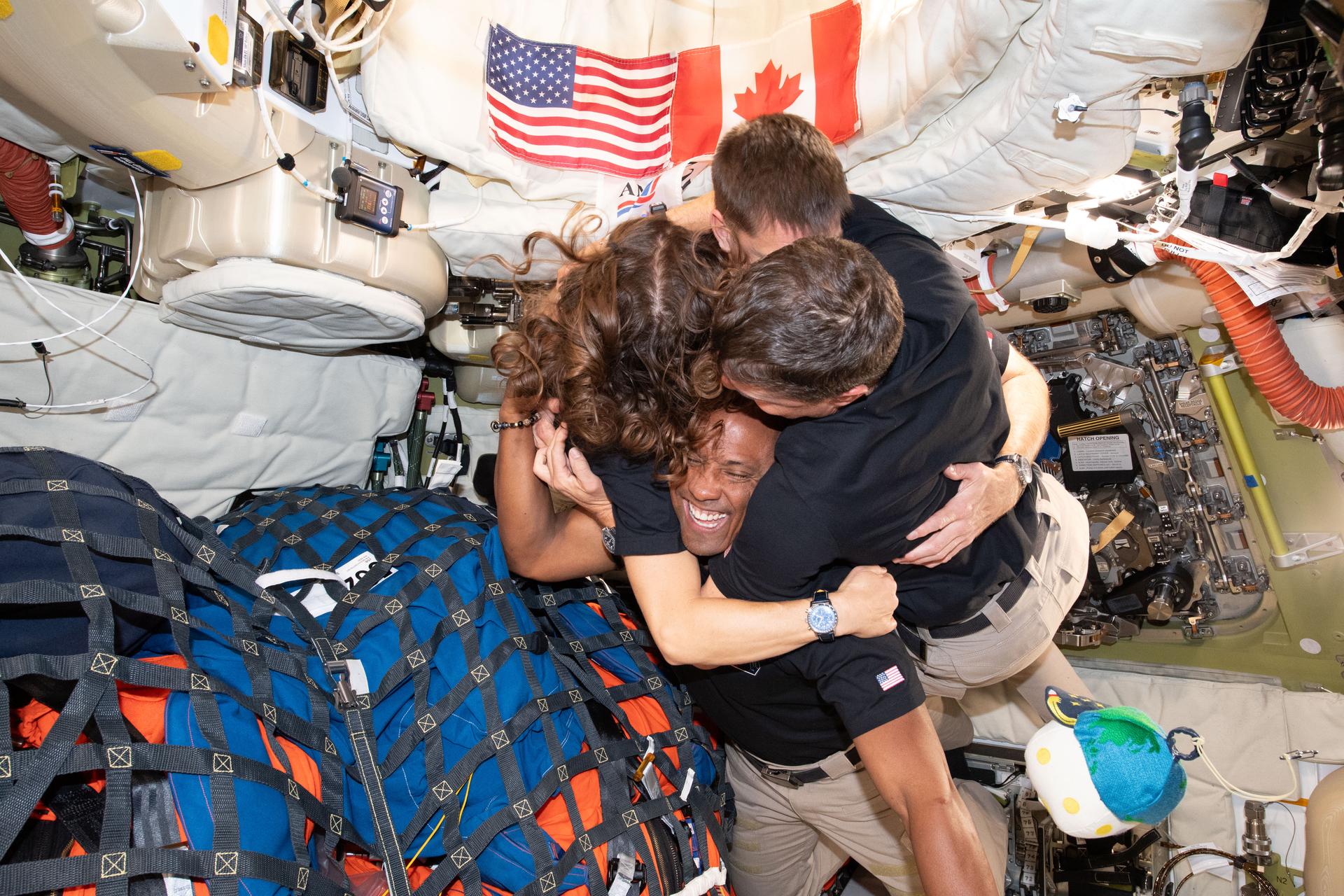
On their last full day in space, the Artemis II crew began the morning with “Lonesome Drifter” by Charley Crockett as they approached Earth at 147,337 miles.
NASA astronauts Reid Wiseman, Victor Glover, and Christina Koch, and CSA (Canadian Space Agency) astronaut Jeremy Hansen will continue preparing for their return to Earth set for Friday, April 10, including reviewing re-entry and splashdown procedures and conducting a return trajectory correction burn.
Cabin configuration for re-entry
Koch and Hansen will begin by stowing equipment they have had out during the mission, removing cargo and locker netting, installing and adjusting crew seats to ensure all items are secured before their return to Earth. As part of the day’s activities, the crew will review the latest weather briefing, recovery force status, and entry timeline. Throughout the day, they also will work through post‑landing operations.
Another push home
Orion’s thrusters are scheduled to ignite for the second return trajectory correction burn at 9:53 p.m. EDT to fine‑tune the spacecraft’s path toward Earth. The maneuver will further refine Orion’s trajectory and ensure the spacecraft remains aligned for atmospheric re-entry. During the burn, Hansen will review the procedure steps and monitor Orion’s guidance, navigation, and propulsion systems.
Preparing for splashdown
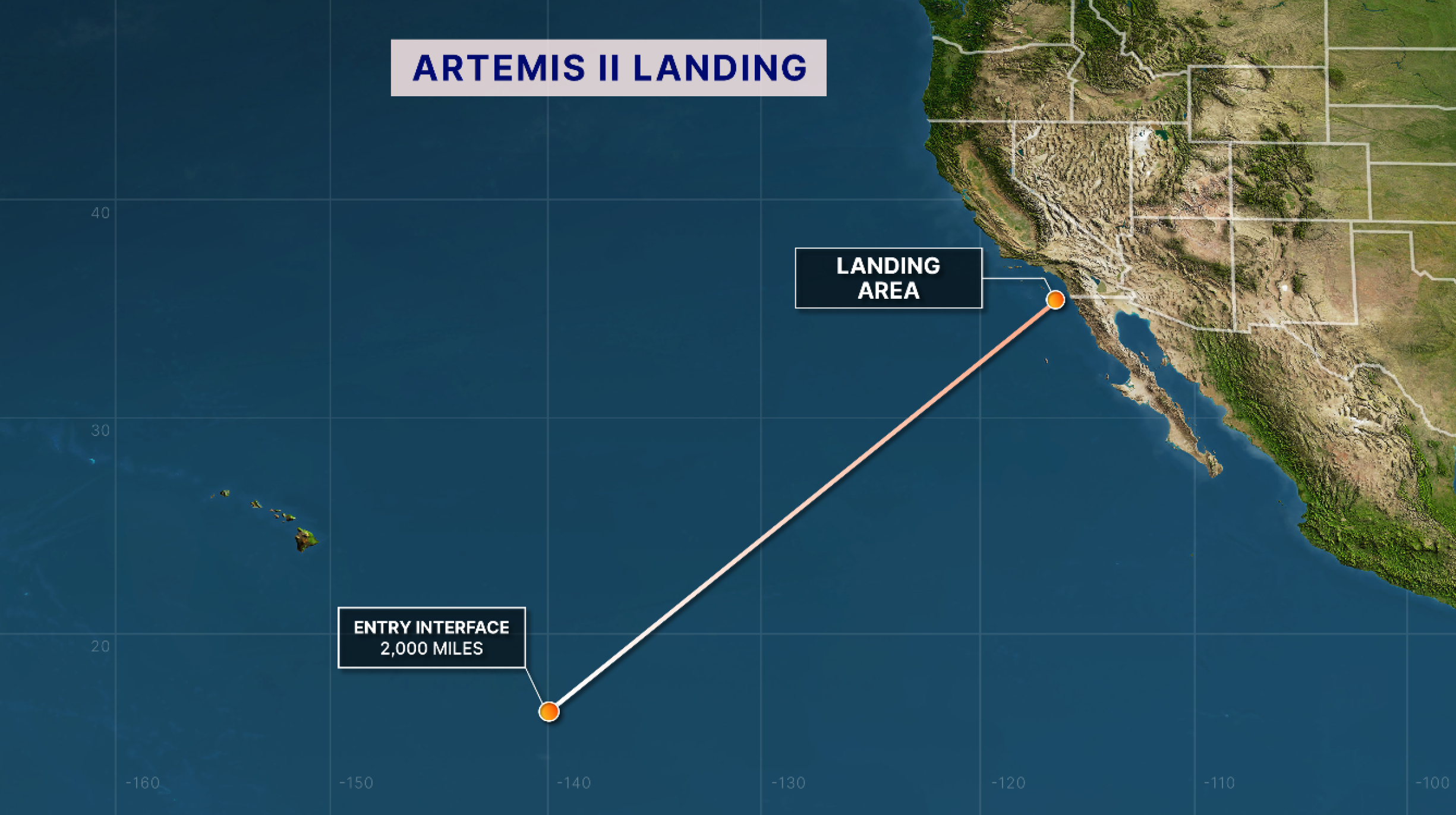
As Artemis II nears its return to Earth, NASA teams on the ground are completing final preparations for Orion’s re-entry and splashdown around 8:07 p.m. (5:07 p.m. PDT) Friday, April 10, off the coast of San Diego.
The agency will continue to provide updates about the test flight during the daily mission briefing. Today’s mission status briefing is at 3:30 p.m. and will stream on NASA’s 24/7 coverage on the agency’s YouTube channel.
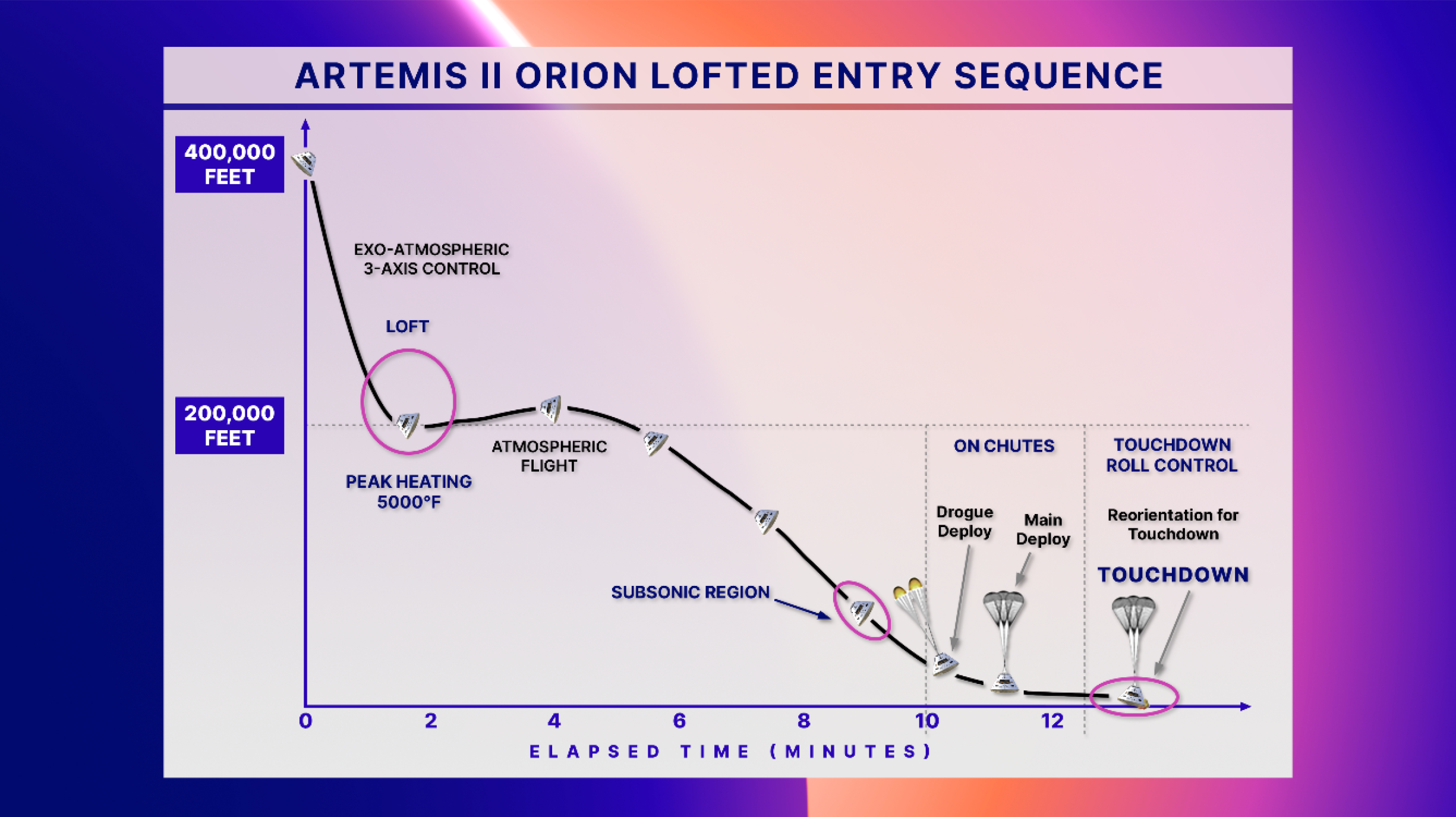
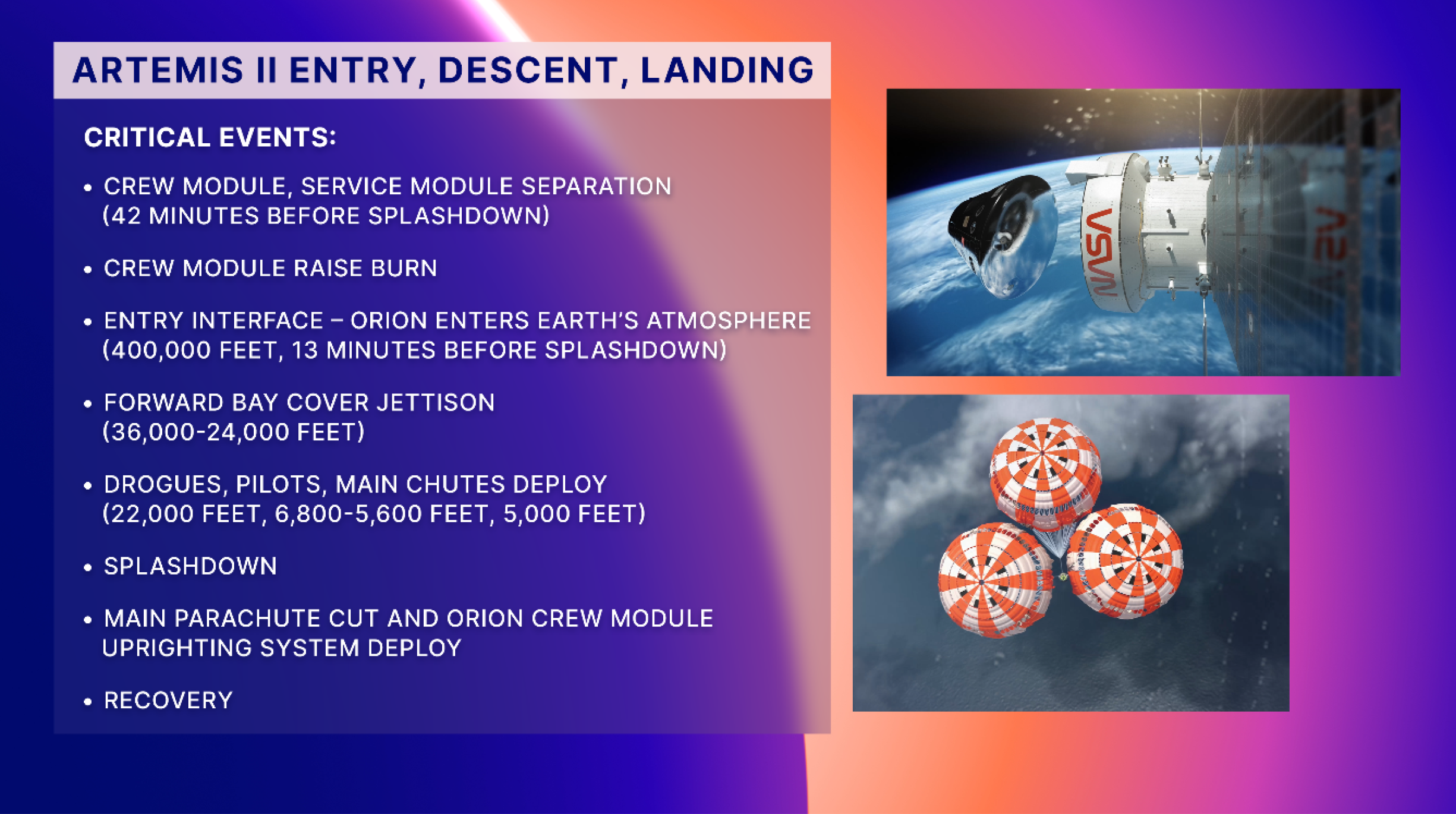
During re-entry, the service module will separate about 20 minutes before Orion reaches the upper atmosphere southeast of Hawaii. If needed, a final trajectory‑adjustment burn will fine‑tune the flight path before the spacecraft begins a series of roll maneuvers to safely distance itself from departing hardware. Orion will reach its maximum velocity — approximately 23,864 mph — just before entry interface.
As Orion descends through about 400,000 feet, the spacecraft will enter a planned six‑minute communications blackout as plasma forms around the capsule during peak heating. The crew is expected to experience up to 3.9 Gs in a nominal landing profile.
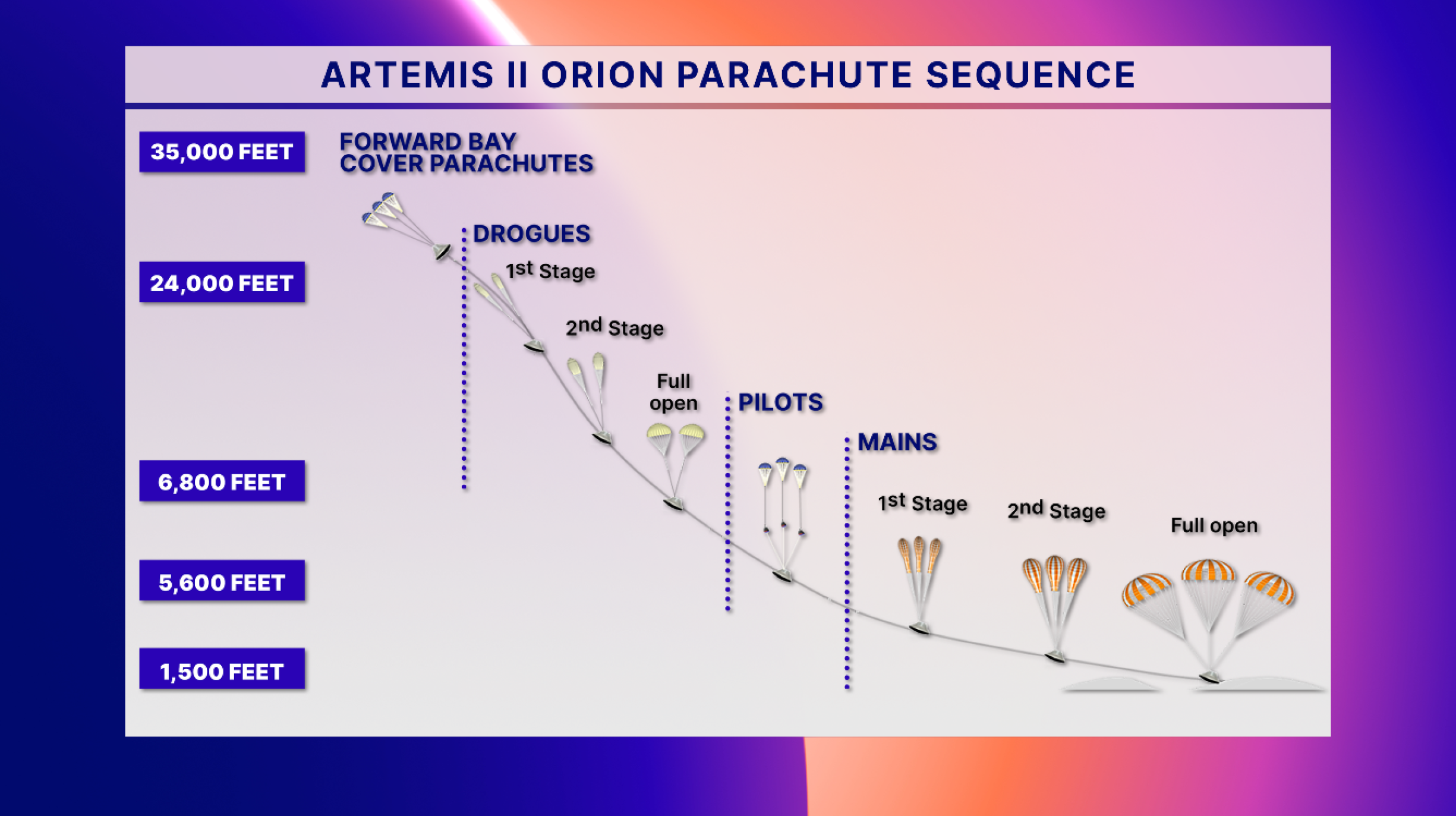
After emerging from blackout, Orion will jettison its forward bay cover, deploy its drogue parachutes near 22,000 feet, and then unfurl its three main parachutes around 6,000 feet to slow the capsule for splashdown off the coast of San Diego.
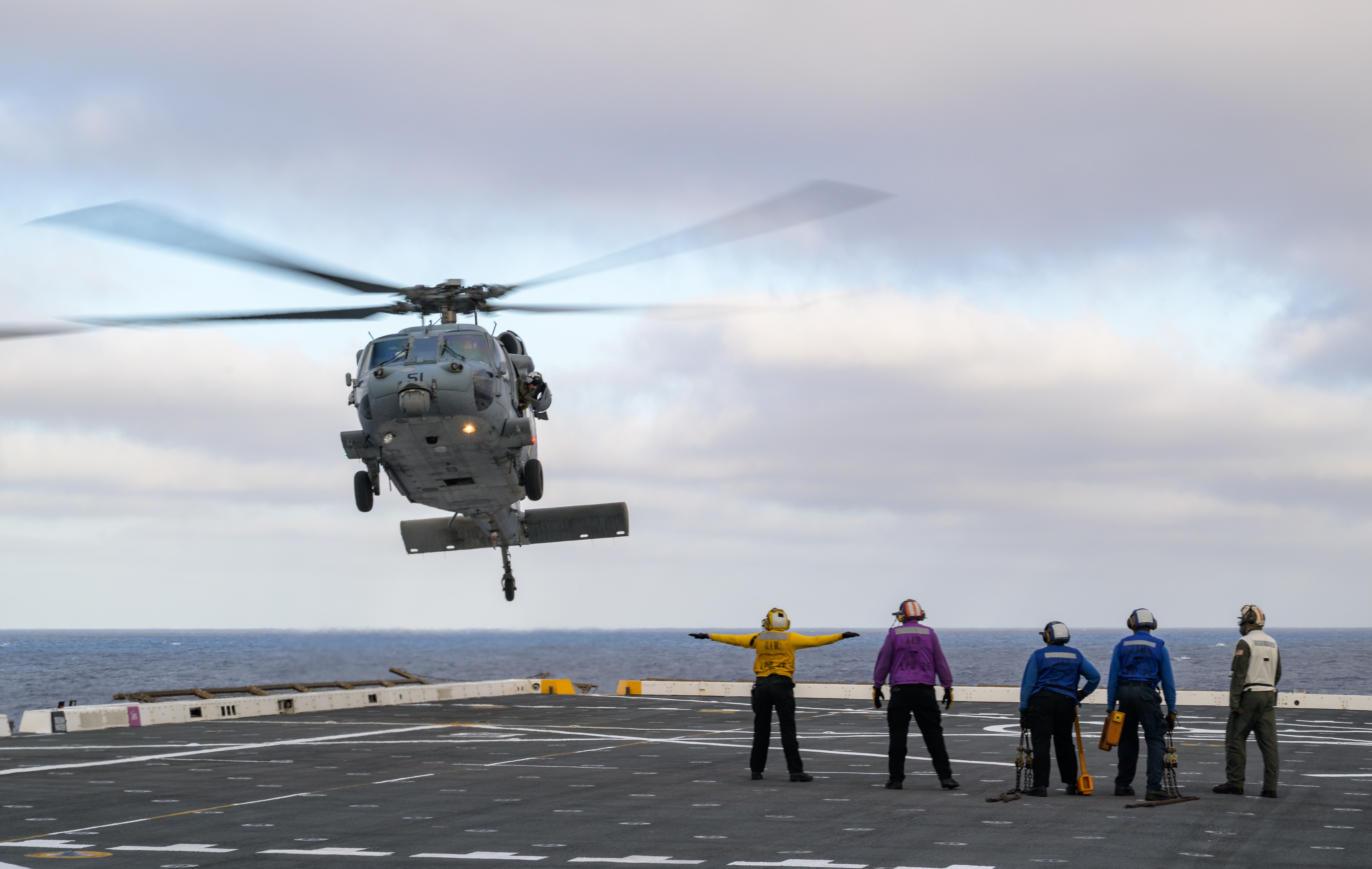
Within two hours after splashdown, the crew will be extracted from Orion and flown to the USS John P. Murtha. Recovery teams will retrieve the crew using helicopters, and once aboard the ship, the astronauts will undergo post‑mission medical evaluations before returning to shore to board an aircraft bound for NASA’s Johnson Space Center in Houston.
Watch live return coverage on NASA+, Amazon Prime, Apple TV, Netflix, HBO Max, Discovery+, Peacock and Roku starting at 6:30 p.m. Learn how to stream NASA content through a variety of online platforms, including social media. Coverage will continue until NASA and Department of War personnel safely assist the crew out of Orion and transport them to the USS Murtha.
View the latest imagery from the Artemis II mission on our Artemis II Multimedia Resource Page. Please follow @NASAArtemis on X, Facebook, and Instagram for real-time updates. Live mission coverage is available on NASA’s YouTube channel.