
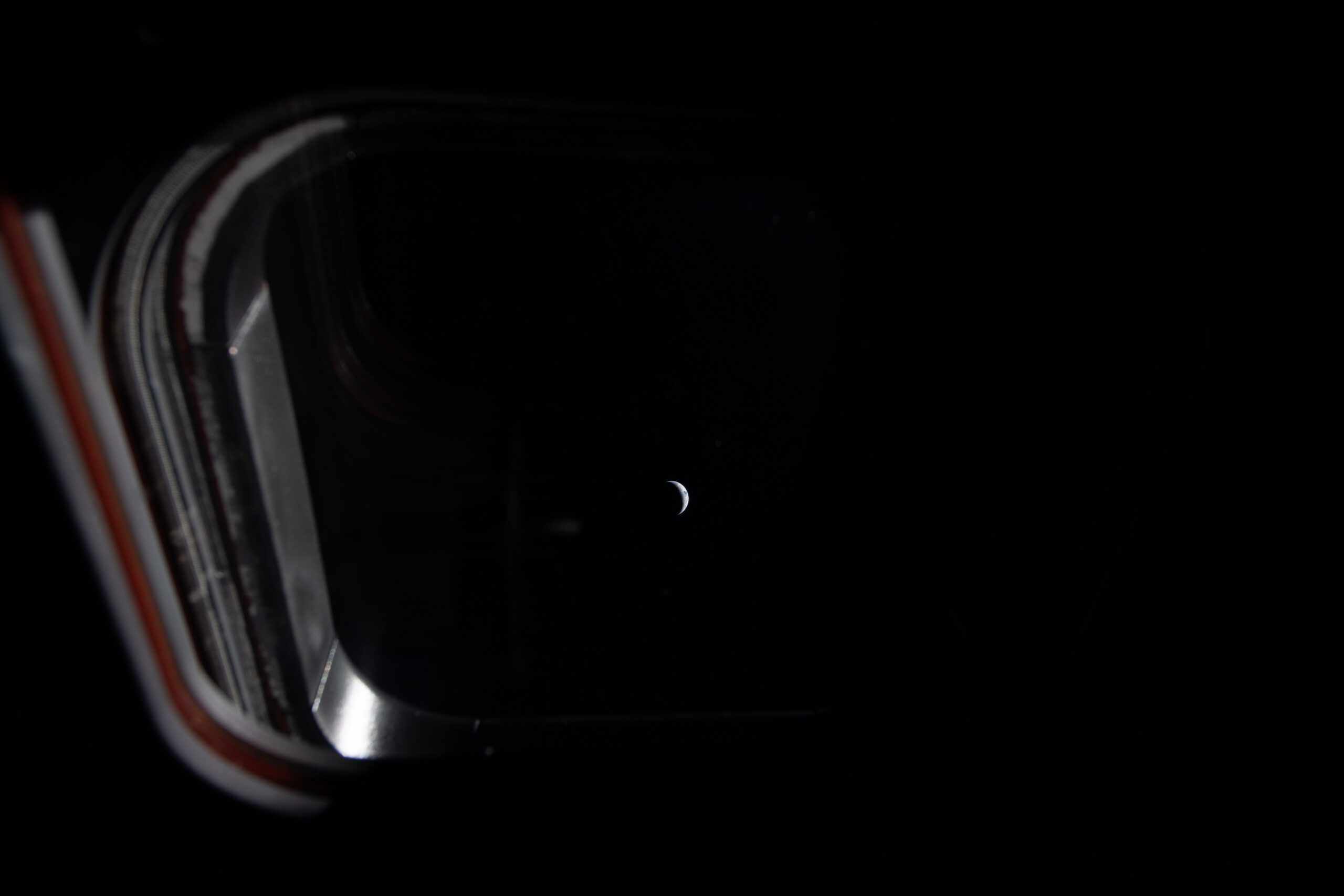
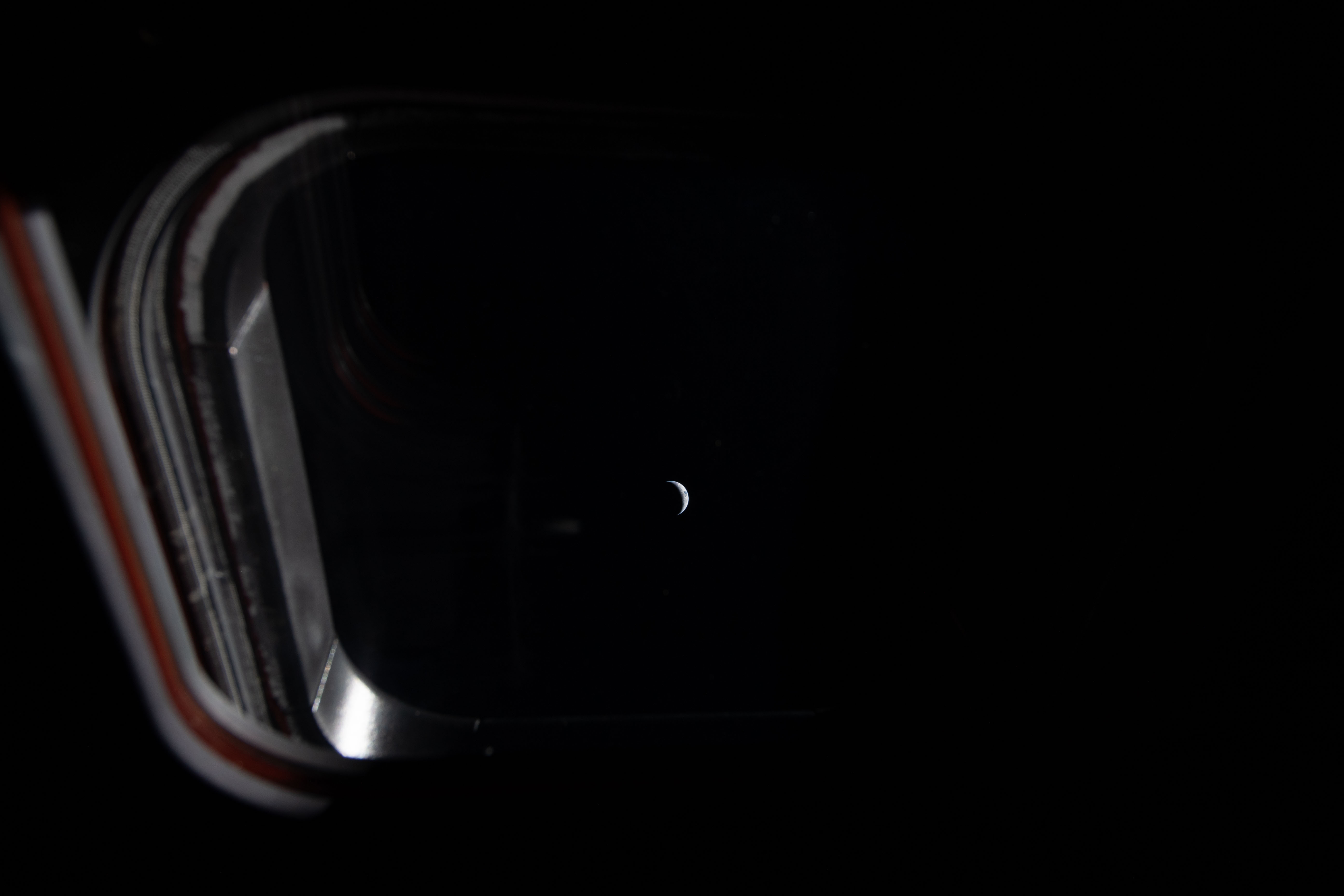
Editor’s Note: Blog updated to reflect the cabin depressurization activity scheduled for Sunday is deferred to a later date in the mission.
The Artemis II crew of NASA astronauts Reid Wiseman, Victor Glover, Christina Koch, and CSA (Canadian Space Agency) astronaut Jeremy Hansen, continue their workday aboard the Orion spacecraft.
With a demonstration underway of the Orion crew survival system spacesuit, the crew also will prepare for their lunar flyby set for Monday, April 6, including reviewing their final science targets, and getting ready for the final outbound trajectory correction burn.
The crew will enter the lunar sphere of gravitational influence at approximately 12:41 a.m. EDT April 6.
Spacesuit testing
The crew members are in the midst of testing their Orion Crew Survival System suits, performing leak checks, simulating seat entry, and assessing mobility and their ability to eat and drink. The suit protects astronauts during dynamic phases of flight and provides life support in the event of cabin depressurization and survival operations after splashdown.
Fine tuning lunar flight path
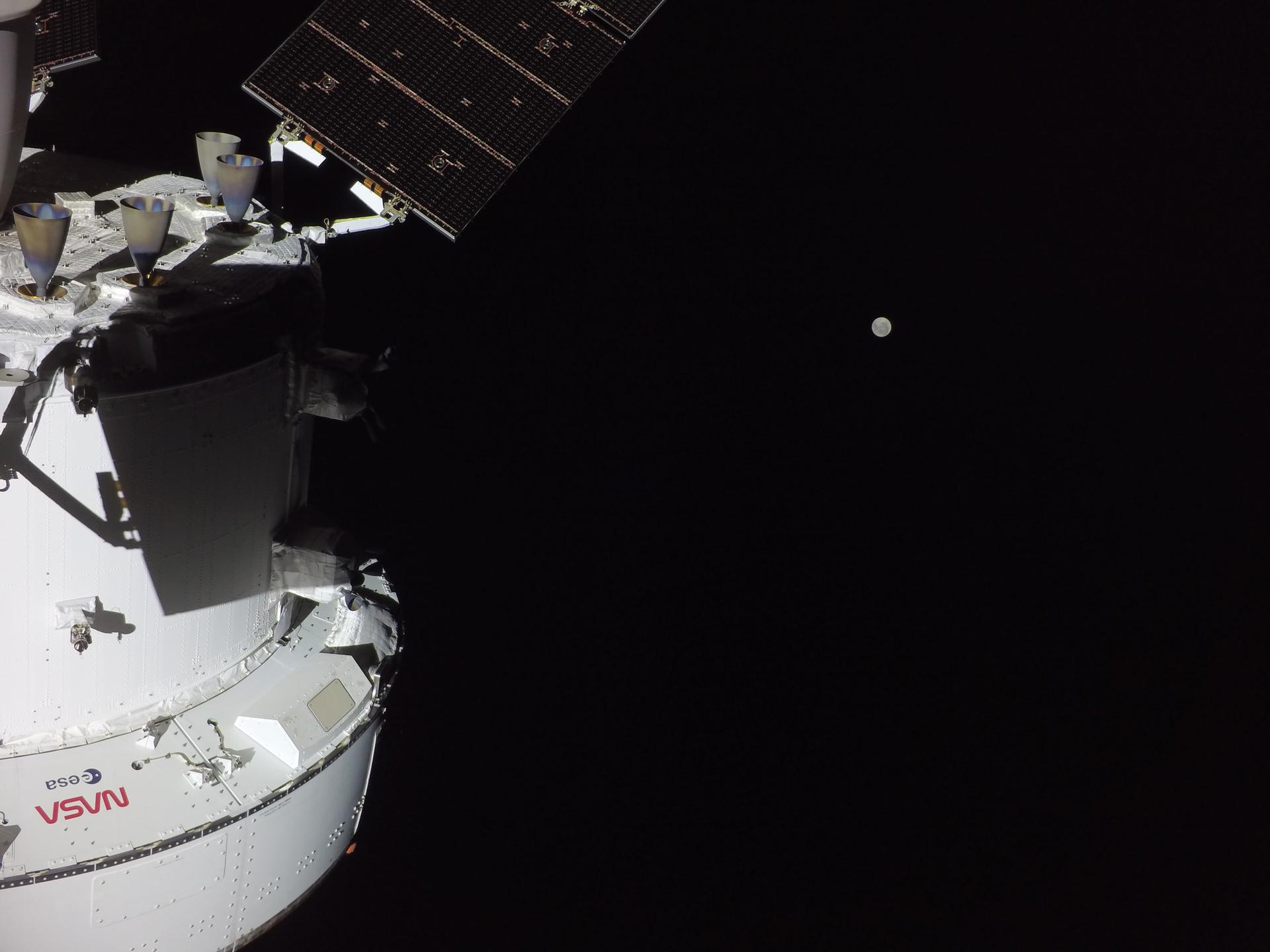
Following spacesuit evaluations, the crew will turn their attention to the planned outbound trajectory correction (OTC) burn, scheduled for 10:03 p.m. EDT. The maneuver will refine the Orion spacecraft’s path toward the Moon. Earlier in the mission, flight controllers cancelled the previous two planned trajectory correction burns, as Orion’s trajectory remained precise. Koch and Hansen will review procedures for the upcoming burn, with Hansen monitoring the spacecraft’s configuration and navigation data.
Crew receives final science targets
Early Sunday, mission control sent the crew the final list of lunar surface features the science team has assigned for observation and photography during the lunar flyby on April 6. Ahead of the flyby, the crew will work through final preparations and hold a conference with mission controllers to finalize lunar targets and techniques.
The 30 targets include the Orientale basin, a nearly 600-mile-wide crater that straddles the Moon’s near and far sides. Orientale will be fully illuminated and visible as Orion approaches the Moon. This 3.8-billion-year-old crater formed when a large object struck the lunar surface and retains clear evidence of that collision, including dramatic topography in its rings. The crew will study Orientale’s features up close and from multiple angles as they pass by.
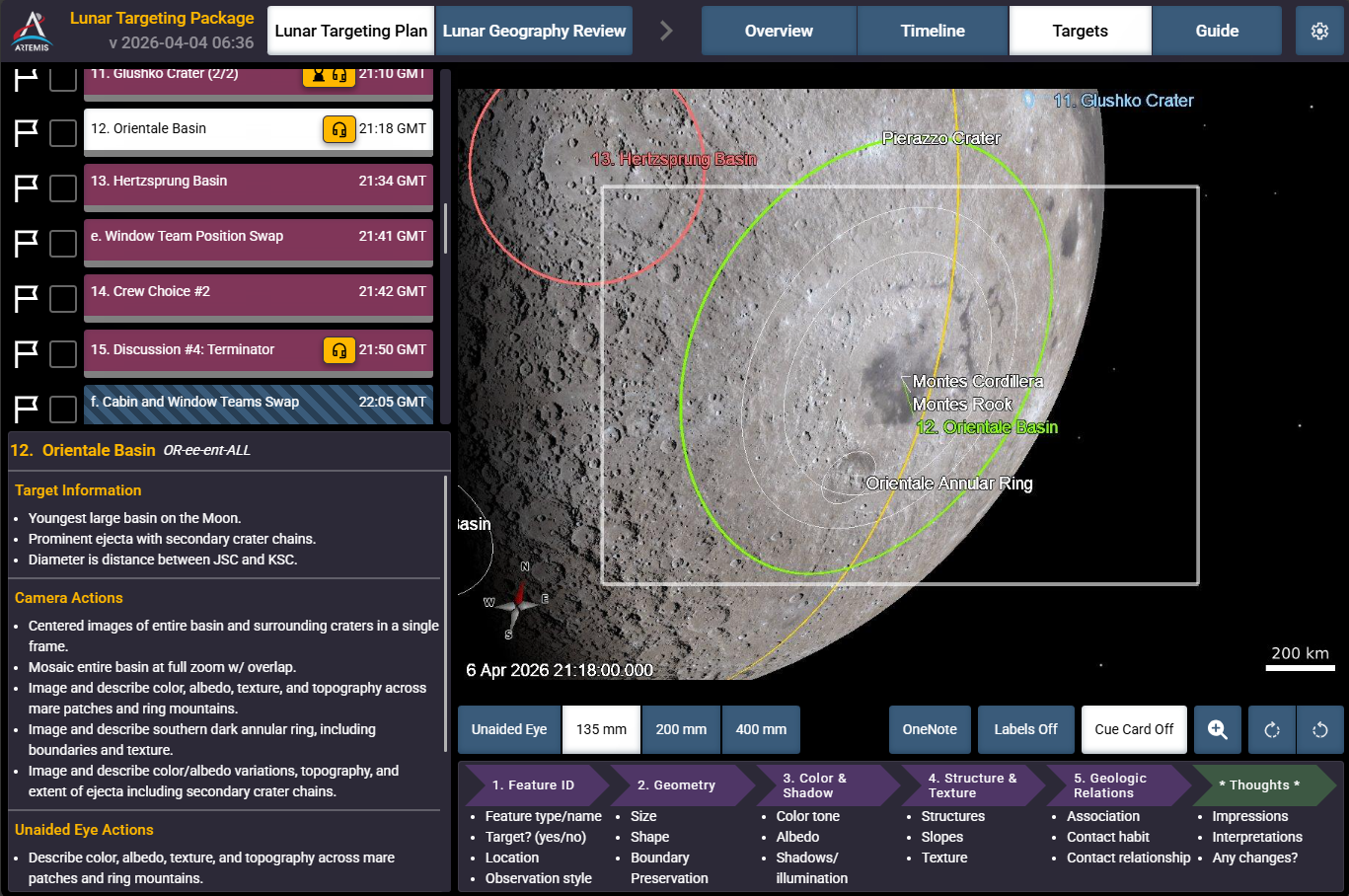
Hertzsprung basin also is on the crew’s list of targets. Northwest of Orientale is a nearly 400-mile crater on the Moon’s far side. An older ringed basin, Hertzsprung offers a unique contrast to Orientale because its features have been degraded by subsequent impacts. The crew will compare the topography of the two craters to gain insight into how features evolve over geologic timescales.
Key moments for the lunar flyby include this following. All times are Eastern and may change based on real-time operations:
Monday, April 6
- 12:41 a.m.: Orion enters lunar sphere of influence at 41,072 miles from the Moon.
- 1:30 p.m.: The science officer in mission control will brief the crew on their science goals for the upcoming flyby.
- 1:56 p.m.: The Artemis II crew is expected surpass the record previously set by the Apollo 13 crew in 1970 for the farthest humans have ever traveled from Earth.
- 2:45 p.m.: Lunar observations begin.
- 6:44 p.m.: Mission control expects to temporarily lose communication with the crew as the Orion spacecraft passes behind the Moon.
- 6:45 p.m.: During “Earthset,” Earth will glide behind the Moon from Orion’s perspective.
- 7:02 p.m.: Orion reaches its closest approach to the Moon at 4,070 miles above the surface.
- 7:07 p.m.: Crew reach their maximum distance from Earth during the mission.
- 7:25 p.m.: “Earthrise” marks Earth coming back into view on the opposite edge of the Moon.
- 7:25 p.m.: NASA’s Mission Control Center should re -acquire communication with the astronauts.
- 8:35-9:32 p.m.: During a solar eclipse, the Sun will pass behind the Moon from the crew’s perspective.
- 9:20 p.m.: Lunar observations conclude.
Tuesday, April 7
- 1:25 p.m.: Orion exits the lunar sphere of influence at 41,072 miles from the Moon.
Watch live coverage of the Artemis II lunar flyby on NASA+, Amazon Prime, Apple TV, Hulu, Netflix, HBO Max and Roku starting at 1 p.m., alongside the agency’s 24/7 coverage on its YouTube channel. Learn how to stream NASA content through a variety of online platforms, including social media.
During the flyby, the spacecraft will break the record for the farthest distance from Earth traveled by any human mission, surpassing the mark set by Apollo 13 in April 1970 during its emergency return to Earth. The spacecraft is expected to break the record at 1:56 p.m. and will reach its maximum distance at 7:07 p.m., a total of 252,760 miles from Earth; Apollo 13 reached 248,655 miles from Earth.
When Orion passes behind the Moon, the mission will enter a planned communications blackout of about 40 minutes as the lunar surface blocks the radio signals needed for the Deep Space Network to connect with the spacecraft. Similar blackouts occurred during the Artemis I and Apollo missions and are expected with an Earth-based communications infrastructure. Once Orion reemerges, the network will quickly reacquire its signal and restore contact with mission control.
View the latest imagery from the Artemis II mission on our Artemis II Multimedia Resource Page. Please follow @NASAArtemis on X, Facebook, and Instagram for real-time updates. Live mission coverage is available on NASA’s YouTube channel.