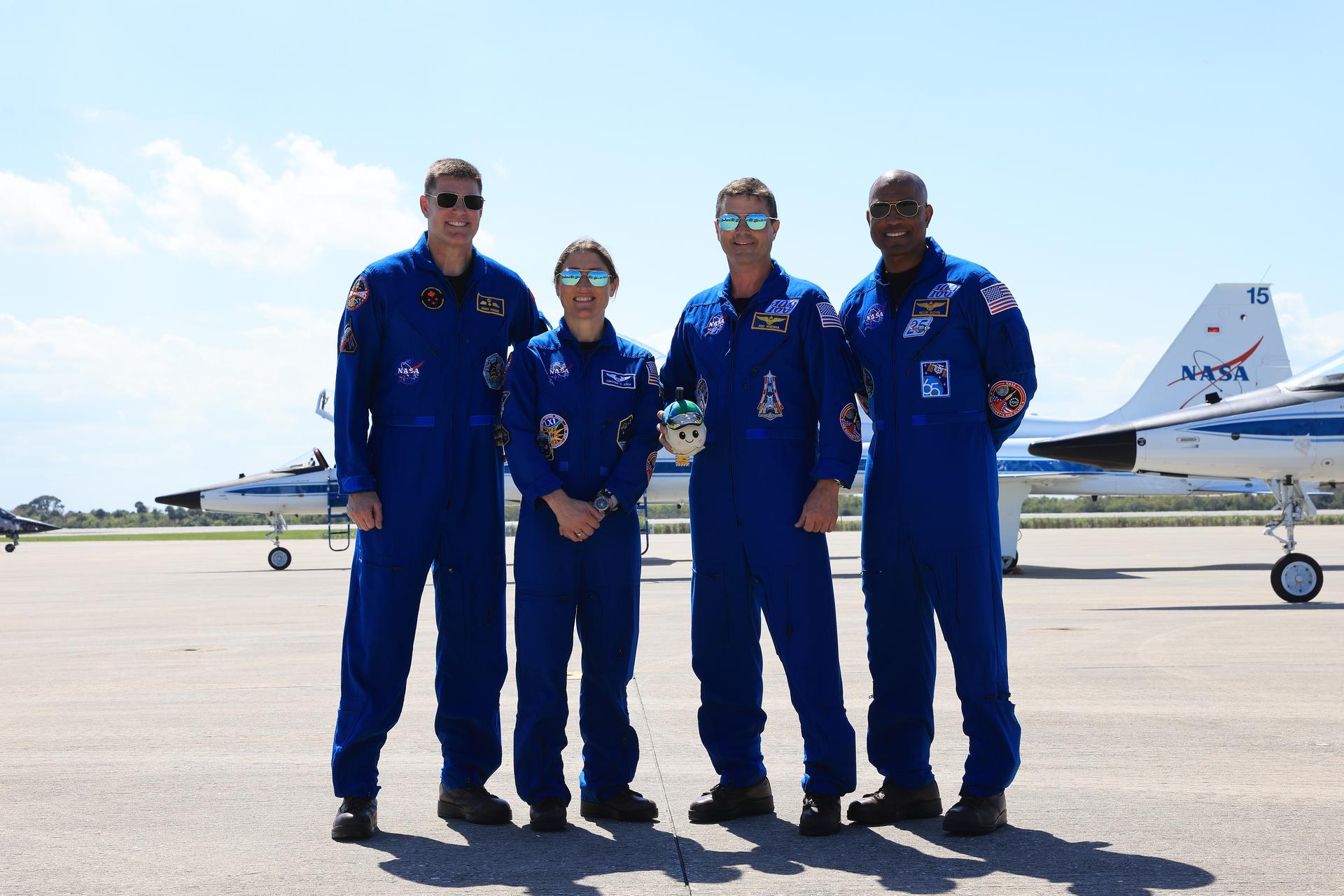
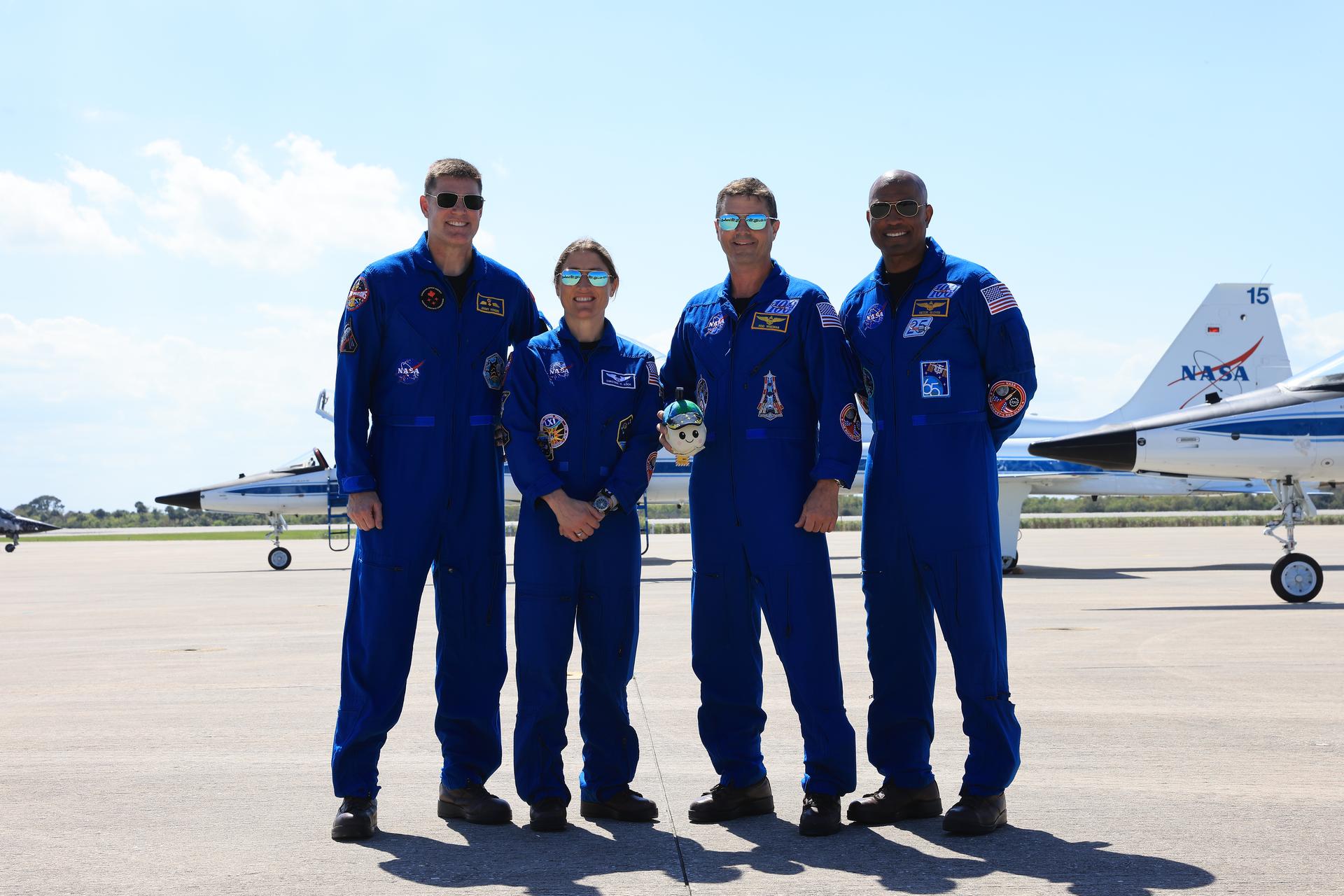
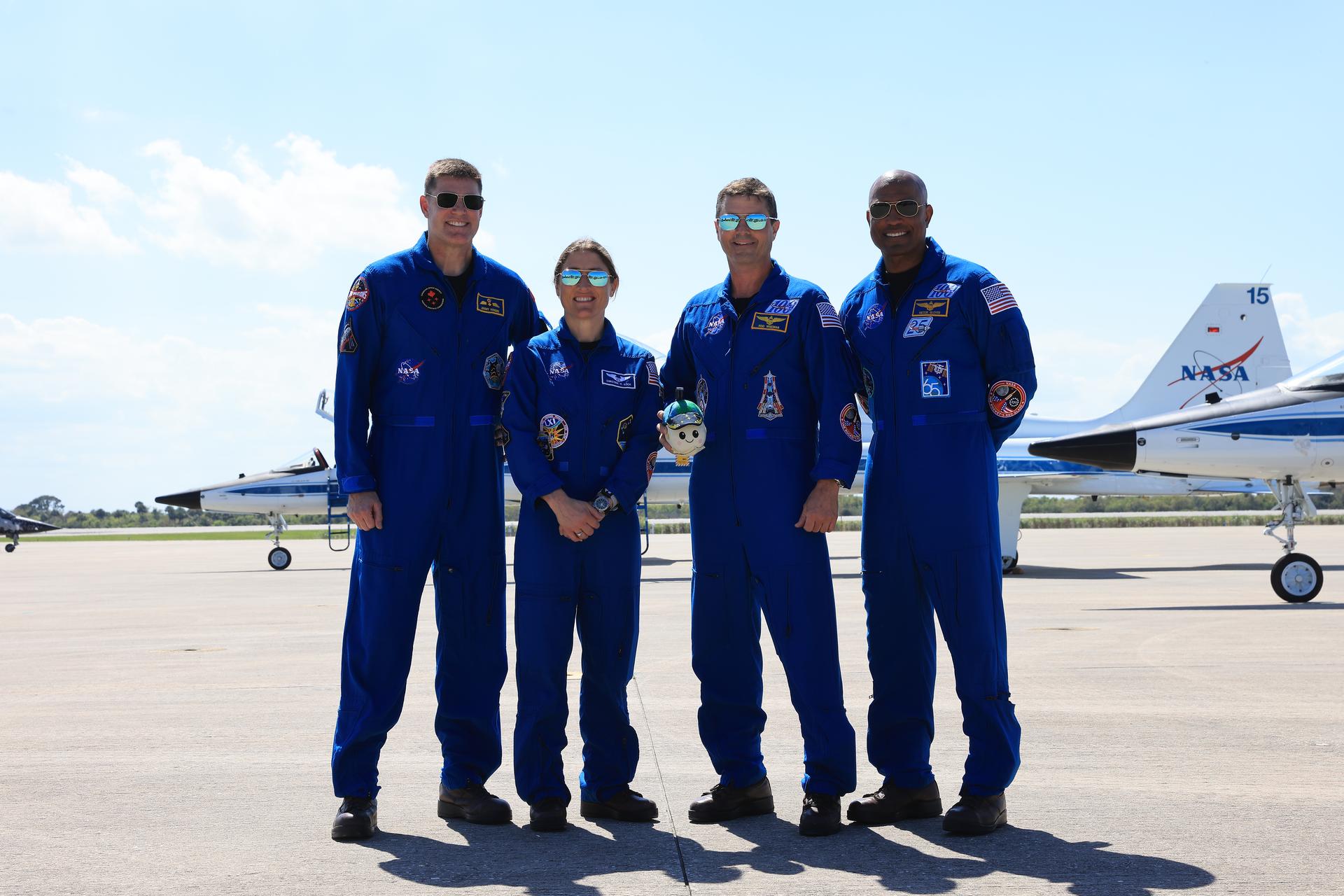
The four astronauts set to fly around the Moon on NASA’s Artemis II test flight arrived at the agency’s Kennedy Space Center in Florida, Friday, March 27. NASA continues to target as soon as Wednesday, April 1, for launch within a two-hour window that opens at 6:24 p.m. EDT.
During remarks at Kennedy’s Launch and Landing Facility, Artemis II commander Reid Wiseman announced “Rise,” designed by Lucas Ye of Mountain View, California, as the zero gravity indicator that will fly with the crew around the Moon. “Rise” was inspired by the iconic Earthrise moment from the Apollo 8 mission. A zero gravity indicator is a small plush item that typically rides with a crew to visually indicate when they are in space.
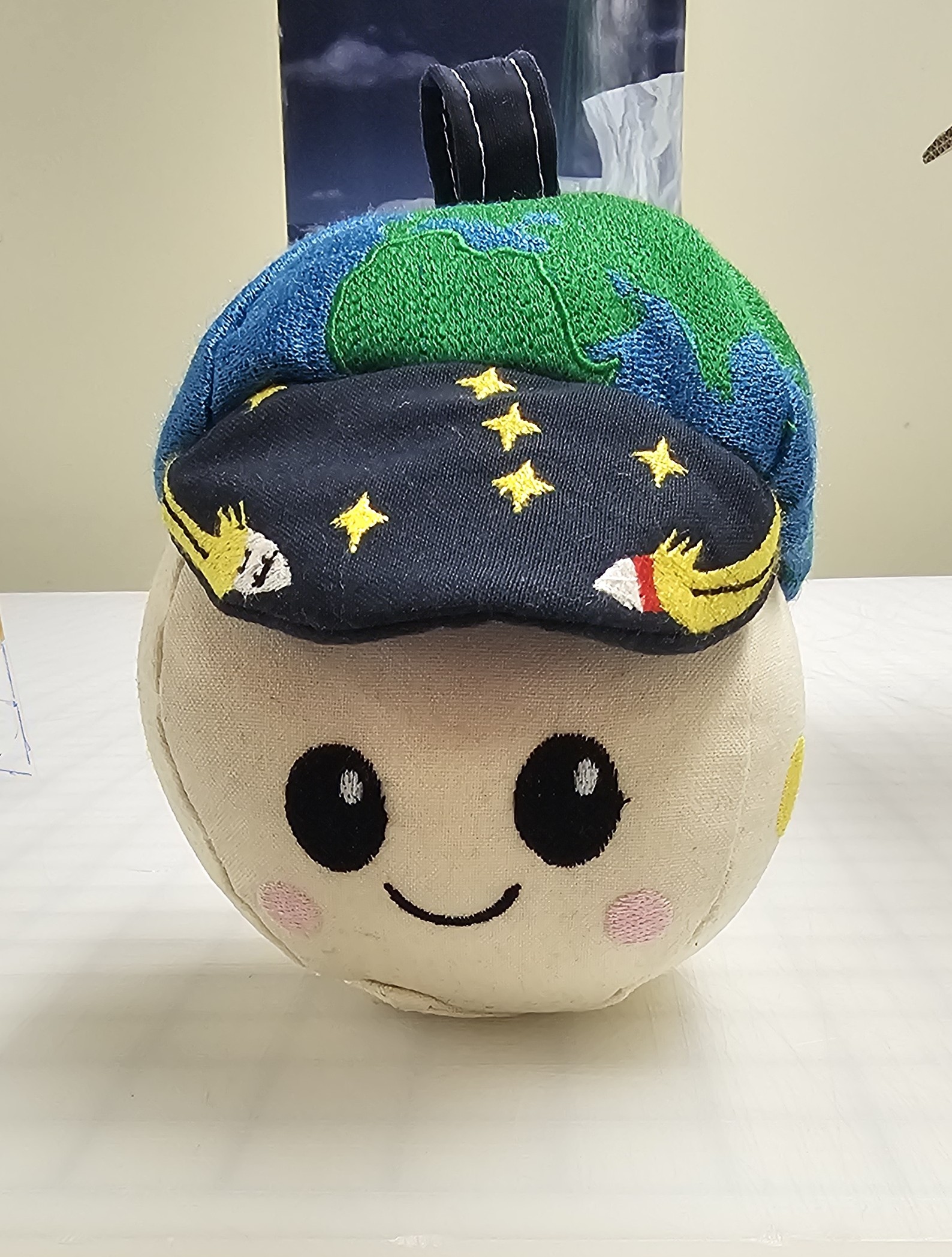
The design was selected from more than 2,600 submissions from over 50 countries, including K-12 students, that were part of a Moon Mascot contest. During the selection process, the crew narrowed a list of 25 finalists to five top designs, including:
- “Big Steps of Little Octopus,” Anzhelika Iudakova, Finland
- “Corey the Explorer,” Daniela Colina, Peru
- “Creation Mythos,” Johanna Beck, McPherson, Kansas
- “Lepus the Moon Rabbit,” Oakville Trafalgar School, Canada
- “Rise,” Lucas Ye, Mountain View, California
While work continues to prepare the SLS (Space Launch System) rocket, Orion spacecraft, and ground systems for launch, the crew – NASA astronauts Reid Wiseman, Victor Glover, Christina Koch, and CSA (Canadian Space Agency) astronaut Jeremy Hansen — will review their launch day timeline and mission activities, participate in medical checkouts, and spend time with family.
View an updated countdown for launch and details about pre-launch and mission events.