APOD Science APOD APOD: 2026 September 27 –… Today’s APOD Archive Submissions Index Search Calendar RSS Education About Discuss APOD
Astronomy Picture of the Day
Discover the cosmos! Each day a different image or photograph of our fascinating universe is featured, along with a brief explanation written by a professional astronomer.
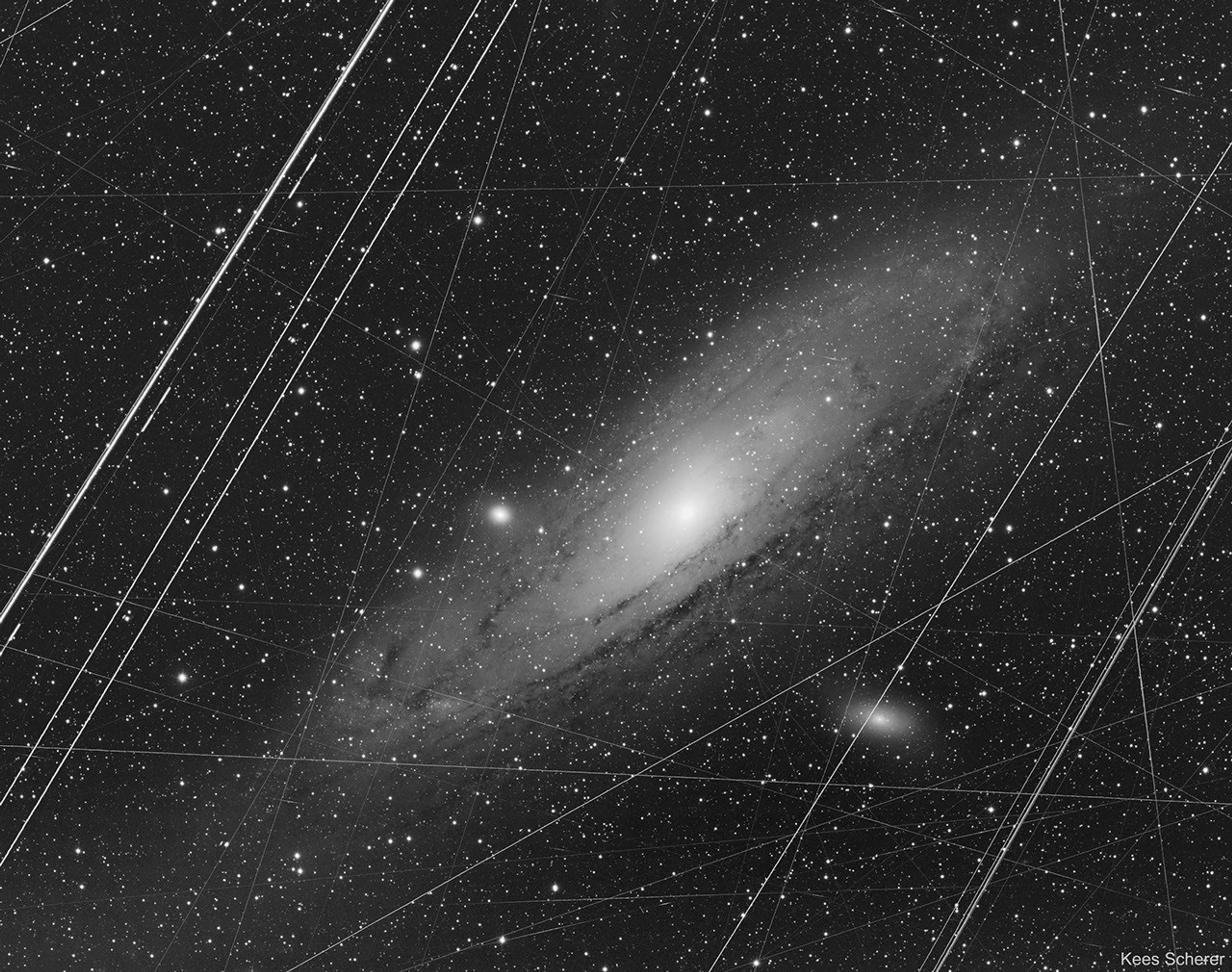
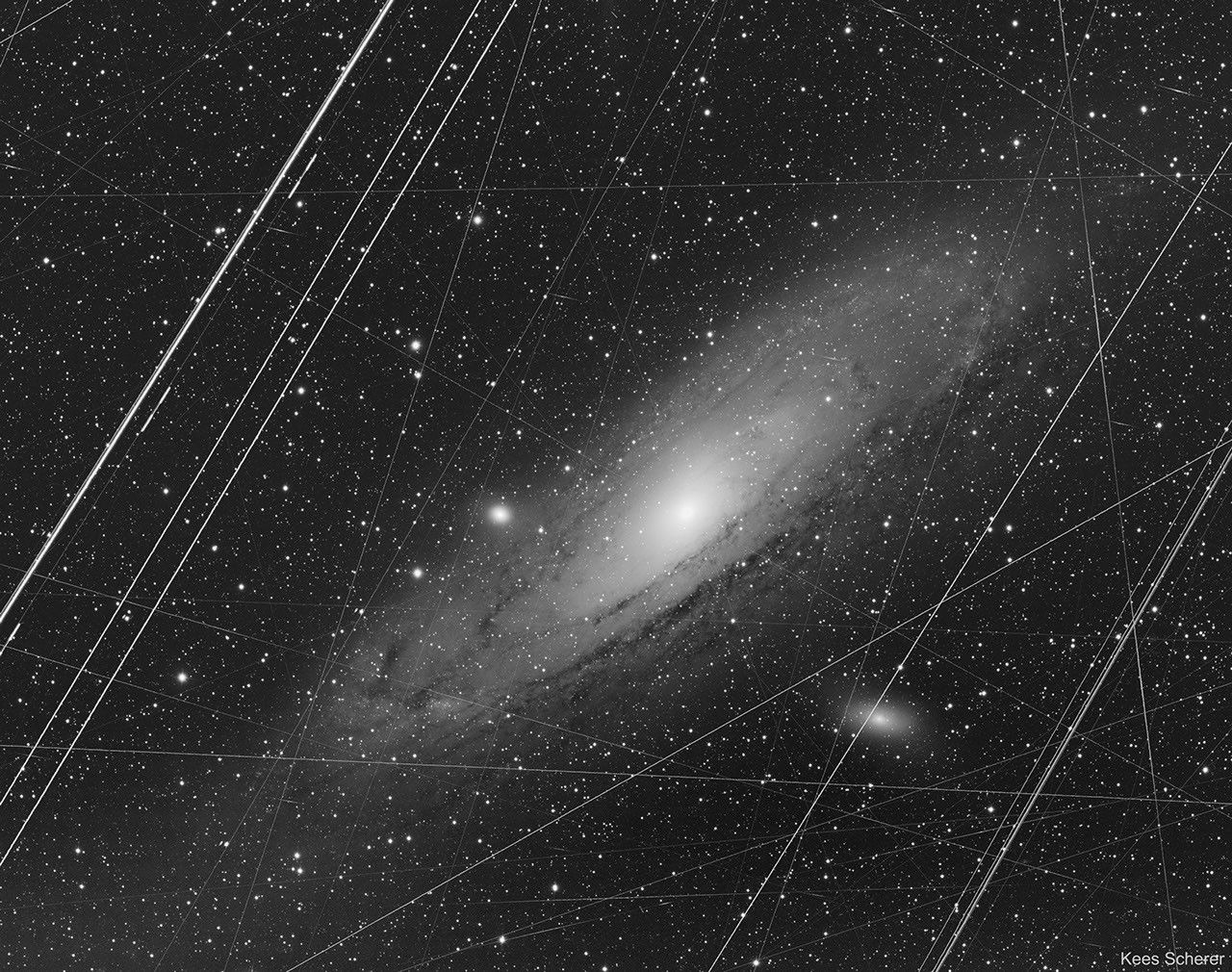
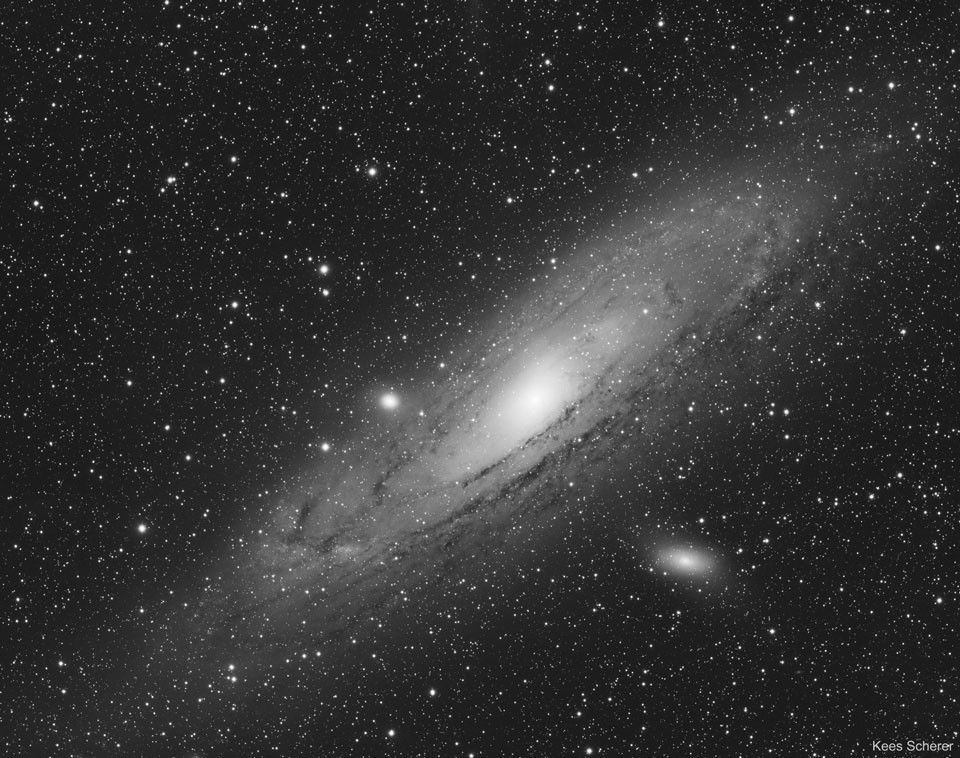 BeforeAfter Andromeda Before and After Photoshop Explanation: What does the Andromeda galaxy really look like? The featured before image shows how our Milky Way Galaxy‘s closest major galactic neighbor really appears in a long exposure through Earth‘s busy skies and with a digital camera that introduces normal imperfections. The picture is a stack of 223 images, each a 300 second exposure, taken from a garden observatory in Portugal during 2019. Obvious image deficiencies include bright parallel airplane trails, long and continuous satellite trails, short cosmic ray streaks, and bad pixels. In the after image, these imperfections were actually not removed with Photoshop specifically, but rather greatly reduced with a series of computer software packages that included Astro Pixel Processor, DeepSkyStacker, and PixInsight. All of this work was done not to deceive you with a digital fantasy that has little to do with the real likeness of the Andromeda galaxy (M31), but to minimize Earthly artifacts that have nothing to do with the distant galaxy and so better recreate what M31 really does look like.
APOD’s email for image submissions has changed. Please see: APOD Submissions
APOD’s main NASA site is moving: From apod.nasa.gov to science.nasa.gov/apod
Tomorrow’s picture: cosmic latte
Date September 26, 2026 Credit & Copyright: Kees Scherer Authors & editors: Robert Nemiroff, Jerry Bonnell, Cecilia Chirenti, Keighley Rockcliffe A service of: ASD at NASA / GSFC,
NASA Science Activation & Michigan Tech. U.
Random APOD Generator
Yesterday’s Image APOD: 2026 September 26 – Mirrored Meteor and Milky Way