4 min read
NASA’s Swift Mission Ends, Leaves Behind Scientific Bonanza NASA’s Neil Gehrels Swift Observatory has ended its science mission now that the spacecraft is orbiting less than 171 miles (275 kilometers) above Earth’s surface. The greater atmospheric drag at this height prevents the satellite’s telescopes from steadily gazing at their astronomical targets.
Swift conducted its final observation on Oct. 20. It is expected to re-enter the atmosphere in the next few weeks.
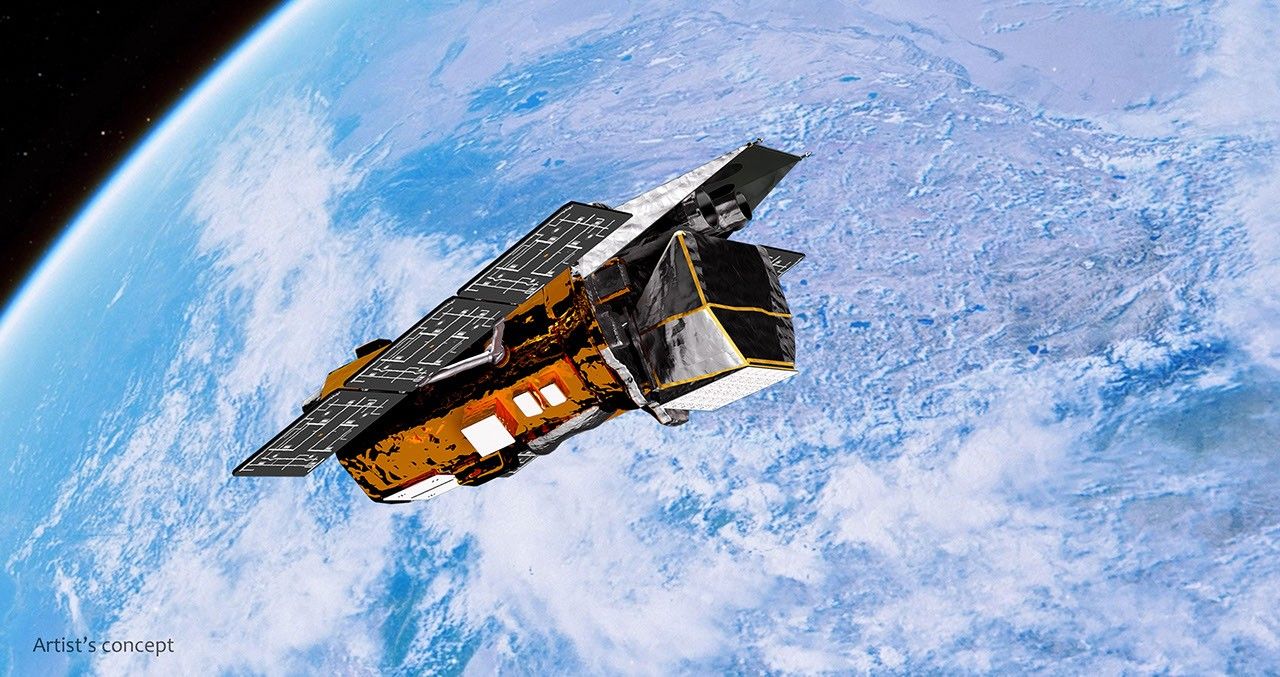
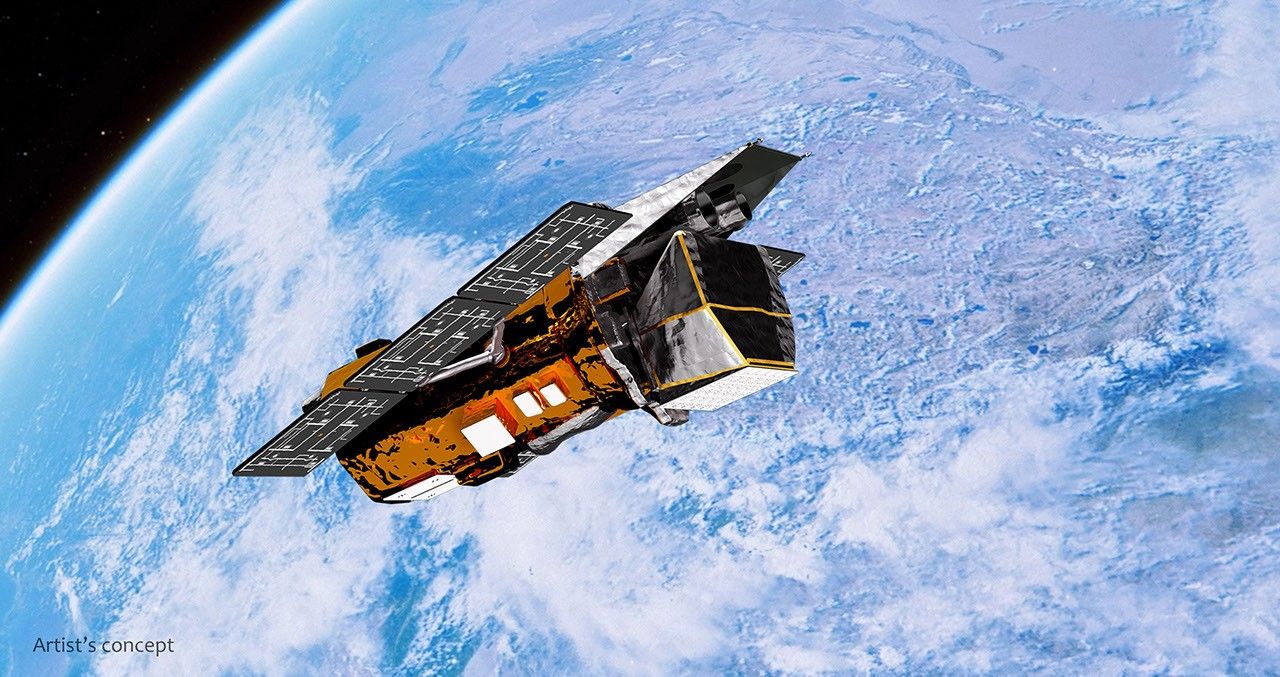
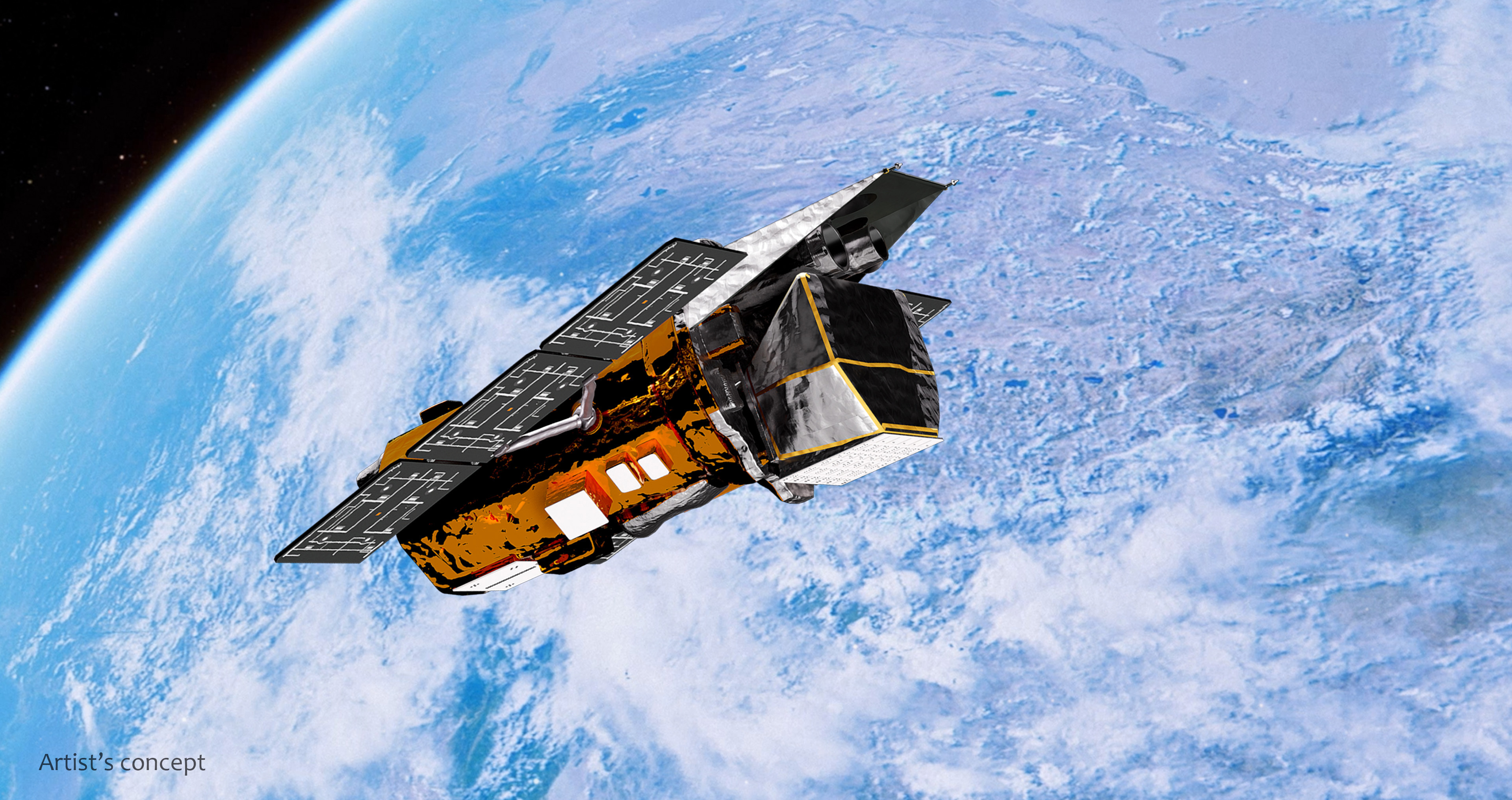 NASA’s Neil Gehrels Swift Observatory orbits above Earth in this artist’s concept.NASA’s Goddard Space Flight Center Conceptual Image Lab “Swift delivered an incredible, lasting return on investment for the nation, designed for a two-year primary mission but productive for more than 10 times as long,” said Shawn Domagal-Goldman, director, Astrophysics Division at NASA Headquarters in Washington. “In that time, Swift played a major role in advancing our understanding of the changing universe and was part of a revolution in astrophysics that showed how critical rapid-response observations are to the entire community. To support rapid response to cosmic events in a post-Swift world, we’re exploring our ability to use and augment NASA’s fleet of existing space telescopes, from fast-to-orbit commercial capabilities to efficient, innovative new missions. And Swift leaves us with an extraordinary archive of multiwavelength observations that will fuel new discoveries for decades more.”
In its storied career, Swift has observed more than 2,000 gamma-ray bursts, the most powerful explosions in the cosmos. It has studied more than 1,400 supernova explosions, witnessed stars shredded by black holes, monitored active galaxies, conducted an all-sky X-ray survey, studied asteroids and comets, and more. Swift data has contributed to about 7,000 published scientific papers.
“Swift was designed as a satellite dedicated to studying gamma-ray bursts, outbursts that came and went so quickly that no one could target them with large telescopes to learn more,” said S. Bradley Cenko, the mission’s principal investigator at NASA’s Goddard Space Flight Center in Greenbelt, Maryland. “Swift needed to detect and locate gamma-ray bursts, communicate their position to other observatories, and then swing its telescopes around to image the burst locations before their afterglows faded out. This typically took Swift about a minute to do.”
Led by its first principal investigator, Neil Gehrels, Swift was born as a multiwavelength observatory, with co-aligned Optical/Ultraviolet and X-ray telescopes that could quickly image and refine a burst’s position. The mission launched into orbit on Nov. 20, 2004, and went to work the following month. In 2018, NASA renamed the mission to honor Gehrels following his death.
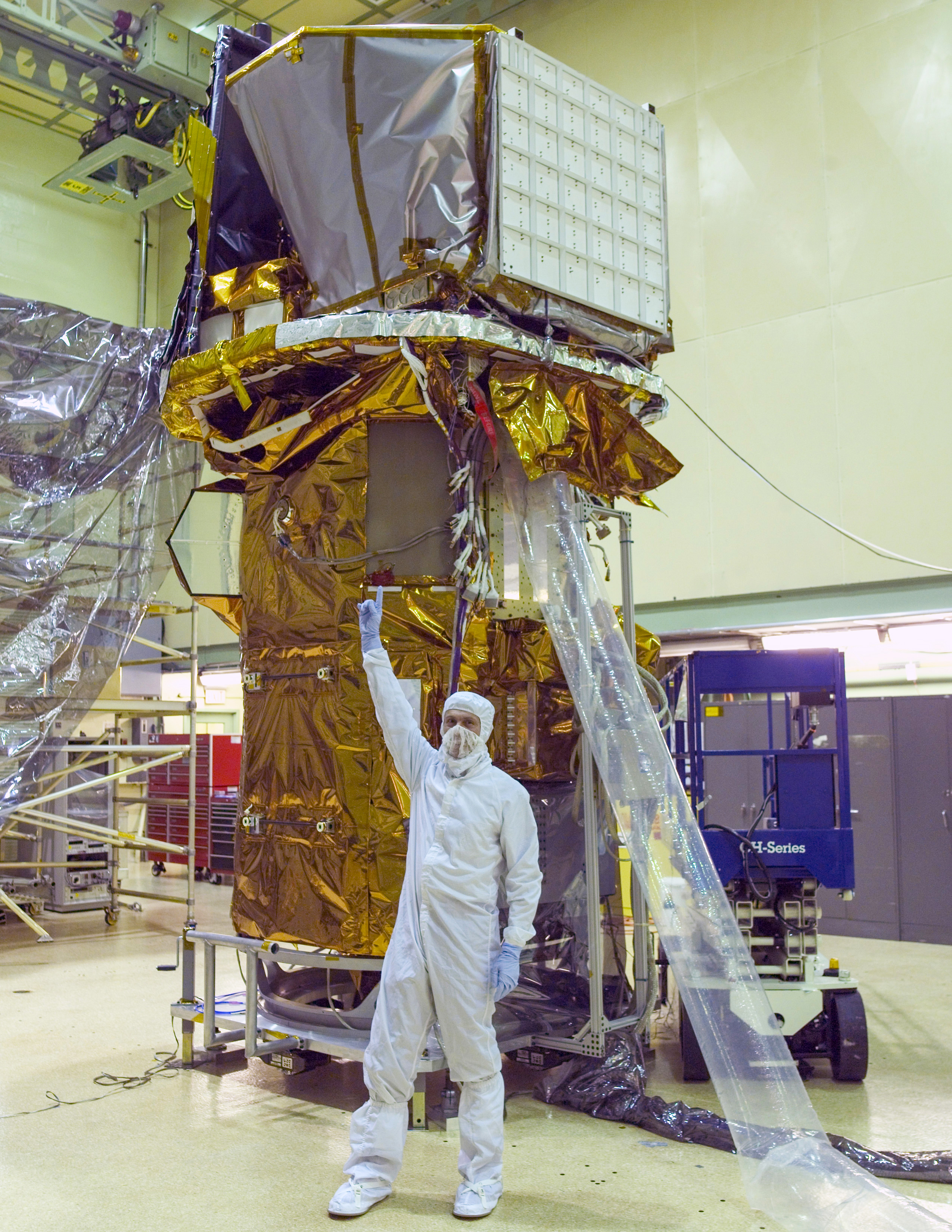 The completed Swift spacecraft is seen in a clean room at NASA Goddard on Sept. 9, 2003. In front of it, Neil Gehrels, the mission’s first principal investigator, points toward the instruments at the top.NASA Speed was especially important for an elusive population called short gamma-ray bursts, which reach peak brightness in less than two seconds. Until Swift, it had been impossible to locate these bursts rapidly and precisely enough to observe their afterglows. In May 2005, Swift achieved this milestone with GRB 050509B, which lasted just 0.03 seconds. Swift turned to the burst fast enough to detect 11 X-ray photons, making this the first short burst with a detected afterglow. These observations validated long-standing theoretical models, showing that short gamma-ray bursts likely come from mergers of two neutron stars — objects with the mass of the Sun that have been crushed to the size of a city.
Another factor led to Swift’s success as a kind of astronomical multitool. Its flexible planning system enabled astronomers to request “target-of-opportunity” observations that could be commanded from the ground in as little as a few minutes, or to set up monitoring programs for observing specific sources lasting from as little as a few minutes to months. The system could schedule up to 75 independent targets a day.
“The unique speed of response of the Swift hardware, the extraordinary success of the rapid mission operations, and the closely knit teamwork of the Swift Flight and Science Operations teams placed Swift at the crossroads of burgeoning areas of research,” said John Nousek, the mission’s operations director and professor of astronomy and astrophysics in the Eberly College of Science at Penn State in University Park, Pennsylvania.
The Swift archive contains nearly 22 years of brightness measurements of all kinds of cosmic outbursts, multiwavelength spectra, more than 1.5 million images from its Ultraviolet/Optical Telescope, and much more. The full dataset, publicly available as part of NASA’s commitment to open, gold standard science, spans approximately 12 terabytes, the storage equivalent of about 600 high-definition movies.
As part of the agency’s previous planning for Swift’s end of mission, NASA will continue to prioritize finding new options to react rapidly to cosmic events, using current missions to help fill the gap in the meantime.
To learn more about the Swift mission, visit:
Facebook logo @NASAUniverse @NASAUniverse Instagram logo @NASAUniverse
 6 min read NASA’s Swift Sees ‘Wandering’ Mega Black Hole Shredding Star Article 3 months ago
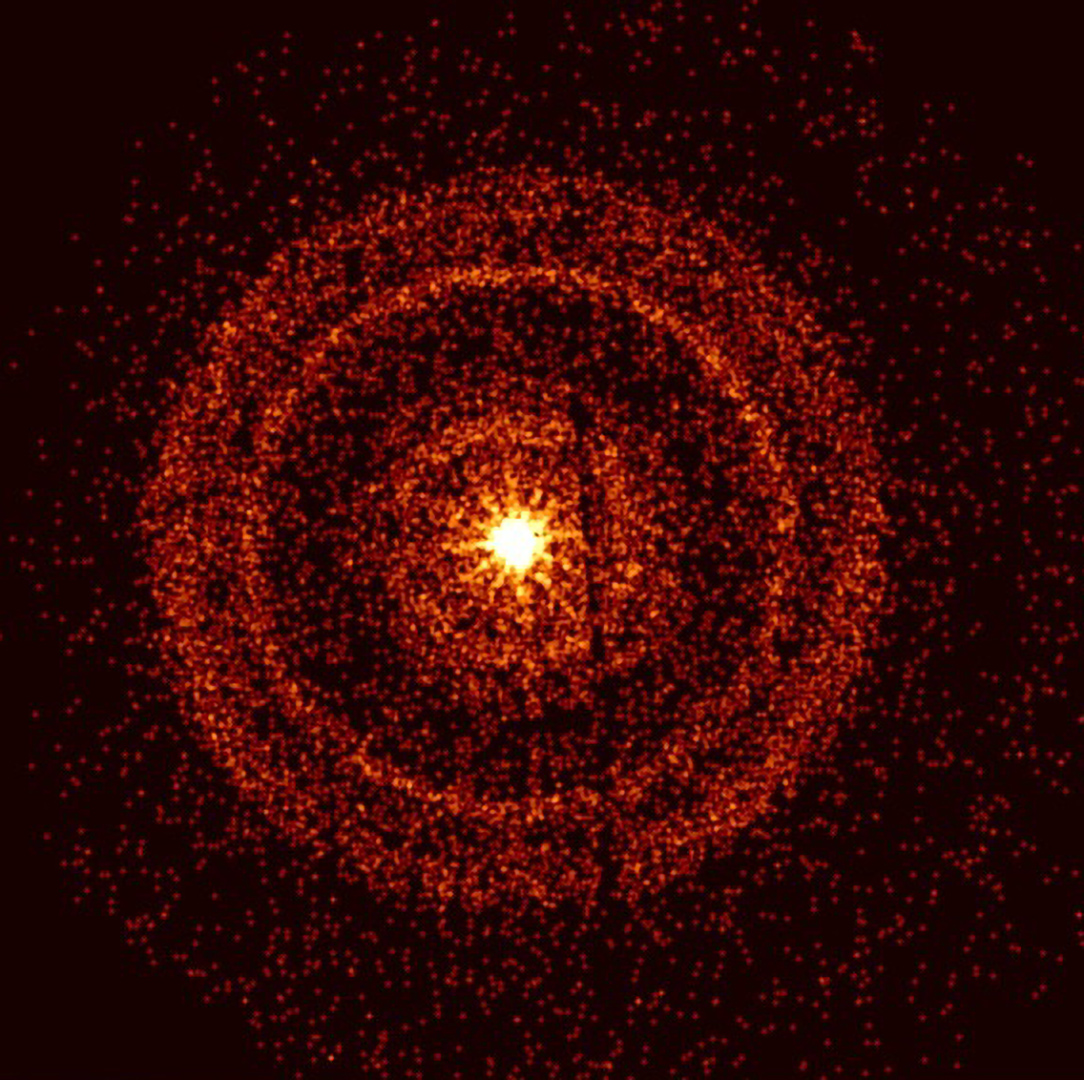 3 min read NASA’s Swift, Fermi Missions Detect Exceptional Cosmic Blast Astronomers around the world are captivated by an unusually bright and long-lasting pulse of high-energy…
Article 4 years ago
 7 min read NASA’s Swift Helps Tie Neutrino to Star-shredding Black Hole For only the second time, astronomers have linked an elusive particle called a high-energy neutrino…
Article 6 years ago
Keep Exploring Discover Related Topics Missions