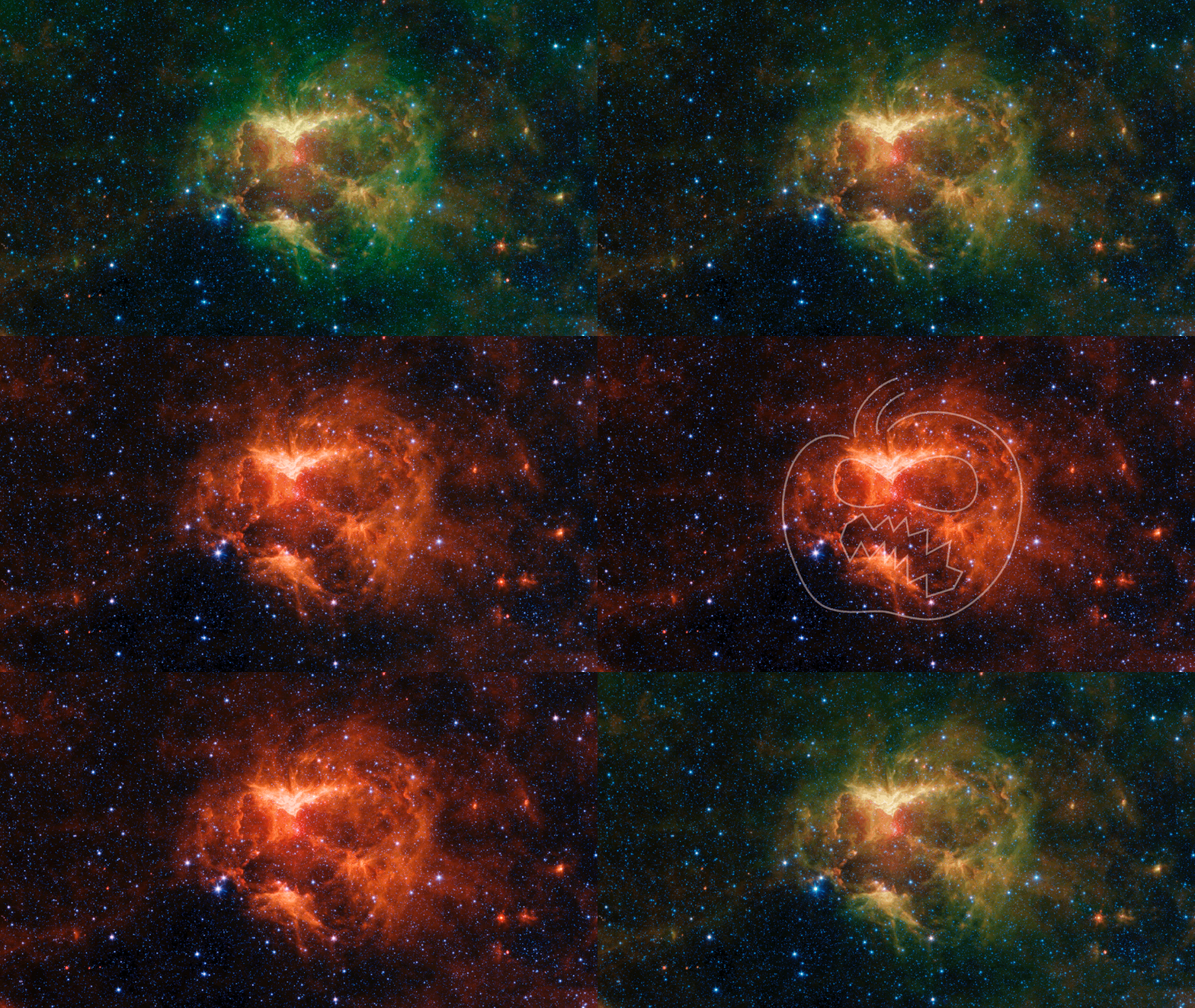
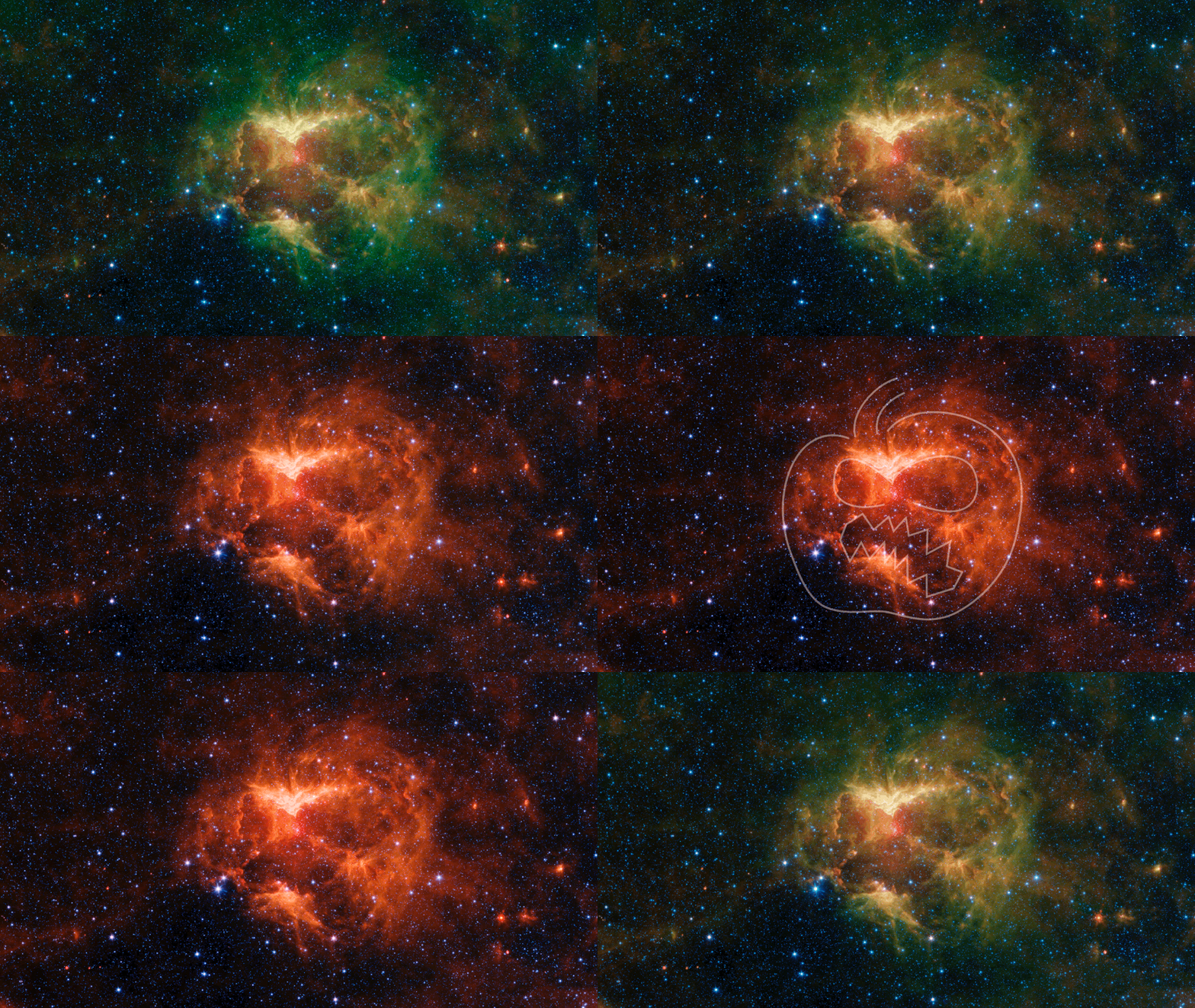
2 Min Read October’s Night Sky Notes: Spooky Stargazing 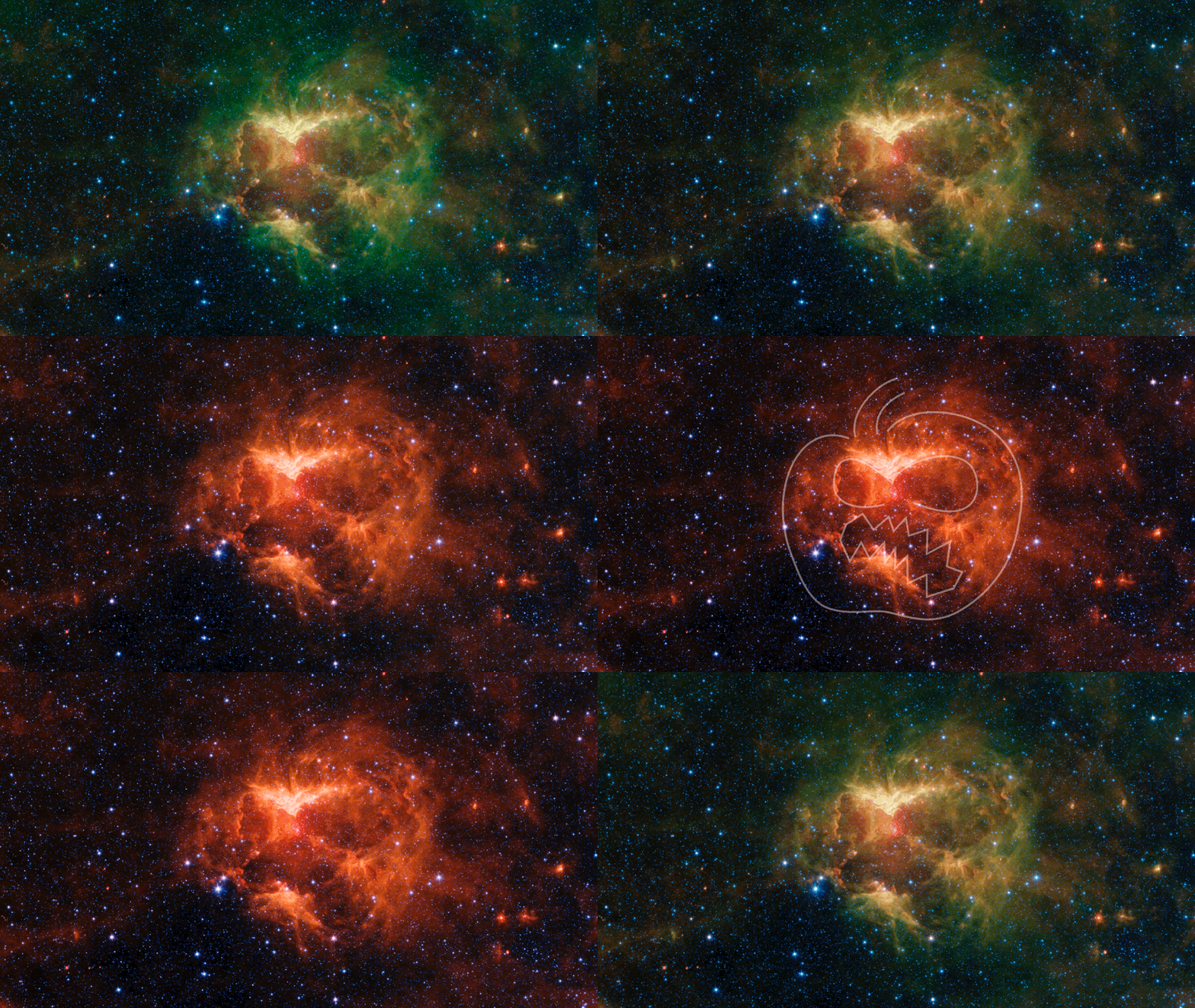 This infrared image from NASA’s Spitzer Space telescope shows a cloud of gas and dust carved out by a massive star. A drawing overlaid on the image reveals why researchers nicknamed this region the “Jack-o’-lantern Nebula.” Credit: NASA/JPL-Caltech Credits:
NASA/JPL-Caltech The Ghoul Located within the constellation Perseus lies a star called Algol, also known as ‘Demon Star’ or ‘The Ghoul’. You can spot this star during the autumn months, along with Cassiopeia and Andromeda in the northeastern sky, beginning after 9 PM. In Greek mythology, this star represents the ‘blinking eye’ of the gorgon Medusa. But how can a star blink?
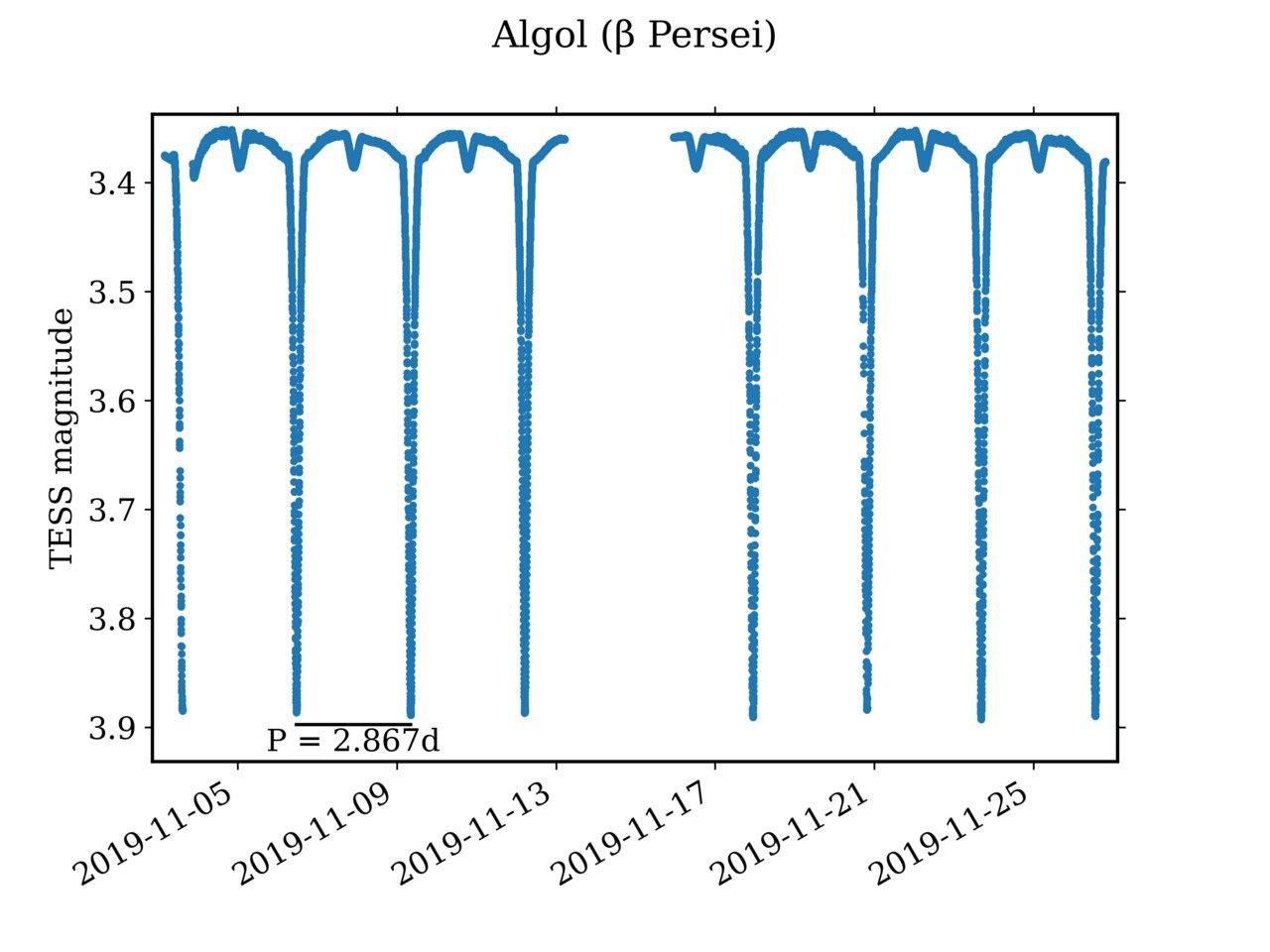 Light curve of the eclipsing binary star Algol recorded by NASA’s Transiting Exoplanet Survey Satellite (TESS), stored on NASA’s Mikulski Archive for Space Telescopes (MAST). NASA/Wikipedia Commons Algol is a triple-star system, with two of the three stars orbiting one another. This eclipsing binary causes the system to go from a bright +2.1 magnitude to a slightly dimmer +3.4 magnitude about every three days. Using data from NASA’s Transiting Exoplanet Survey Satellite (TESS) mission, this light curve shows the regular dimming, or Medusa’s ‘blinking eye’!
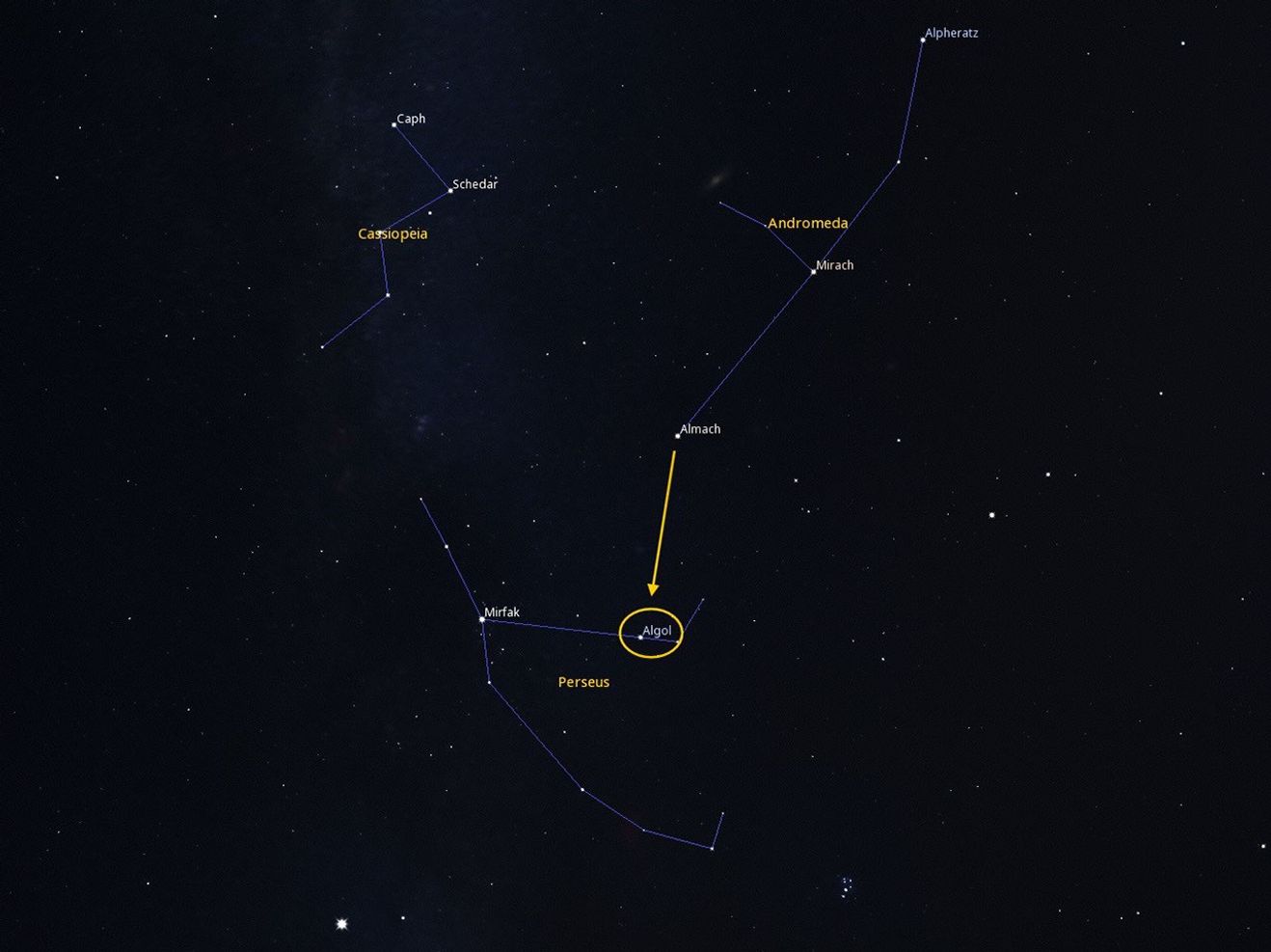 Using the constellations Cassiopeia and Andromeda, locate Perseus. You can find Algol by using the star Almach as a guide. Stellarium There is no shortage of resources on how to calculate the dimming – or minima – of Algol, from interactive charts to data plots. Find the one that works best for you. Because it has a similar magnitude of brightness, you can compare Algol’s brightness to the nearby star Almach (Gamma Andromedae) in Andromeda using a small telescope or binoculars.
Witch Head Nebula Between the Eridanus and Orion constellations lies a spooky silhouette, illuminated by the star Rigel. IC 2118, or the Witch Head Nebula, is a reflection nebula about 900 light-years away from Earth. Because reflection nebulae rely on nearby starlight to appear visible, they can be difficult to see with the naked eye, especially if they are as far away as this one. While the Witch Head Nebula can’t be seen with the naked eye, telescopes with very large apertures and low magnification make it easier to catch under dark skies. Astrophotographers, with or without smart telescopes, can image this haunting outline within a few hours, depending on equipment and sky quality. And what is a witch without their broom! You can find the Witch’s Broom in the Western Veil Nebula, located in the constellation Cygnus.
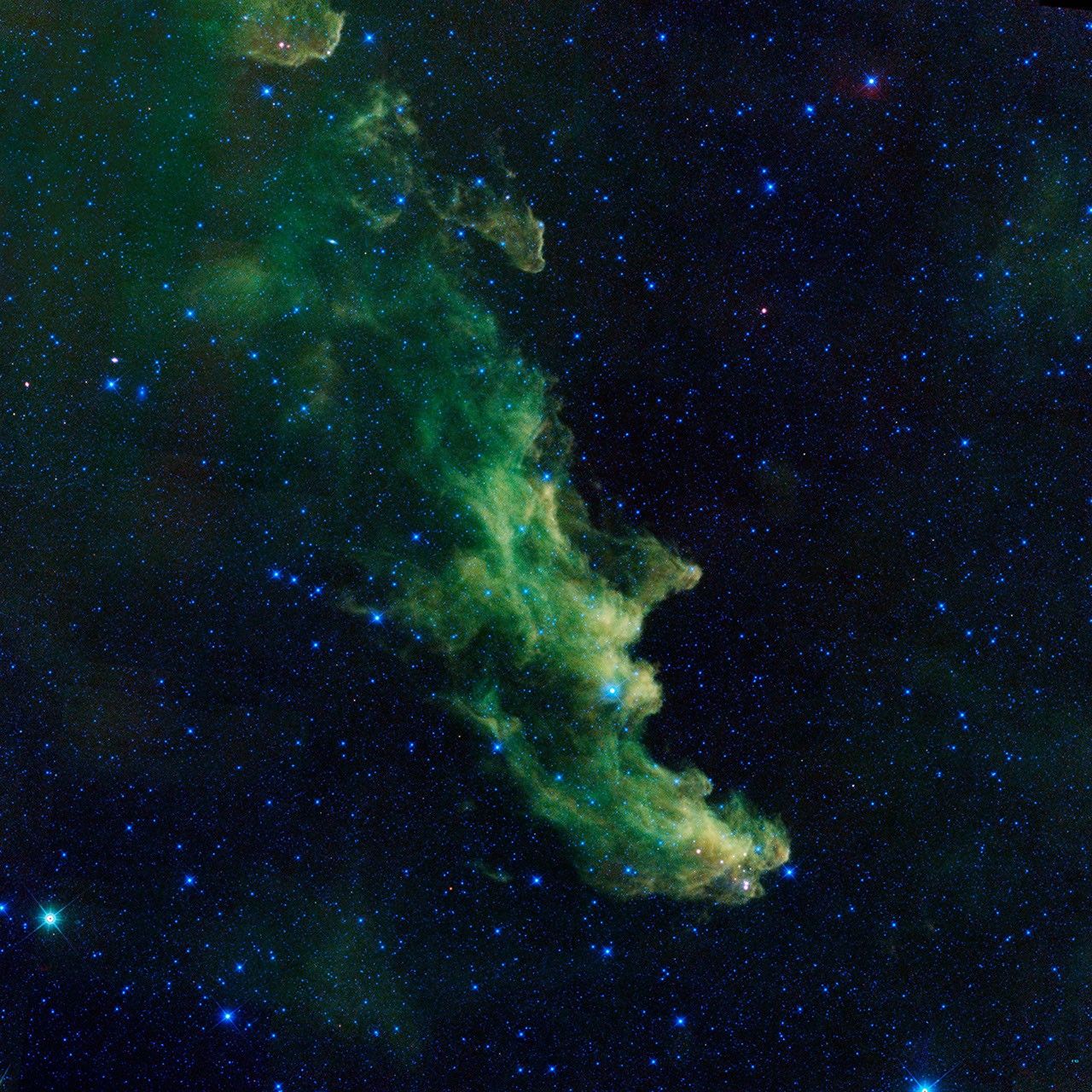 An infrared portrait of the Witch Head nebula from NASA’s Wide-field Infrared Survey Explorer, or WISE, shows billowy clouds where new stars are brewing. NASA/JPL-Caltech Want more tips for getting into the season? Read our article on how you can make some spooky sidewalk astronomy fun for your community with Trick or Treat: Sidewalk Astronomy!