
New supplies are on their way to the International Space Station after launching aboard a Progress 96 cargo spacecraft at 9:33 a.m. EDT on Wednesday. Progress 96 will arrive Saturday for an automated docking to the Poisk module at 9:46 a.m. EDT bringing nearly three tons of food, fuel, and cargo to the Expedition 75 crew members.
NASA and SpaceX are now targeting as soon as early October for the launch of the Crew-13 mission to allow for completion of prelaunch activities, readiness reviews, and coordination of space station operations. The team successfully replaced an oxidizer valve in Dragon’s propulsion system after a leak was detected earlier in processing.
In the meantime, the seven residents aboard the orbiting outpost stayed focused on ongoing microgravity research, cargo operations, and lab maintenance throughout Wednesday.
Station commander Jessica Meir of NASA began her shift documenting her sleep quality, collecting a saliva sample, and downloading biomedical data collected from her smart watch to a computer tablet. Researchers will analyze Meir’s health metrics for the RelaxPro investigation to help reduce stress and improve sleep for astronauts. Next, she transferred cargo in and out of Northrop Grumman’s Cygnus XL cargo spacecraft which has been berthed to the Unity module’s Earth-facing port since April 14.
NASA flight engineer Anil Menon once again soldered components on a circuit board in the Harmony module using lead-free soldering techniques to demonstrate the safe manufacturing and repairing of electronics in microgravity. The space-soldered samples will be returned to Earth and compared to identical ground-soldered samples. Results may lead to reduced reliance on costly resupply missions.
NASA flight engineer Jack Hathaway spent his shift inside the Destiny laboratory module installing new water filter cartridges in the oxygen generation system. The filters remove fluoride ions keeping water pure and clean as it passes through the spacecraft’s systems.
Flight engineer Sophie Adenot of ESA (European Space Agency) worked out on the new European Enhanced Exploration Exercise Device (E4D) installed inside the Columbus laboratory module. Controller software on the E4D tracked her performance helping researchers evaluate its effectiveness for use on future long-duration missions.
The three cosmonauts from Roscosmos, flight engineers Pyotr Dubrov, Anna Kikina, and Andrey Fedyaev, spent their shift on station maintenance. Dubrov tested power systems and cleaned vents in the Zvezda service module. Kikina serviced Zvezda’s Elektron oxygen generator and cleaned fan screens in the Rassvet module. Fedyaev inspected and photographed laptop computers and their power supplies.
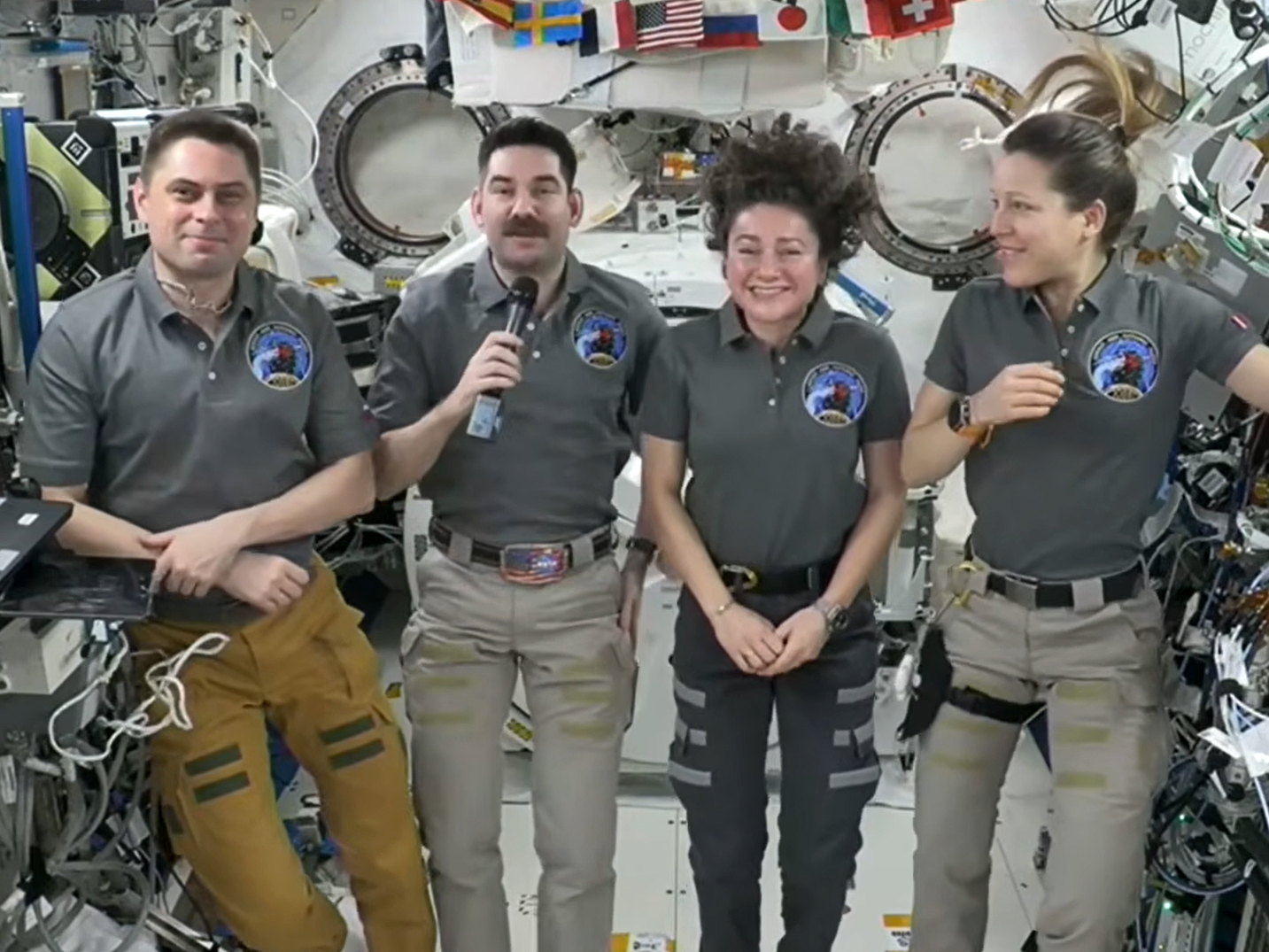
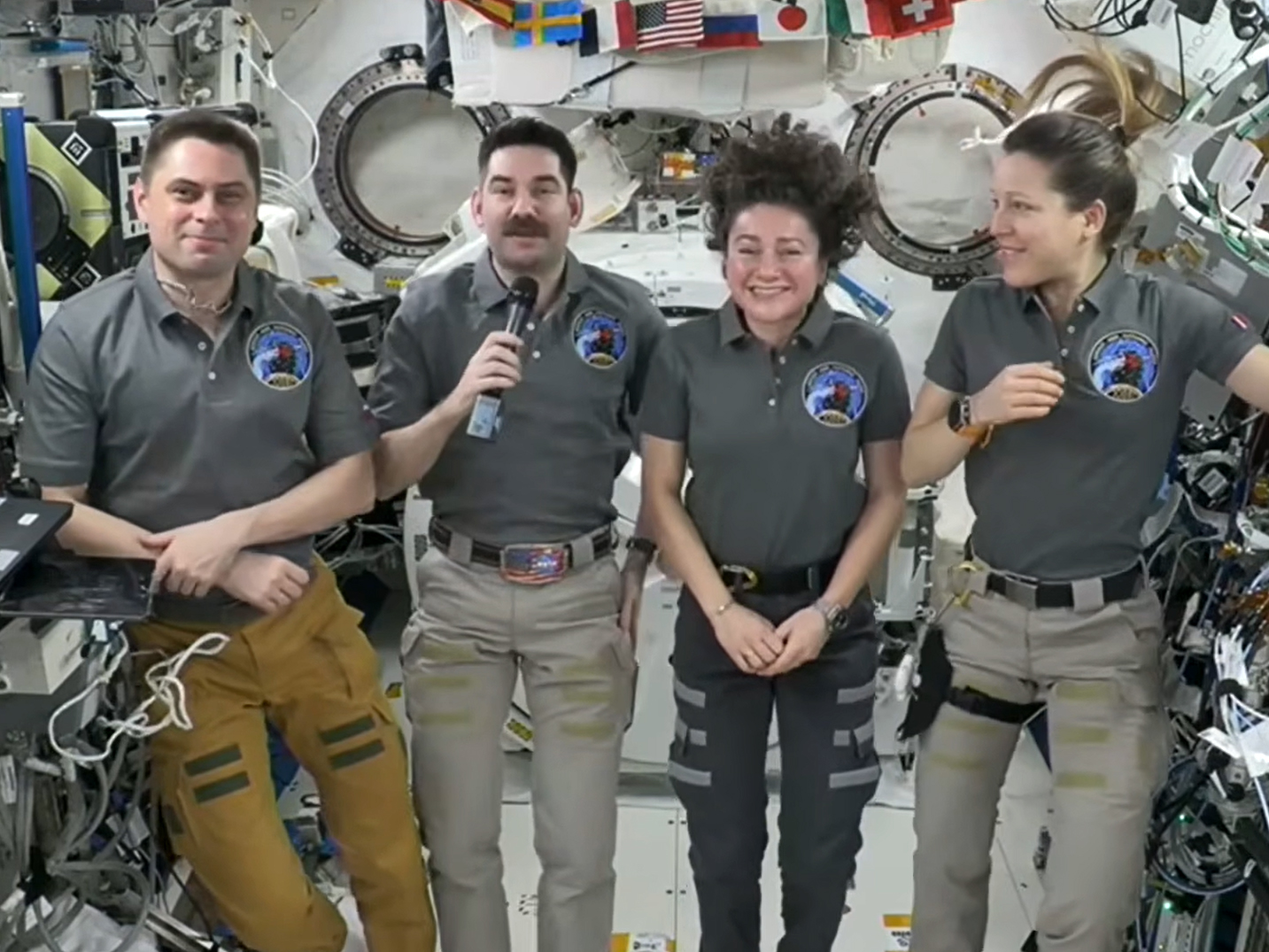
Fedyaev and his SpaceX Crew-12 crewmates Meir, Hathaway, and Adenot—who have been aboard the space station since February 14—also participated in a news conference with journalists on the ground. Meir commented on her recent spacewalk when she rode the Canadarm2 robotic arm, “I felt like I was just there levitating above the Earth. I think that was the biggest eureka moment for me.”
Learn more about station activities by following the space station blog, @space_station on X, as well as the ISS Facebook and ISS Instagram accounts.
Get the latest from NASA delivered every week. Subscribe here.