
Four Expedition 74 astronauts had a light duty day on Wednesday following the previous day’s spacewalk for external robotics maintenance. The remaining three crew members from Roscosmos focused on cardiac research and lab maintenance aboard the International Space Station.
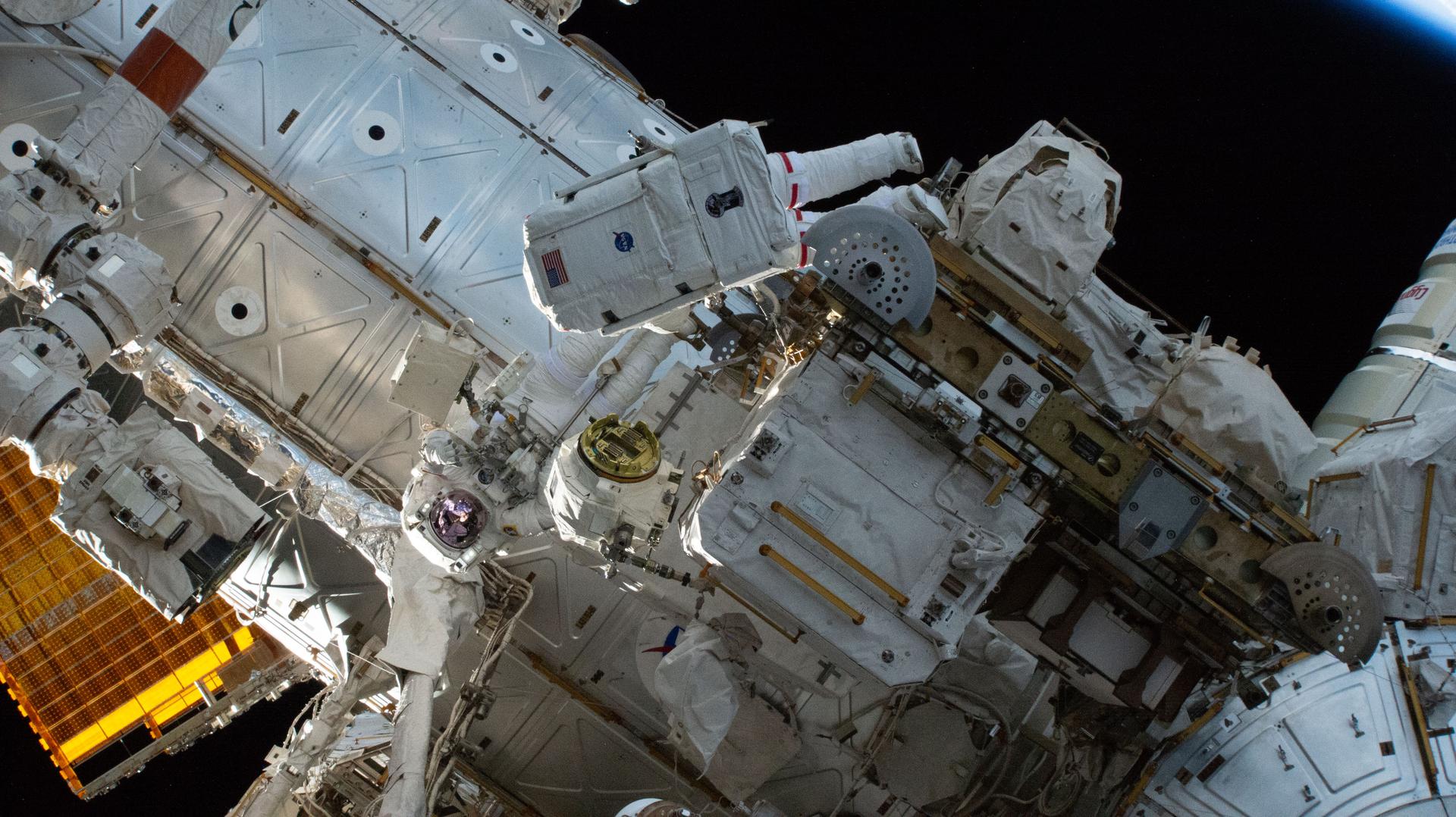
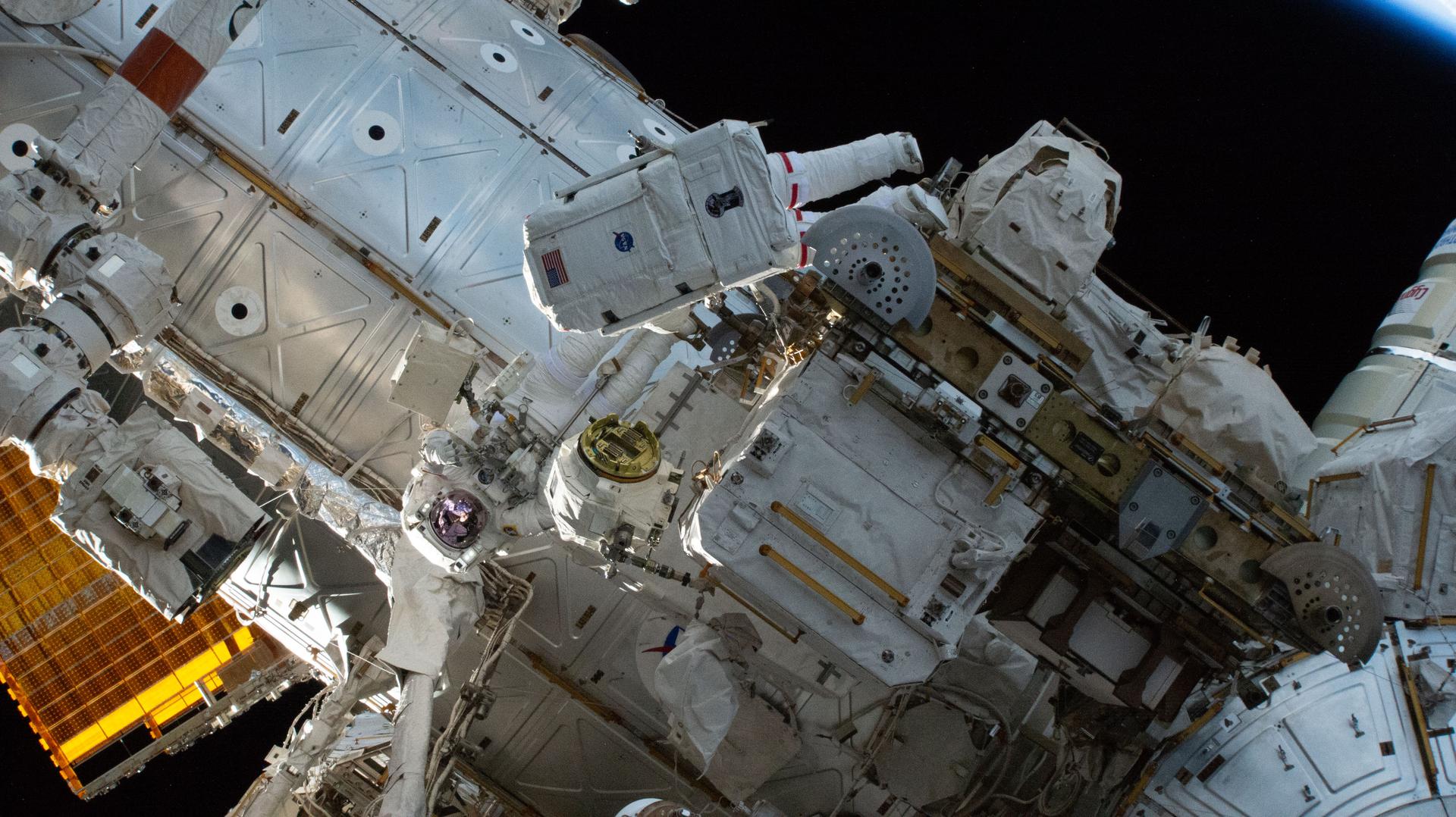
NASA flight engineers Chris Williams and Jessica Meir concluded their second spacewalk together on Tuesday after successfully replacing a malfunctioning wrist joint on the Canadarm2 robotic arm. The duo spent seven hours and 20 minutes on Canadarm2’s fourth repair job since its installation on April 26, 2001. Initial checkouts of the arm by flight controllers on the ground indicate the arm is functioning well and additional checkouts and verification will continue in the coming days.
Williams and Meir slept in on Wednesday and relaxed for a few hours afterward before photographing their spacesuit gloves for inspection and refilling the water tanks that help keep a spacesuit’s temperature stable during a spacewalk. Flight engineers Jack Hathaway of NASA and Sophie Adenot of ESA (European Space Agency), who monitored and assisted the spacewalkers on Tuesday, also slept in and relaxed during the first half of their shift. Finally, all four astronauts joined each other for a standard post-spacewalk conference with mission controllers on Earth and discussed their experience during the robotics repair job.
The orbiting laboratory’s commander Sergey Kud-Sverchkov and flight engineer Sergei Mikaev had a busy research schedule Wednesday studying how weightlessness affects mental performance and the circulatory system. Kud-Sverchkov and Sergei Mikaev first logged onto to a pair of computer tablets and participated in a test that provided increasingly difficult tasks that required the pair’s coordination. Results may reveal how teamwork, decision‑making, and concentration change during long missions in space and lead to improved mission training techniques.
The two cosmonauts also took turns wearing arm, wrist, and finger cuffs measuring their blood pressure. Next, the duo attached light‑based sensors to their forehead, fingers, and toes to study how blood flows through tiny vessels, or the microcirculatory system, in the skin. Doctors will use the insights for early detection of space-caused circulation issues to protect crew health and the development of advanced medical technology on Earth.
Roscosmos flight engineer Andrey Fedyaev spent most of his shift inside the Nauka science module cleaning smoke detectors. At the end of his shift, Fedyaev downloaded and read data collected from radiation detectors that Williams and Meir wore on their spacesuits during Tuesday’s spacewalk.
Learn more about station activities by following the space station blog, @space_stationon X, as well as the ISS Facebook and ISS Instagram accounts.
Get the latest from NASA delivered every week. Subscribe here.