
A SpaceX Falcon 9 rocket with a Dragon cargo spacecraft atop stands ready to launch to the International Space Station at 6:50 p.m. EDT today, weather permitting, from Launch Complex 40 at Cape Canaveral Space Force Station in Florida. The uncrewed Dragon, packed with about 6,500 pounds of science experiments, crew supplies, and lab hardware for the Expedition 74 crew, will orbit Earth for half-a-day before approaching the orbital outpost for an automated docking to the Harmony module’s forward port at 7:35 a.m. on Thursday. Watch NASA’s live launch coverage beginning at 6:30 p.m. on NASA+, Amazon Prime, and the agency’s YouTube channel.
NASA flight engineers Chris Williams, Jessica Meir, and Jack Hathaway joined flight engineer Sophie Adenot of ESA (European Space Agency) for part of the day on Wednesday reviewing Dragon cargo operations then calling down to flight controllers for a mission readiness review. The quartet will begin unpacking critical, time-sensitive research samples packed inside Dragon’s portable science freezers just a few after hours after the cargo spacecraft’s arrival. Hathaway and Adenot will also be on duty Thursday monitoring Dragon during its automated approach and rendezvous.
Williams assisted Hathway on Wednesday as he worked in the Tranquility module configuring hardware and making space for the installation of a new water recycling system reducing the need to resupply water from Earth. Williams then tested using voice commands on a free-flying robotic camera that could assist astronauts with video and photography activities.
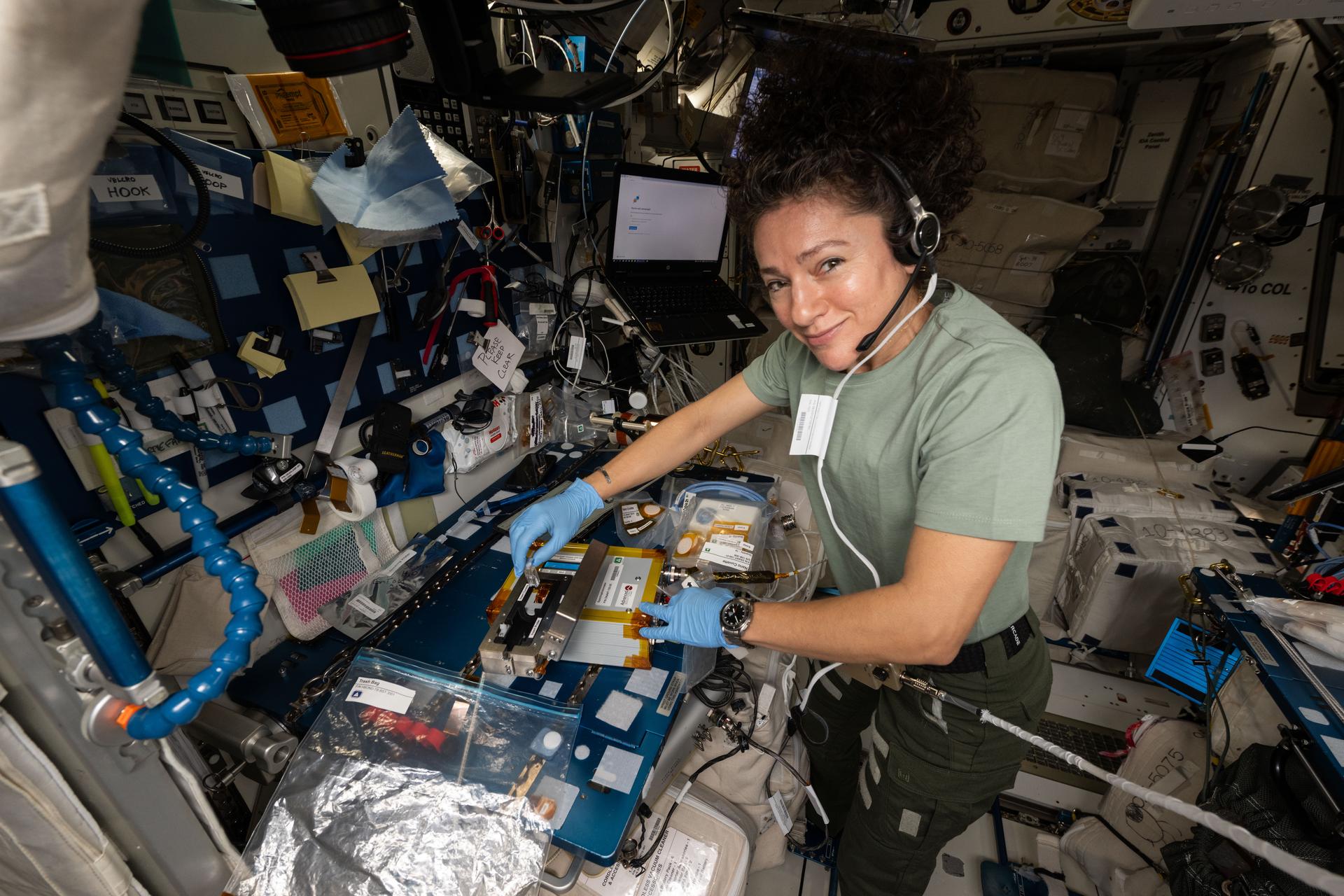
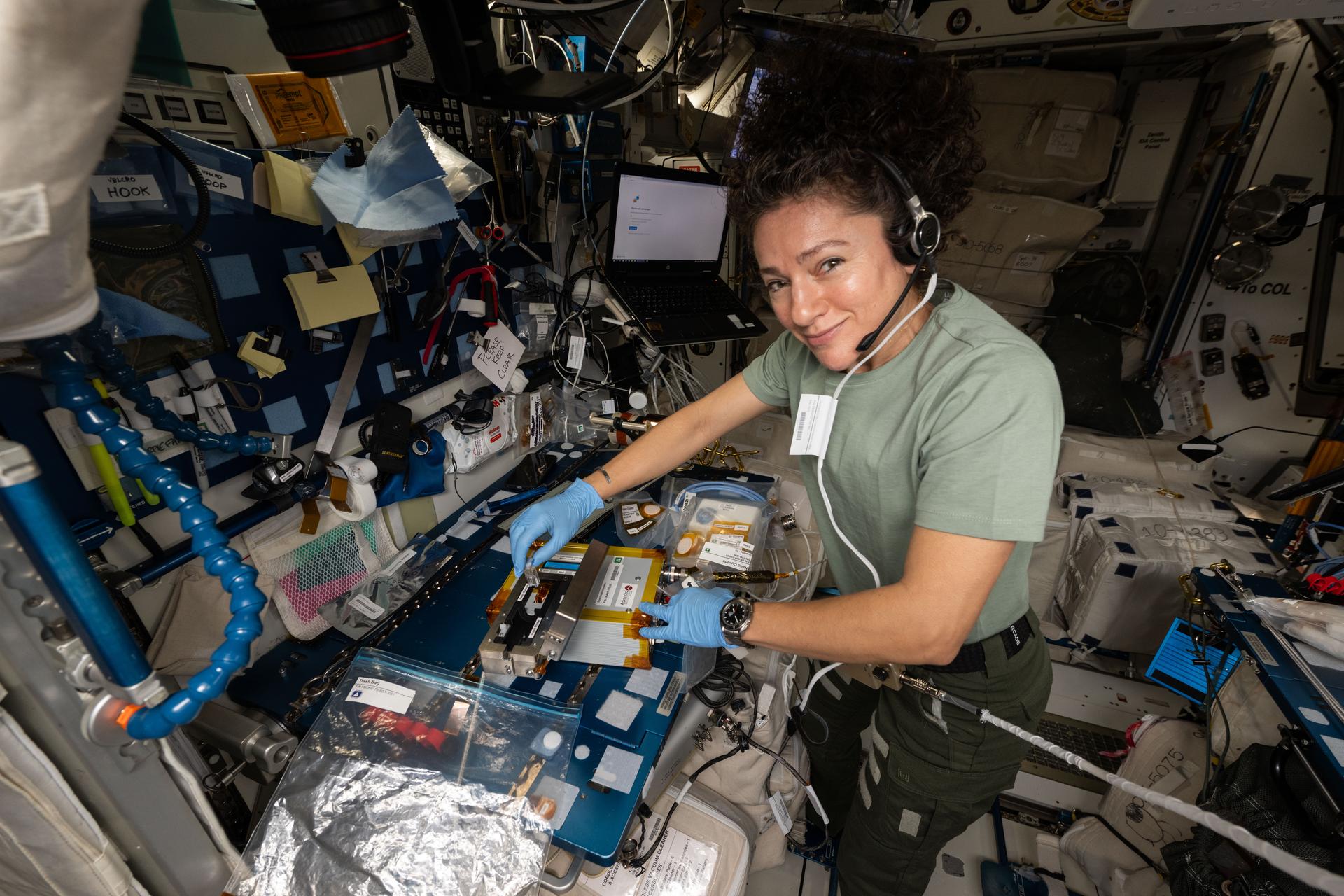
Meir swapped out materials research hardware inside the Kibo laboratory module’s airlock for placement into the external environment of space for exposure and testing. Adenot wore the sensor-packed Bio-Monitor vest and headband that monitored her heart and breathing activity while she pedaled on an exercise cycle. The two astronauts wrapped up their shift together in the Columbus laboratory module with Meir scanning Adenot’s leg veins with the Ultrasound 3 biomedical device looking for potential signs of space-caused blood clots.
Roscosmos cosmonauts Sergey Kud-Sverchkov and Sergey Mikaev, station commander and flight engineer respectively, started their shift reviewing procedures they will use on an upcoming spacewalk for external lab maintenance. Kud-Sverchkov then collected and stowed his saliva samples for analysis while Mikaev serviced scientific control and data processing hardware. Roscosmos flight engineer Andrey Fedyaev pedaled on exercise cycle for a fitness test then performed maintenance on Roscosmos computer systems.
Learn more about station activities by following the space station blog, @space_stationon X, as well as the ISS Facebookand ISS Instagram accounts.
Get the latest from NASA delivered every week. Subscribe here.