Explore This Section Science Science Activation Artemis Moon Tree Dedicated in… Overview Learning Resources Science Activation Teams SME Map Opportunities More Science Activation Stories Citizen Science Science Activation Opportunities 4 min read
Artemis Moon Tree Dedicated in Honor of Mary W. Jackson 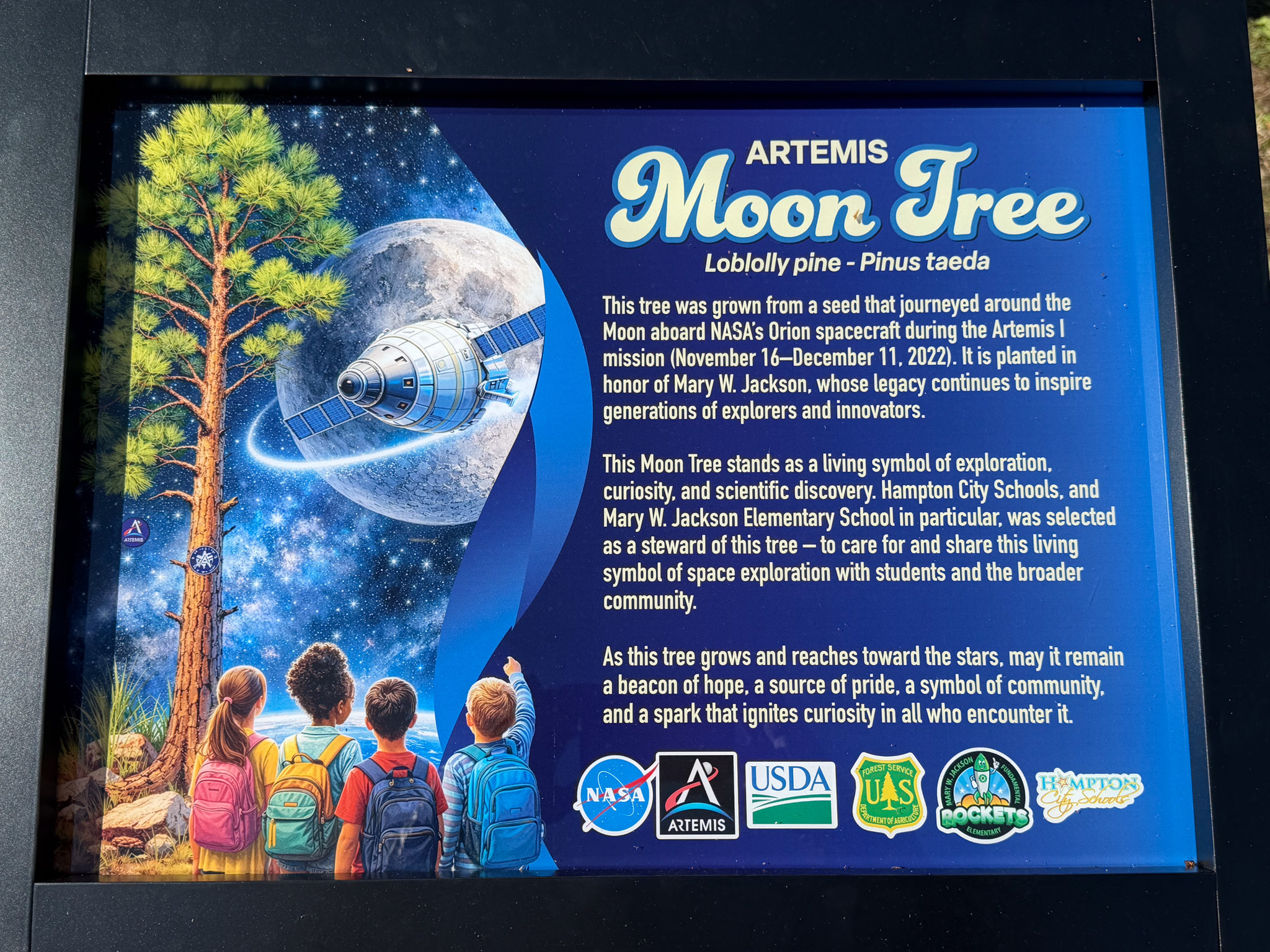 Sign installed next to the planted Artemis Moon Tree. Credit: NASA On March 18, 2026, students, staff, and members of NASA’s Langley Research Center gathered at Mary W. Jackson Elementary School in Hampton to celebrate the dedication of a remarkable addition to the campus – an Artemis Moon Tree. Although formally dedicated on this day, the loblolly pine had already taken root months earlier, having been planted on November 21st, 2025, by students and staff.
NASA eClips educators from the National Institute of Aerospace’s Center for Integrative STEM Education (NIA-CISE) applied for and received the Artemis Moon Tree through NASA’s Office of STEM Engagement. NASA eClips, part of NASA’s Science Activation Program, strives to deepen science literacy by engaging learners and educators in experiences and standards-aligned resources grounded in NASA science.
The tree’s journey is as extraordinary as its setting. The seed orbited the Moon in 2022 as part of the Artemis I before returning to Earth, where it was nurtured into a sapling by the U.S. Department of Agriculture Forest Service. In late spring 2025, it arrived in Hampton and was cared for by NASA eClips educators at NIA-CISE until it could be planted by third- through fifth-grade students at Mary W. Jackson Elementary School. The planting site was chosen to honor the legacy of Mary W. Jackson, NASA’s first Black female engineer.
In addition to recognizing current and former members of NASA Langley Research Center in attendance, the ceremony highlighted the collaboration that brought the project to life. A short video showcased the teamwork behind the tree’s planting, reflecting the coordination essential to NASA missions. Students worked in groups – Earth Excavators, Compost Crew, Mulch Movers, and Water Brigade – to carefully plant the tree. Fifth-grader Caiden captured the experience best: “My job was putting soil around the tree, and at first, it seemed like a small task, but I realized it was actually one of the most important parts. The soil is what helps the tree stand strong and grow over time. It made me think about how, in life, the little things we do – like helping others, staying consistent, and doing our part – can make a big difference. Just like this tree came from a seed that traveled around the moon, we all have the potential to go far and do amazing things, but we need a strong foundation to grow…I’m proud that I helped give this tree its start, and I’ll always remember that even small actions can lead to something big.” The ceremony concluded at the planting site with an official ribbon cutting, marking the beginning of the tree’s life as a centerpiece of the school community.
Mary W. Jackson Elementary School’s Artemis Moon Tree also serves as a “bookend” to an Apollo Moon Tree, a sycamore tree that was planted on April 30, 1976, at Albert W. Patrick Elementary School (formerly Booker Elementary School). Together, these trees represent generations of exploration, linking past and present NASA missions in a living timeline of discovery. Their presence in Hampton is especially meaningful, as the city was home to NASA’s earliest research efforts and to the astronauts of Project Mercury, as well as pioneering mathematicians and engineers including Katherine Johnson, Dorothy Vaughan, and Christine Darden – trailblazers who, like Mary W. Jackson, helped shape the nation’s journey into space.
The Artemis Moon Tree stands as a living symbol of exploration, curiosity, and scientific discovery – hallmarks of NASA. Entrusted to the care of the students and staff at Mary W. Jackson Elementary, who represent the next generation of thinkers, innovators, and explorers, it will continue to serve as a source of learning and inspiration for years to come.
Details Last Updated Mar 25, 2026 Editor NASA Science Editorial Team Location NASA Langley Research Center Related Terms Science Activation Artemis 1 Earth’s Moon
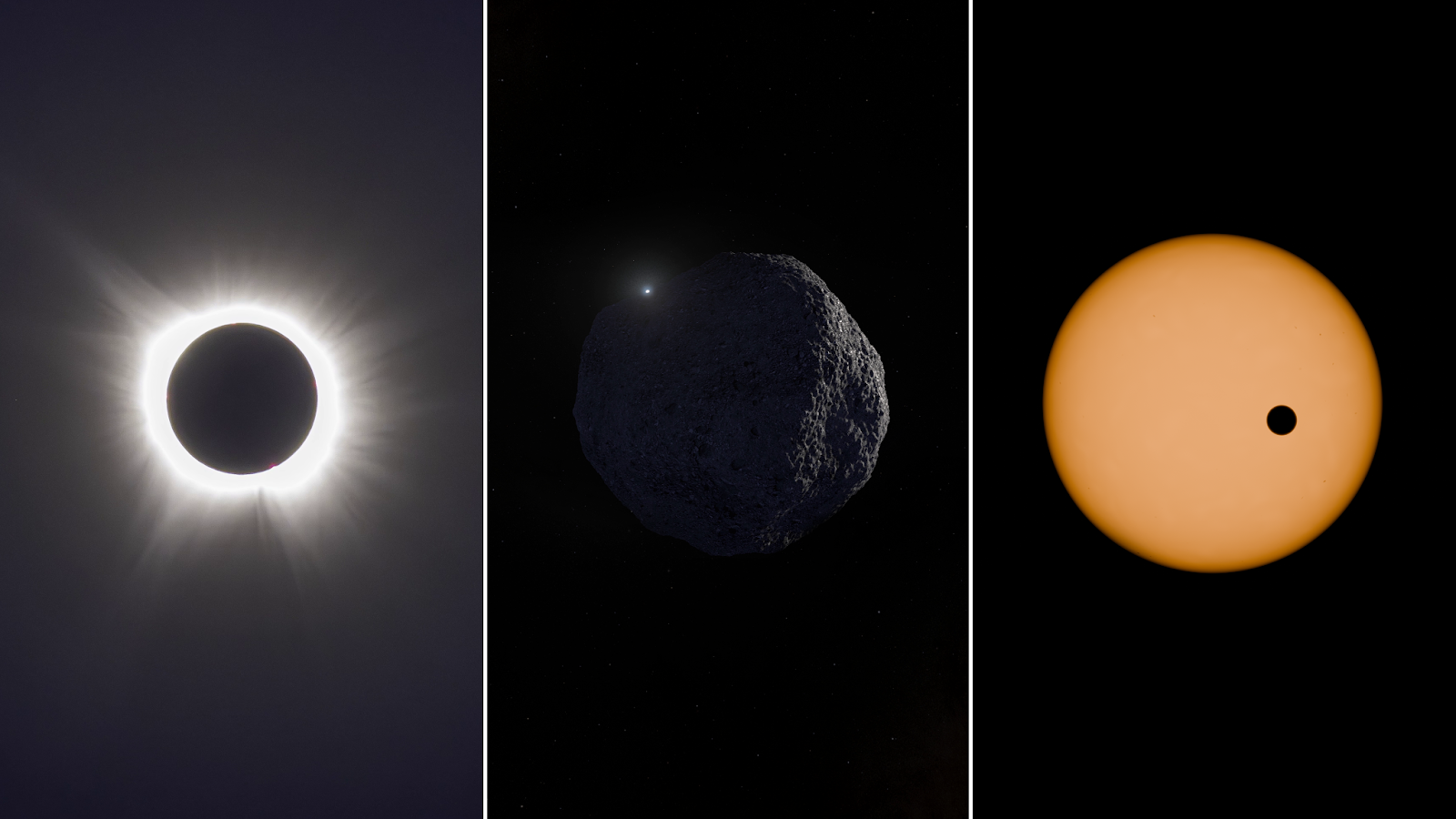 6 min read Science Through Shadows: How Astronomical Alignments Reveal the Universe When one celestial object passes in front of another, it can cast a shadow that…
Article
2 days ago
 5 min read Astronomy Activation Ambassadors: Embracing Multiple Perspectives The Astronomy Activation Ambassadors (AAA) project, part of the NASA Science Activation program, aims to…
Article
1 month ago
 4 min read March 2026 Total Lunar Eclipse: Your Questions Answered A total lunar eclipse will redden the Moon in the early morning hours of March…
Article
2 months ago
Keep Exploring Discover More Topics From NASA James Webb Space Telescope
Webb is the premier observatory of the next decade, serving thousands of astronomers worldwide. It studies every phase in the…

This rover and its aerial sidekick were assigned to study the geology of Mars and seek signs of ancient microbial…
On a mission to “touch the Sun,” NASA’s Parker Solar Probe became the first spacecraft to fly through the corona…
NASA’s Juno spacecraft entered orbit around Jupiter in 2016, the first explorer to peer below the planet’s dense clouds to…