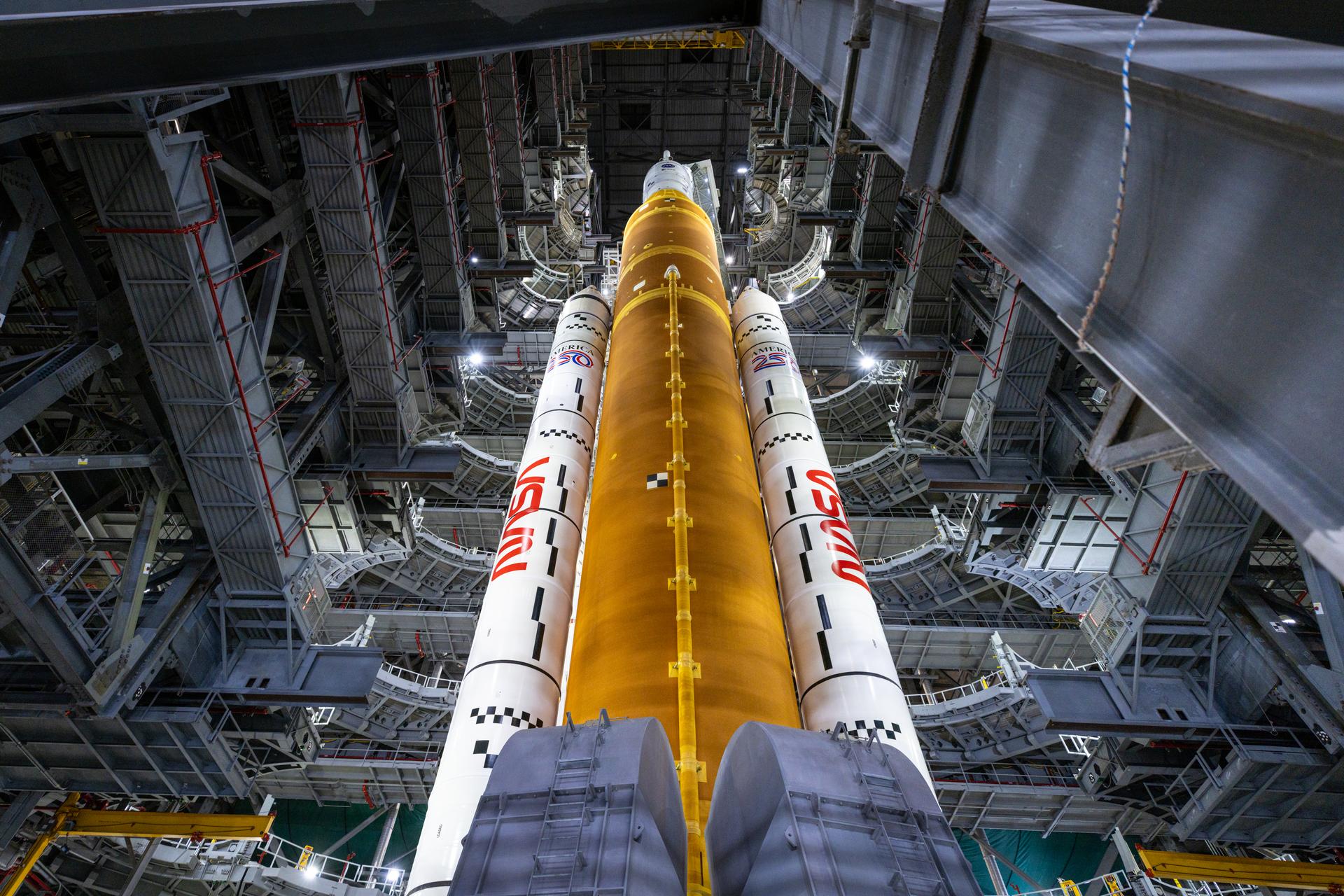
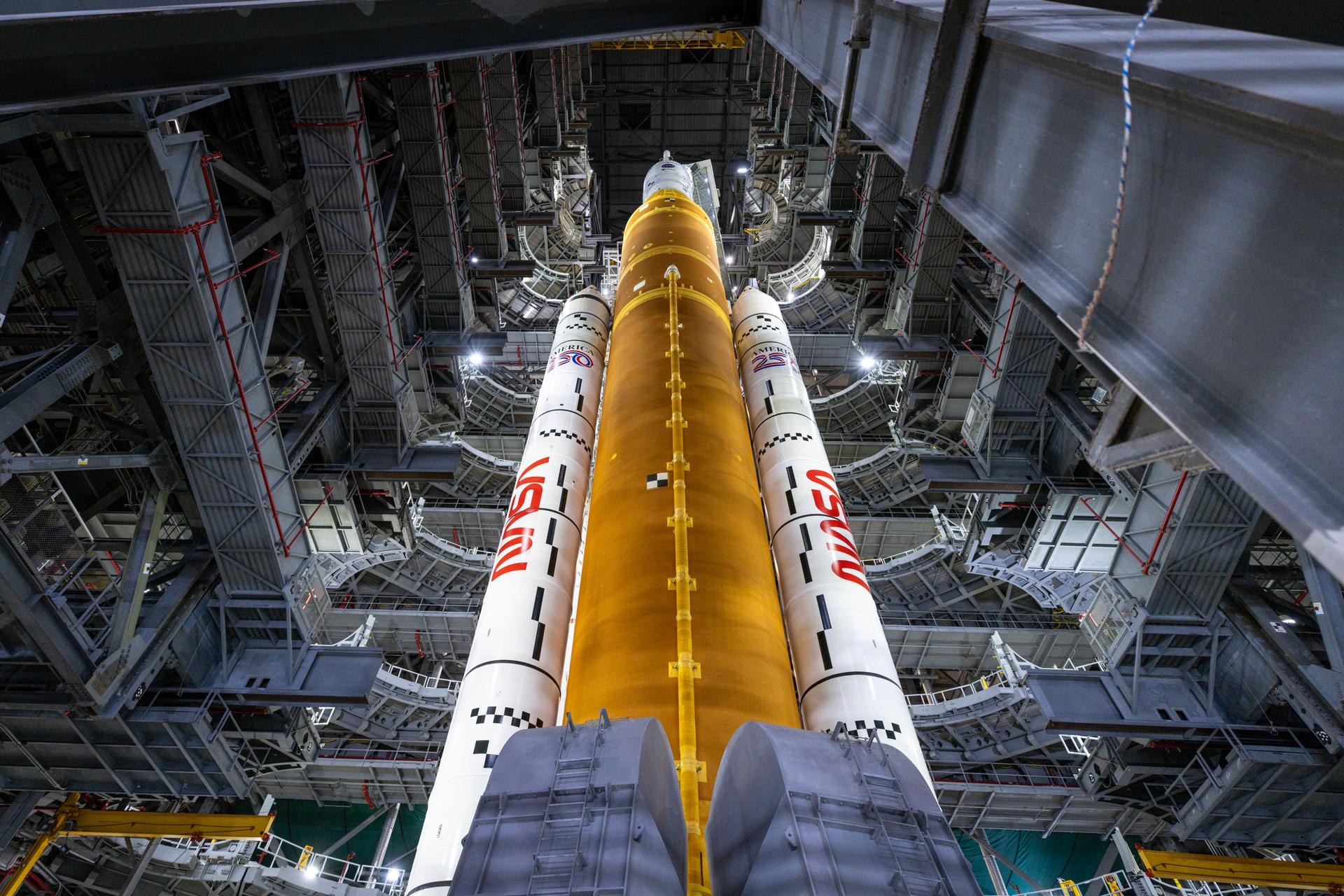
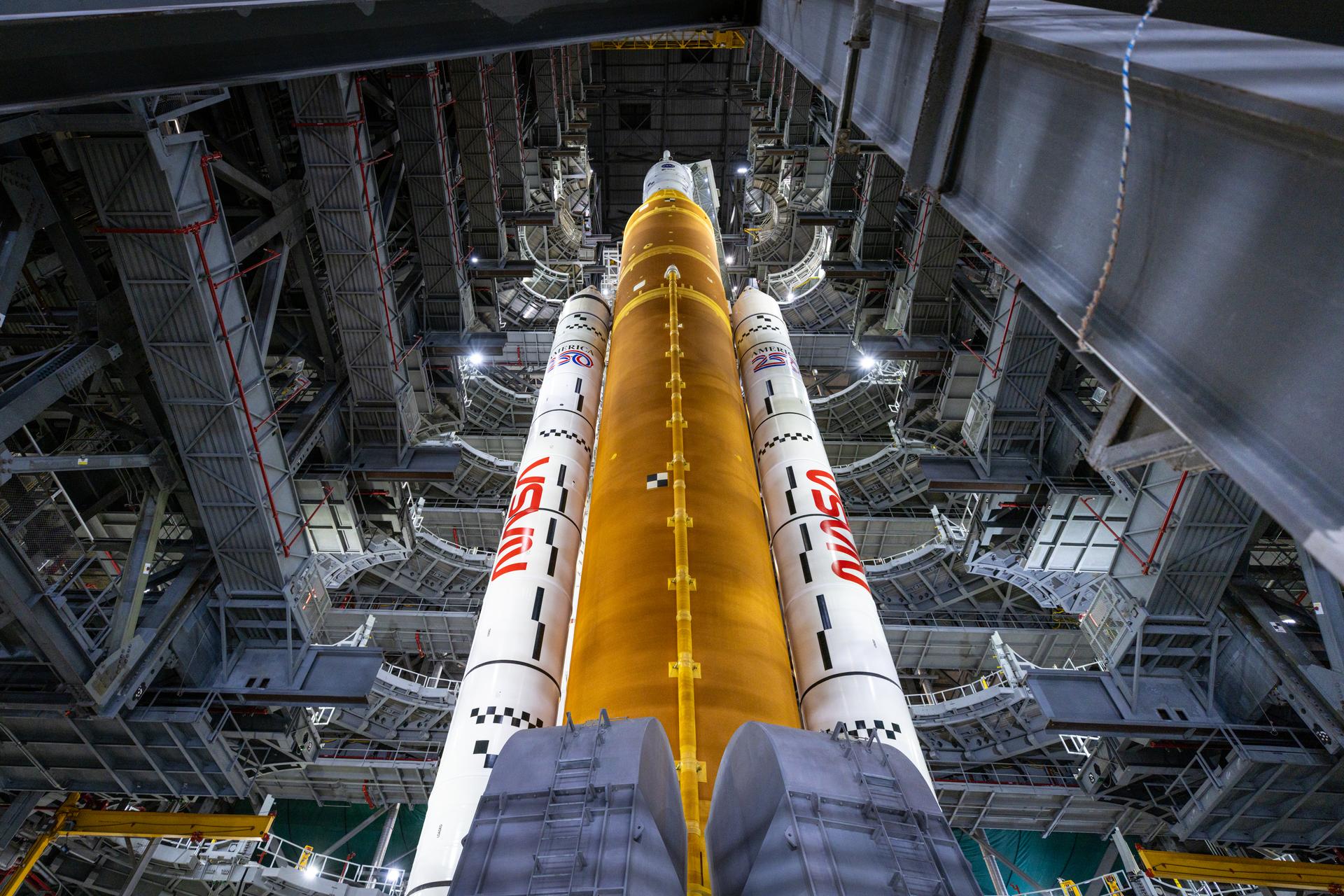
NASA’s Artemis II SLS (Space Launch System) rocket and Orion spacecraft slated to send four astronauts around the Moon began rolling to Launch Pad 39B at 12:20 a.m. EDT on Friday, March 20. Rollout operations at the agency’s Kennedy Space Center in Florida were delayed earlier in the day due to high winds in the area.
The trek to the pad is expected to take up to 12 hours, as NASA’s crawler-transporter 2 carefully carries the rocket on top of the mobile launcher approximately 4 miles along the crawlerway. A live feed of the rollout is available on NASA’s YouTube channel.
Following a successful wet dress rehearsal on Feb. 21, teams identified an issue preventing helium from flowing to the rocket’s upper stage, prompting a return to the Vehicle Assembly Building (VAB) where the issue was repaired.
While the rocket and spacecraft were in the VAB, engineers also refreshed and retested several systems on the rocket. Engineers activated a new set of flight termination system batteries, replaced other batteries on the upper stage, core stage, and solid rocket boosters, and charged Orion’s launch abort system batteries. Engineers also replaced a seal on the core stage liquid oxygen feed line and reassembled and retested the oxygen tail service mast umbilical plate to confirm a tight seal interface.
Artemis II will send NASA astronauts Reid Wiseman, Victor Glover, and Christina Koch, along with CSA (Canadian Space Agency) astronaut Jeremy Hansen, on an approximately 10-day mission around the Moon and back, marking the first crewed flight of the Artemis program.