
SpaceX Dragon arrival preparations and artificial intelligence research to improve crew operations continued aboard the International Space Station on Thursday. The Expedition 74 crew also checked out new medical hardware and trained to use emergency gear while keeping up orbital lab maintenance.
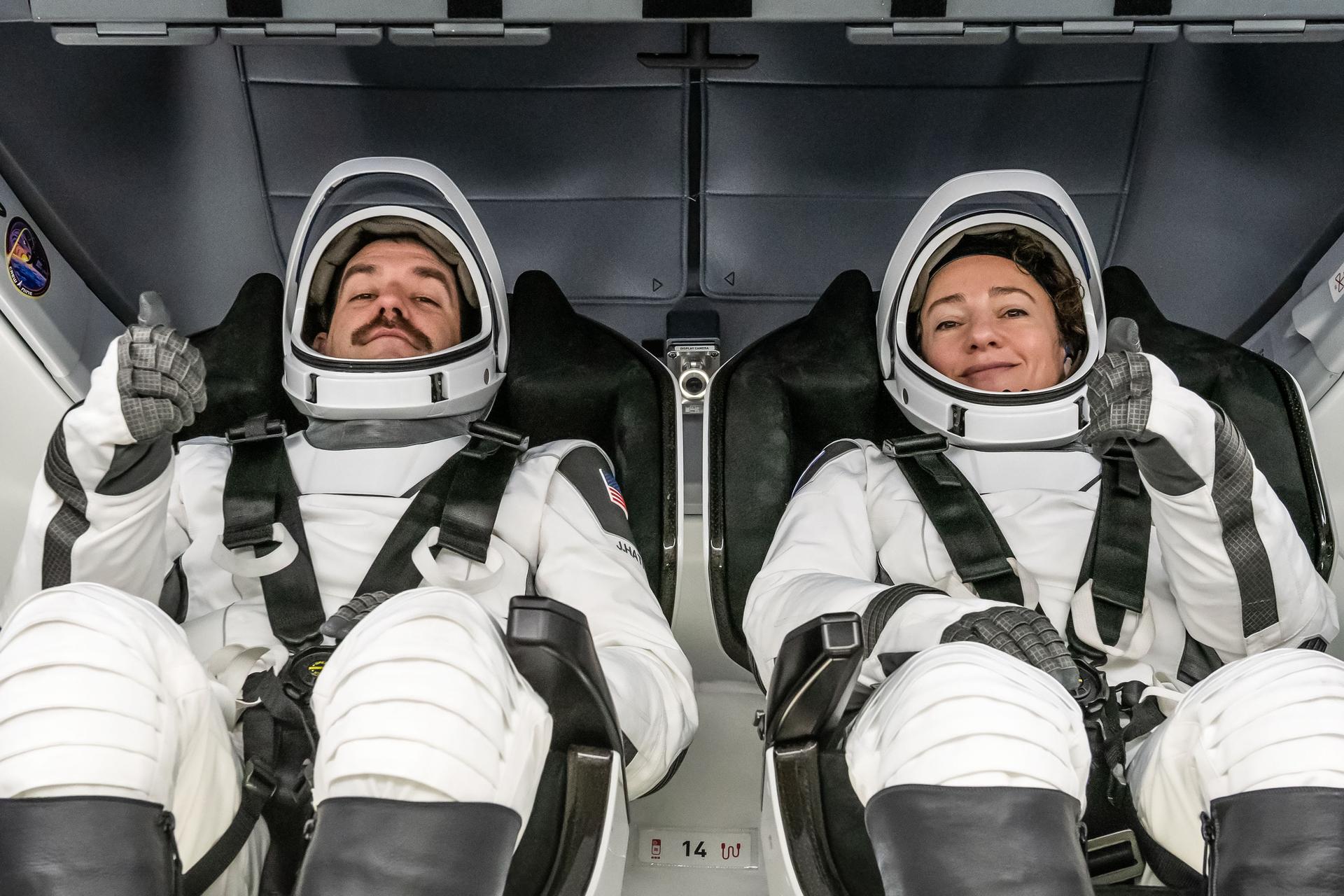
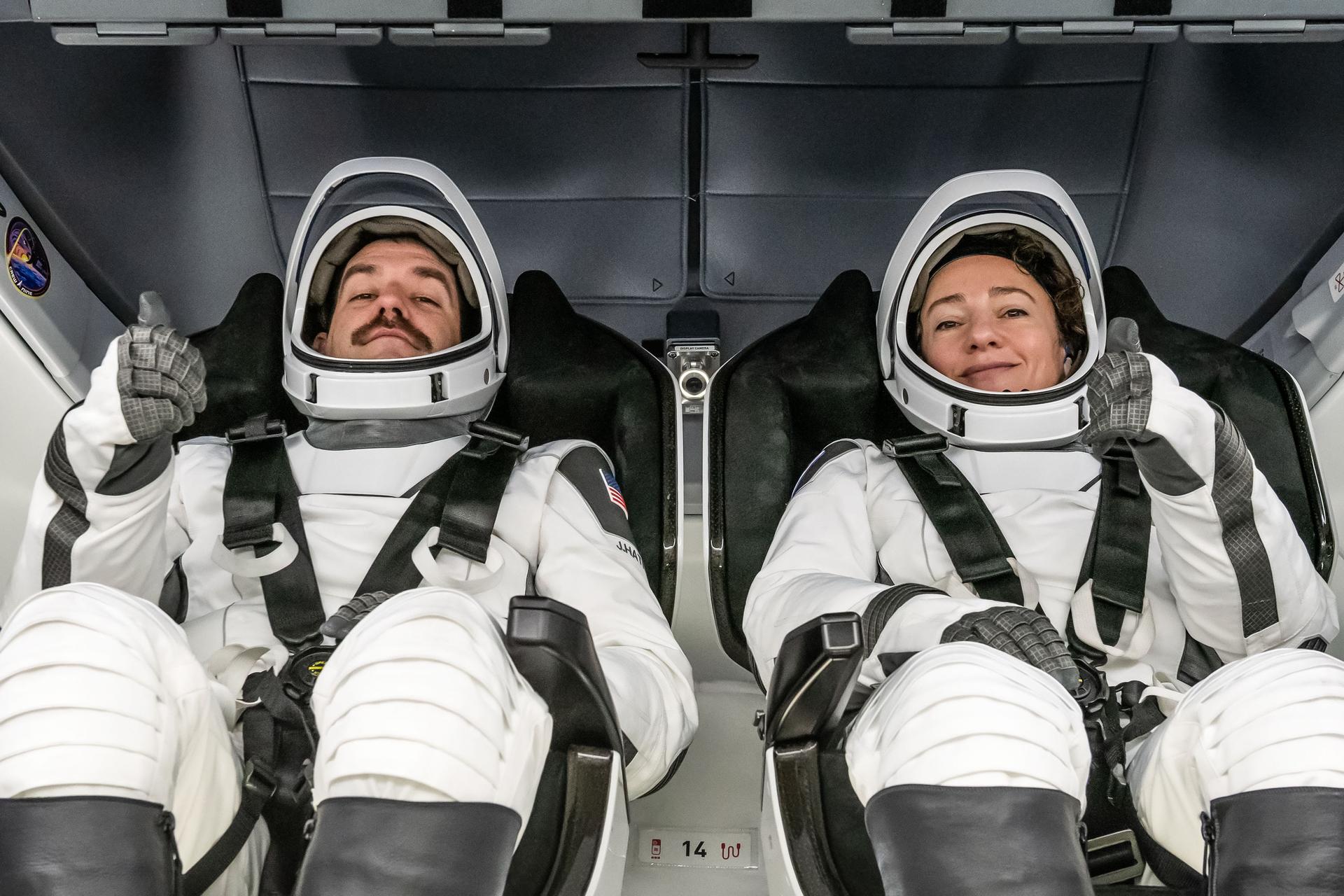
NASA’s SpaceX Crew-12 mission continues its countdown to a launch targeted for no earlier than 6:01 a.m. EST on Feb. 11, from Space Launch Complex 40 at Cape Canaveral Space Force Station in Florida. The four Crew-12 members Jessica Meir and Jack Hathaway, both from NASA, Sophie Adenot of ESA (European Space Agency), and Andrey Fedyaev of Roscosmos will dock to the orbital outpost’s space-facing port on the Harmony module the following day. They will spend nine months conducting advanced microgravity research aboard the orbital outpost benefitting humans living on and off the Earth.
Station Flight Engineer Chris Williams kept up his Dragon training and station configurations ahead of Crew-12’s planned arrival next week. Williams spent an hour continuing to review the procedures he will use while monitoring Dragon’s automated approach and rendezvous toward Harmony. Afterward, he began gathering and organizing standard spacecraft emergency hardware that will be transferred into Dragon shortly after it arrives.
Williams also checked out the new Ultrasound 3 biomedical device that is replacing the Ultrasound 2 scanner on the station. He powered on the device in the Columbus laboratory module and tested its configurations and electrical connections with a laptop computer and the Human Research Facility. The Ultrasound 3 was delivered to the orbital outpost on Sept. 18, 2025, aboard Northrop Grumman’s Cygnus XL spacecraft. It can be used for advanced imaging of a crew member’s cardiovascular, abdominal, and musculoskeletal systems in weightlessness with real-time guidance from doctors on the ground.
Roscosmos cosmonauts Sergey Kud-Sverchkov and Sergei Mikaev, station commander and flight engineer respectively, joined each other on Thursday exploring using artificial intelligence to boost crew efficiency aboard the orbital outpost. The duo tested AI-assisted tools to convert speech-to-text for speedier documentation and improve data handling and communications between the crew and ground controllers.
Kud-Sverchkov also conducted crew medical officer training familiarizing himself a variety of emergency hardware, including an automated external defibrillator and respiratory support pack, to treat a crew member in the unlikely event of a medical situation aboard the space station. The two-time station resident continued experiment operations for the Plasma Kristall-4 investigation that explores complex plasmas to advance spacecraft designs, better understand planetary formation, and improve fundamental physics research.
Mikaev began his shift testing space-to-ground communications hardware with mission controllers in Russia. Afterward, the first-time space flyer checked the Elektron oxygen generator’s water tanks for air bubbles to ensure the life support device’s continuous operation.
Learn more about station activities by following the space station blog, @space_station on X, as well as the ISS Facebook and ISS Instagram accounts.
Get the latest from NASA delivered every week. Subscribe here.