Explore Hubble Hubble Home Overview About Hubble The History of Hubble Hubble Timeline Why Have a Telescope in Space? Hubble by the Numbers At the Museum FAQs Impact & Benefits Hubble’s Impact & Benefits Science Impacts Cultural Impact Technology Benefits Impact on Human Spaceflight Astro Community Impacts Science Hubble Science Science Themes Science Highlights Science Behind Discoveries Universe Uncovered Hubble’s Partners in Science Hubble & Citizen Science AI & Hubble Science Explore the Night Sky Observatory Hubble Observatory Hubble Design Mission Operations Science Operations Astronaut Missions to Hubble Hubble vs Webb Team Hubble Team Career Aspirations Hubble Astronauts Multimedia Images Videos Sonifications Podcasts e-Books Online Activities 3D Hubble Models Lithographs Fact Sheets Posters Hubble on the NASA App Glossary News Hubble News Social Media Media Resources More 35th Anniversary Online Activities 3 min read
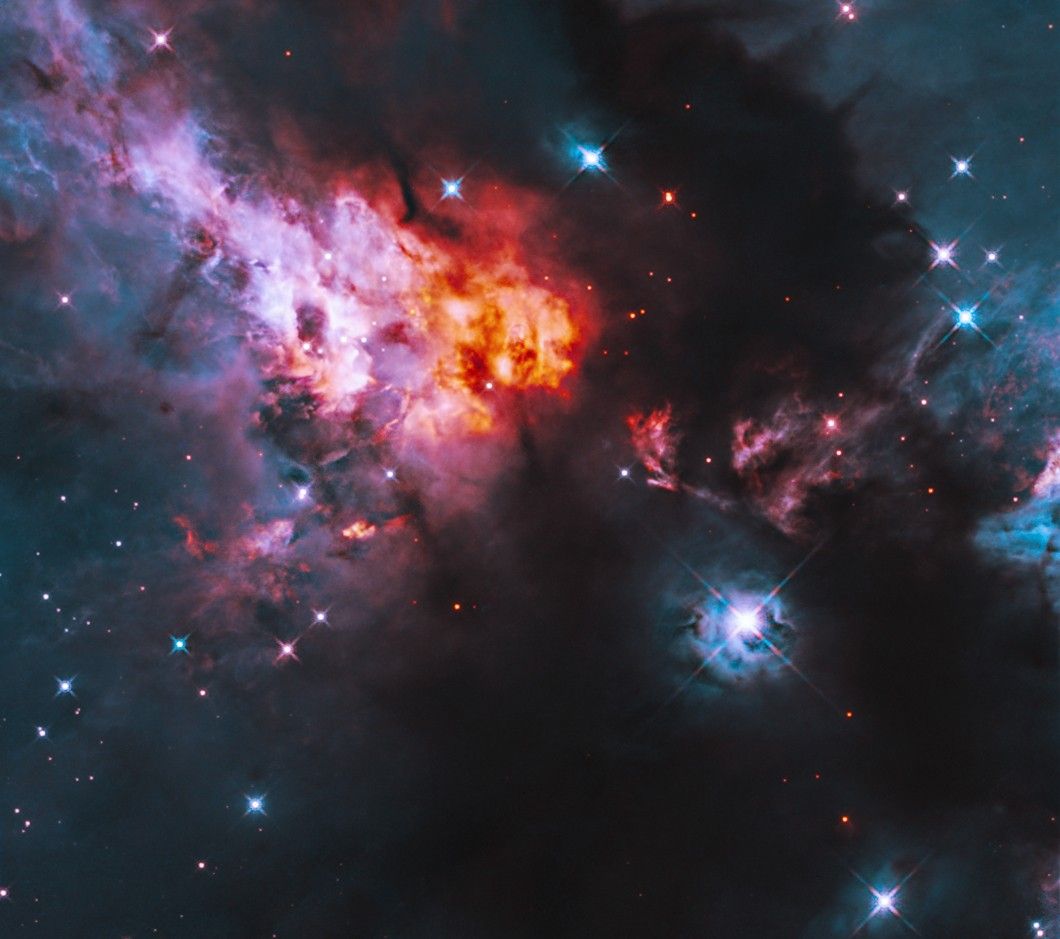
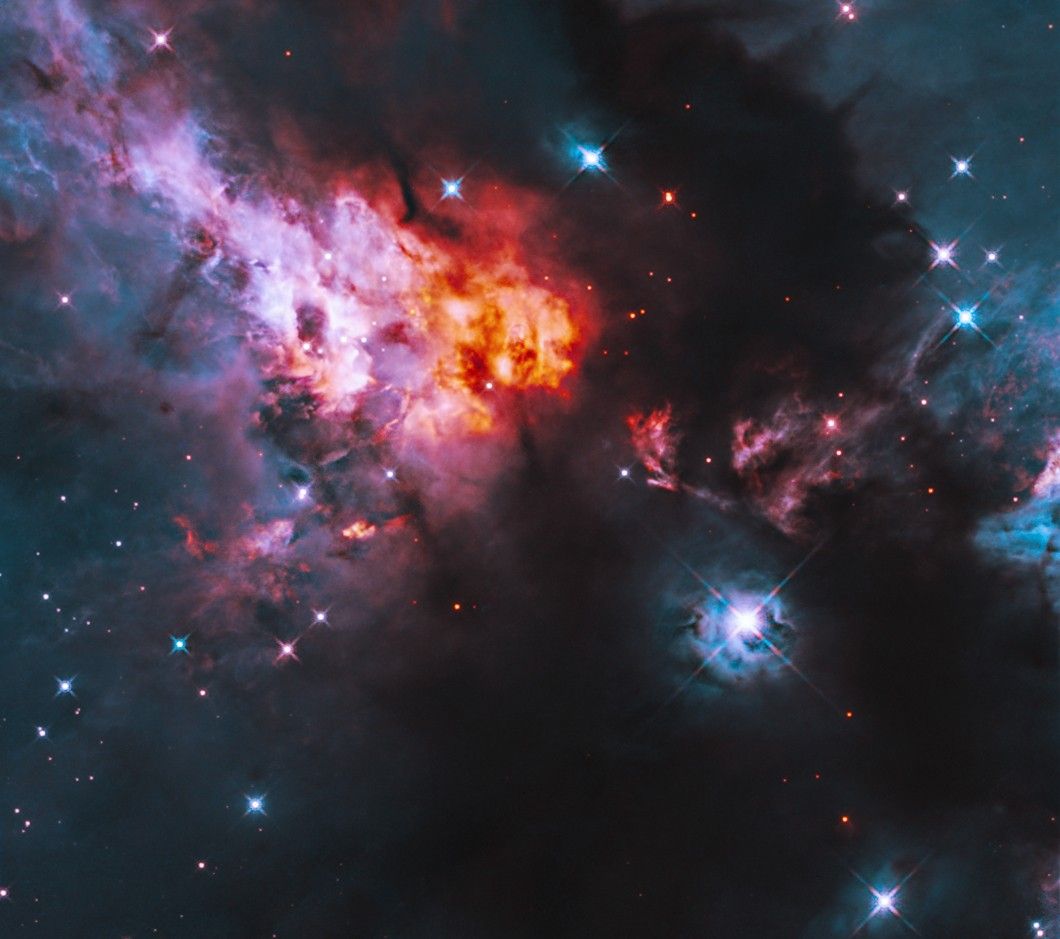
Hubble Snaps Stellar Baby Pictures 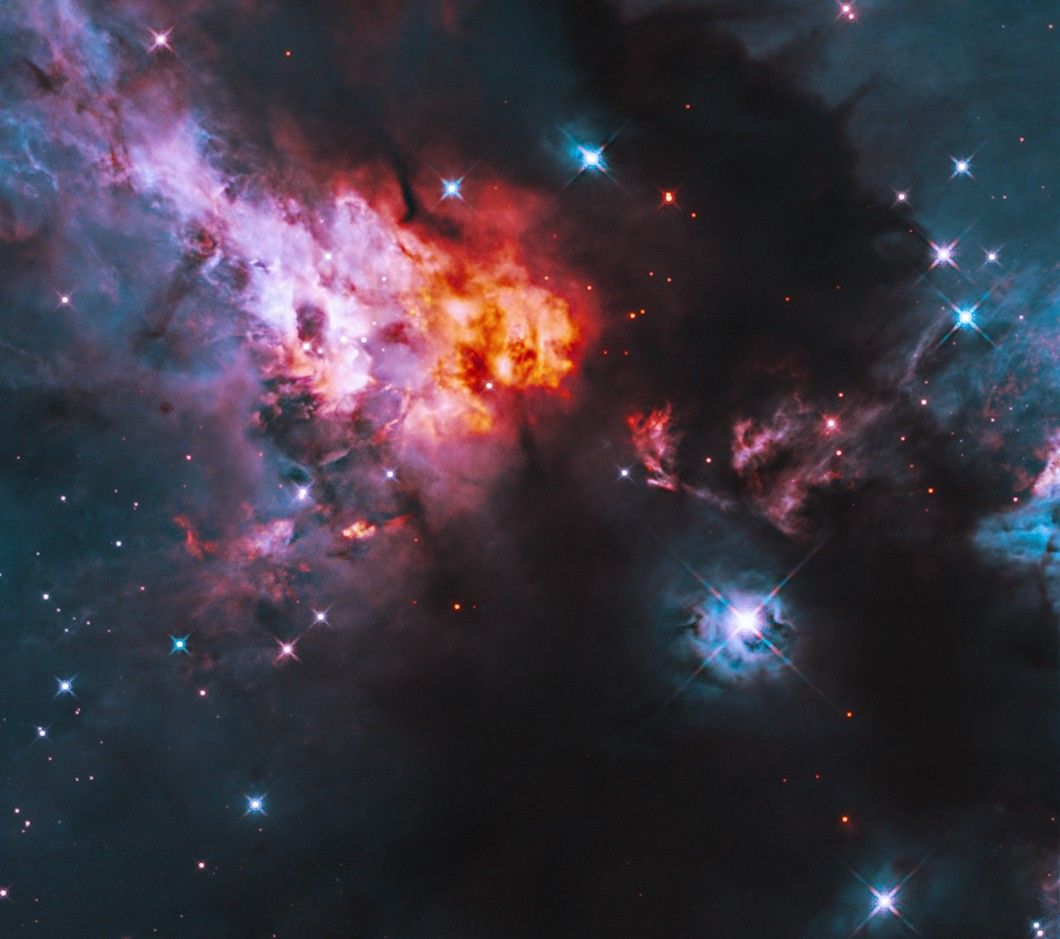 The Cepheus A region is home to a number of infant stars, including a protostar that is responsible for much of the region’s illumination. NASA, ESA, and R. Fedriani (Instituto de Astrofisica de Andalucia); Processing: Gladys Kober (NASA/Catholic University of America)


Newly developing stars shrouded in thick dust get their first baby pictures in these images from NASA’s Hubble Space Telescope. Hubble took these infant star snapshots in an effort to learn how massive stars form.
Protostars are shrouded in thick dust that blocks light, but Hubble can detect the near-infrared emission that shines through holes formed by the protostar’s jets of gas and dust. The radiating energy can provide information about these “outflow cavities,” like their structure, radiation fields, and dust content. Researchers look for connections between the properties of these young stars – like outflows, environment, mass, brightness – and their evolutionary stage to test massive star formation theories.
These images were taken as part of the SOFIA Massive (SOMA) Star Formation Survey, which investigates how stars form, especially massive stars with more than eight times the mass of our Sun.

Download this image (5.7 MB)
The high-mass star-forming region Cepheus A hosts a collection of baby stars, including one large and luminous protostar, which accounts for about half of the region’s brightness. While much of the region is shrouded in opaque dust, light from hidden stars breaks through outflow cavities to illuminate and energize areas of gas and dust, creating pink and white nebulae. The pink area is an HII region, where the intense ultraviolet radiation of the nearby stars has converted the surrounding clouds of gas into glowing, ionized hydrogen.
Cepheus A lies about 2,400 light-years away in the constellation Cepheus.
Download this image (5.8 MB)
Glittering much closer to home, this Hubble image depicts the star-forming region G033.91+0.11 in our Milky Way galaxy. The light patch in the center of the image is a reflection nebula, in which light from a hidden protostar bounces off gas and dust.
Download this image (5.8 MB)
This Hubble image showcases the star-forming region GAL-305.20+00.21. The bright spot in the center-right of the image is an emission nebula, glowing gas that is ionized by a protostar buried within the larger complex of gas and dust clouds.
Download this image (5.7 MB)
Shrouded in gas and dust, the massive protostar IRAS 20126+4104 lies within a high-mass star-forming region about 5,300 light-years away in the constellation Cygnus. This actively forming star is a B-type protostar, characterized by its high luminosity, bluish-white color, and very high temperature. The bright region of ionized hydrogen at the center of the image is energized by jets emerging from the poles of the protostar, which ground-based observatories previously observed.
New images added every day between January 12-17, 2026! Follow @NASAHubble on social media for the latest Hubble images and news and see Hubble’s Stellar Construction Zones for more images of young stellar objects.
Facebook logo @NASAHubble @NASAHubble Instagram logo @NASAHubble Explore More
Exploring the Birth of Stars
Media Contact:
Claire Andreoli
NASA’s Goddard Space Flight Center, Greenbelt, MD
claire.andreoli@nasa.gov
Details Last Updated Jan 17, 2026 Location NASA Goddard Space Flight Center Related Terms Hubble Space Telescope Astrophysics Astrophysics Division Goddard Space Flight Center Protostars Stars The Universe
Keep Exploring Discover More Topics From Hubble Hubble Space Telescope
Since its 1990 launch, the Hubble Space Telescope has changed our fundamental understanding of the universe.

Hubble’s Stellar Construction Zones