6 min read
NASA’s Pandora Satellite, CubeSats to Explore Exoplanets, Beyond A new NASA spacecraft called Pandora is awaiting launch ahead of its journey to study the atmospheres of exoplanets, or worlds beyond our solar system, and their stars.
Along for the ride are two shoebox-sized satellites called BlackCAT (Black Hole Coded Aperture Telescope) and SPARCS (Star-Planet Activity Research CubeSat), as NASA innovates with ambitious science missions that take low-cost, creative approaches to answering questions like, “How does the universe work?” and “Are we alone?”
All three missions are set to launch Jan. 11 on a SpaceX Falcon 9 rocket from Space Launch Complex 4 East at Vandenberg Space Force Base in California. The launch window opens at 8:19 a.m. EST (5:19 a.m. PST). SpaceX will livestream the event.
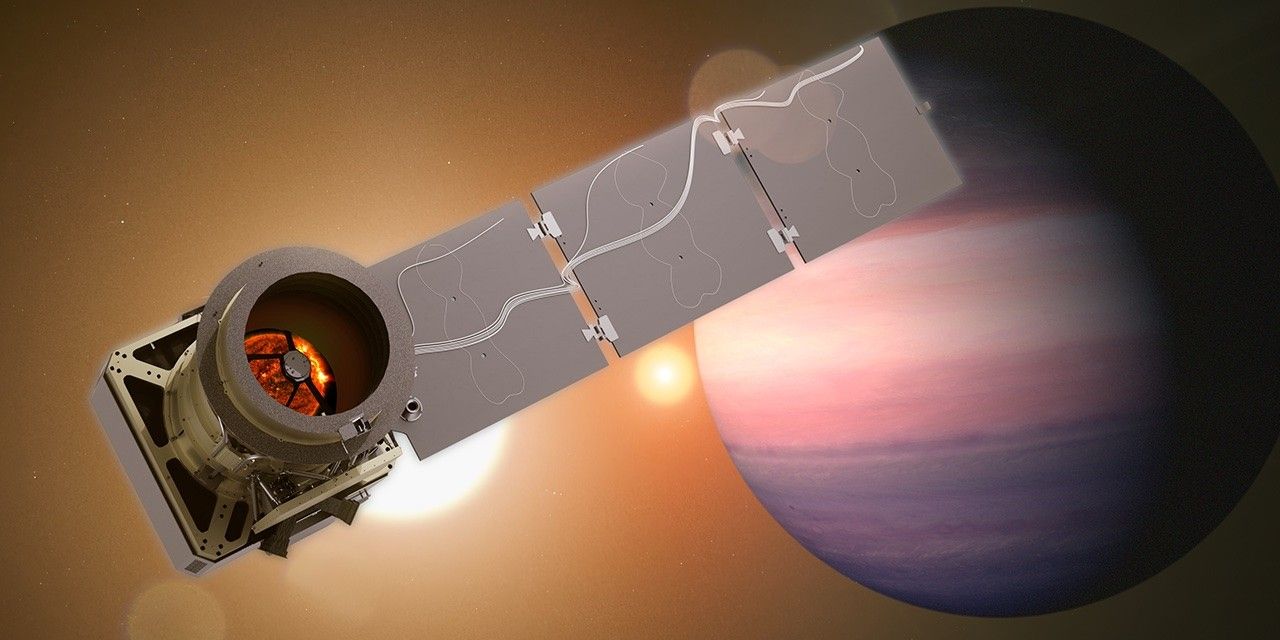
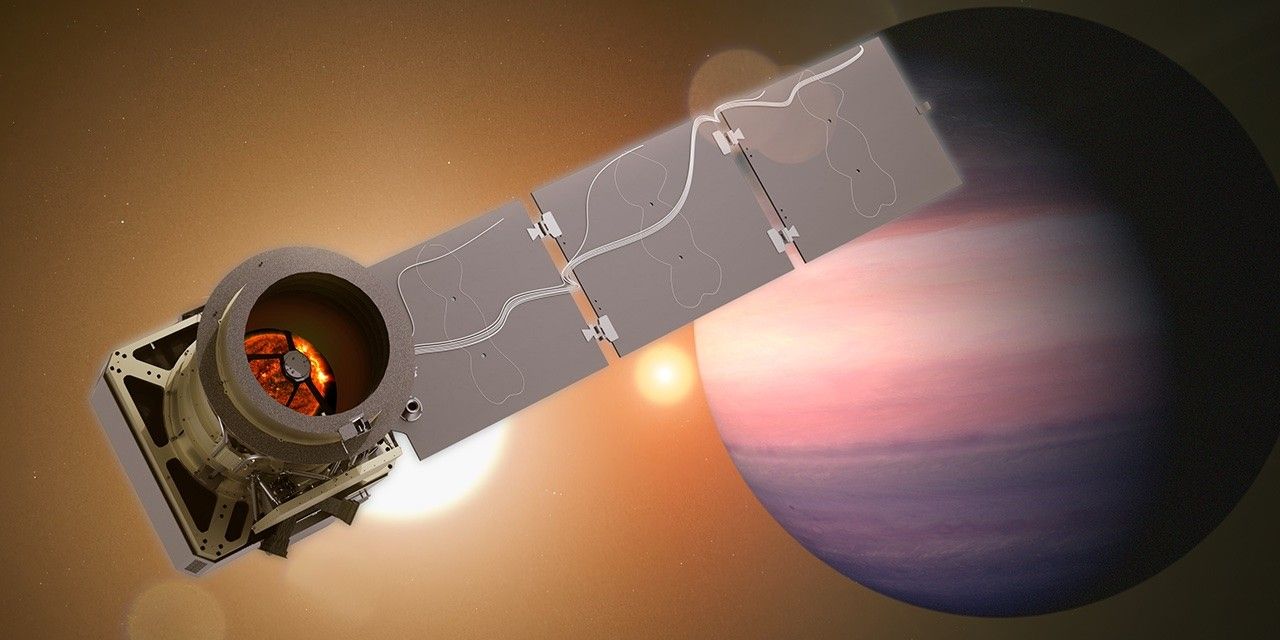
 Artist’s concept of NASA’s Pandora mission, which will help scientists untangle the signals from the atmospheres of exoplanets — worlds beyond our solar system — and their stars. NASA’s Goddard Space Flight Center/Conceptual Image Lab
Download high-resolution images from NASA’s Scientific Visualization Studio
“Pandora’s goal is to disentangle the atmospheric signals of planets and stars using visible and near-infrared light,” said Elisa Quintana, Pandora’s principal investigator at NASA’s Goddard Space Flight Center in Greenbelt, Maryland. “This information can help astronomers determine if detected elements and compounds are coming from the star or the planet — an important step as we search for signs of life in the cosmos.”
BlackCAT and SPARCS are small satellites that will study the transient, high-energy universe and the activity of low-mass stars, respectively.
Pandora will observe planets as they pass in front of their stars as seen from our perspective, events called transits.
As starlight passes through a planet’s atmosphere, it interacts with substances like water and oxygen that absorb characteristic wavelengths, adding their chemical fingerprints to the signal.
But while only a small fraction of the star’s light grazes the planet, telescopes also collect the rest of the light emitted by the star’s facing side. Stellar surfaces can sport brighter and darker regions that grow, shrink, and change position over time, suppressing or magnifying signals from planetary atmospheres. Adding a further complication, some of these areas may contain the same chemicals that astronomers hope to find in the planet’s atmosphere, such as water vapor.
All these factors make it difficult to be certain that important detected molecules come from the planet alone.
Pandora will help address this problem by providing in-depth study of at least 20 exoplanets and their host stars during its initial year. The satellite will look at each planet and its star 10 times, with each observation lasting a total of 24 hours. Many of these worlds are among the over 6,000 discovered by missions like NASA’s TESS (Transiting Exoplanet Survey Satellite).
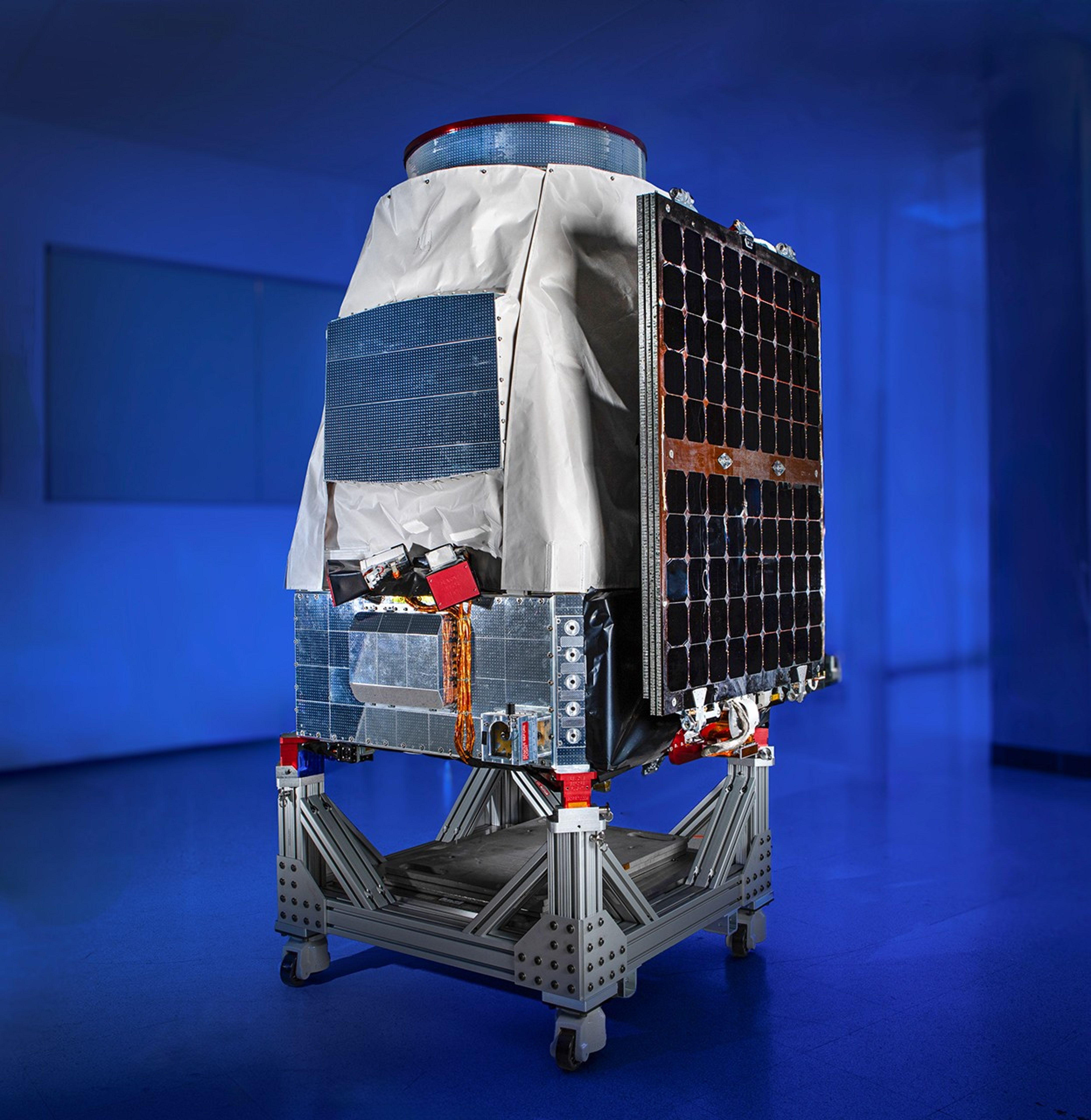 This view of the fully integrated Pandora spacecraft was taken May 19, 2025, following the mission’s successful environmental test campaign at Blue Canyon Technologies in Lafayette, Colorado. Visible are star trackers (center), multilayer insulation blankets (white), the end of the telescope (top), and the solar panel (right) in its launch configuration. NASA/BCT Pandora will collect visible and near-infrared light using a novel, all-aluminum 17-inch-wide (45-centimeter) telescope jointly developed by Lawrence Livermore National Laboratory in California and Corning Incorporated in Keene, New Hampshire. Pandora’s near-infrared detector is a spare developed for NASA’s James Webb Space Telescope.
Each long observation period will capture a star’s light both before and during a transit and help determine how stellar surface features impact measurements.
“These intense studies of individual systems are difficult to schedule on high-demand missions, like Webb,” said engineer Jordan Karburn, Pandora’s deputy project manager at Livermore. “You also need the simultaneous multiwavelength measurements to pick out the star’s signal from the planet’s. The long stares with both detectors are critical for tracing the exact origins of elements and compounds scientists consider indicators of potential habitability.”
Pandora is the first satellite to launch in the agency’s Astrophysics Pioneers program, which seeks to do compelling astrophysics at a lower cost while training the next generation of leaders in space science.
After launching into low Earth orbit, Pandora will undergo a month of commissioning before embarking on its one-year prime mission. All the mission’s data will be publicly available.
“The Pandora mission is a bold new chapter in exoplanet exploration,” said Daniel Apai, an astronomy and planetary science professor at the University of Arizona in Tucson where the mission’s operations center resides. “It is the first space telescope built specifically to study, in detail, starlight filtered through exoplanet atmospheres. Pandora’s data will help scientists interpret observations from past and current missions like NASA’s Kepler and Webb space telescopes. And it will guide future projects in their search for habitable worlds.”
Watch to learn more about NASA’s Pandora mission, which will revolutionize the study of exoplanet atmospheres.
NASA’s Goddard Space Flight Center
Download high-resolution video and images from NASA’s Scientific Visualization Studio
The BlackCAT and SPARCS missions will take off alongside Pandora through NASA’s Astrophysics CubeSat program, the latter supported by the Agency’s CubeSat Launch Initiative.
CubeSats are a class of nanosatellites that come in sizes that are multiples of a standard cube measuring 3.9 inches (10 centimeters) across. Both BlackCAT and SPARCS are 11.8 by 7.8 by 3.9 inches (30 by 20 by 10 centimeters). CubeSats are designed to provide cost-effective access to space to test new technologies and educate early career scientists and engineers while delivering compelling science.
The BlackCAT mission will use a wide-field telescope and a novel type of X-ray detector to study powerful cosmic explosions like gamma-ray bursts, particularly those from the early universe, and other fleeting cosmic events. It will join NASA’s network of missions that watch for these changes. Abe Falcone at Pennsylvania State University in University Park, where the satellite was designed and built, leads the mission with contributions from Los Alamos National Laboratory in New Mexico. Kongsberg NanoAvionics US provided the spacecraft bus.
The SPARCS CubeSat will monitor flares and other activity from low-mass stars using ultraviolet light to determine how they affect the space environment around orbiting planets. Evgenya Shkolnik at Arizona State University in Tempe leads the mission with participation from NASA’s Jet Propulsion Laboratory in Southern California. In addition to providing science support, JPL developed the ultraviolet detectors and the associated electronics. Blue Canyon Technologies fabricated the spacecraft bus.
Pandora is led by NASA Goddard. Livermore provides the mission’s project management and engineering. Pandora’s telescope was manufactured by Corning and developed collaboratively with Livermore, which also developed the imaging detector assemblies, the mission’s control electronics, and all supporting thermal and mechanical subsystems. The near-infrared sensor was provided by NASA Goddard. Blue Canyon Technologies provided the bus and performed spacecraft assembly, integration, and environmental testing. NASA’s Ames Research Center in California’s Silicon Valley will perform the mission’s data processing. Pandora’s mission operations center is located at the University of Arizona, and a host of additional universities support the science team.
By Jeanette Kazmierczak
NASA’s Goddard Space Flight Center, Greenbelt, Md.
Media Contact:
Claire Andreoli
301-286-1940
NASA’s Goddard Space Flight Center, Greenbelt, Md.
Facebook logo @NASAUniverse @NASAUniverse Instagram logo @NASAUniverse
Details Last Updated Jan 09, 2026 Related Terms Exoplanets Ames Research Center Astrophysics Astrophysics Pioneers CubeSats Exoplanet Science Exoplanet Transits Galaxies, Stars, & Black Holes Research Goddard Space Flight Center Infrared Light James Webb Space Telescope (JWST) Jet Propulsion Laboratory Kepler / K2 SmallSats Program Stars Studying Exoplanets TESS (Transiting Exoplanet Survey Satellite) The Universe Visible / Optical Light