Explore This Section Perseverance Home Mission Overview Rover Components Mars Rock Samples Where is Perseverance? Ingenuity Mars Helicopter Mission Updates Science Overview Objectives Instruments Highlights Exploration Goals News and Features Multimedia Perseverance Raw Images Images Videos Audio More Resources Mars Missions Mars Sample Return Mars Perseverance Rover Mars Curiosity Rover MAVEN Mars Reconnaissance Orbiter Mars Odyssey More Mars Missions Mars Home 2 min read
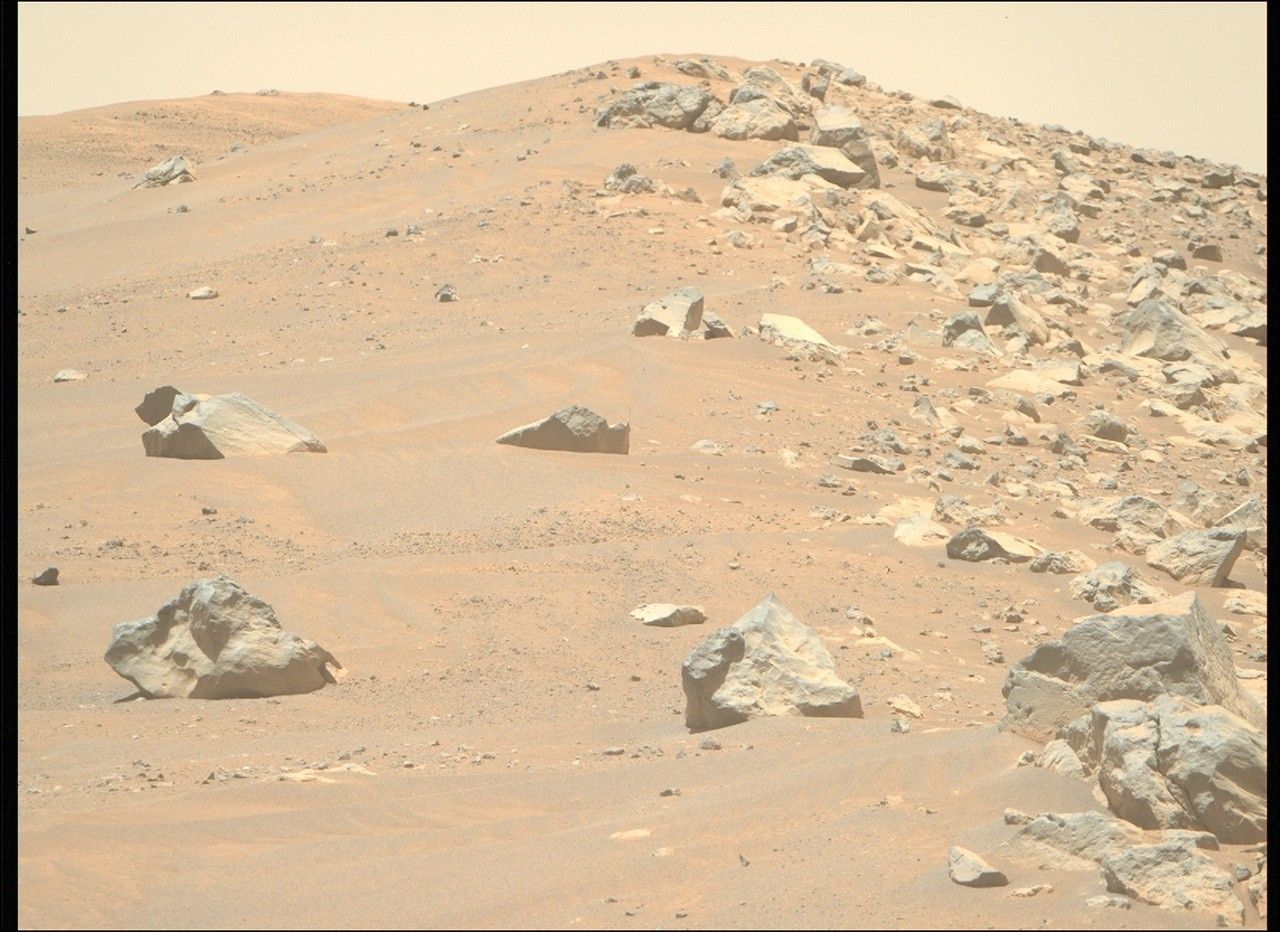
Linking Local Lithologies to a Larger Landscape 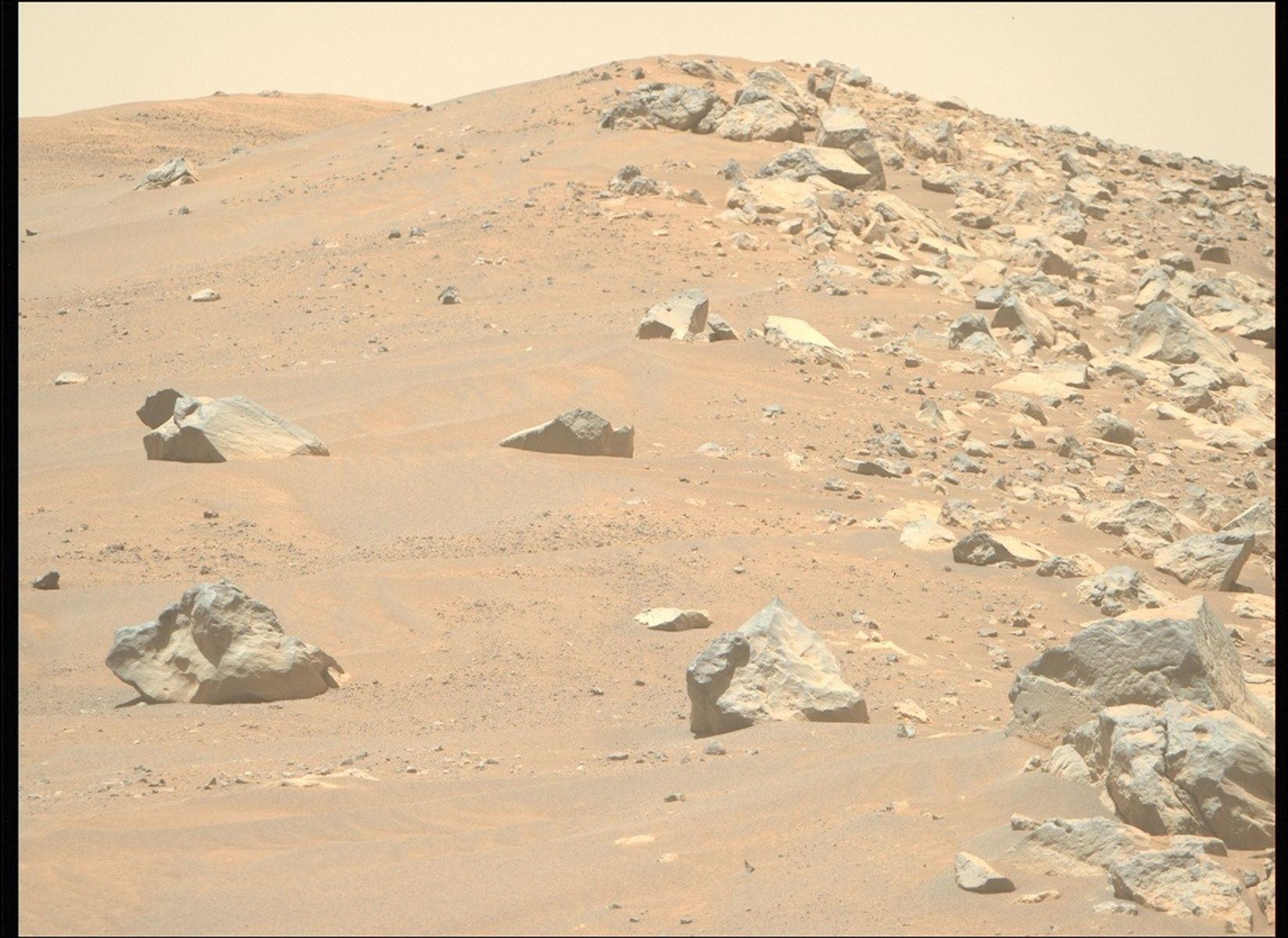 This image from NASA’s Mars Perseverance rover, taken by the Mastcam-Z instrument’s right eye, shows a collection of ridge-forming boulders. The rover acquired this image looking south along the ridge while exploring the “Westport” region of the outer crater rim on July 18, 2025 — Sol 1568, or Martian day 1,568 of the Mars 2020 mission — at the local mean solar time of 11:53:04. NASA/JPL-Caltech/ASU Written by Margaret Deahn, Ph.D. Student at Purdue University
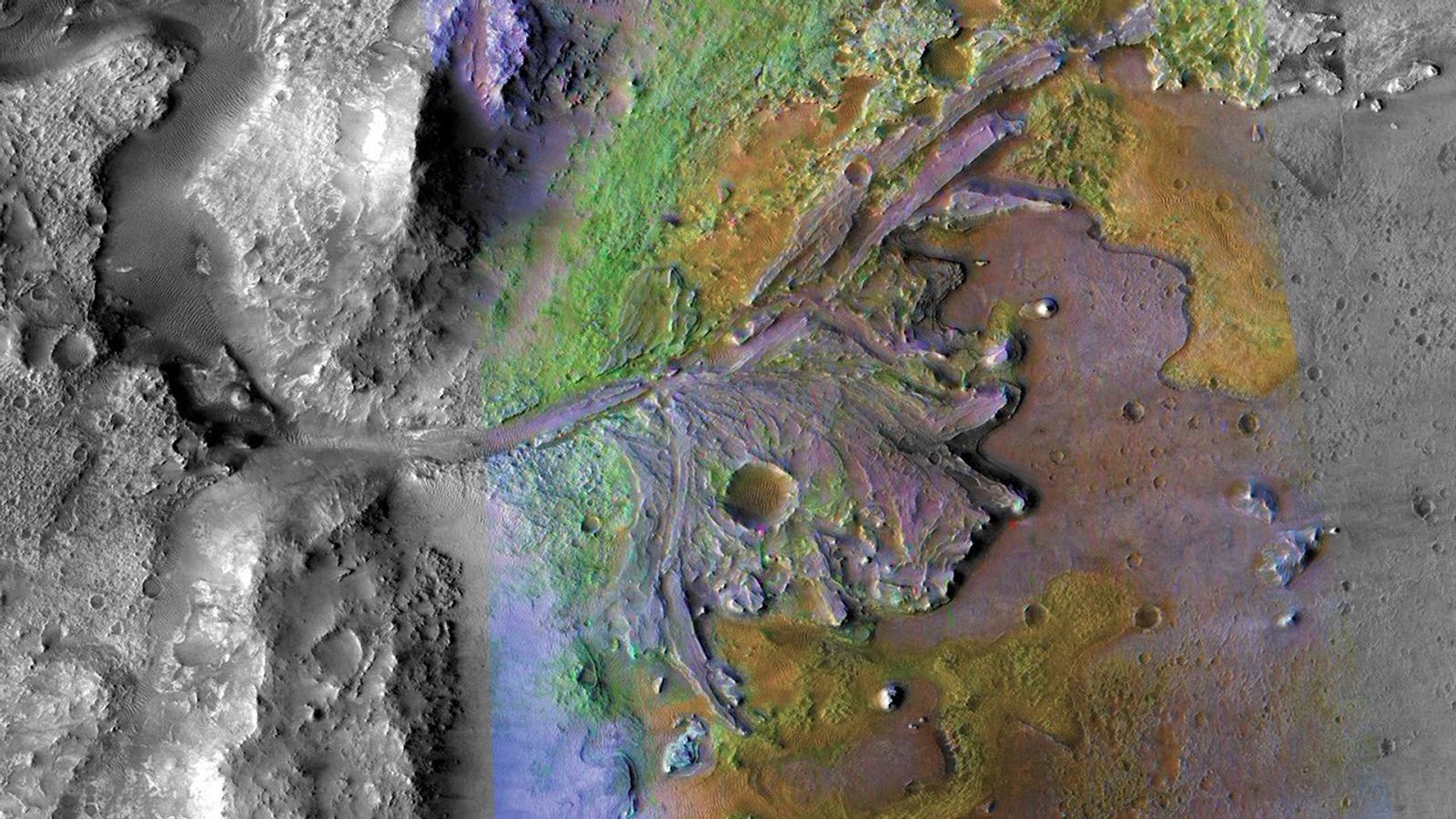
NASA’s Mars 2020 rover is continuing to explore a boundary visible from orbit dividing bright, fractured outcrop from darker, smoother regolith (also known as a contact). The team has called this region “Westport,” (a fitting title, as the rover is exploring the western-most rim of Jezero), which hosts a contact between the smoother, clay-bearing “Krokodillen” unit and an outcrop of olivine-bearing boulders that converge to form a ridge on the outer Jezero crater rim. To learn more about the nature of this contact, see this blog post by Dr. Melissa Rice. Piecing together geologic events like the formation of this olivine-bearing material on Jezero’s crater rim may allow us to better understand Mars’ most ancient history.
The rover has encountered several olivine-bearing rocks while traversing the rim, but it is unclear if, and how these rocks are all connected. Jezero crater is in a region of Mars known as Northeast Syrtis, which hosts the largest contiguous exposure (more than 113,000 square kilometers, or more than 43,600 square miles) of olivine-rich material identified from orbit on Mars (about the same square mileage as the state of Ohio!). The olivine-rich materials are typically found draping over older rocks, often infilling depressions, which may provide clues to their origins. Possible origins for the olivine-rich materials in Northeast Syrtis may include (but are not limited to): (1) intrusive igneous rocks (rocks that cool from magma underground), (2) melt formed and deposited during an impact event, or (3) pyroclastic ash fall or flow from a volcanic eruption.
The Perseverance rover’s investigation of the olivine-bearing materials on the rim of Jezero crater may allow us to better constrain the history of the broader volcanic units present in the Northeast Syrtis region. Olivine-rich material in Northeast Syrtis is consistently sandwiched between older, clay-rich rock and younger, more olivine-poor material (commonly referred to as the “mafic capping” unit), and may act as an important marker for recording early alteration by water, which could help us understand early habitable environments on Mars. We see potential evidence of all of these units on Jezero crater’s rim based on orbital mapping. If the olivine-bearing rocks the Perseverance rover is encountering on the rim are related to these materials, we may be able to better constrain the age of this widespread geologic unit on Mars.
Learn more about Perseverance’s science instruments
For more Perseverance blog posts, visit Mars 2020 Mission Updates
Details Last Updated Aug 07, 2025 Related Terms Blogs
 3 min read Curiosity Blog, Sols 4622-4623: Kicking Off (Earth) Year 14 With an Investigation of Veins
Article
18 hours ago
 3 min read Curiosity Blog, Sols 4618-4619: The Boxwork Structures Continue to Call to Us
Article
2 days ago
 3 min read Curiosity Blog, Sols 4620-4621: Among the Hollows and the Ridges
Article
2 days ago
Keep Exploring Discover More Topics From NASA Mars
Mars is the fourth planet from the Sun, and the seventh largest. It’s the only planet we know of inhabited…
Explore this collection of Mars images, videos, resources, PDFs, and toolkits. Discover valuable content designed to inform, educate, and inspire,…
Each robotic explorer sent to the Red Planet has its own unique capabilities driven by science. Many attributes of a…
Mars Exploration: Science Goals
The key to understanding the past, present or future potential for life on Mars can be found in NASA’s four…