Curiosity Navigation Curiosity Home Mission Overview Where is Curiosity? Mission Updates Science Overview Instruments Highlights Exploration Goals News and Features Multimedia Curiosity Raw Images Images Videos Audio Mosaics More Resources Mars Missions Mars Sample Return Mars Perseverance Rover Mars Curiosity Rover MAVEN Mars Reconnaissance Orbiter Mars Odyssey More Mars Missions Mars Home 2 min read
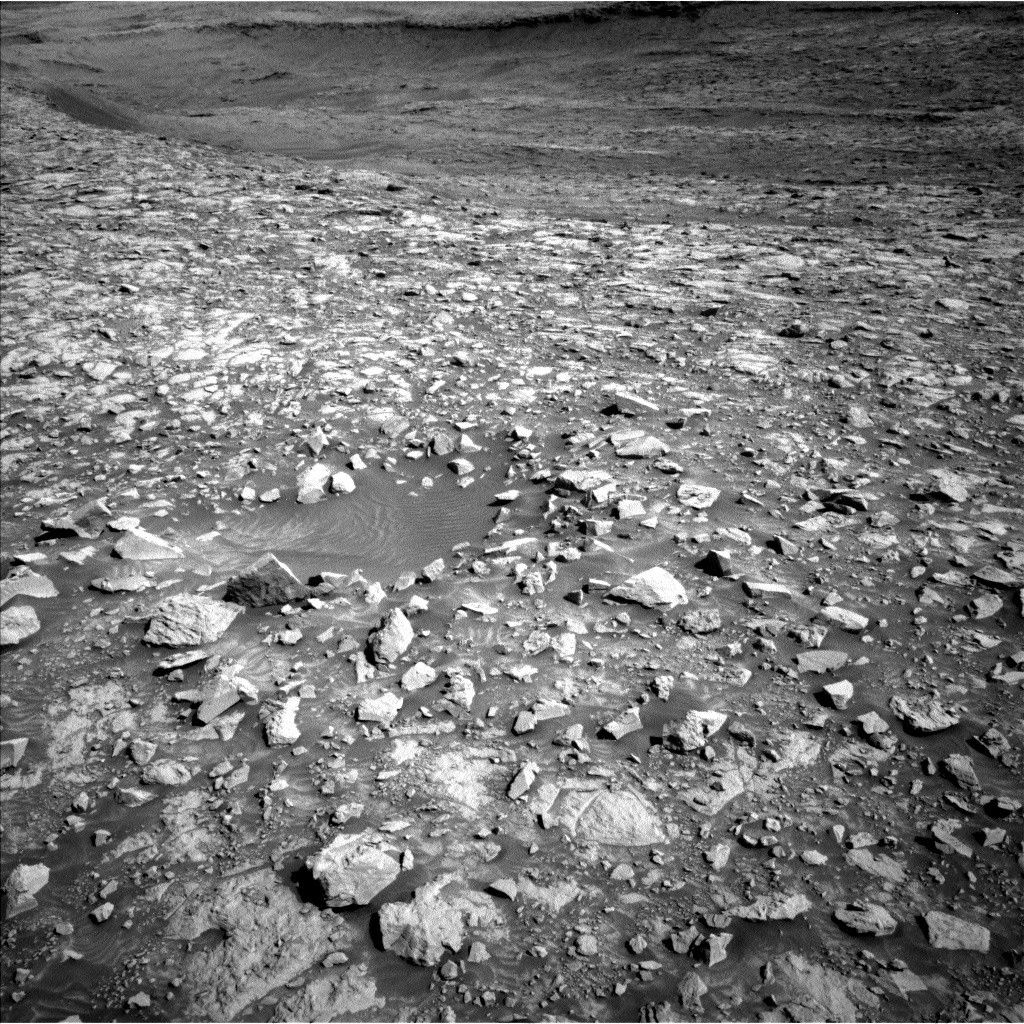
Curiosity Blog, Sols 4597-4599: Wide Open Spaces 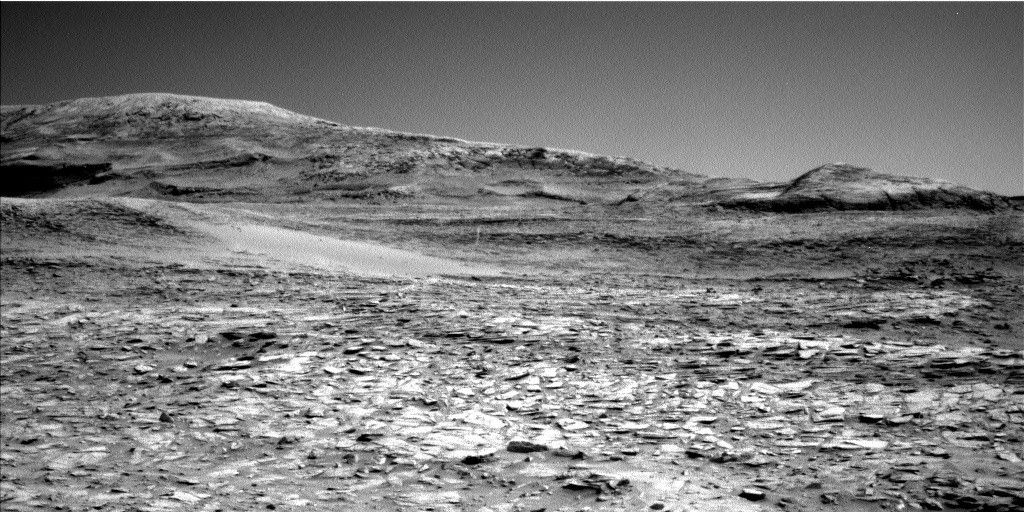 NASA’s Mars rover Curiosity acquired this image, of the sweeping Mount Sharp vista into which the rover will drive the weekend of July 11-12, 2025, using its onboard Left Navigation Camera. Curiosity captured the image on July 11, 2025 — Sol 4596, or Martian day 4,596 of the Mars Science Laboratory mission — at 12:01:55 UTC. NASA/JPL-Caltech Written by Michelle Minitti, MAHLI Deputy Principal Investigator, Framework
Earth planning date: Friday, July 11, 2025
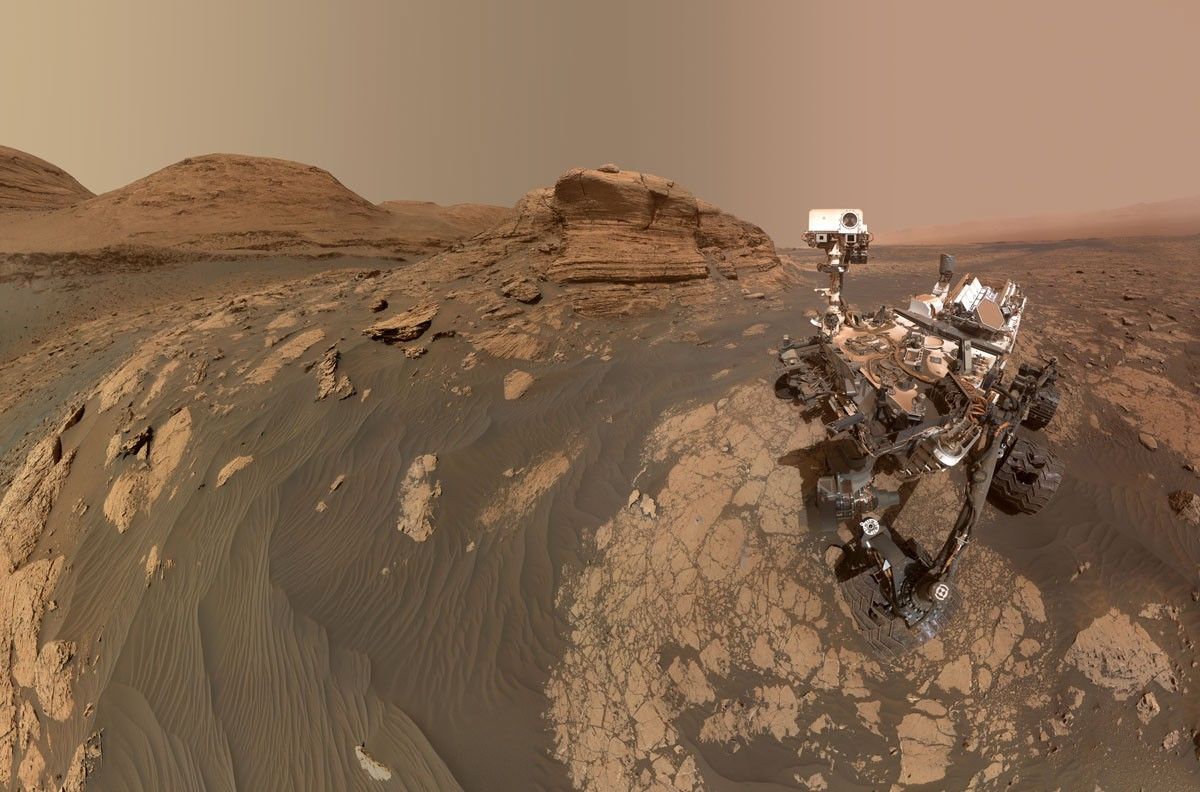
Imagine this vista as the view out your office window to start your workday. Your natural tendency would be to grab your camera and photograph as much of the view as possible. Curiosity was lucky enough to find herself in this situation today after a successful drive of about 61 meters (about 200 feet) on Wednesday, and the science team operating Curiosity wasted no time papering the scene with mosaics.
Between Mastcam and ChemCam, we planned 105 images across the scene. Those images will capture the structures underpinning the boxwork ridges we are driving toward, smaller-scale fractures in the near field that might be related to the boxwork ridges, and the back side of a ridge we recently studied in detail, “Volcán Peña Blanca.” Together, the images will help us understand the geologic history of the area that hosts the boxwork ridges, and what conditions existed in this part of Mount Sharp to support their formation.
We did not neglect the rocks directly in front of the rover as we gazed at our surroundings. Indeed, the bedrock near the rover was nearly uniformly packed with small (less than 1 centimeter, or 0.39 inches) rounded nodules, a characteristic we have not seen for awhile. MAHLI will image three different instances of the nodules while APXS and ChemCam will each analyze two different targets to understand the chemistry of the nodules and the bedrock hosting them.
REMS, RAD, and DAN will continue to monitor the Martian environment and subsurface throughout the weekend. Additionally, we planned multiple observations of dust devils, the amount of dust in the atmosphere, and clouds including a cloud movie timed to match the overflight of the CASSIS instrument. Our drive will take us to the foot of the smooth slope seen in the distance of the above image. That slope is the ramp we will take to the top of a big boxwork structure, where surely other delightful vistas await.
For more Curiosity blog posts, visit MSL Mission Updates
Learn more about Curiosity’s science instruments
Details Last Updated Jul 16, 2025 Related Terms Blogs
 3 min read Curiosity Blog, Sols 4595-4596: Just Another Beautiful Day on Mars
Article
22 hours ago
 4 min read Curiosity Blog, Sols 4593-4594: Three Layers and a Lot of Structure at Volcán Peña Blanca
Article
5 days ago
 3 min read Continuing the Quest for Clays
Article
1 week ago
Keep Exploring Discover More Topics From NASA Mars
Mars is the fourth planet from the Sun, and the seventh largest. It’s the only planet we know of inhabited…
Explore this collection of Mars images, videos, resources, PDFs, and toolkits. Discover valuable content designed to inform, educate, and inspire,…
Each robotic explorer sent to the Red Planet has its own unique capabilities driven by science. Many attributes of a…
Mars Exploration: Science Goals
The key to understanding the past, present or future potential for life on Mars can be found in NASA’s four…