Skywatching Skywatching Home What’s Up Eclipses Explore the Night Sky Night Sky Network More Tips and Guides FAQ
Download the Video
A Month of Bright Planets Venus blazes at its brightest for the year after sunset, then Mars and Jupiter to rule the night amid the menagerie of bright winter stars.
Skywatching Highlights All Month – Planet Visibility:
Mercury: Pops up just above the horizon in late February, looking relatively bright as sunset fades Venus: Looking brilliant in the west after sunset all month Mars: Bright and amber-orange colored, high in the east each evening. It’s the last planet to set in the west a couple of hours before sunrise Jupiter: Find the giant planet high overhead in the evening, looking very bright Saturn: Somewhat faint, but visible low in the west for the first hour after sunset; increasingly lower as the month goes on Daily Highlights:
February 1 – Venus & Moon: The crescent Moon cozies up to brilliant Venus tonight in the west after sunset. Saturn hangs below them.
February 5 – Moon & Pleiades: Look for the Moon only a finger’s width west of the Pleiades at nightfall, then crossing in front of the star cluster before setting
February 6 – Moon & Jupiter: The Moon is high overhead at nightfall, forming a line with bright Jupiter and reddish star Aldebaran in Taurus
February 9 – Moon & Mars: Find the nearly full Moon in the east tonight after dark, about three finger widths below reddish Mars. Bright stars Pollux and Castor in Gemini are just to its north.
February 12 – Full Moon
Transcript What’s Up for February? The Moon’s many engagements, what’s the right term for a planetary rendezvous, and the goddess of love draws near.
Moon & Planets Starting with the Moon’s journey across the sky this month, you’ll find the slim crescent of Earth’s natural satellite cozied up to the planet Venus on the 1st. It then visits the Pleiades on the 5th, and hops over Jupiter on the 6th, looking increasingly fuller, before arriving right next to Mars on February 9th.
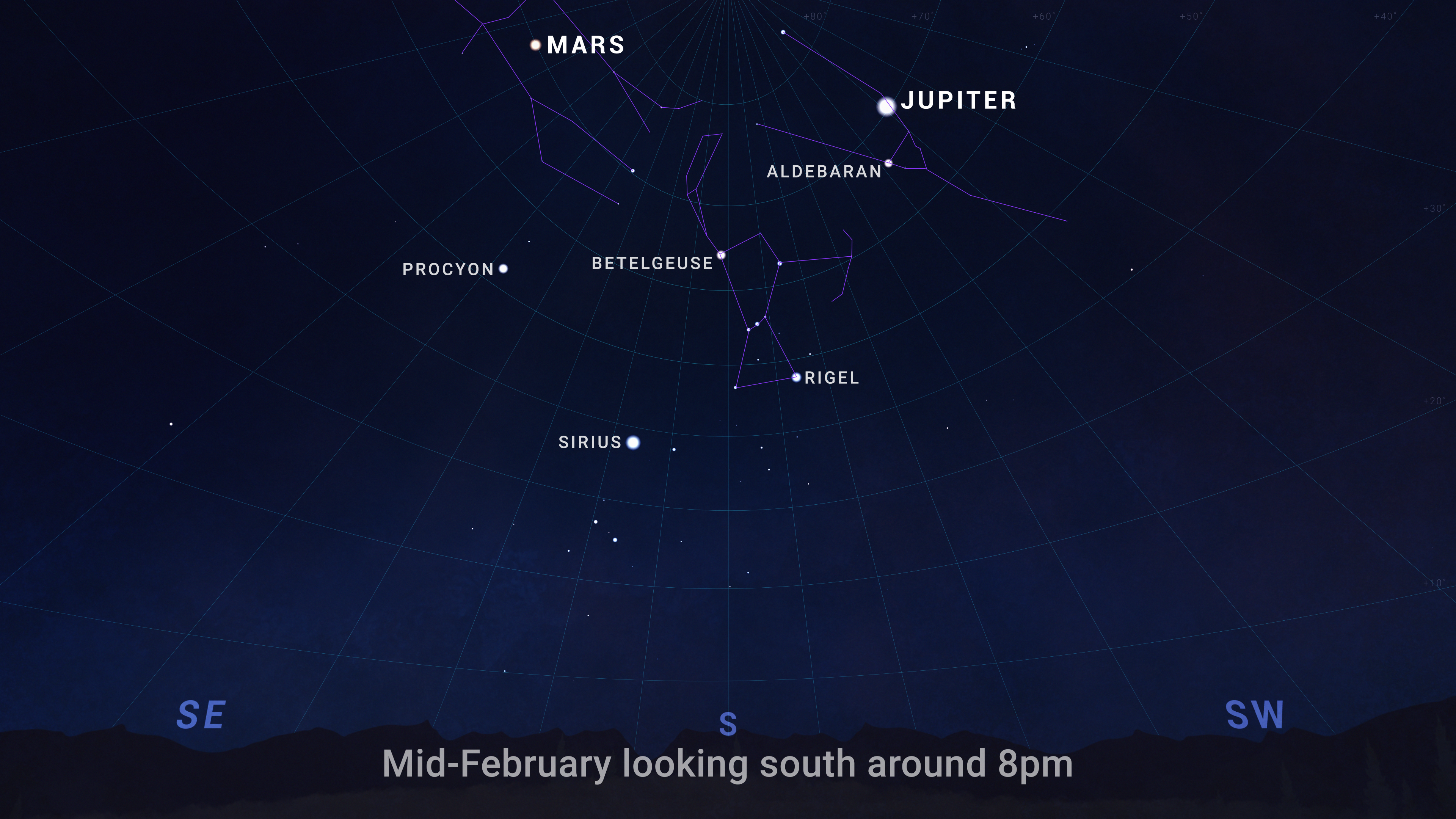
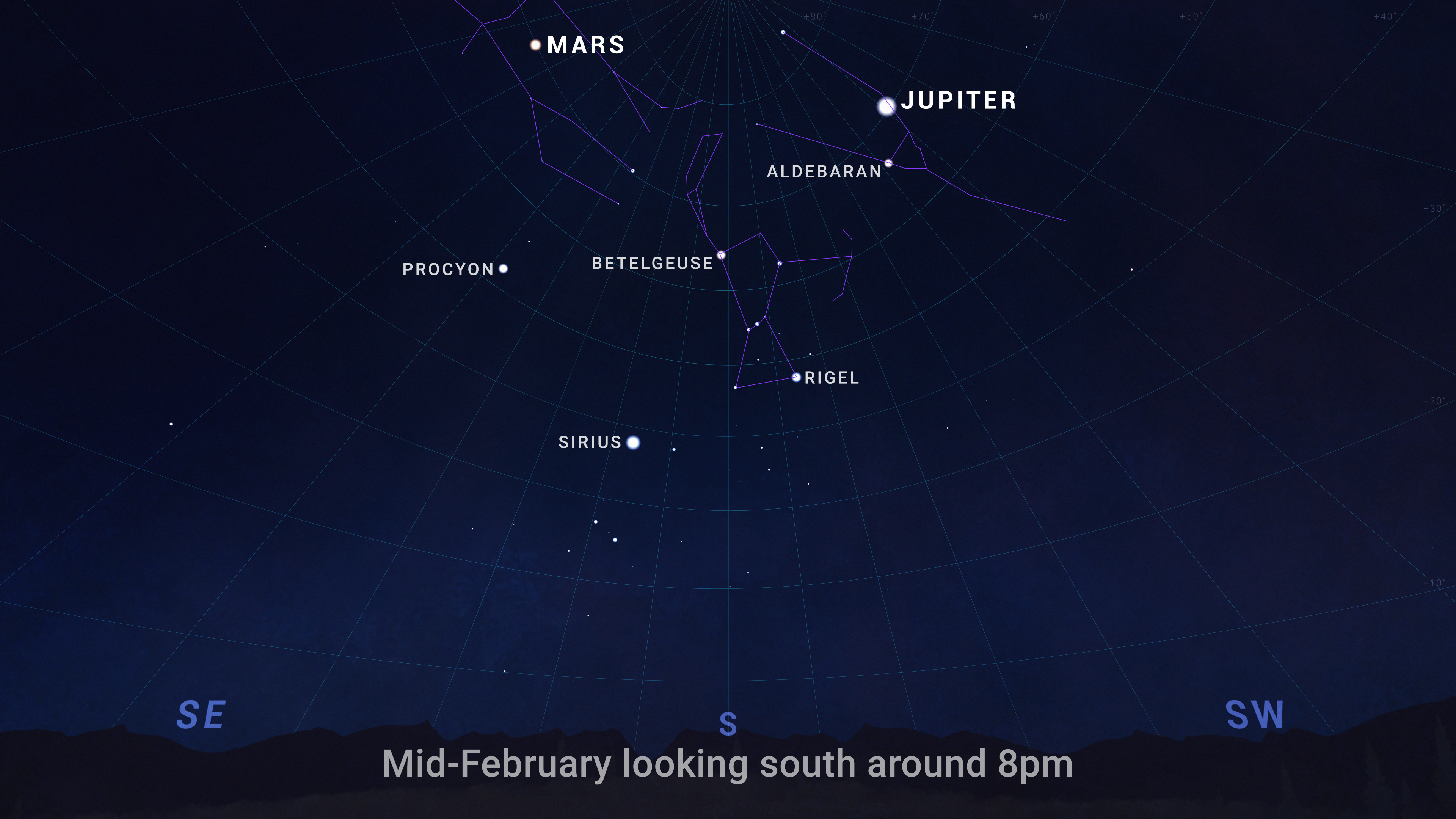
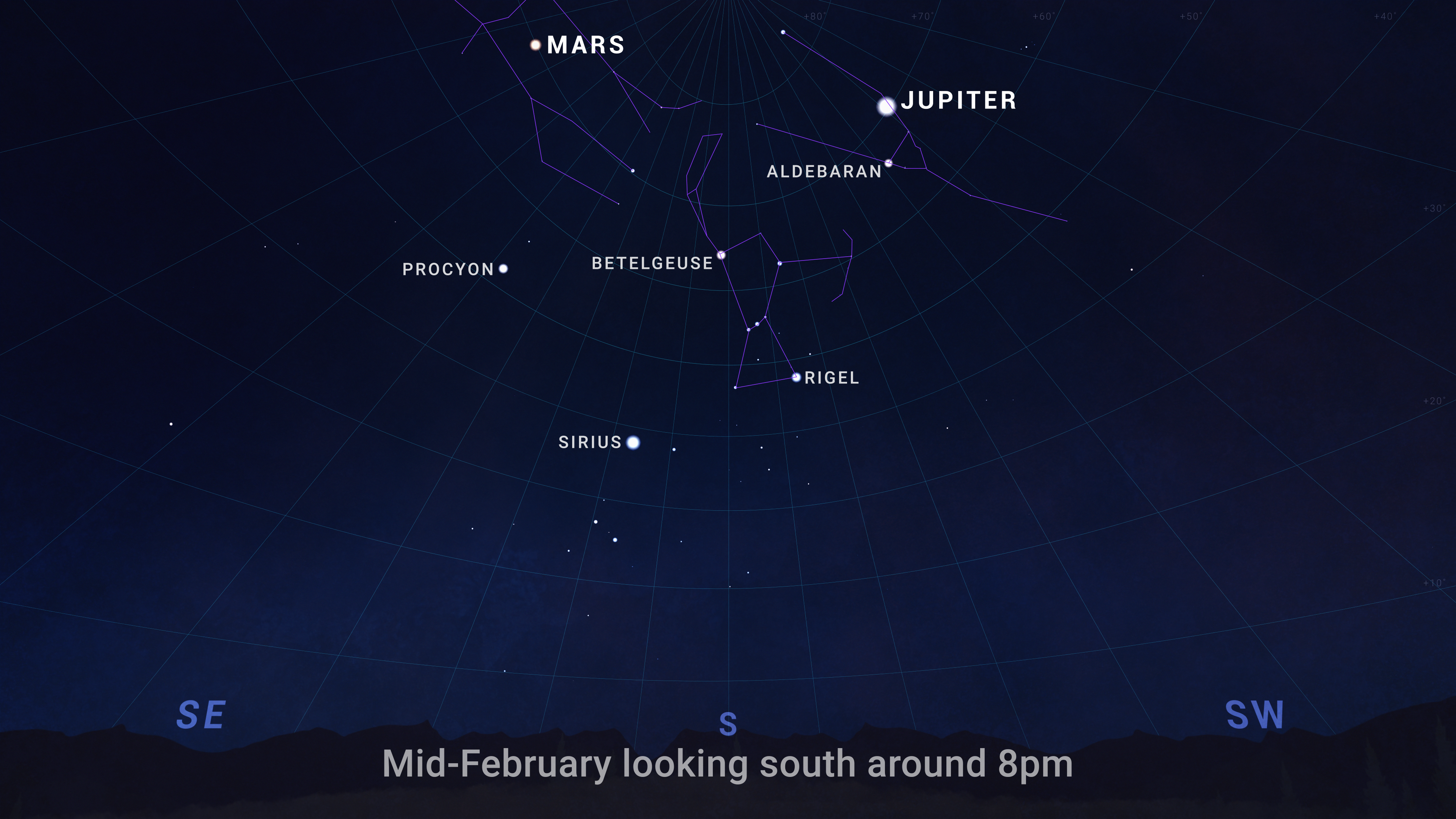 Sky chart showing Jupiter and Mars high overhead after nightfall in February 2025. Jupiter and Mars rule the sky on February nights. You’ll find them high overhead in the evening, together with the winter constellations of Orion, Taurus, and Gemini.
Appulses Astronomers sometimes get picky about their terminology. For instance, the apparent close approaches of objects on the sky, like two planets, or the Moon and a planet, are commonly called “conjunctions,” and we often use that term in this video series.
However, most of the time, the technically correct term is an “appulse.” Conjunctions technically occur when two objects have the same right ascension, and they don’t have to appear close together in the sky. (Right ascension is a way of indicating where an object is along the sky from east to west, similar to how we measure longitude on Earth’s surface.)
Appulses are simply the times when two objects appear at their closest in the sky, regardless of whether they have to have the same “space coordinates.” The term comes from a Latin word meaning “brought near” or “driven toward.” And now that you know the distinction, you can choose to keep it casual or impress others with some next-level astronomy knowledge. Either way, it’s all about enjoying the view.
Venus Draws Near February is a month for love, so what better time to spotlight Venus, which is associated with the Roman goddess of love? This month, Venus shines at its brightest for the year. It’ll remain dazzling through the start of March as it slowly descends from its late-January high point in the sky. By mid-March, it will disappear into the glare of sunset, only to reappear as a morning object in April.
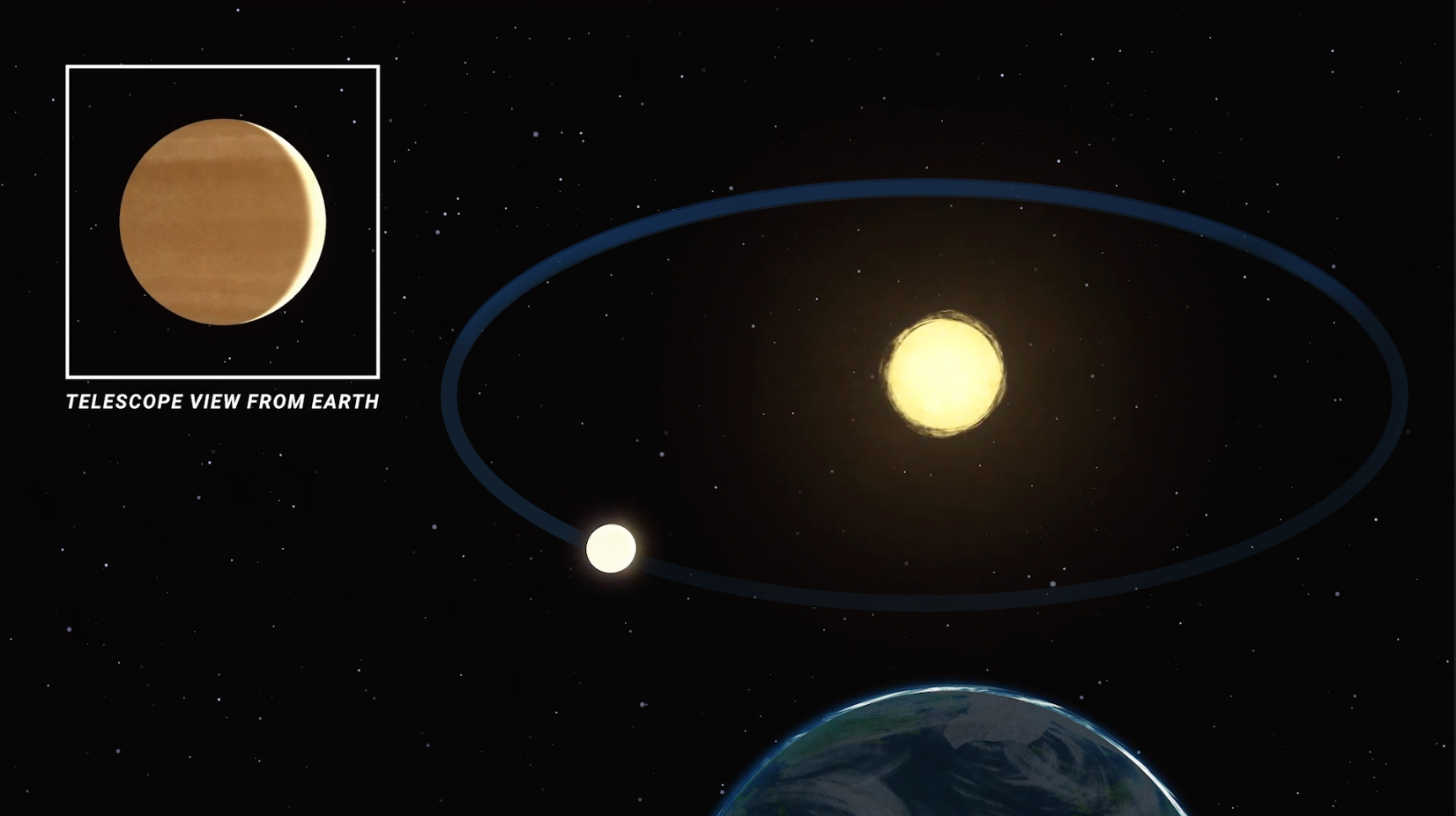 Through a telescope, Venus becomes larger as it comes closer to Earth in its orbit. It also becomes a slimmer crescent. Nonetheless, this is when the planet is at its brightest in our skies. NASA/JPL-Caltech Now, you may have heard that Venus goes through phases, just like the Moon. You can see these phases with a modest telescope. But there’s a surprising twist: unlike the Moon, Venus isn’t at its brightest when it’s “full.” Instead, it shines most brilliantly in our skies when it’s a thinner crescent! It all comes down to distance. See, Venus only appears fuller when it’s on the far side of the Sun, and much farther from Earth. As it comes closer to us, its phase becomes a crescent, but the planet also looks much larger in the sky. Even as a crescent, the light from its closer position more than makes up for the smaller phase.
So, remember this Valentine’s proverb: “The goddess of love is at her most radiant when nearby!”
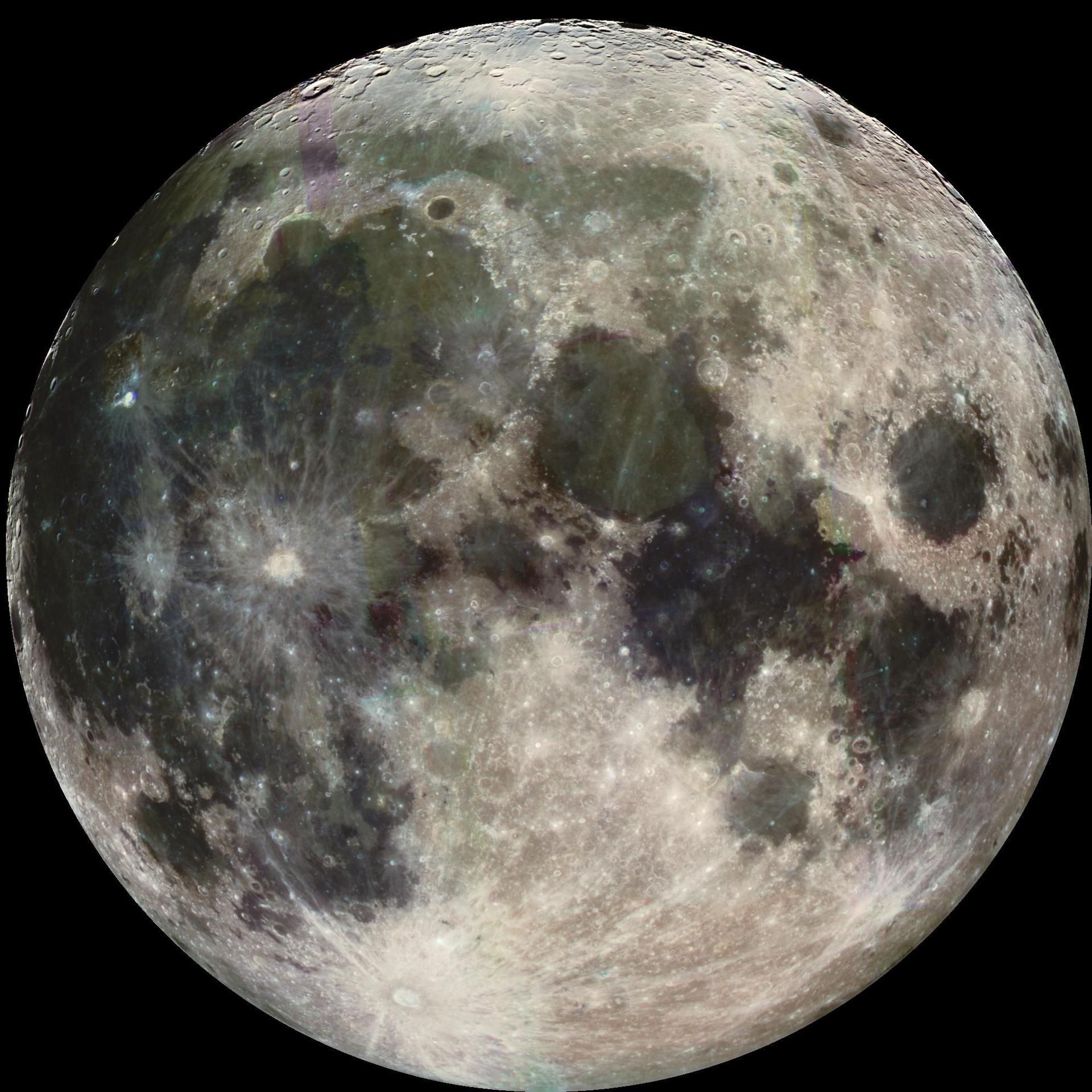
Moon Phases 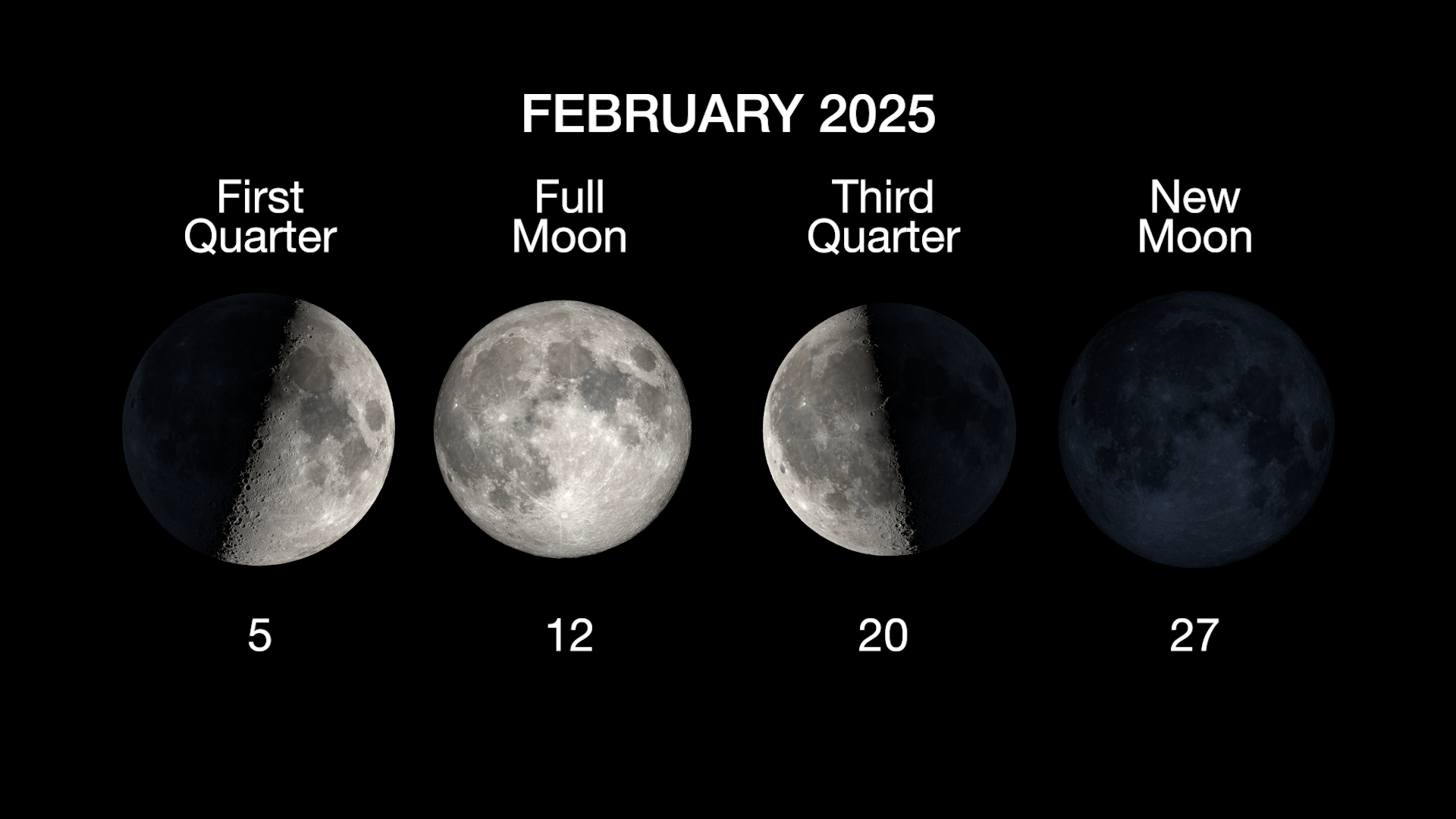 Sky chart showing Jupiter and Mars high overhead after nightfall in February. NASA/JPL-Caltech Above are the phases of the Moon for February. Stay up to date on all of NASA’s missions exploring the solar system and beyond at science.nasa.gov. I’m Preston Dyches from NASA’s Jet Propulsion Laboratory, and that’s What’s Up for this month.
Keep Exploring Discover More Topics From NASA Skywatching